








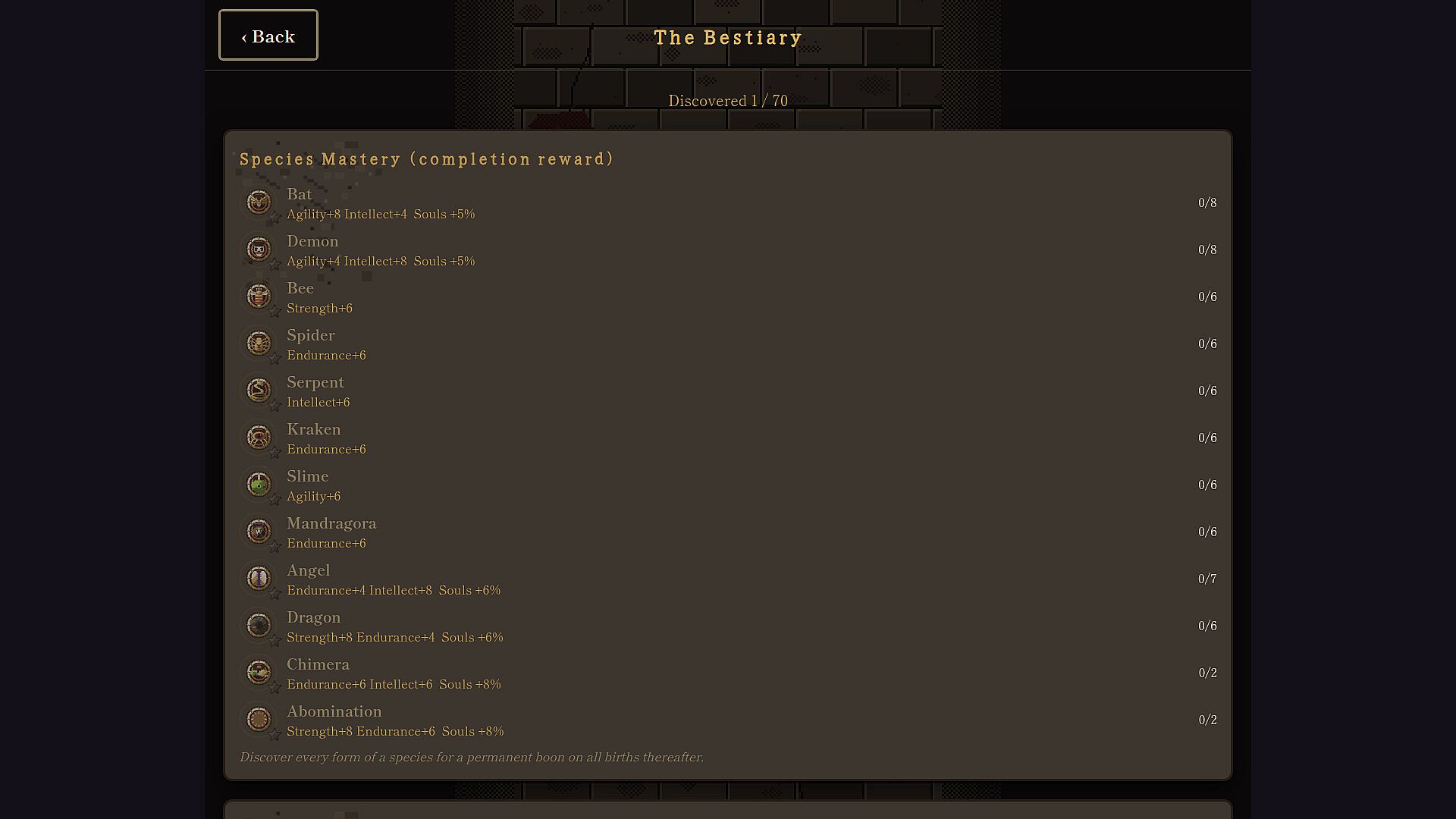



Abyssal Breeder's Journal is a strategy RPG simulation game set in a dark fantasy world where players manage a monster-breeding operation from the depths of a dungeon. The core loop centers on hatching larvae, training them through card-based decisions, and deciding their fate once their lifespan ends, all while balancing competing internal systems that shape each generation's outcome.
Gameplay
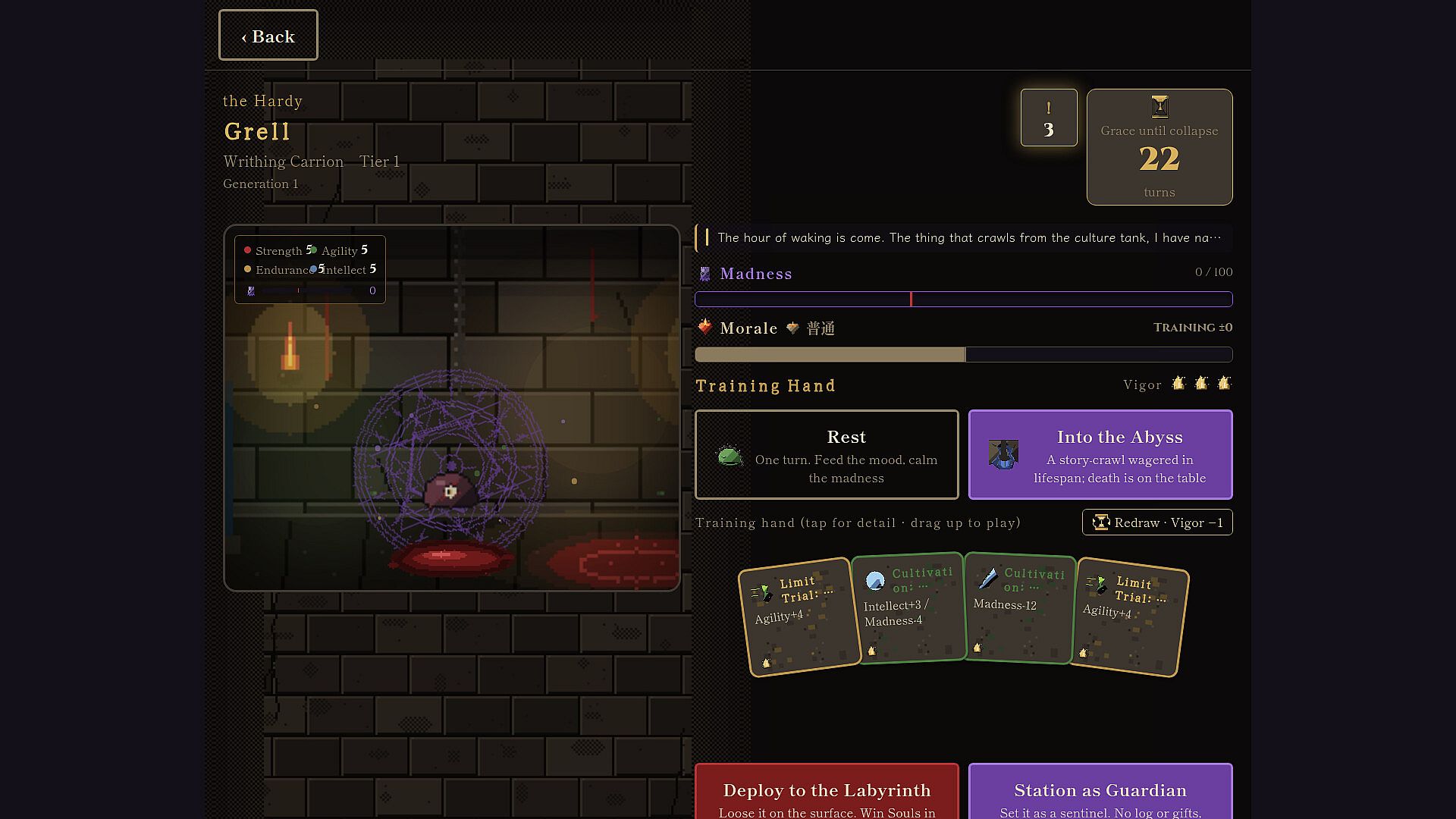
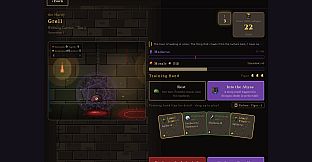
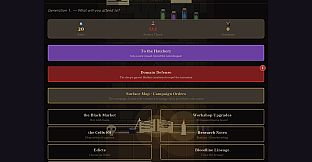
Players begin each generation by hatching a new larva and drawing a hand of training cards. These cards are spent to improve stats across multiple sessions, while TRPG-style event checks introduce risk and variability. Creatures progress through five tiers of mutation, with visual changes reflected in the pixel art presentation. The process emphasizes deliberate choices rather than random chance, as every action influences the creature's development and eventual departure.
Central to training are the Madness and Morale meters. Raising Madness unlocks additional mutation paths and alters the card deck toward more aggressive options, yet excessive levels cause creatures to refuse commands or trigger backfires. Maintaining higher Morale provides consistent bonuses to training effectiveness. This creates an ongoing tension where each card played represents a calculated risk between short-term gains and long-term stability.
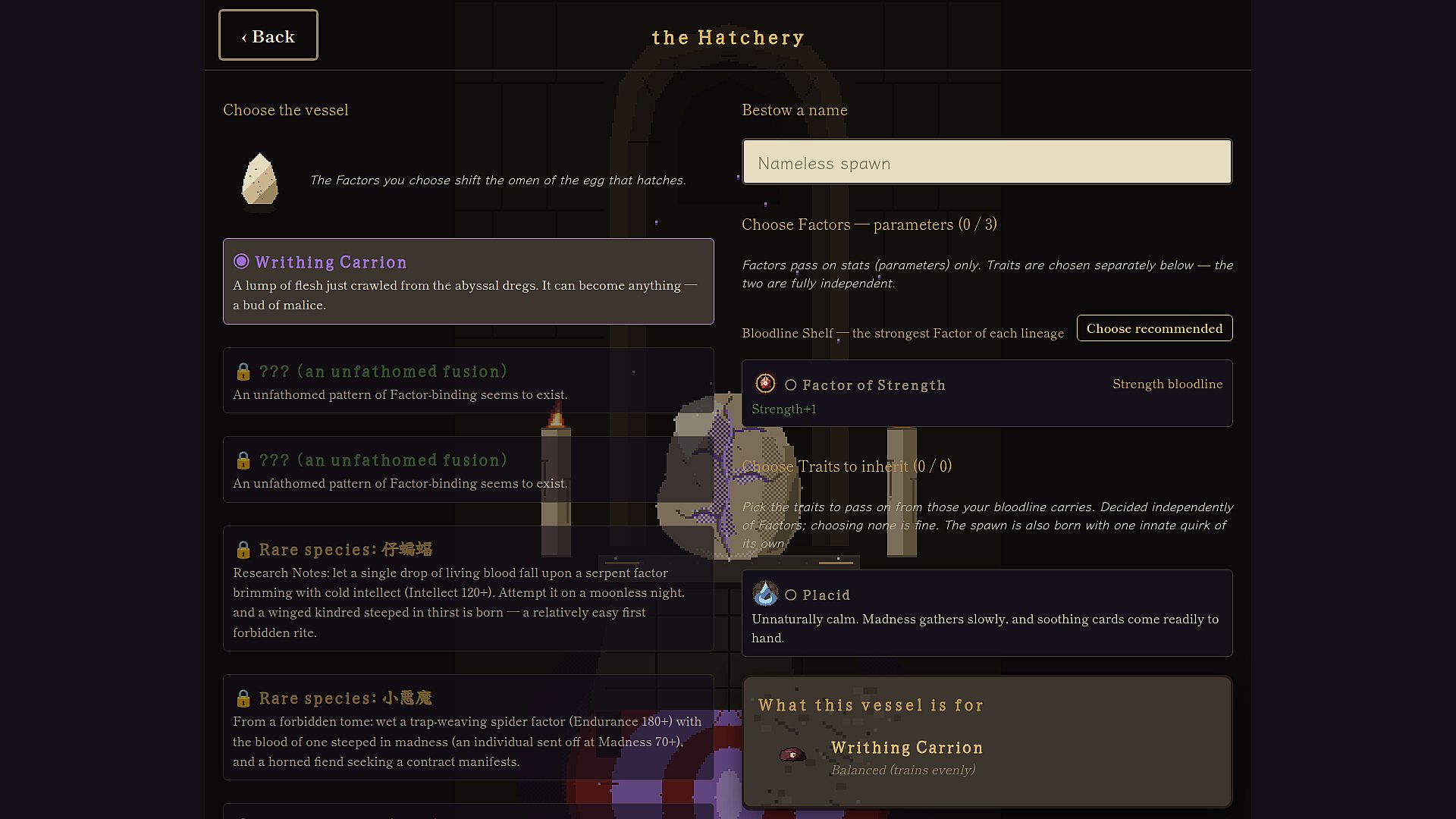
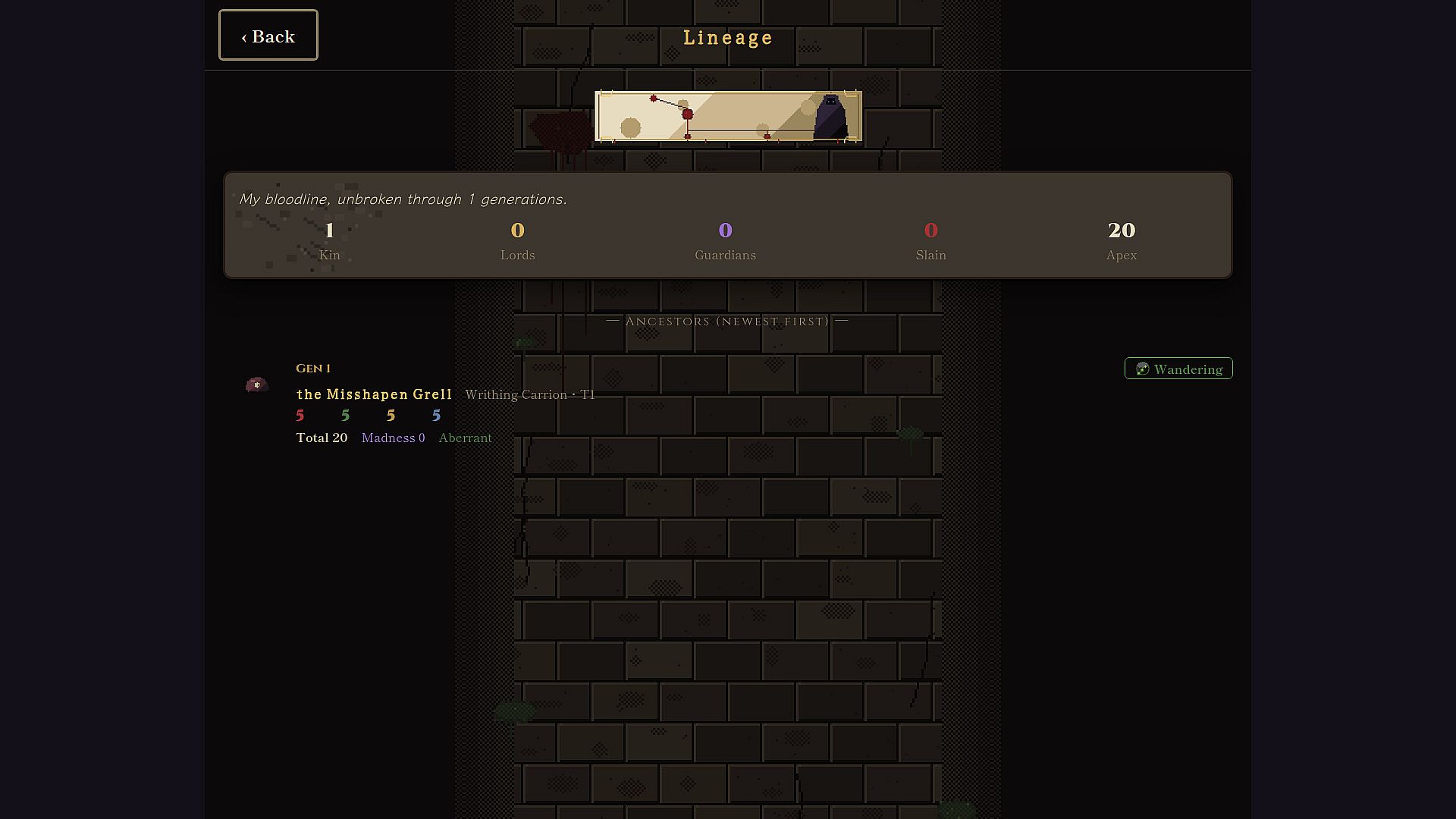
Once a creature reaches the end of its lifespan, it is sent away permanently. Its final stats convert into Factors for inheritance, while Traits remain distinct. Up to three Factors and any accumulated Traits can be selected for the next larva, alongside one new random trait. An Ancestral Boon accumulates across all individuals shipped or stationed, providing a permanent increase to starting stats for future generations.
Game Modes
The game operates through repeated short generations that last roughly ten to fifteen minutes each, with no stamina or timer restrictions preventing immediate continuation. Within each generation, training forms the primary activity, supported by a persistent Grimoire that carries deck-building progress forward across multiple runs.
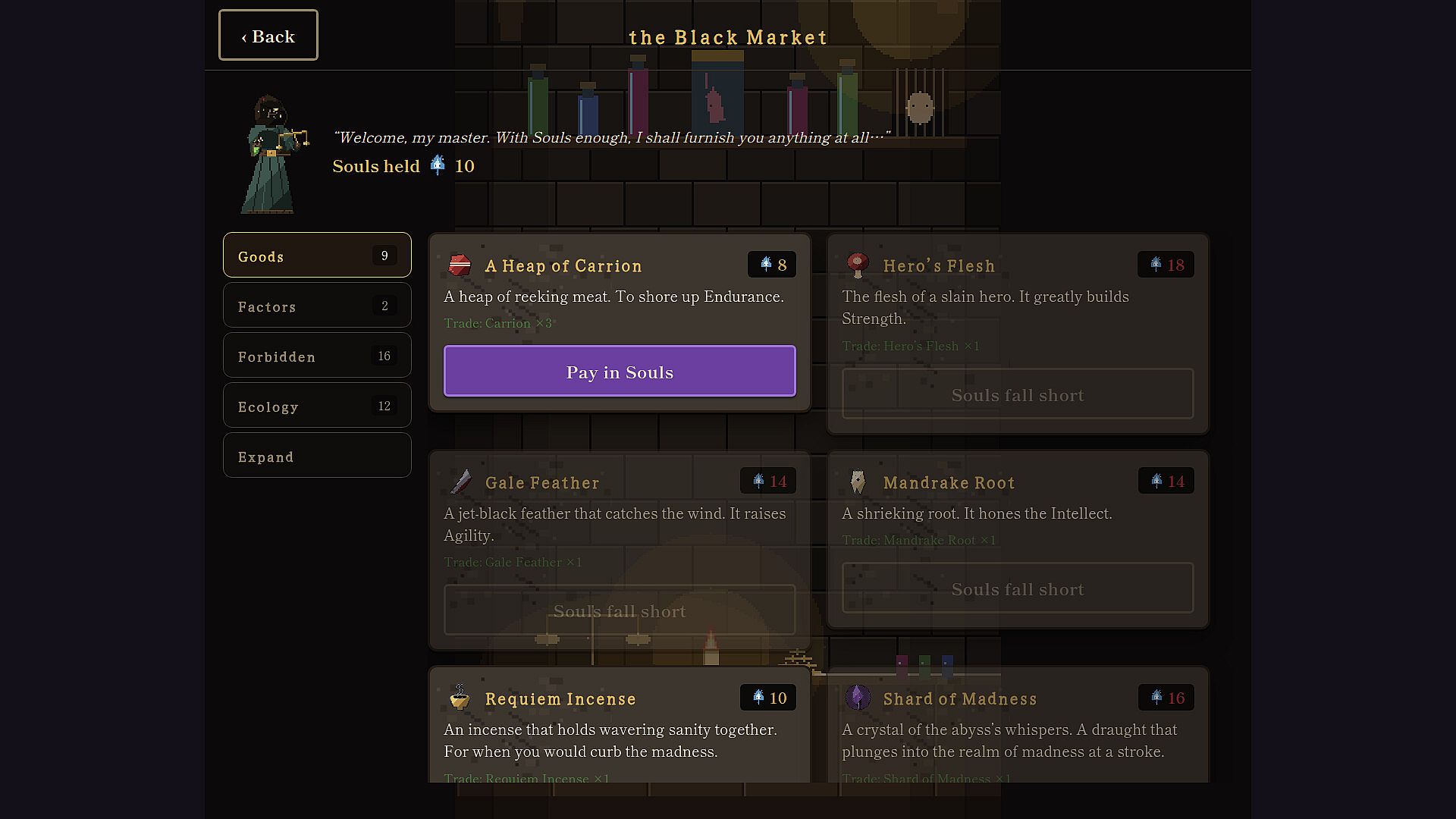
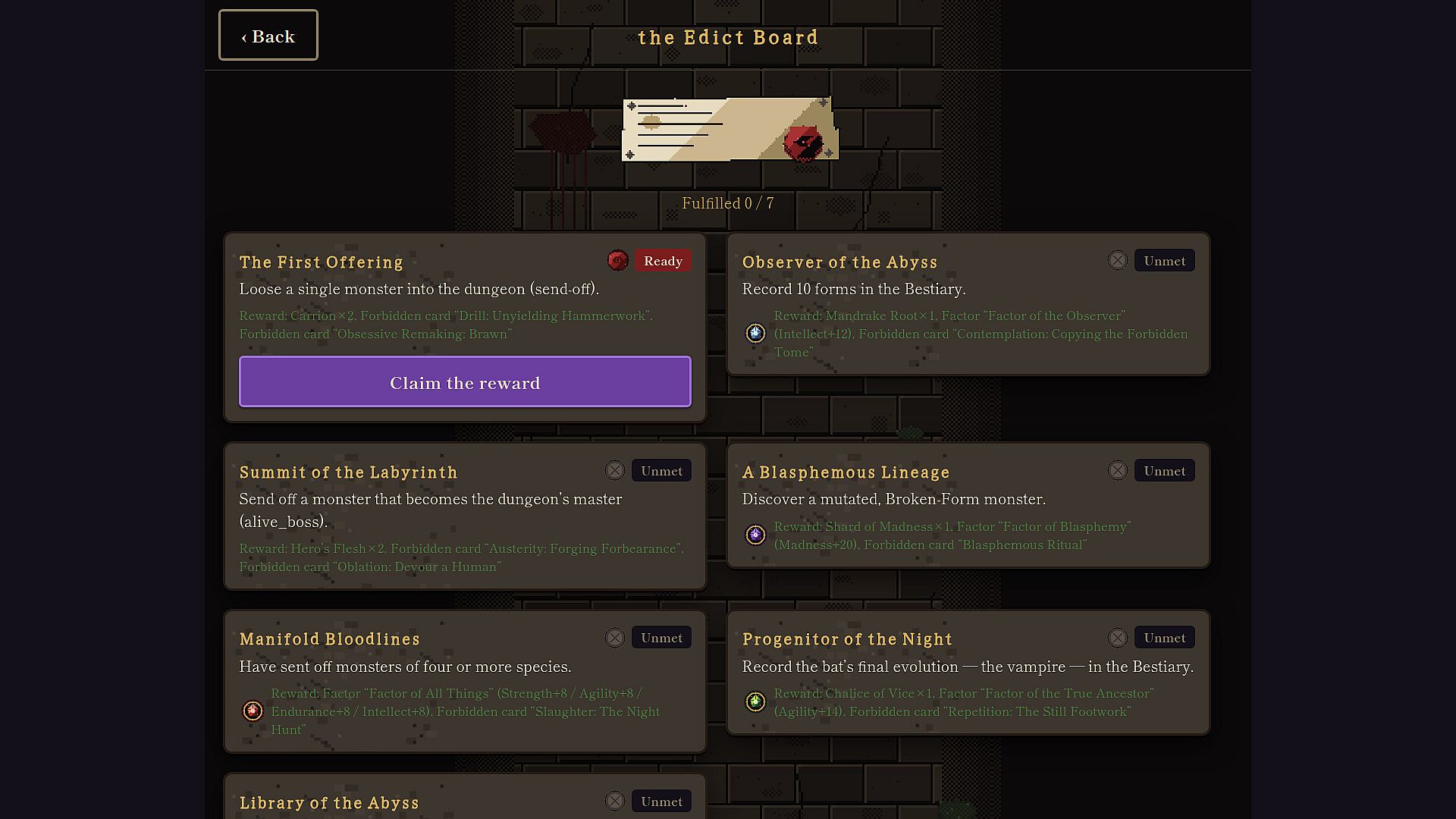
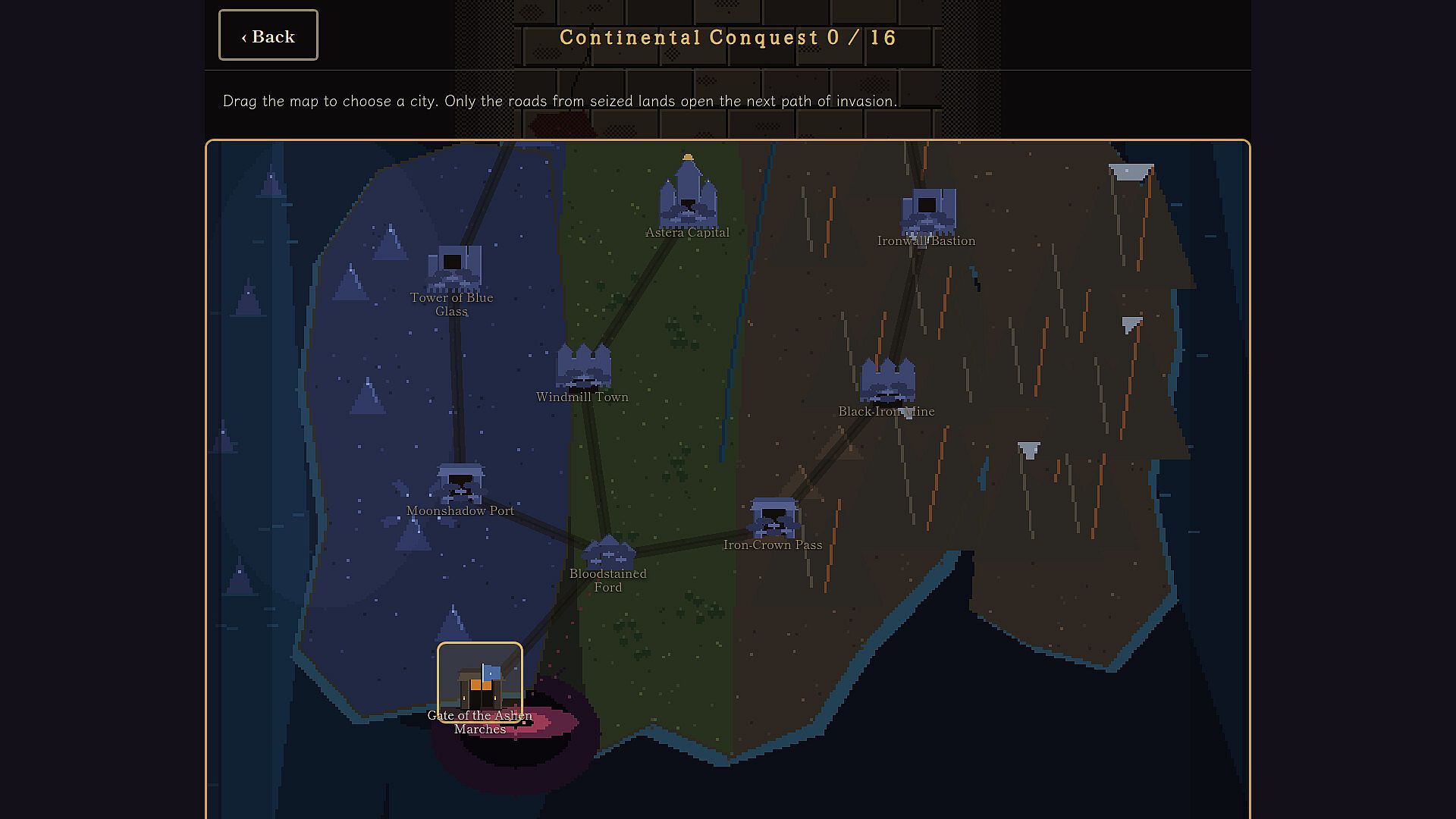
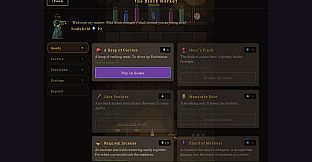
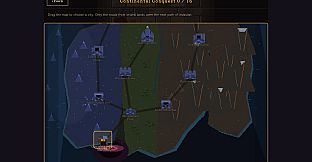
A separate surface layer runs alongside the dungeon breeding. Creatures can be deployed for raids, sabotage, or city assaults to expand territory. Guardians may be stationed for real-time defense during sieges. Additional surface activities include managing prisoners, trading souls at a black market, and attempting cross-breeding between bloodlines to produce mythic hybrids. Actions taken above ground directly influence threats and opportunities encountered below, and the reverse also holds true.
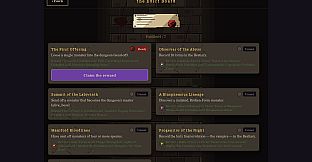
Deployment itself unfolds in four phases that incorporate critical hits, fumbles, and procedurally generated Epithets for notable individuals. Species-specific logs track outcomes after creatures are released, adding narrative weight to each decision without extending session length.
Inheritance and Progression
Breeding across generations forms the central progression system. Factors derived from stats and Traits developed or inherited operate on fully independent tracks, allowing focused pursuit of stat optimization separately from trait specialization. The compounding Ancestral Boon ensures that every creature contributes to long-term advancement, even those that fall short of deployment standards.
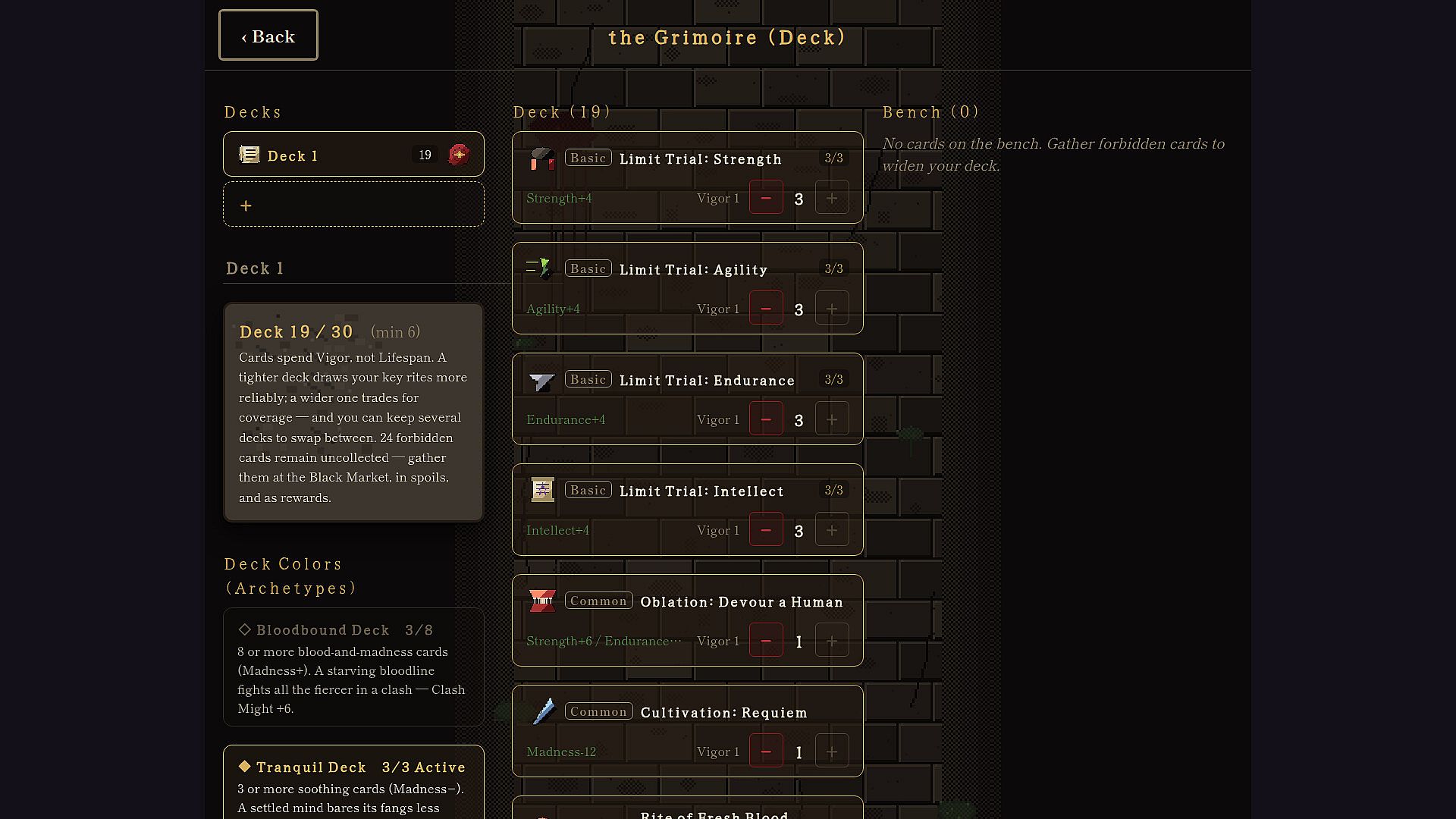
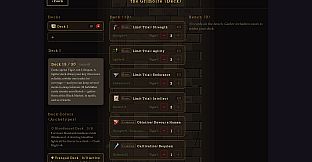
The Grimoire supports ongoing deck customization, letting players refine training options over successive generations. This structure rewards consistent play without requiring extended single sessions, as progress persists regardless of how many generations are completed in one sitting.
Is It Worth Playing?
Abyssal Breeder's Journal suits players who enjoy monster-breeding and creature-collecting experiences but prefer mechanics that require releasing each individual after investment. It appeals to those drawn to roguelite-style loops where accumulated progress compounds rather than resets, combined with dark fantasy themes and TRPG-inspired dice resolution. The short, repeatable generation structure supports flexible play without loss of advancement, and language options include English, Japanese, Simplified Chinese, and Traditional Chinese.
Those seeking a deliberate, choice-driven simulation with clear tradeoffs in resource management and inheritance will find the systems align closely with that preference. The game launches in August 2026 as a single-player title with offline support and no additional requirements for internet connectivity.












