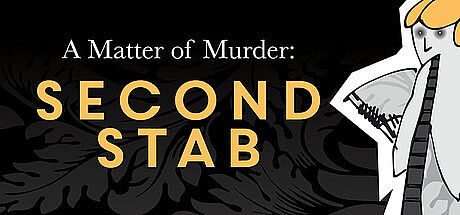


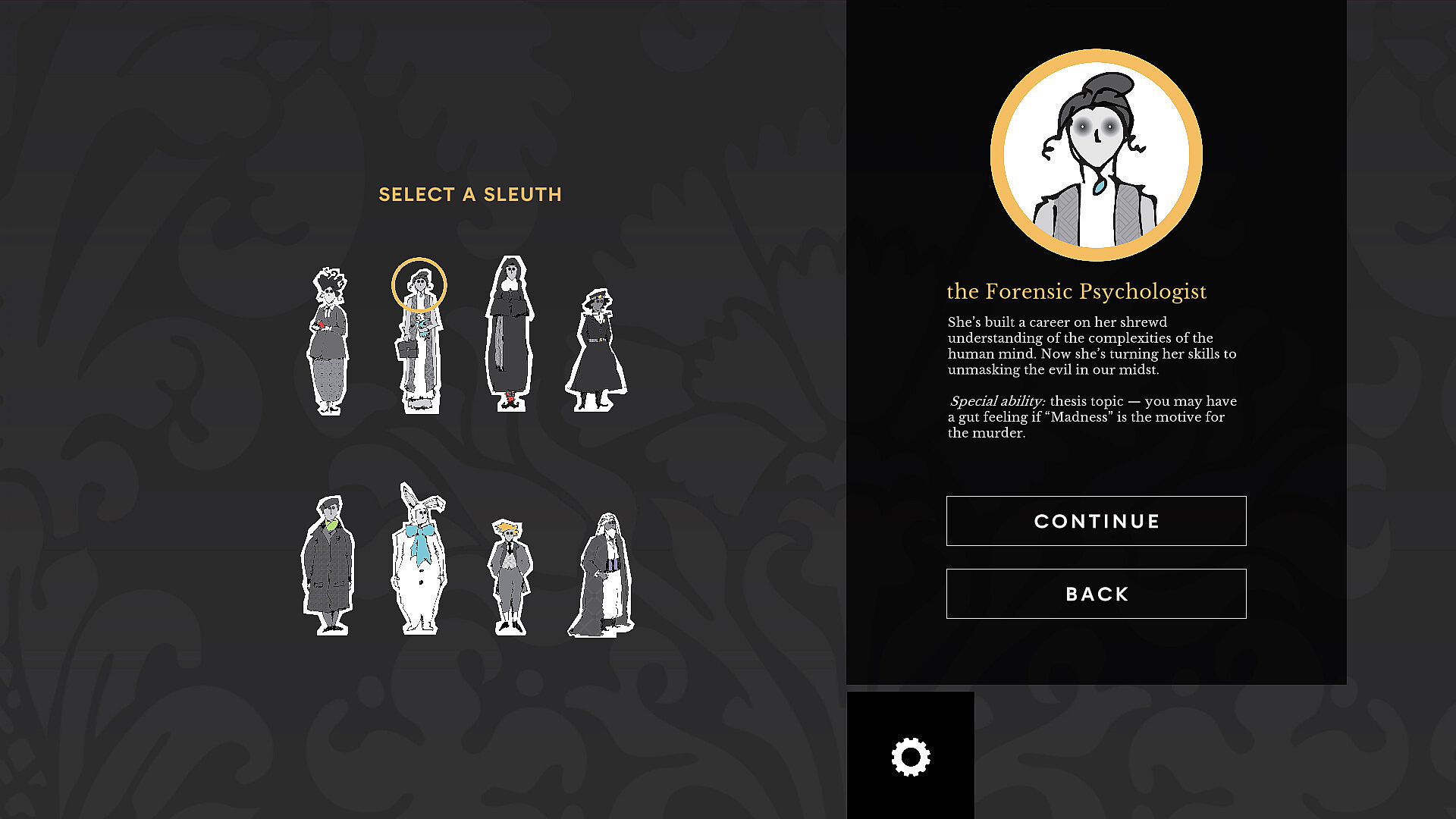
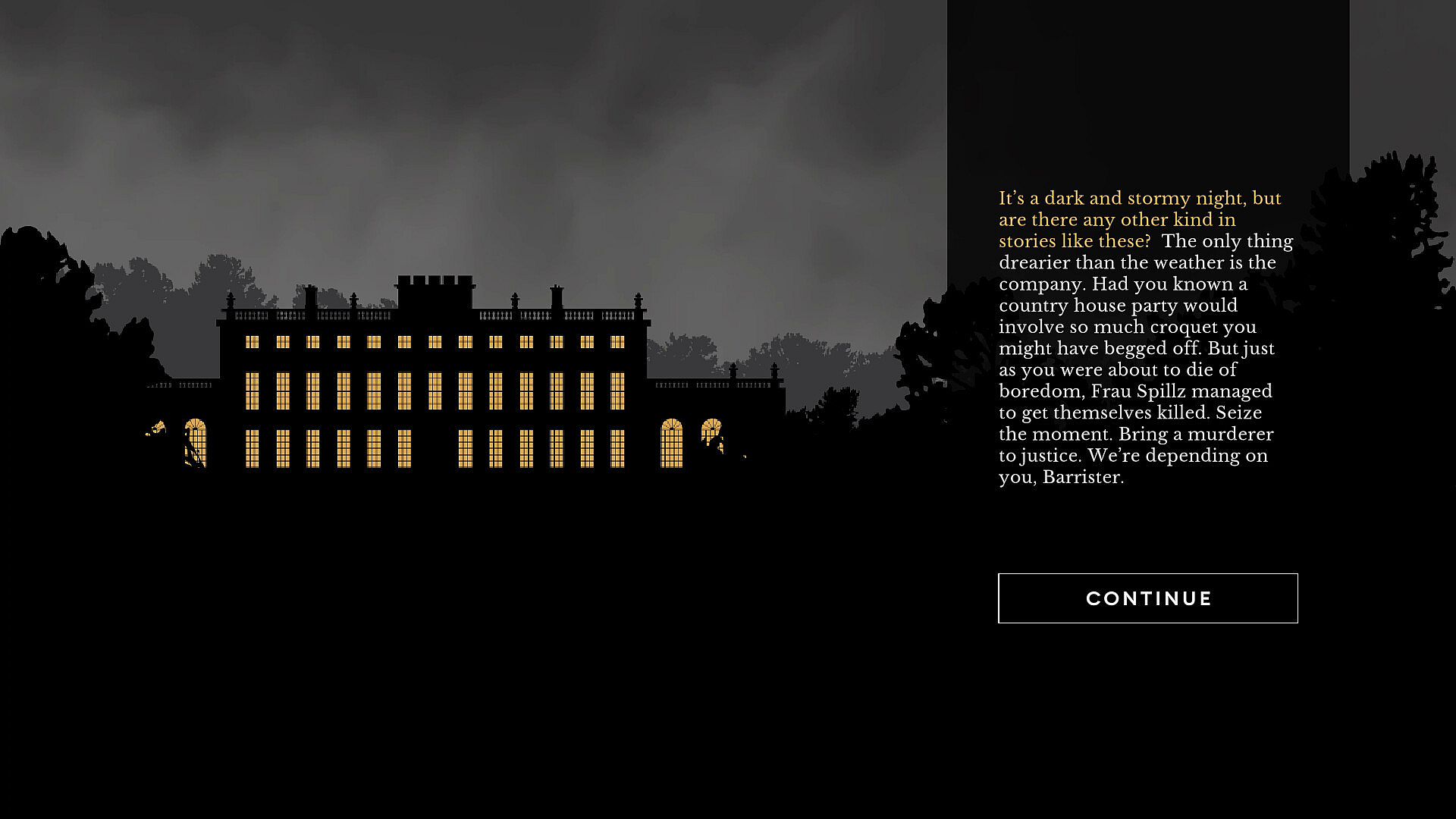
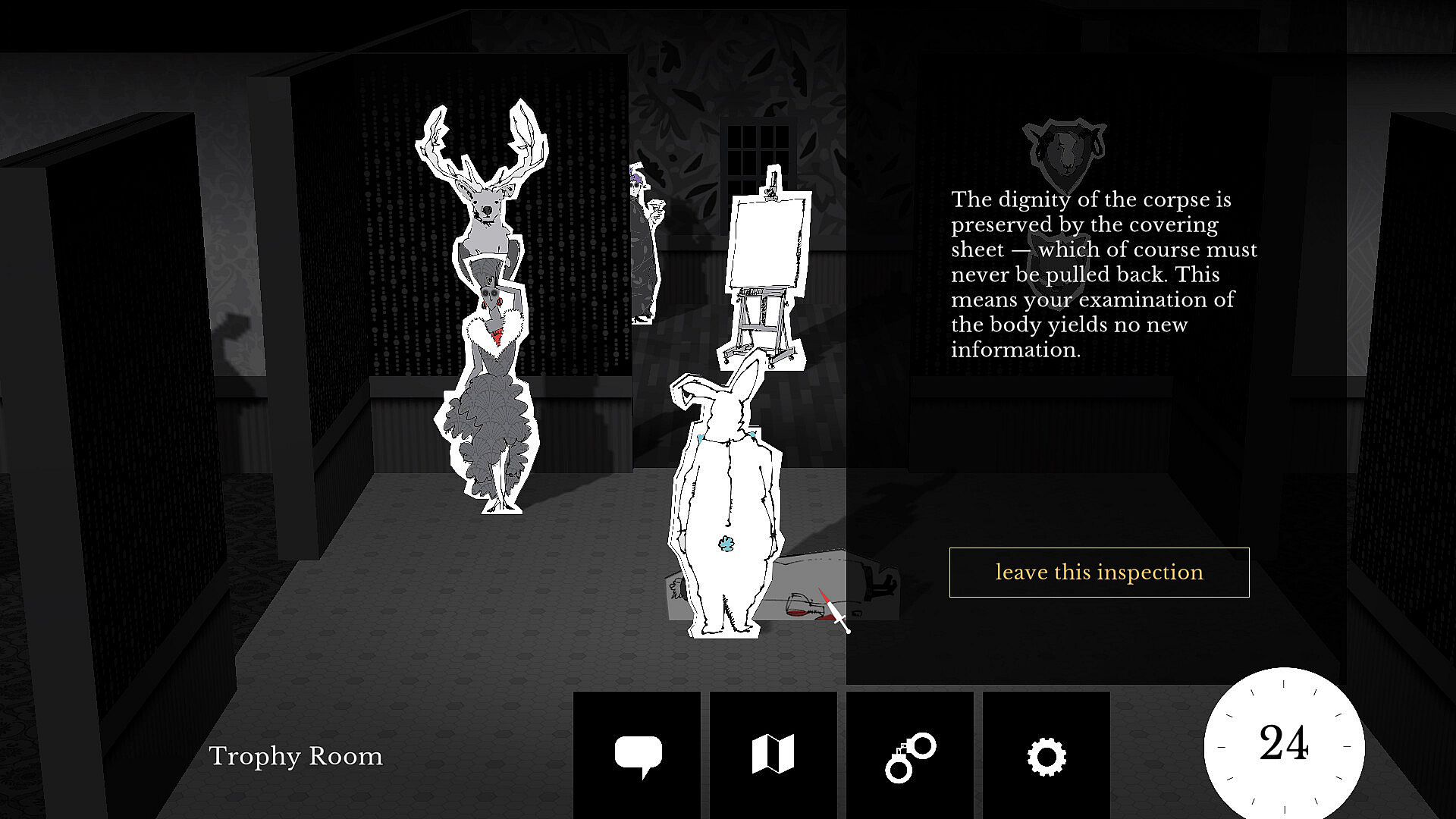
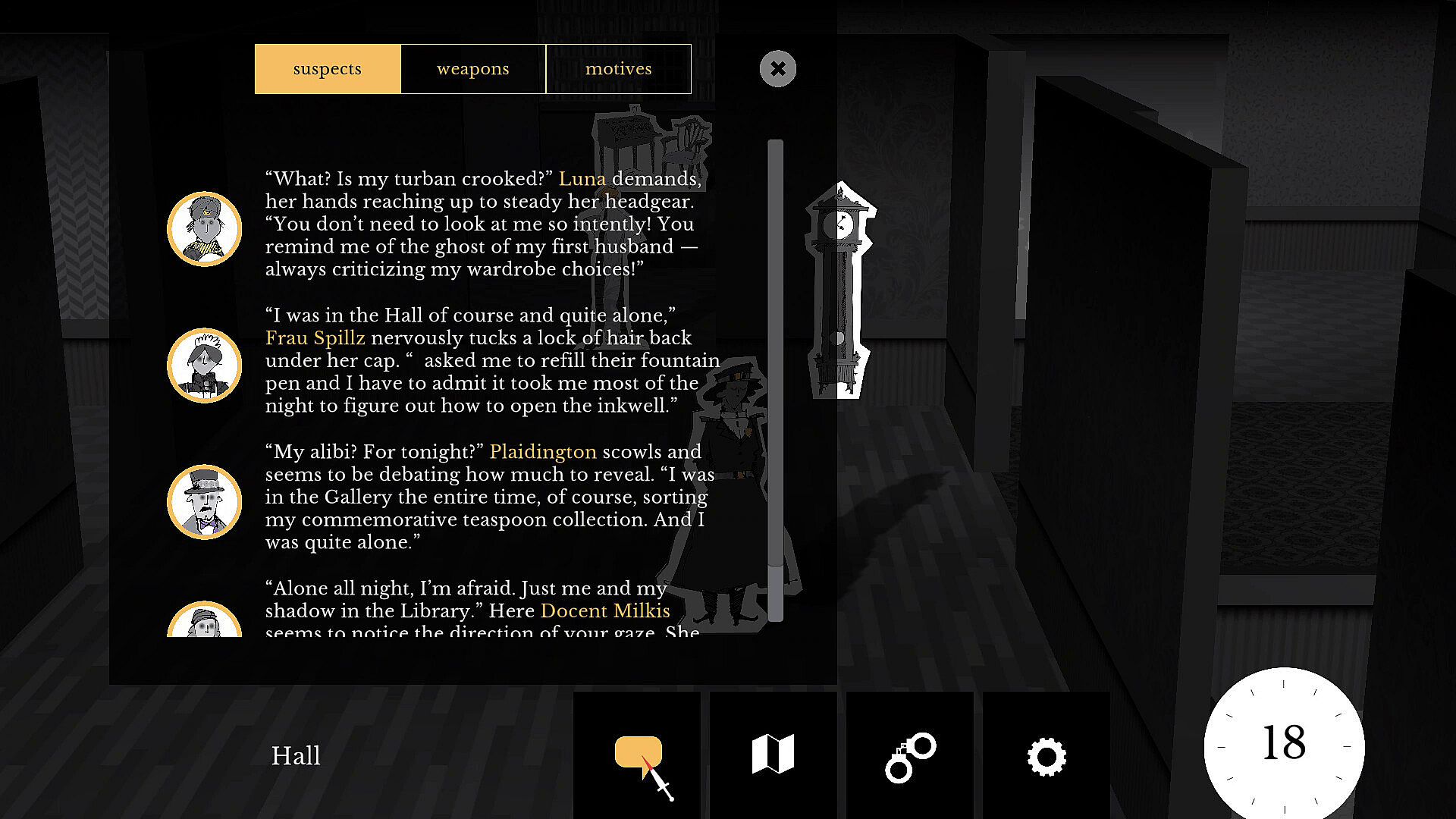
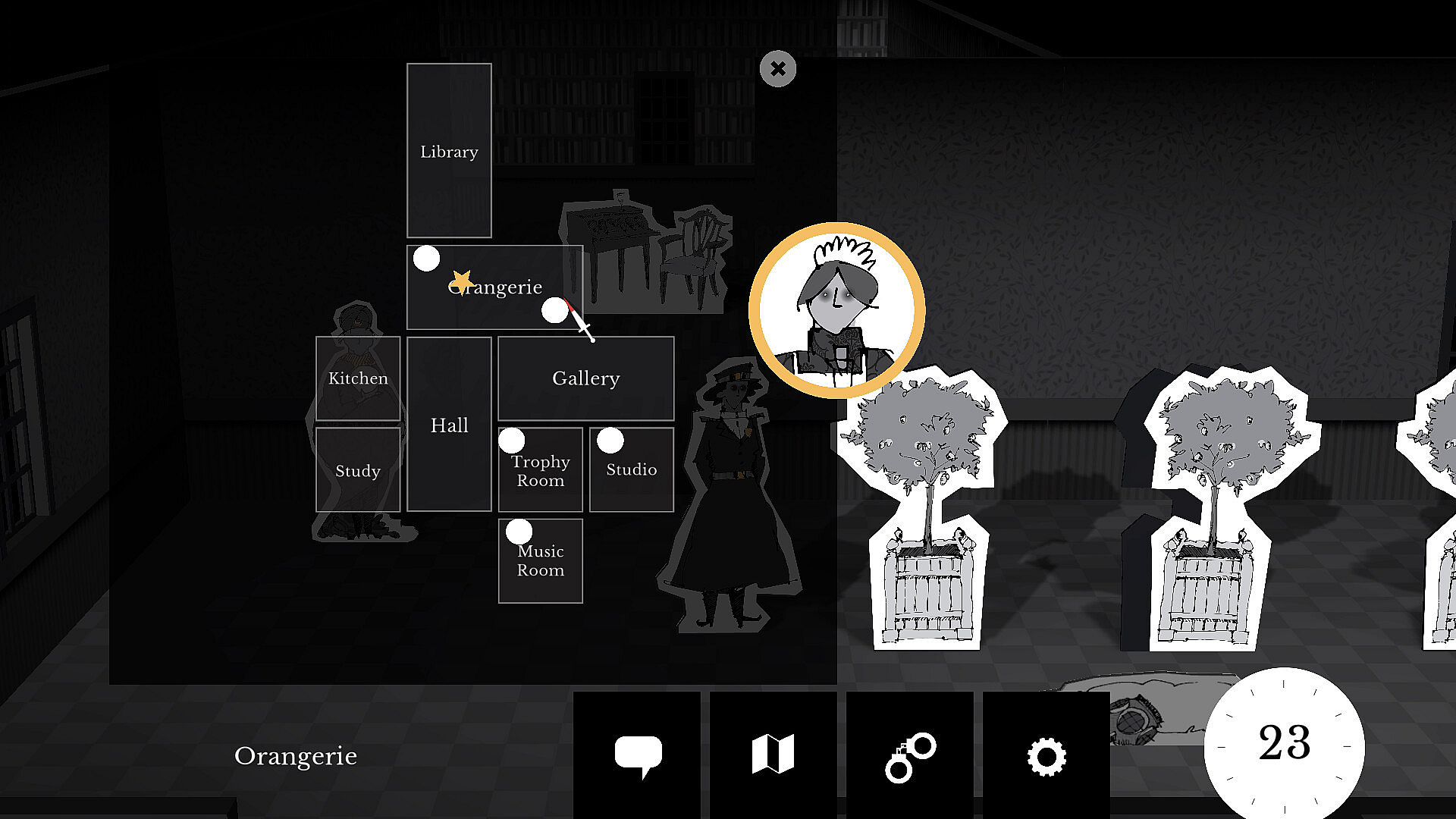
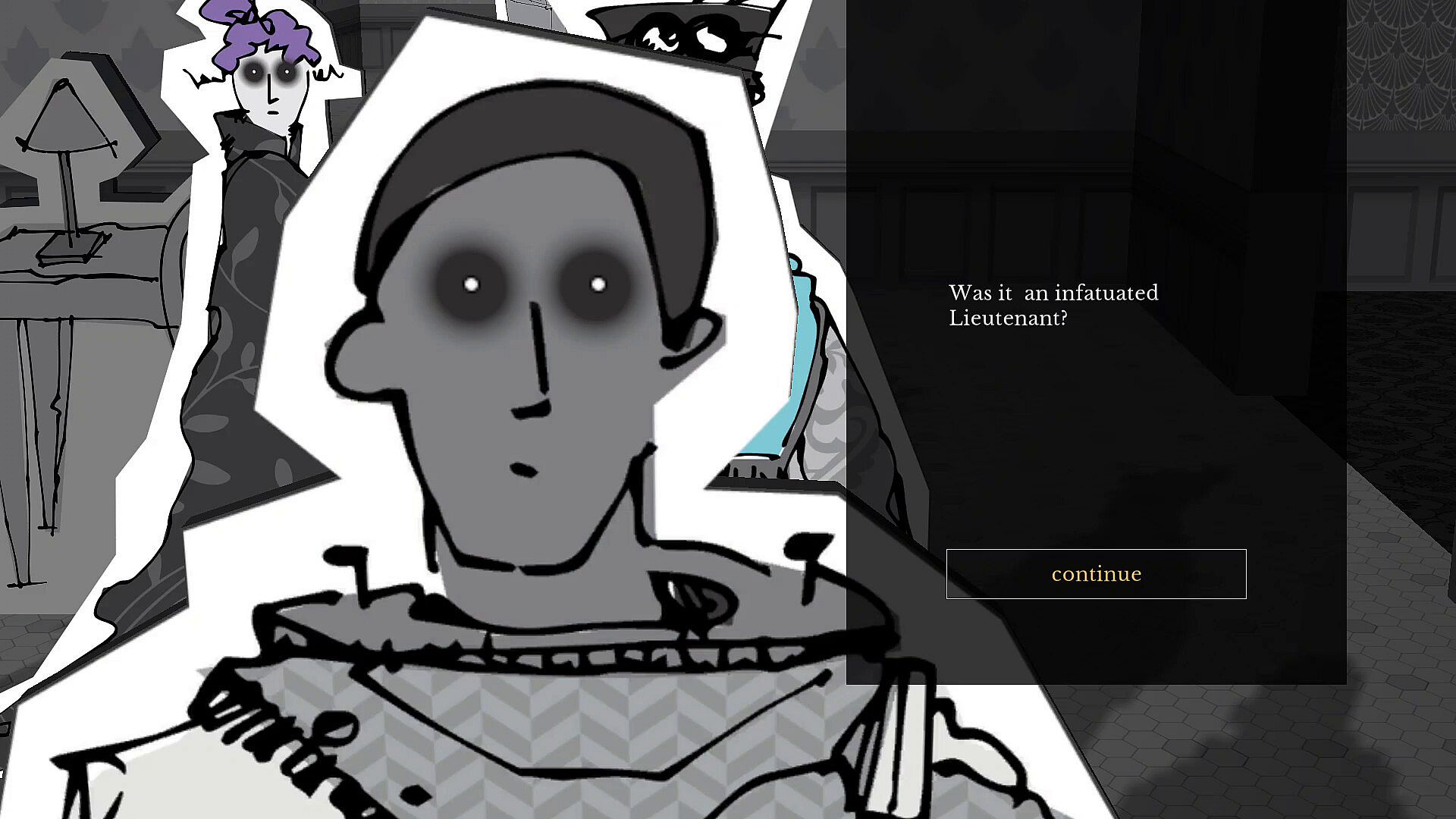


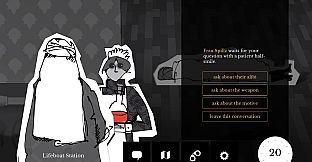
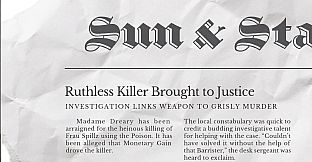

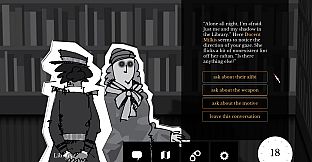
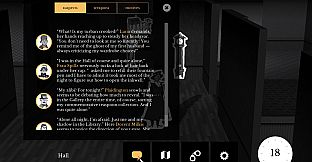
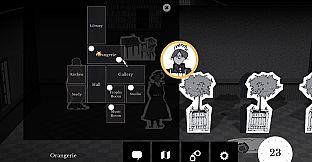
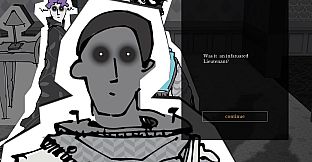
A Matter of Murder: Second Stab is a single-player point-and-click puzzle adventure set in the classic tradition of golden-age detective fiction. Players step into the role of a custom-created detective who arrives at a country house party only to discover that one guest has been murdered. The core loop involves searching crime scenes for clues, questioning an eccentric cast of suspects, and solving logic-based mysteries through careful analysis of testimony and evidence. Hand-drawn gothic artwork and a dramatic score frame each investigation, while roguelite elements add replay value through procedural combinations of puzzle pieces.
Gameplay
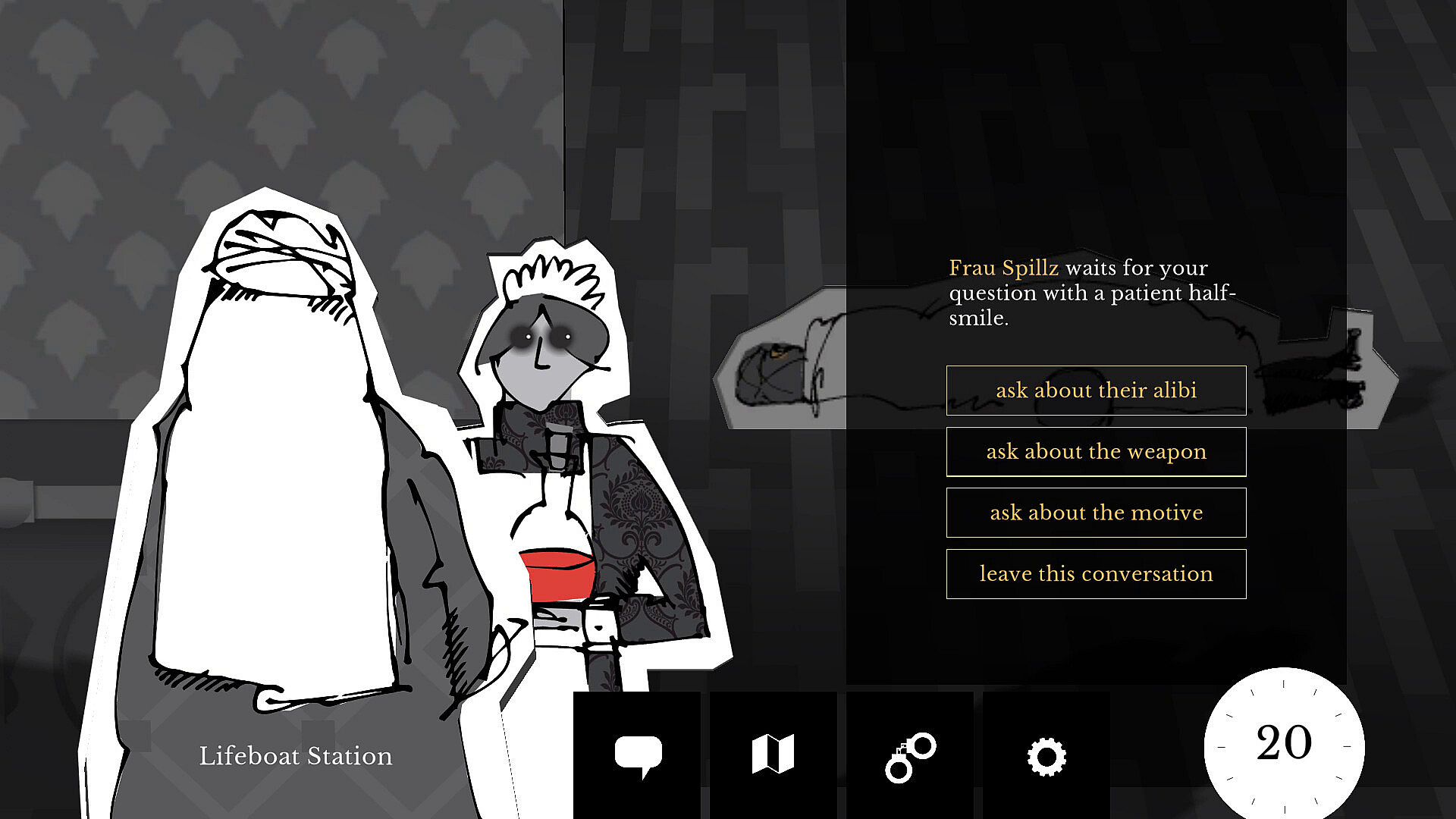
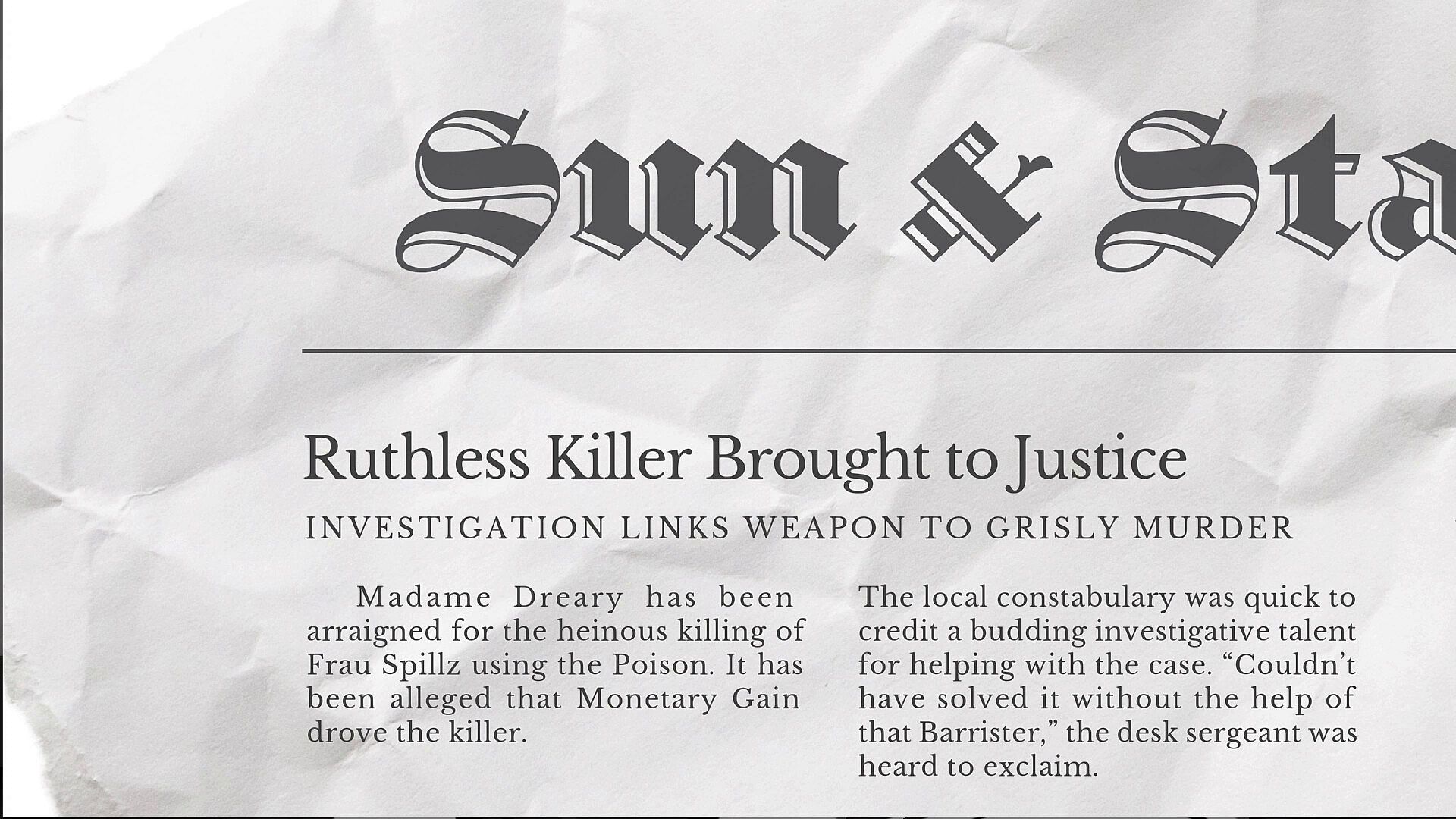
The experience centers on methodical detective work. Players explore four distinct crime scenes, collect items that serve as tools of the trade, and equip them to gain advantages during questioning or deduction. Every testimony matters, and accusations carry lasting consequences that affect how the case unfolds. Time pressure plays a role, as lingering too long can trigger unfortunate plot developments that complicate the investigation. Character creation lets detectives earn accolades for sharp deductions, encouraging multiple attempts at the same mystery with different approaches.
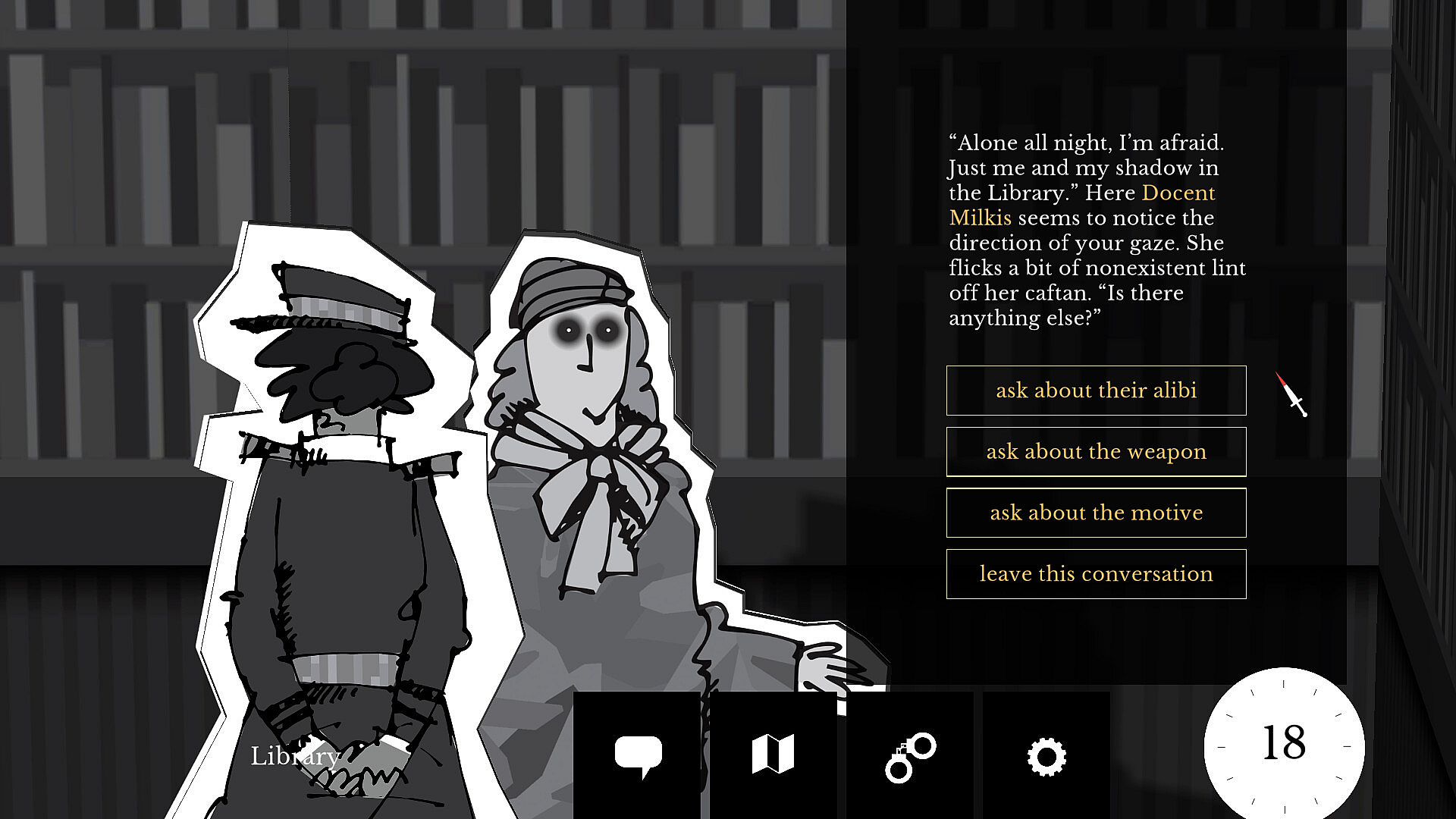
Logic forms the backbone of every case. Testimony must be cross-referenced against physical evidence, and contradictions reveal the truth. The system rewards observation and precise reasoning rather than trial-and-error guessing. Tools collected during play provide targeted edges, such as revealing hidden details or pressing suspects on specific points without derailing the conversation.
Game Modes
Case Mode offers twenty pre-set challenges that increase in complexity. Each one presents a fixed mystery with its own set of clues, suspects, and twists, allowing players to master the core mechanics through structured progression. These cases build familiarity with the deduction process before moving to more open-ended play.
Generative Mode combines puzzle elements in new ways to produce a fresh mystery on every run. The roguelite structure ensures that no two investigations feel identical, with remixed testimony, evidence placement, and suspect behaviors creating high replayability. Players can return repeatedly without encountering the same sequence of events.
Story Mode delivers a longer three-act narrative that introduces new mechanics and sharper twists. This mode expands on the base systems with additional layers of intrigue and more intricate plotting, providing a self-contained experience that differs in scope from the shorter cases.
Visuals and Presentation
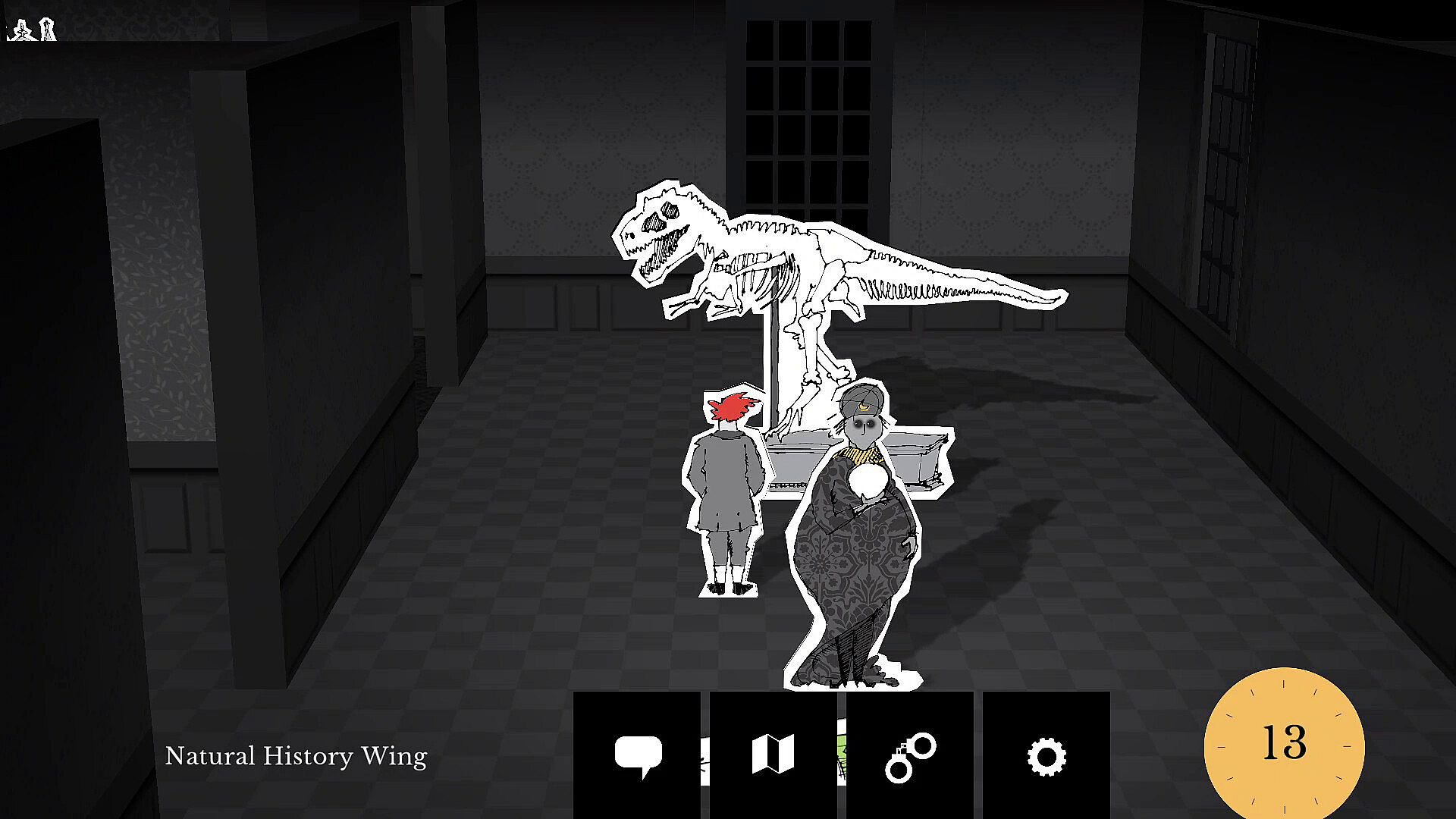
Stylish hand-drawn art depicts the gothic settings and colorful suspects with clear attention to period detail. Scenes emphasize atmosphere through shadows and ornate interiors that fit the murder-mystery tone. The dramatic score underscores key moments without overpowering the focus on dialogue and deduction. These elements combine to create a cohesive presentation that supports the logical gameplay rather than distracting from it.
Is It Worth Playing?
This title suits players who enjoy single-player logic puzzles and classic whodunit structures. The combination of fixed cases, procedural generation, and a narrative-driven mode provides varied ways to engage with the same core systems. Those who appreciate games like Cluedo or other deduction-focused adventures will find familiar satisfaction in piecing together evidence and confronting suspects. The roguelite elements support repeated play without requiring external progression systems. Availability on PC makes it accessible for those seeking a focused mystery experience built around observation and analysis.