

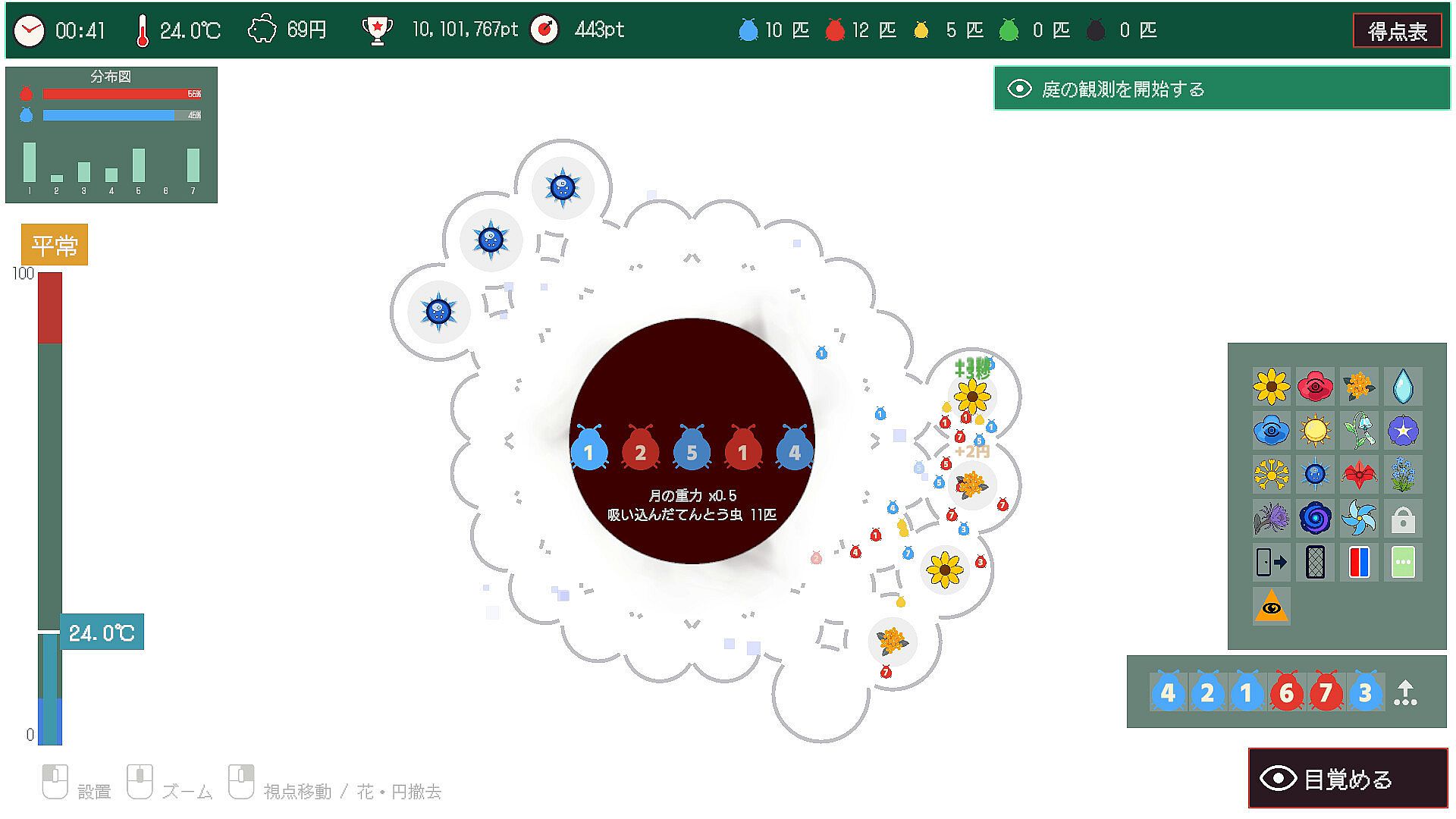
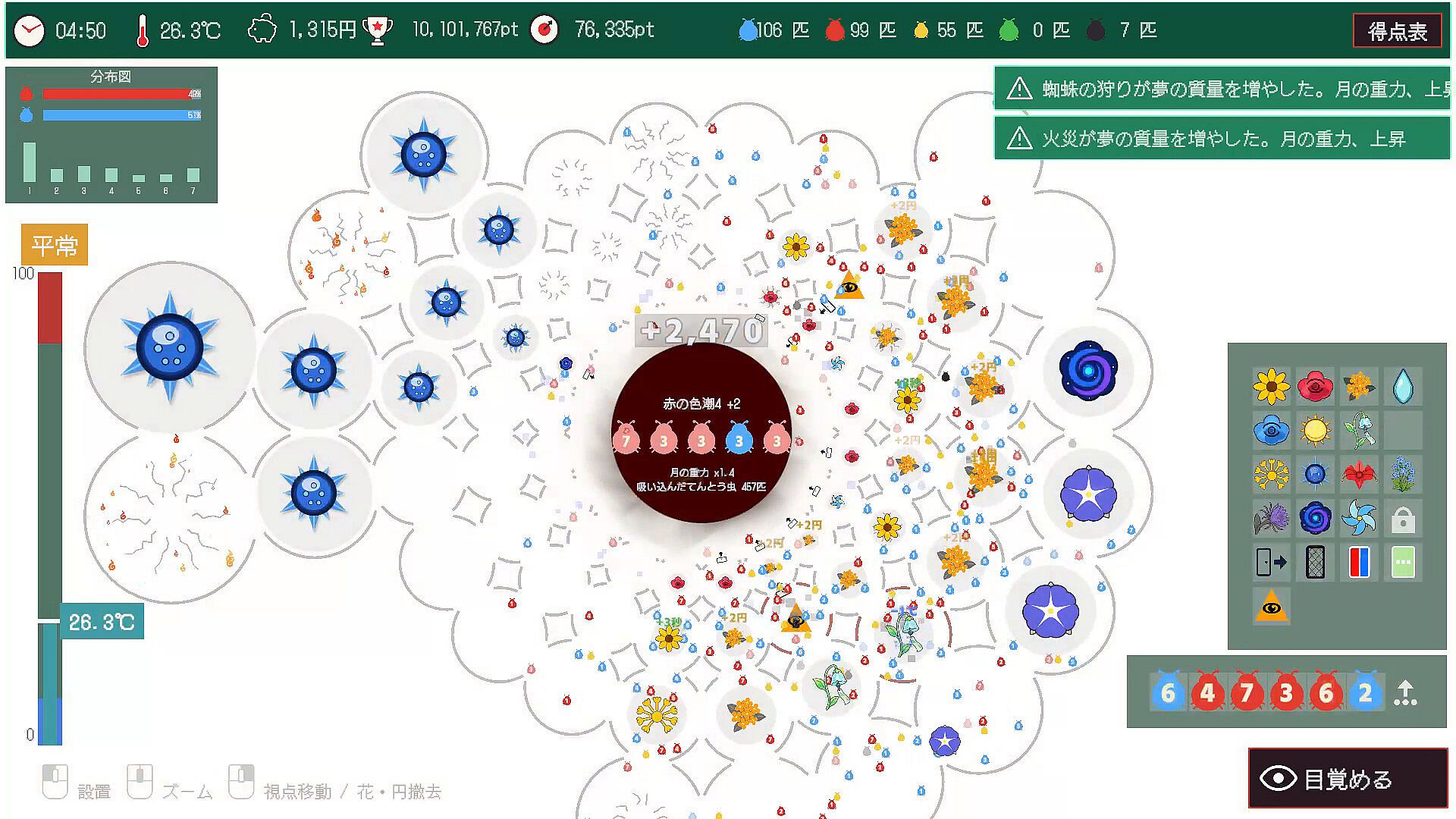
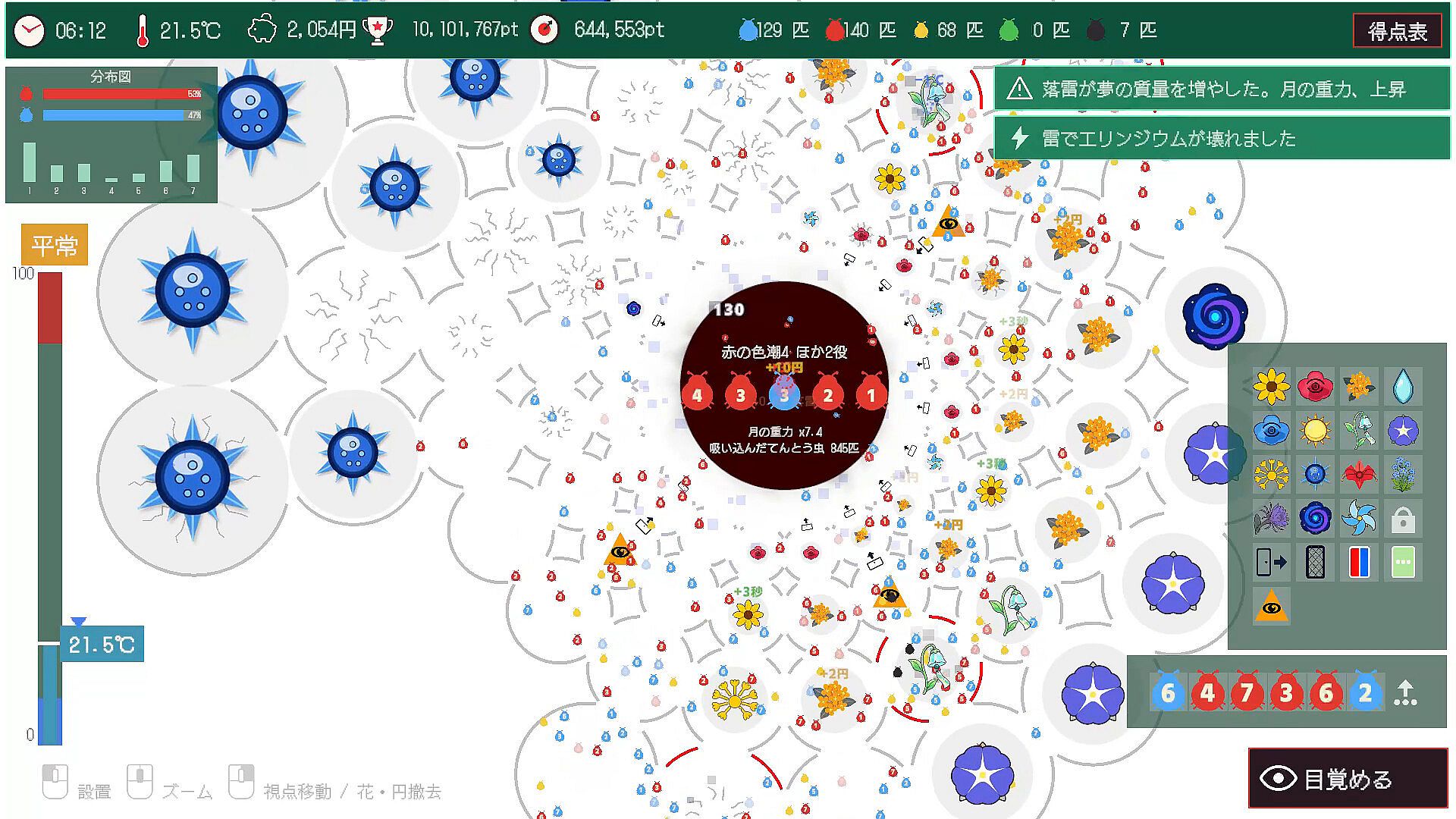
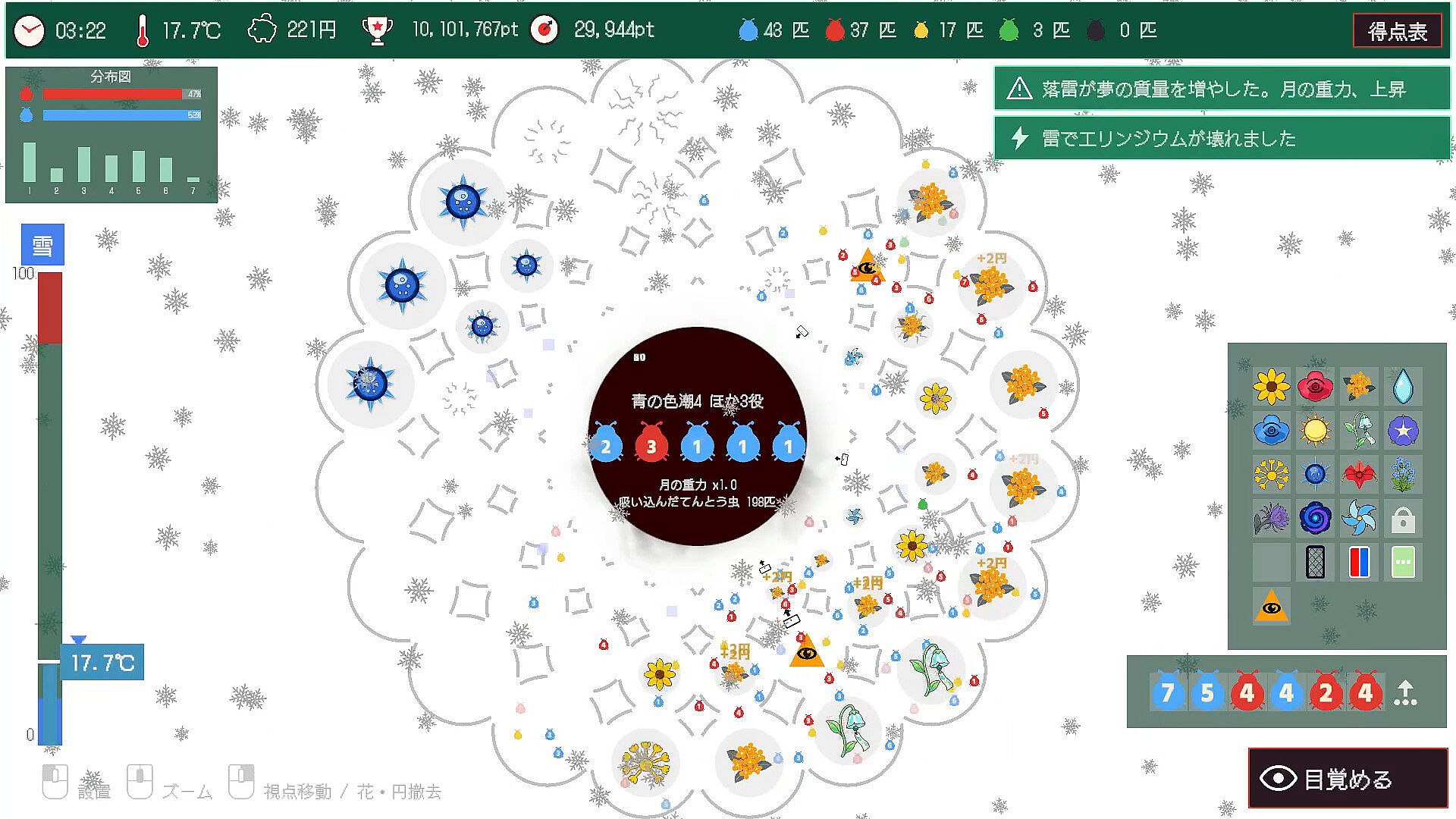
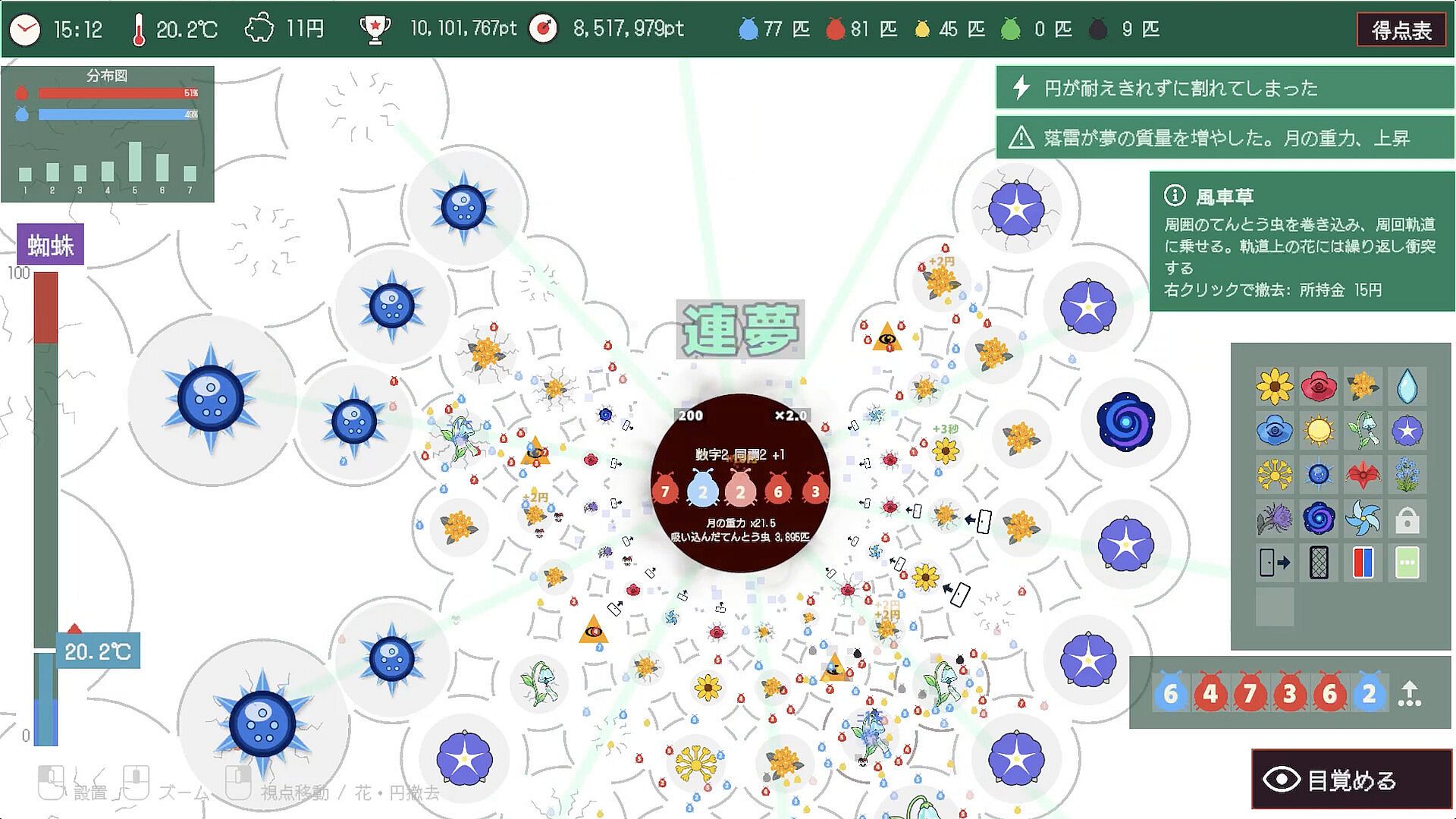
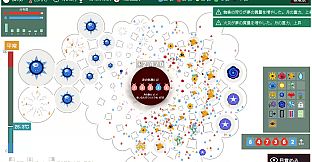


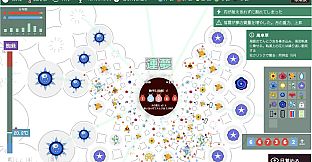
A Dreaming Ladybug is an indie simulation game on PC that blends ecosystem management with slot-style mechanics. Players act as the Dreaming Gardener, an observer who reshapes a garden ecosystem without direct control over individual elements. Ladybugs carry numbers and colors on their backs as they move through the environment toward a central black moon. The core loop involves breeding these ladybugs, adjusting their traits through flowers, and guiding their paths with placed objects so that groups of five reach the moon to trigger reel spins and generate Resonance outcomes.
Gameplay
The gameplay centers on indirect influence over a living system. Ladybugs breed when they bump into one another, but unchecked growth leads to overcrowding, burning, and rising temperatures that destabilize the garden. Players monitor population levels, temperature, funds, lifespans, and breeding rates to maintain balance. Flowers rewrite numbers and colors on ladybugs, filters restrict passage to specific types, and circles connect to funnel swarms along desired routes. These tools shape the flow so that random outcomes gradually align with targeted results. Disasters such as lightning, gales, fires, and a giant spider strike periodically, requiring repairs with limited funds while holding the ecosystem within a stable temperature range. The black moon accumulates Gravity based on observation length and endured disasters, multiplying final Entropy rewards. Entropy earned upon waking can be spent to unlock new flowers and permanent garden upgrades, expanding options for future sessions.
Game Modes
The game operates as a single continuous simulation experience without separate named modes. Each session forms an observation that ends either by choice when the garden remains stable or through collapse from extreme temperatures. Players decide when to wake and collect Entropy or push further for higher Gravity multipliers at the risk of total loss. The structure ties management decisions directly to the slot-like reel outcomes, creating a unified loop where garden design determines both survival duration and reward potential. No additional variants or multiplayer options appear in the available details.
Core Systems and Progression
Progression builds through repeated observations. Each ending reveals logs that gradually uncover the garden's purpose and references to making Yuria bloom. Entropy collected safely carries over to purchase upgrades that add new flowers and structural options. These permanent changes allow larger and more intricate ecosystems in later sessions. The risk-reward element of Moon Gravity encourages players to balance stability against endurance, as longer runs with more disasters increase the multiplier applied to Entropy from Resonance matches. Color and number combinations on the five ladybugs determine Resonance triggers that yield Entropy, with consecutive numbers and matching colors producing stronger effects. All actions remain indirect, relying on environmental design rather than direct commands.
Is It Worth Playing?
This title suits players interested in simulation games that combine resource management with probabilistic outcomes. The focus on designing paths and traits to influence results offers a thoughtful alternative to traditional slot mechanics or pure management titles. Those who enjoy observing emergent behavior from placed objects and maintaining delicate balances will find the loop engaging. The upgrade system provides clear long-term goals through expanded tools and larger gardens. Because the game emphasizes single-player sessions with risk-based decisions around when to end an observation, it appeals to those who prefer deliberate pacing over fast action. Availability remains limited to PC, and the indie scope keeps the experience focused on the described systems without additional layers. Players seeking hybrid management and chance-based gameplay may find it a worthwhile addition to their library.