



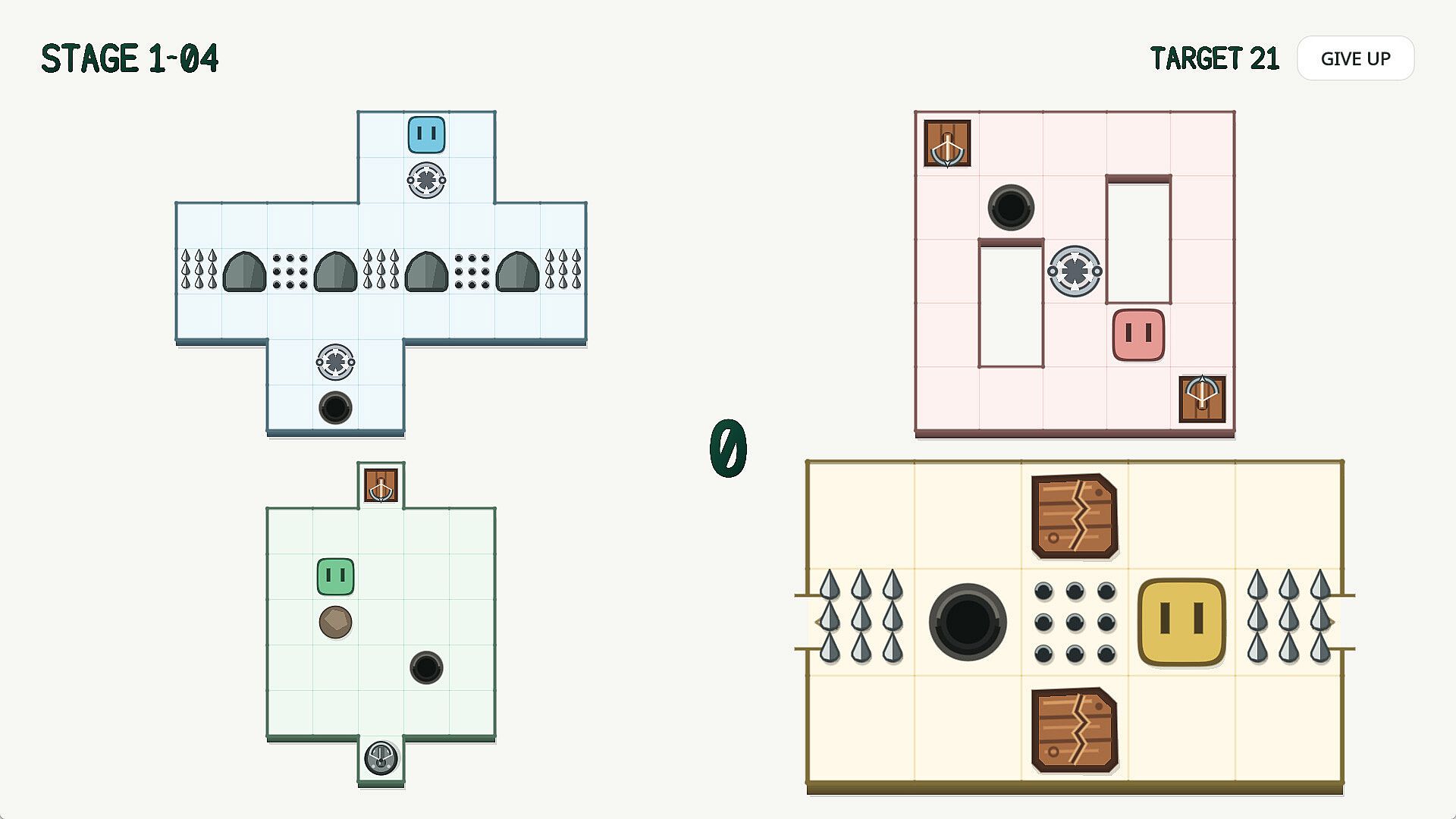
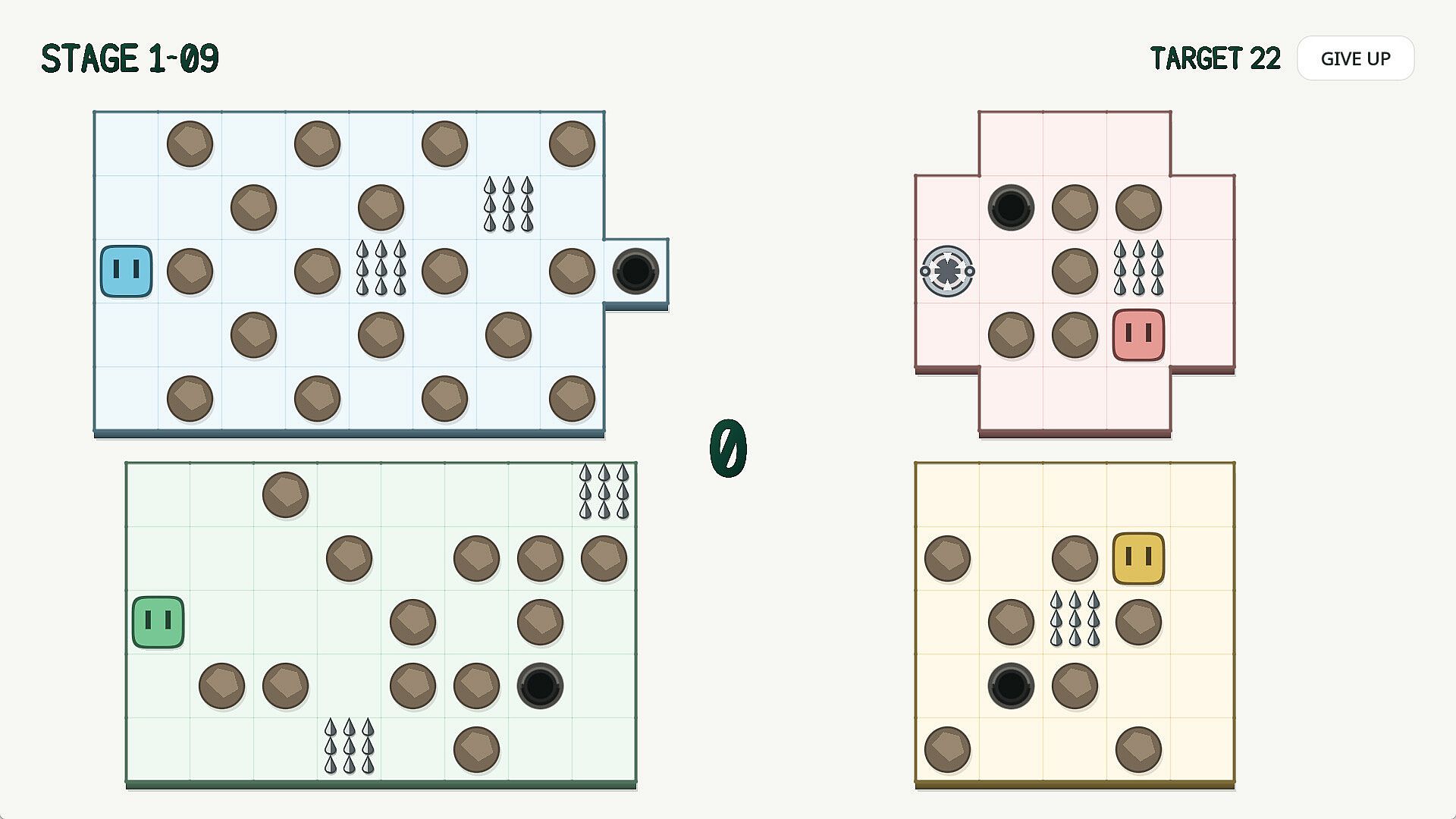
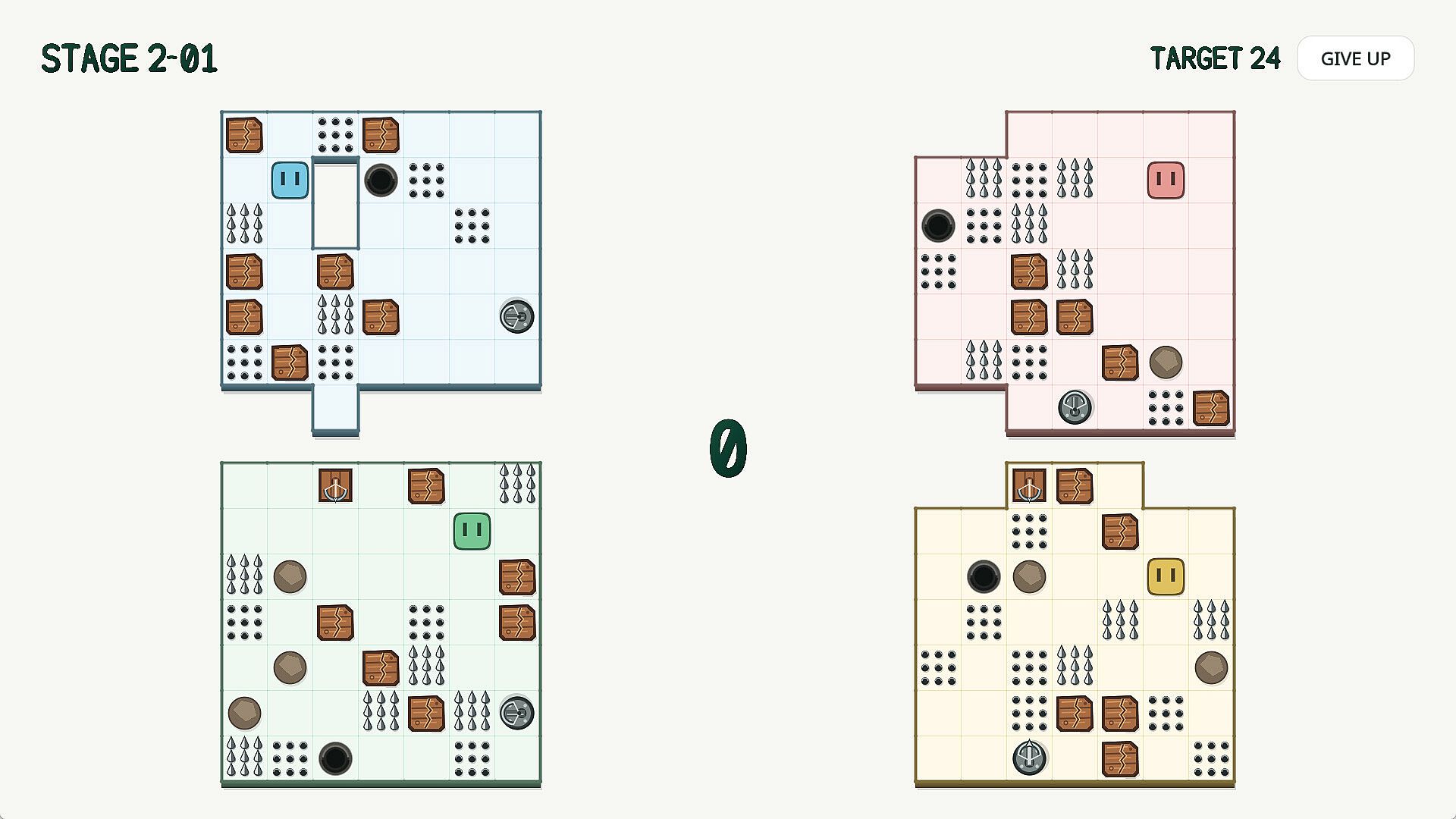
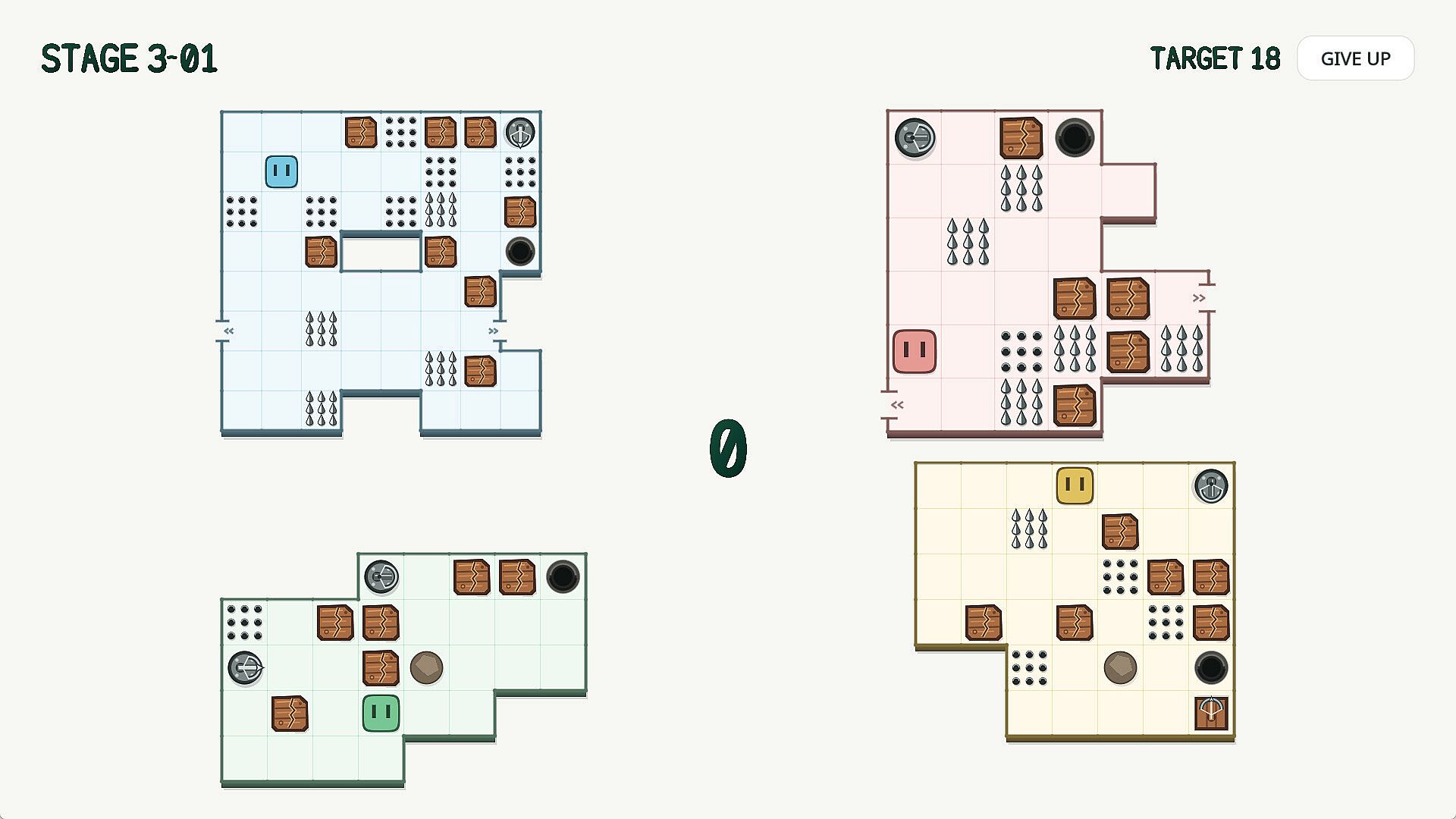
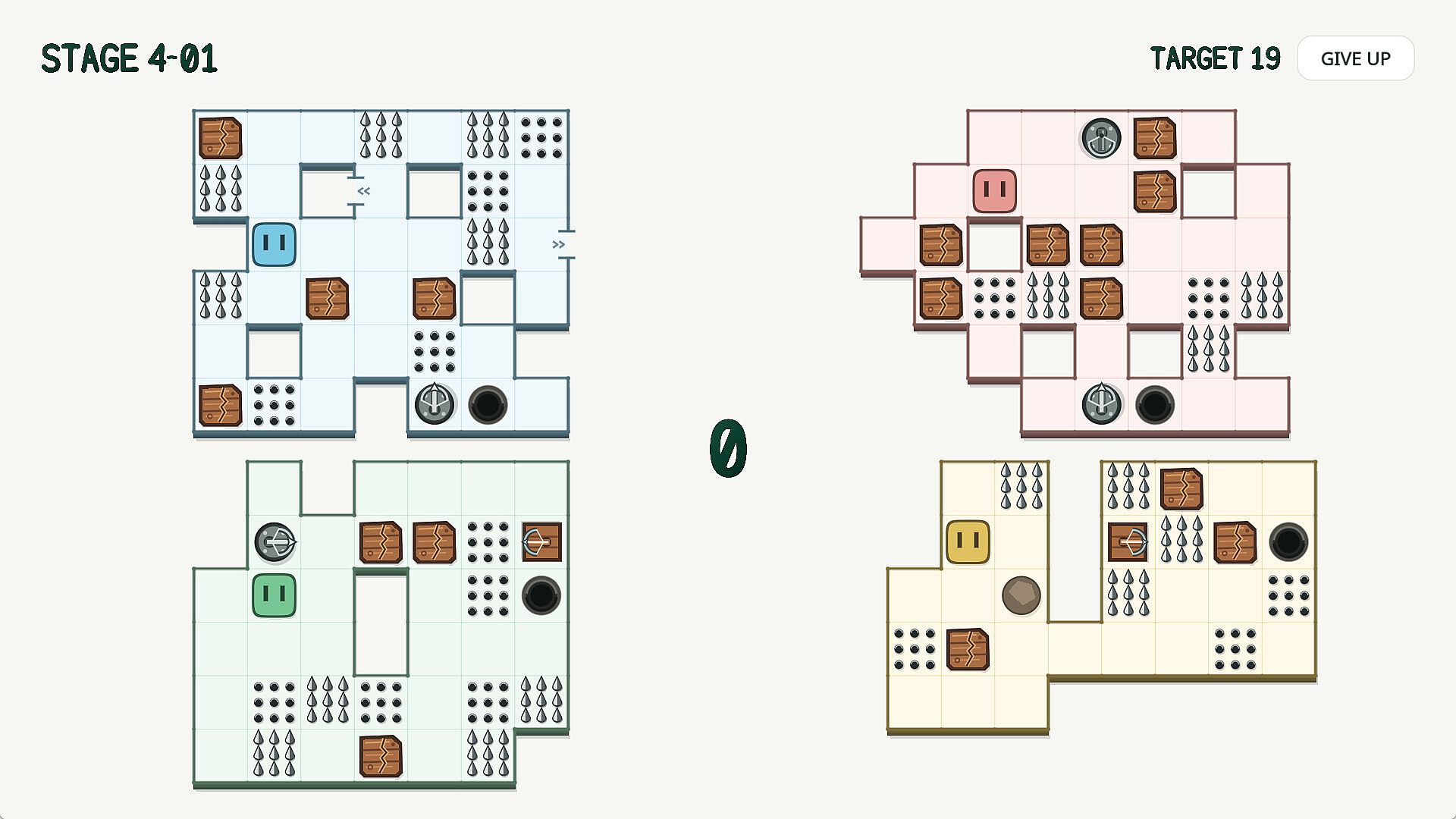
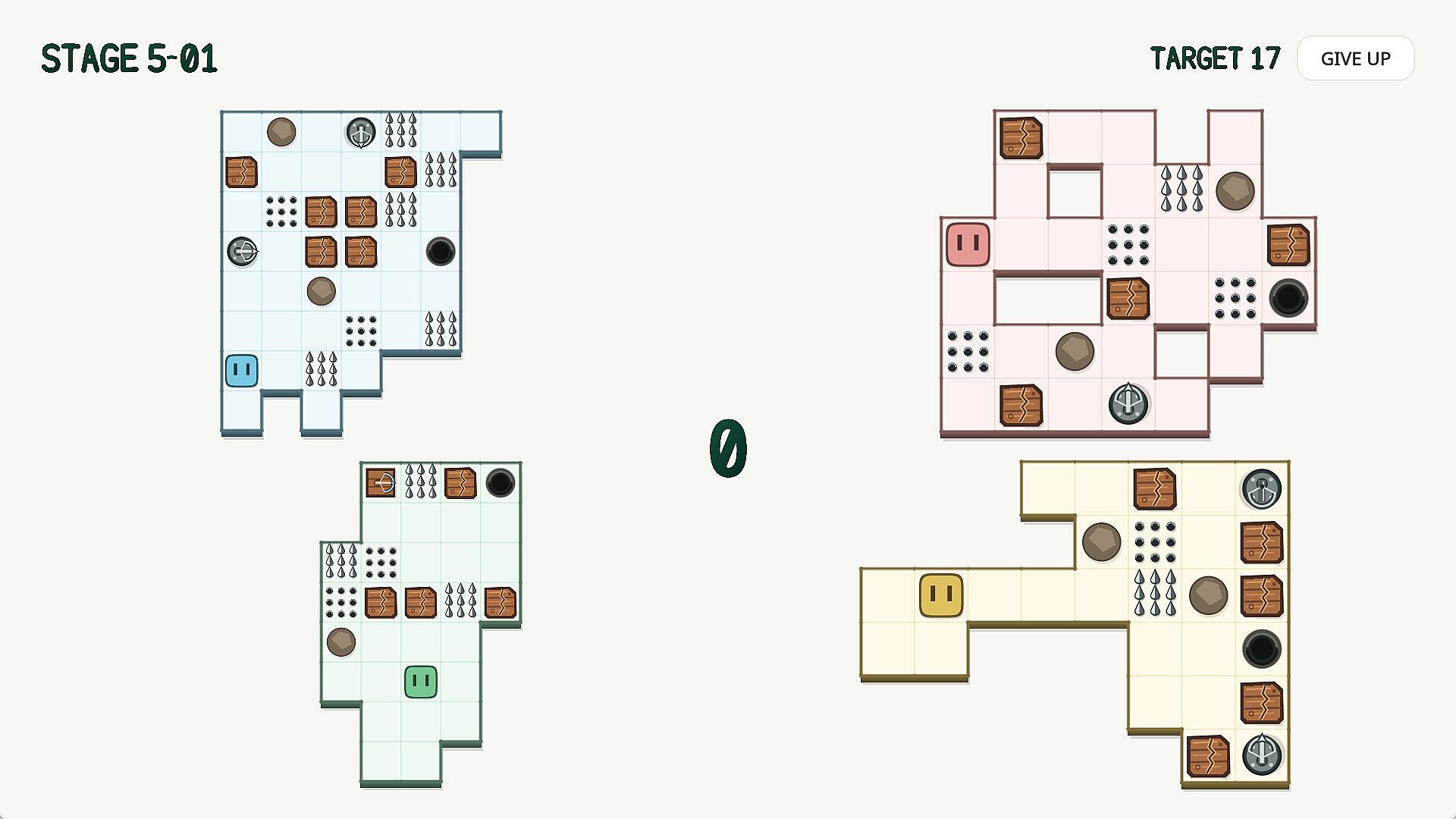
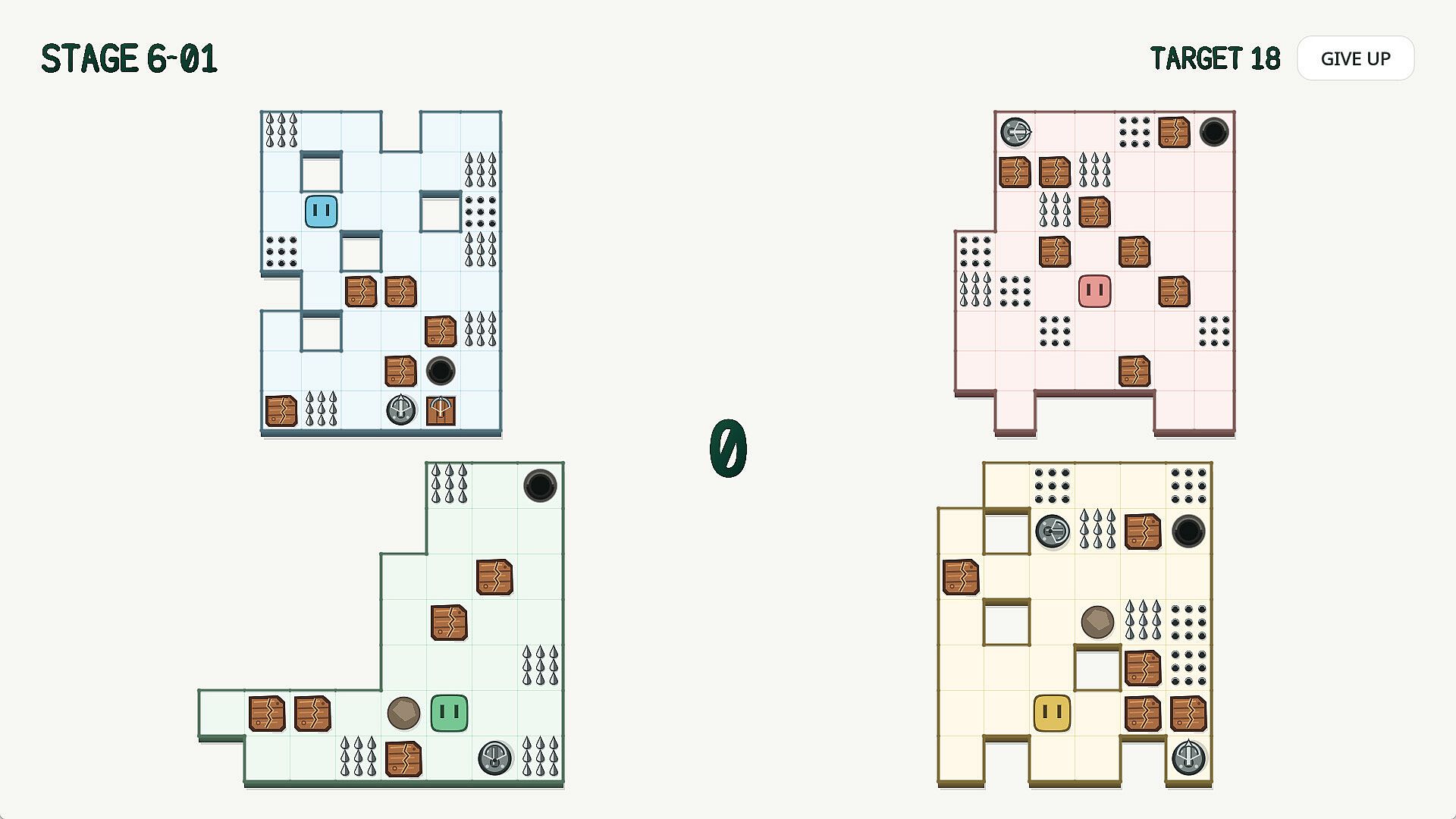
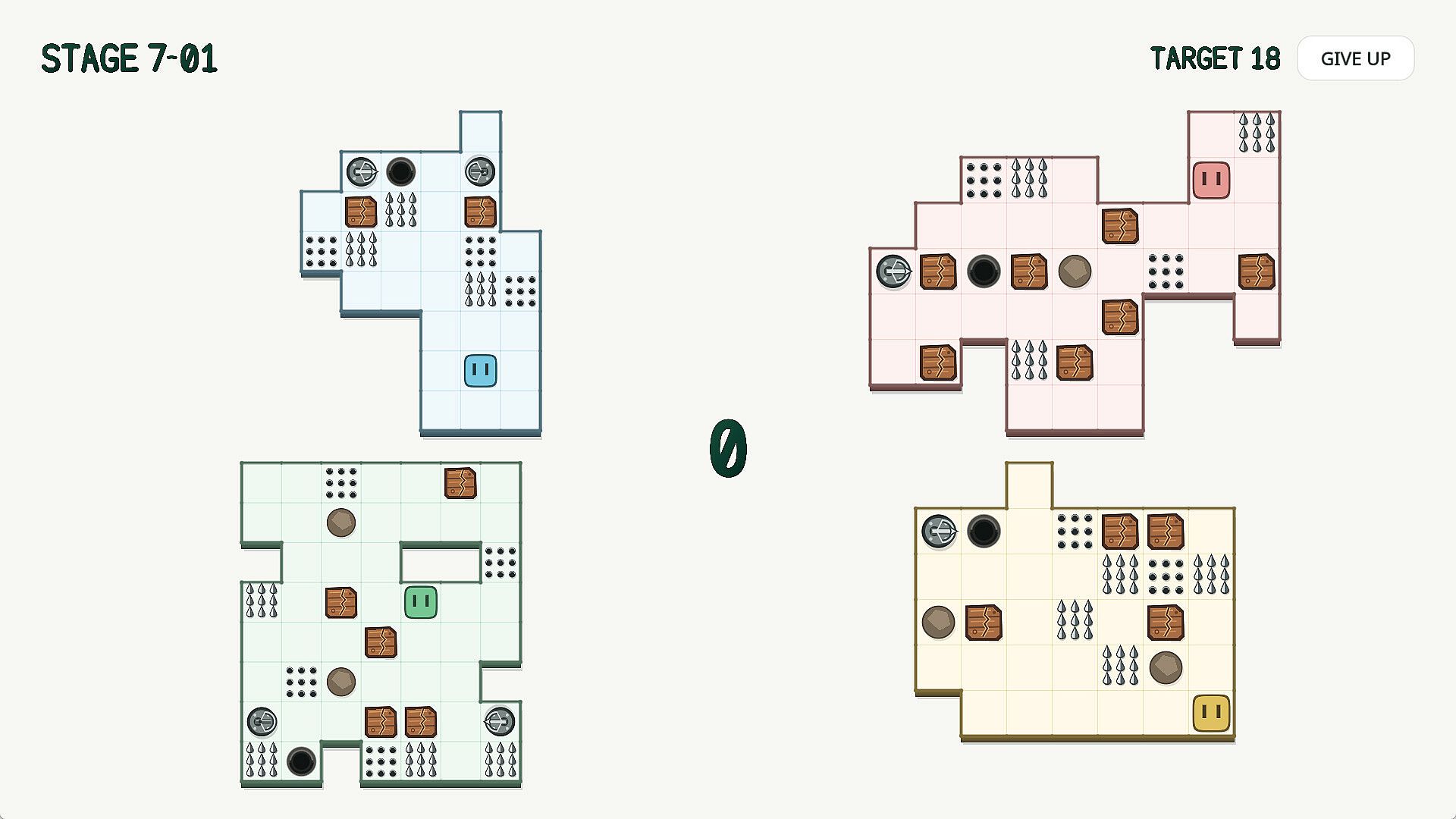
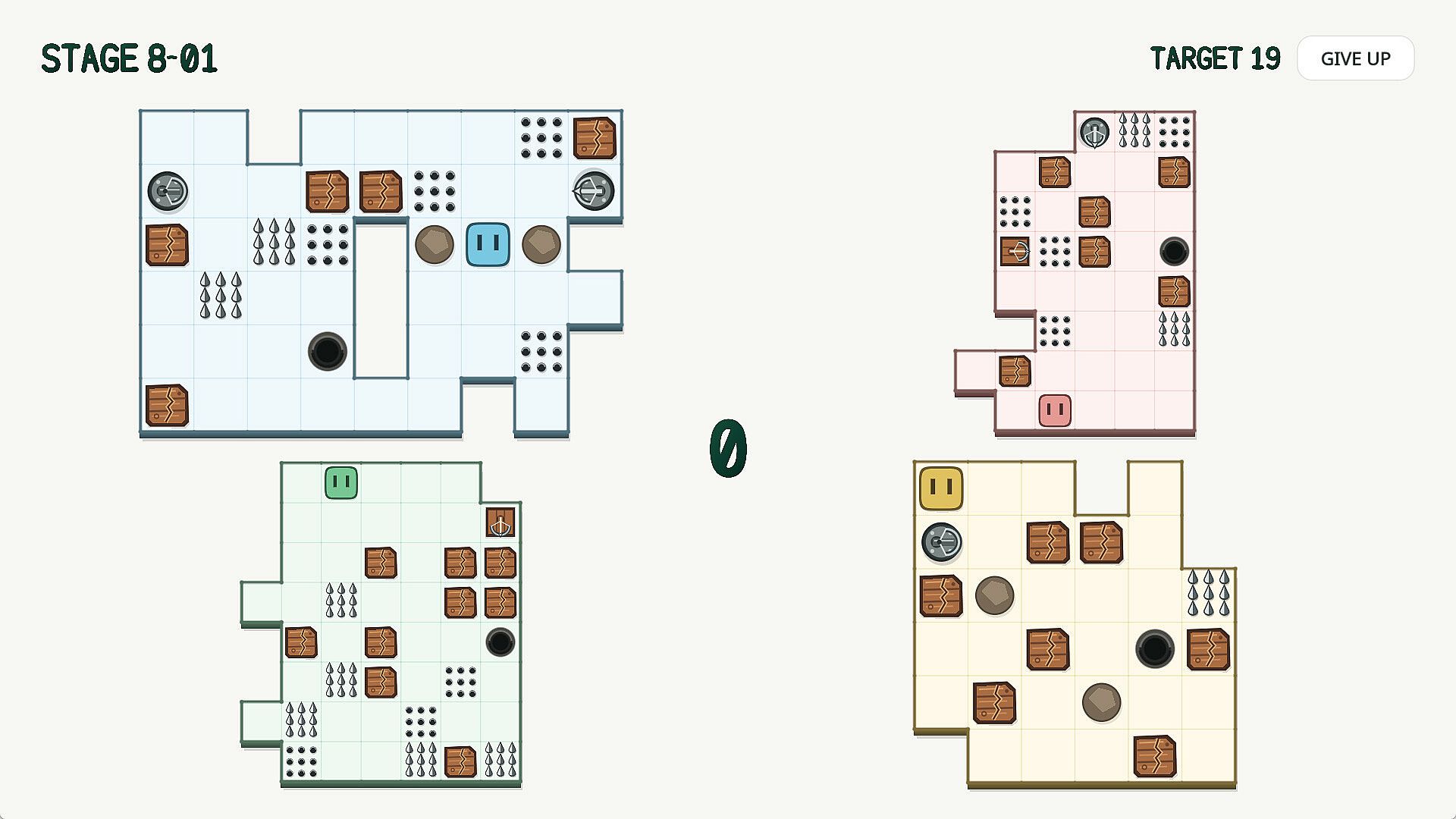
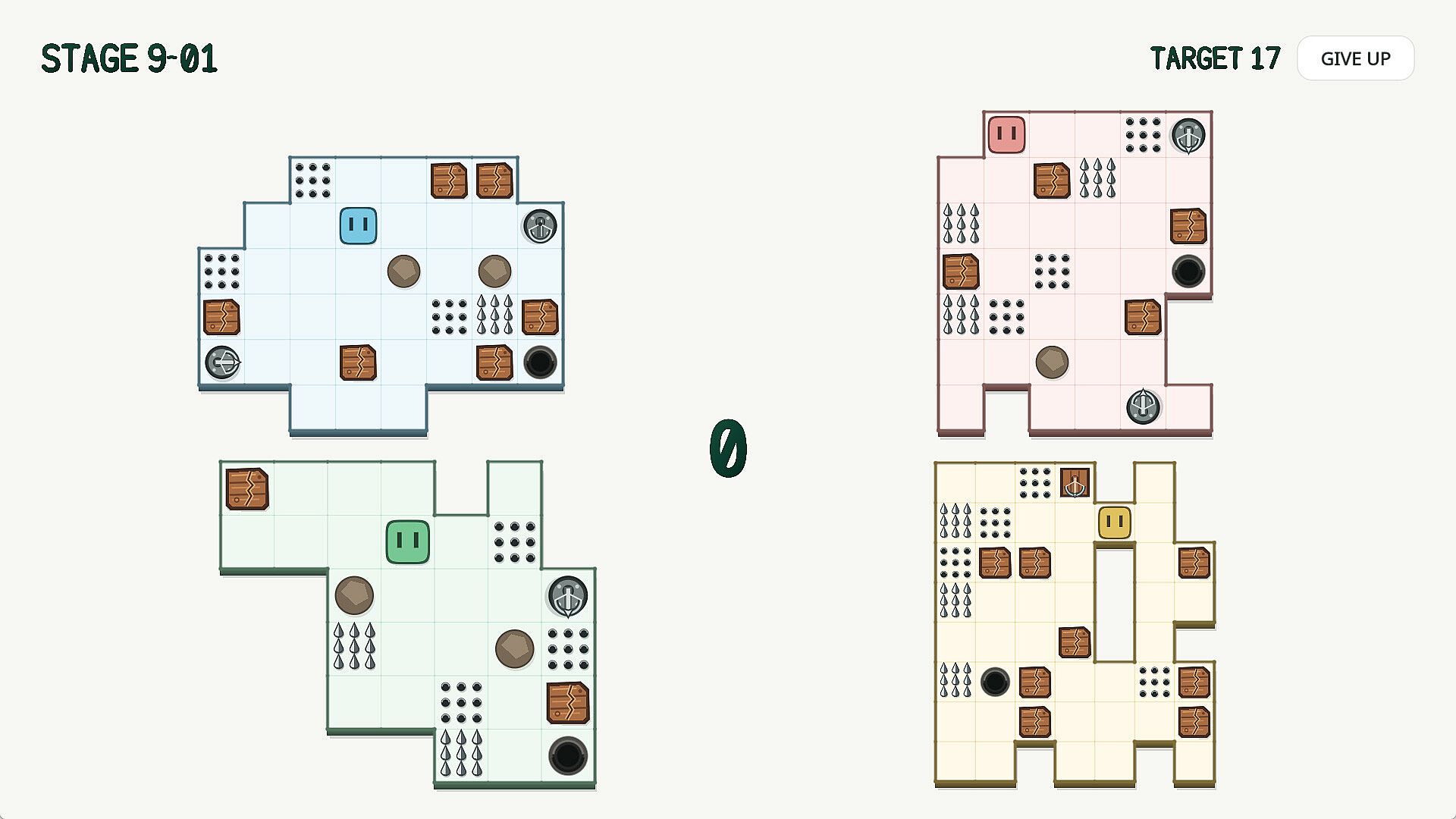
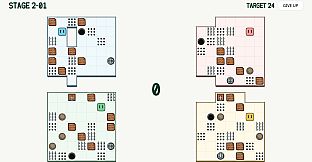
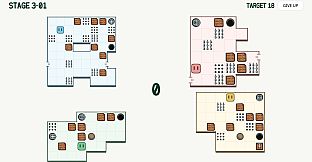
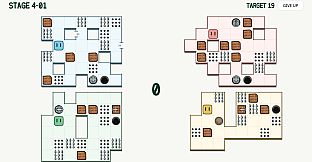
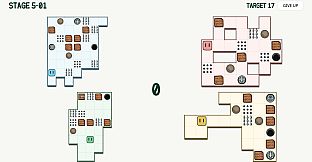
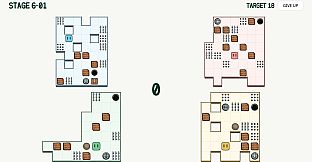
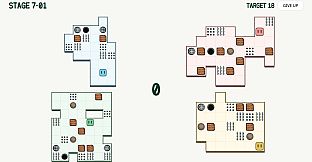
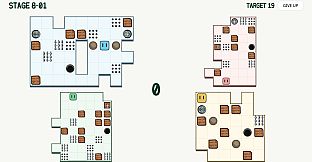
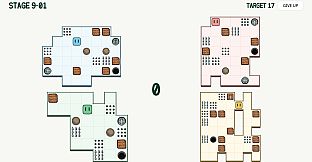
4 SCREENS, 1 MOVE is a casual puzzle game for PC in which players guide four slimes across four separate boards using one shared set of directional inputs. The premise keeps controls straightforward while the outcomes vary sharply from screen to screen, requiring constant attention to how each move affects every board at once.
Gameplay
Each turn advances all four slimes simultaneously in the chosen direction. Walls stop a slime in place while the others continue, creating opportunities to hold one character steady and align the rest. Rocks can be pushed for blocking or shielding, crates break under pressure, and spikes change state with every move. Warps let slimes cross board edges, and arrow-firing devices add timing hazards that must be anticipated across all screens.
Once a slime reaches its exit it remains there, altering the active puzzle for the remaining characters. Players decide the order of arrivals and can pause progress on one board to solve complications on another. Turn-based pacing removes any clock pressure, and unlimited undos allow repeated testing of sequences without penalty. Stars reward solutions that match each stage's minimum move count, encouraging refinement after the initial clear.
Game Modes
The core experience consists of 370 single-player stages. Ten introductory levels teach the four-screen coordination, after which 360 main stages appear across twelve themed sets. These combine the listed mechanics in increasing complexity.
A built-in stage maker lets players construct custom four-board puzzles. Completed creations upload to Steam Workshop for others to download and attempt, turning the game into a platform for both solving and designing new challenges.
Controls and Accessibility
Input works through keyboard, controller, or mouse. The interface stays minimal so attention stays on the four boards. No time limits or failure states beyond restarting a stage keep the focus on planning rather than reflexes.
Is It Worth Playing?
Players who enjoy deliberate, multi-layered puzzle solving will find the shared-input system rewarding. The combination of static obstacles, moving hazards, and the need to manage four independent paths at once creates depth without overwhelming complexity. Unlimited undo and the absence of timers support careful study of every board before committing to a move.
The stage maker and Workshop support extend replay value for those who like creating or discovering new content. Because the game remains in development with no released player reviews yet, its appeal rests on the verified mechanics and structure described above. Those drawn to turn-based logic puzzles that reward observation and sequencing will likely appreciate the format.