

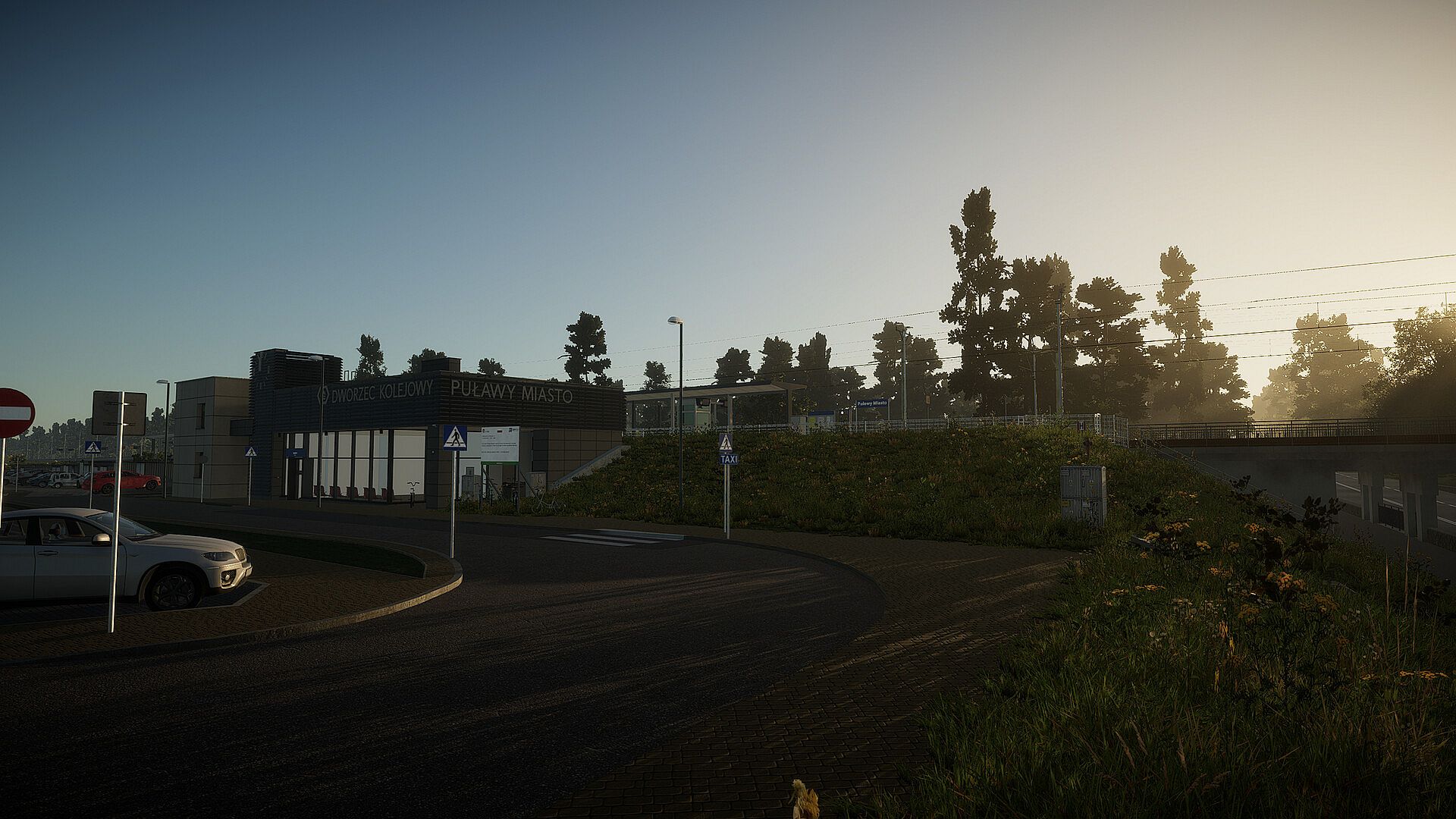
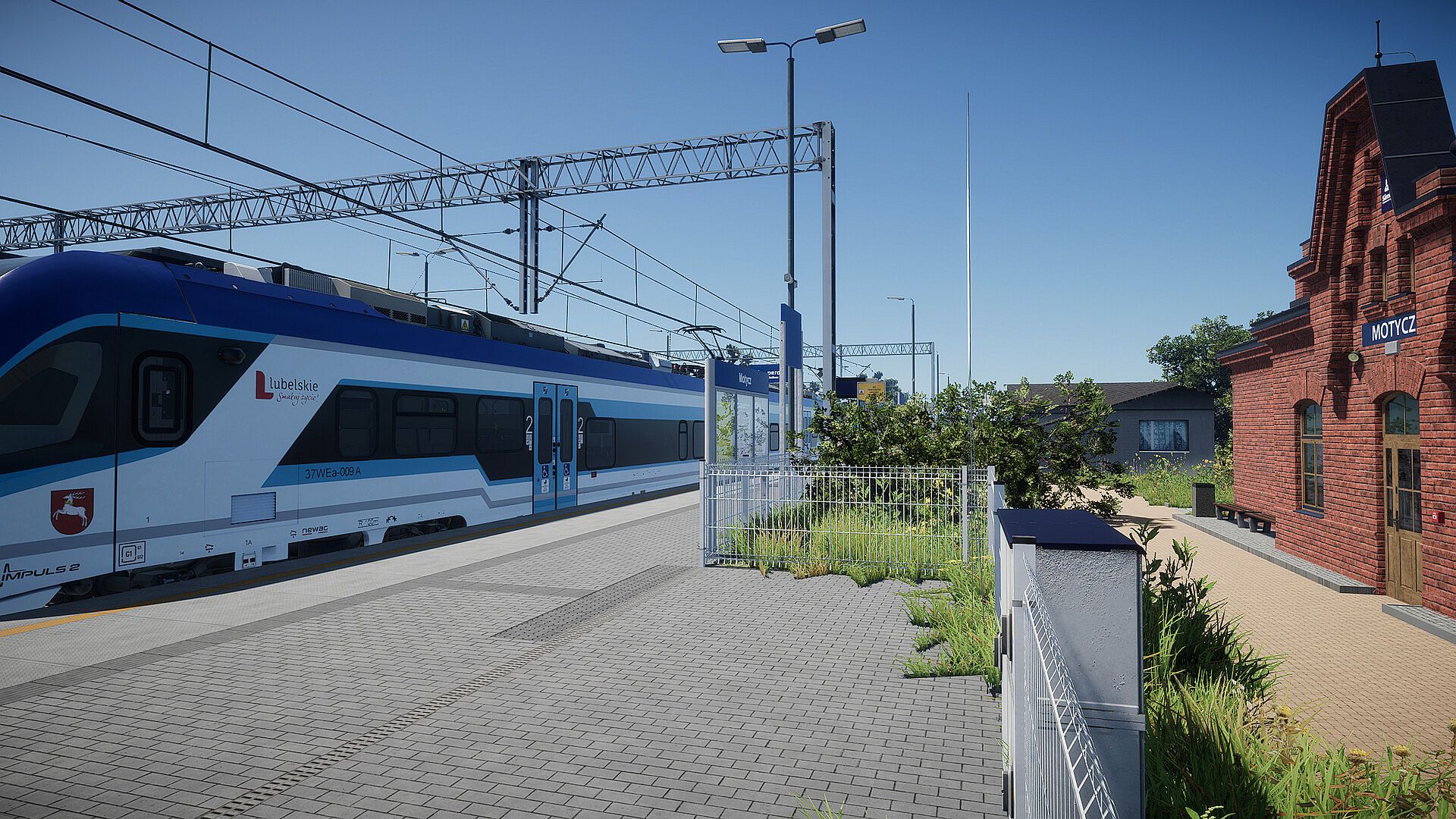
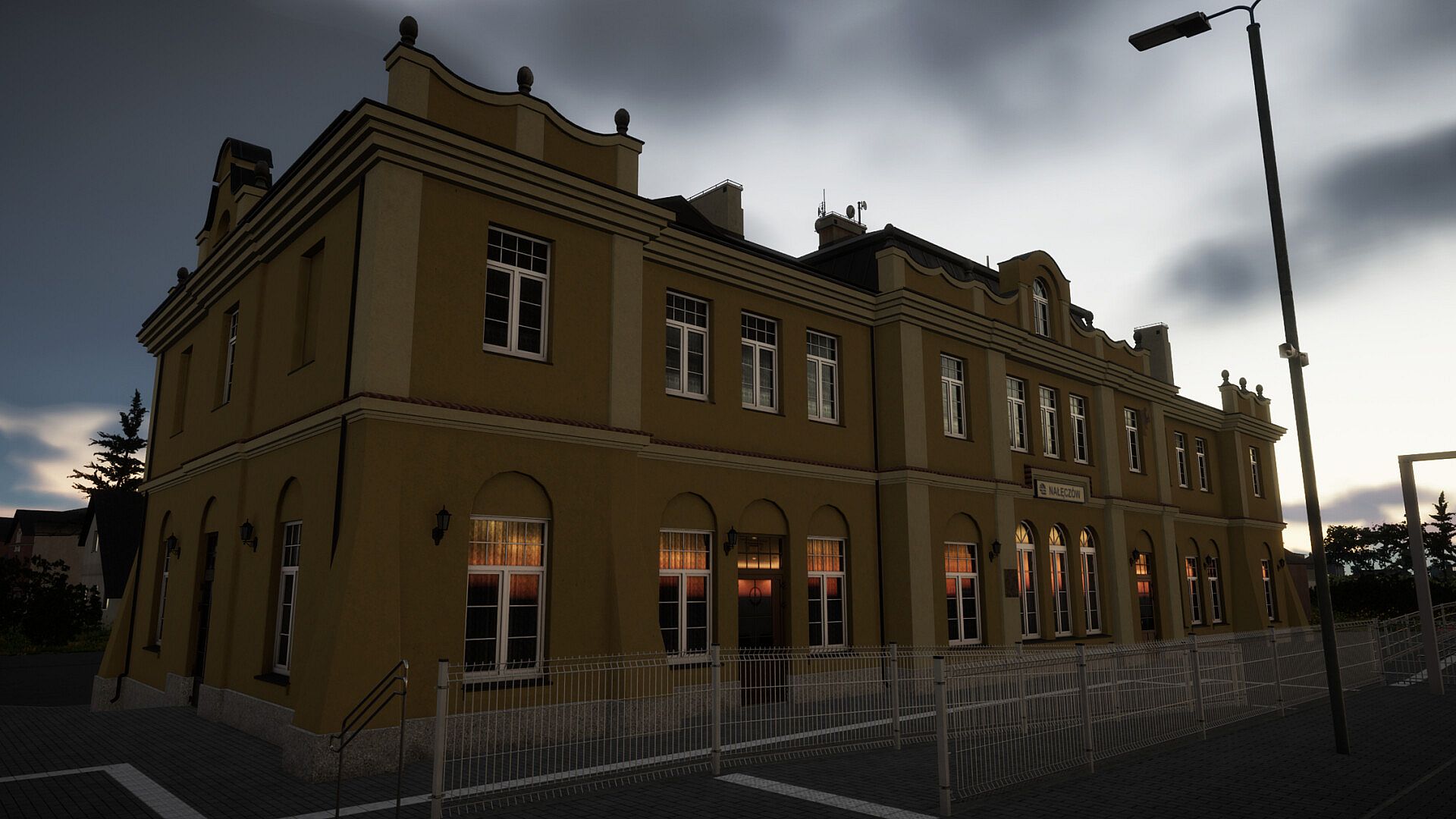
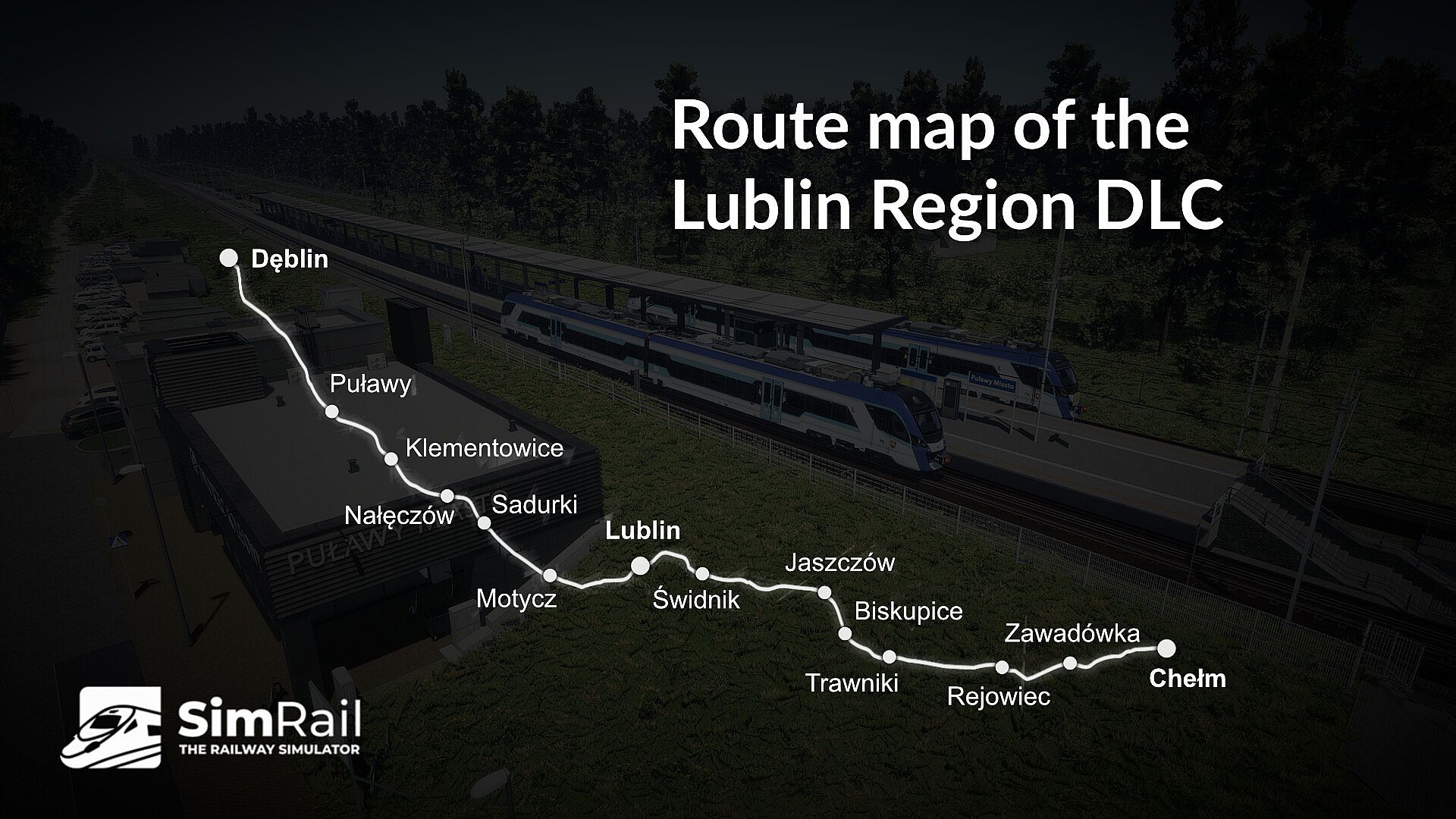
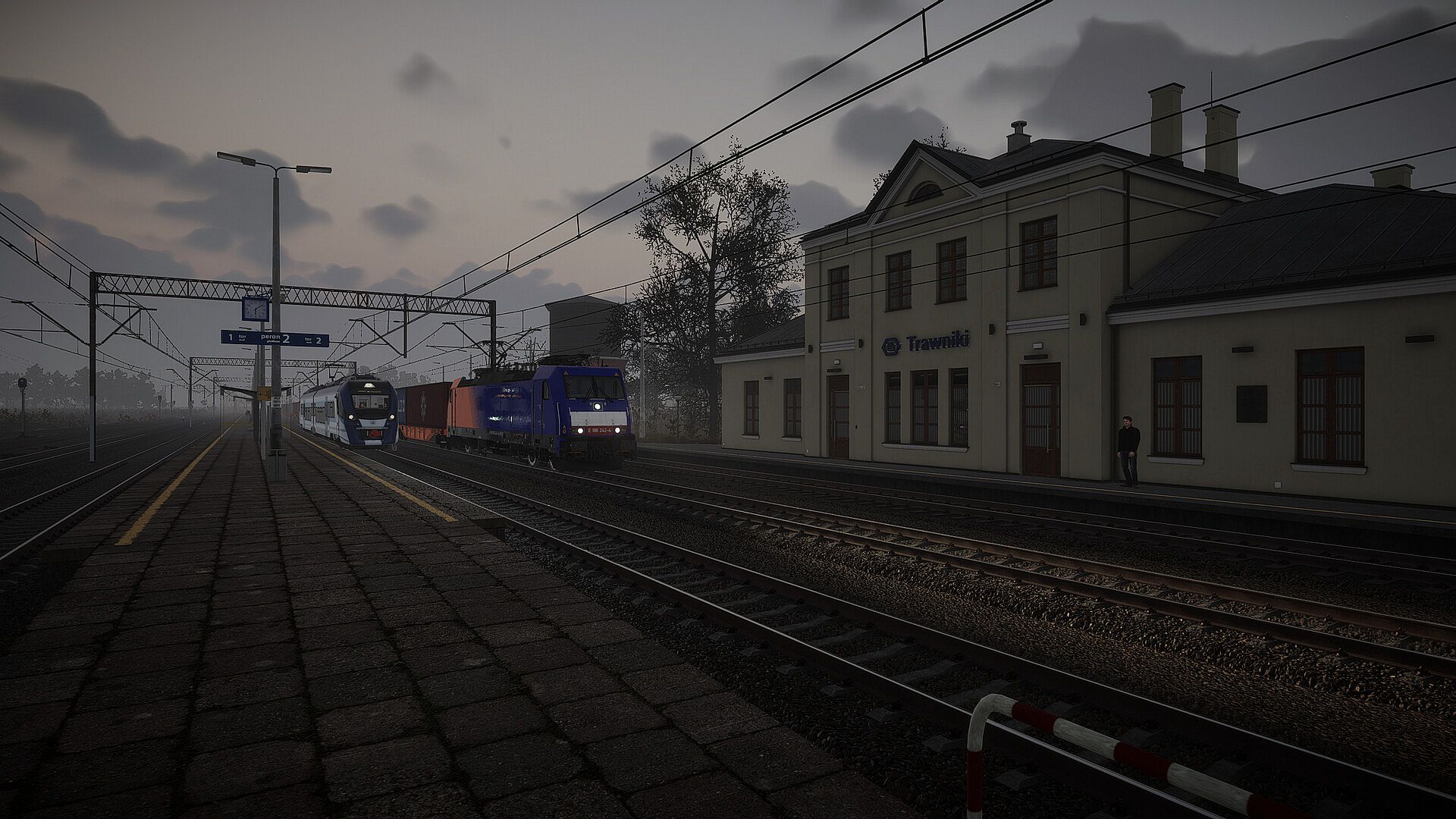
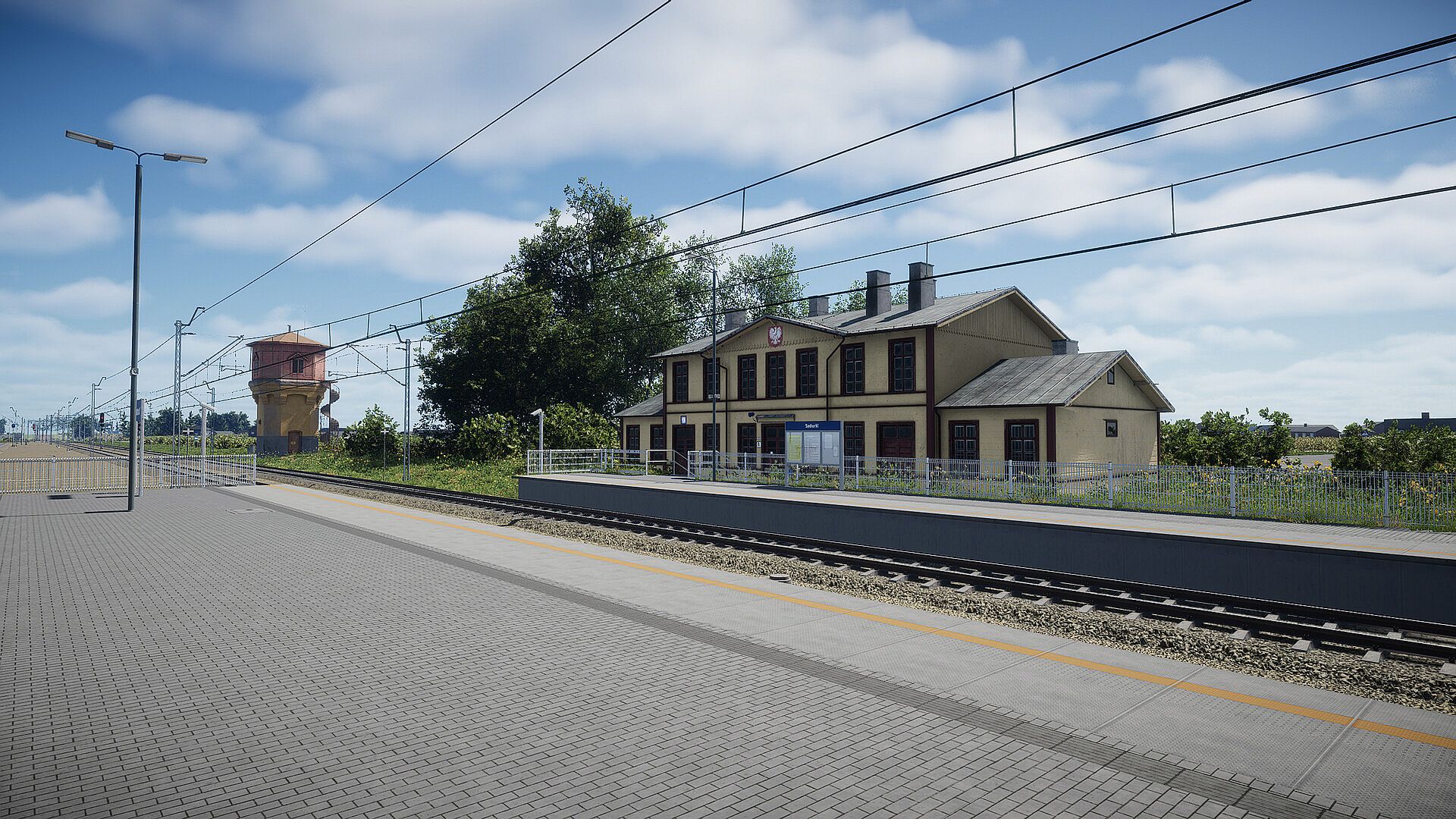
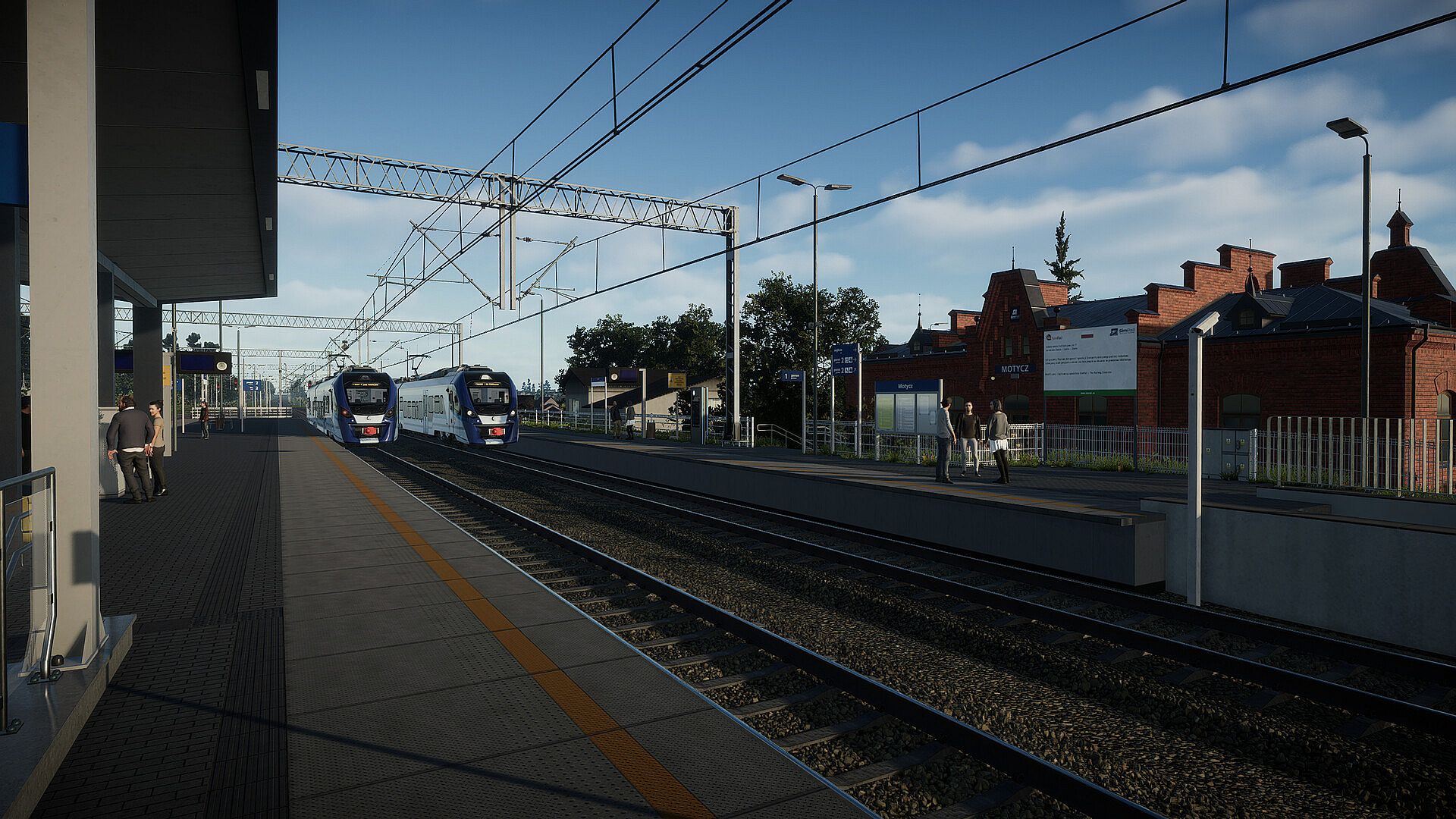
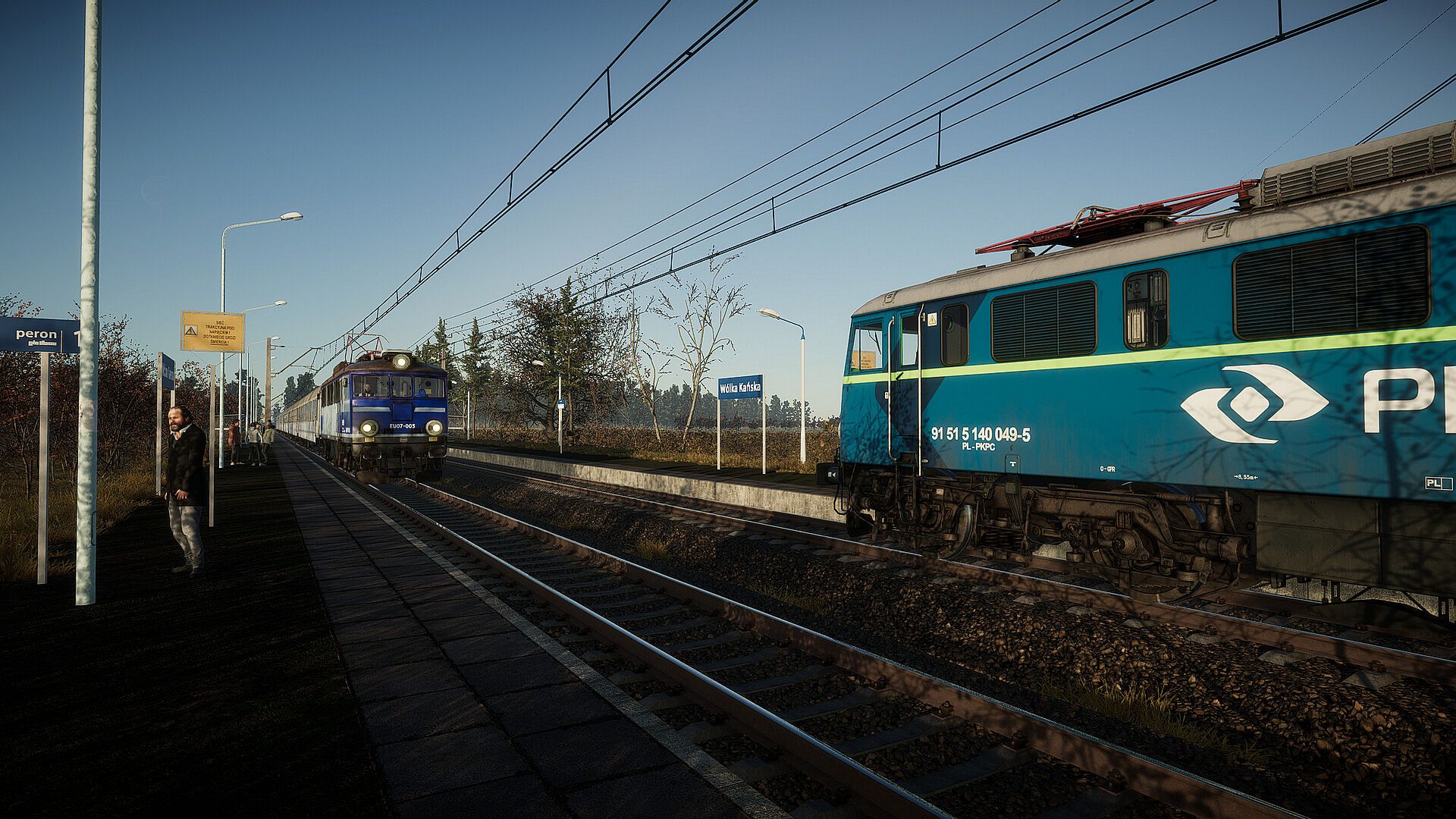
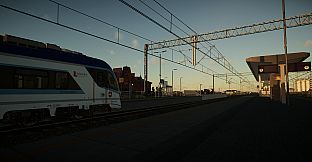
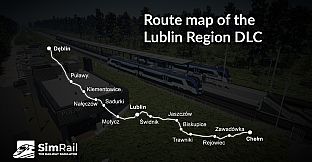
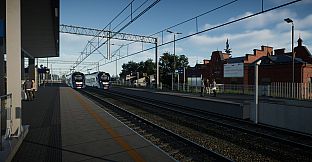
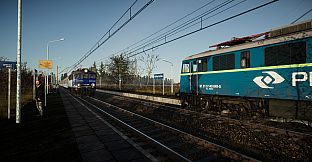
SimRail - The Railway Simulator: Lublin Region expands a train simulation experience focused on realistic Polish railway operations. Players handle either the controls of locomotives or the responsibilities of traffic management across extensive real-world routes. The addition introduces over 145 kilometres of track running from Dęblin through Lublin to Chełm, featuring a modernised high-speed section and a more traditional line that demands adjusted handling techniques.
Gameplay
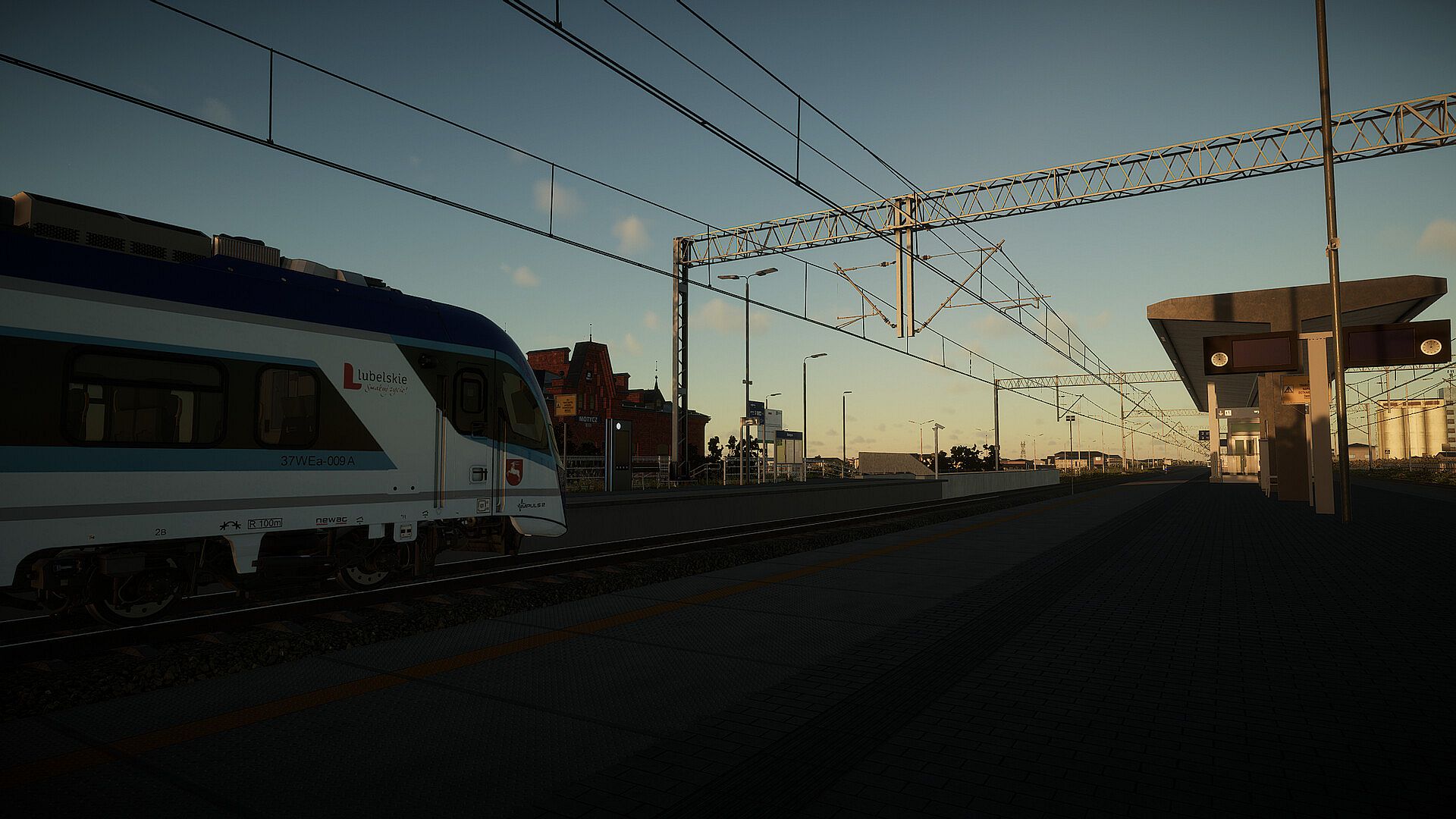
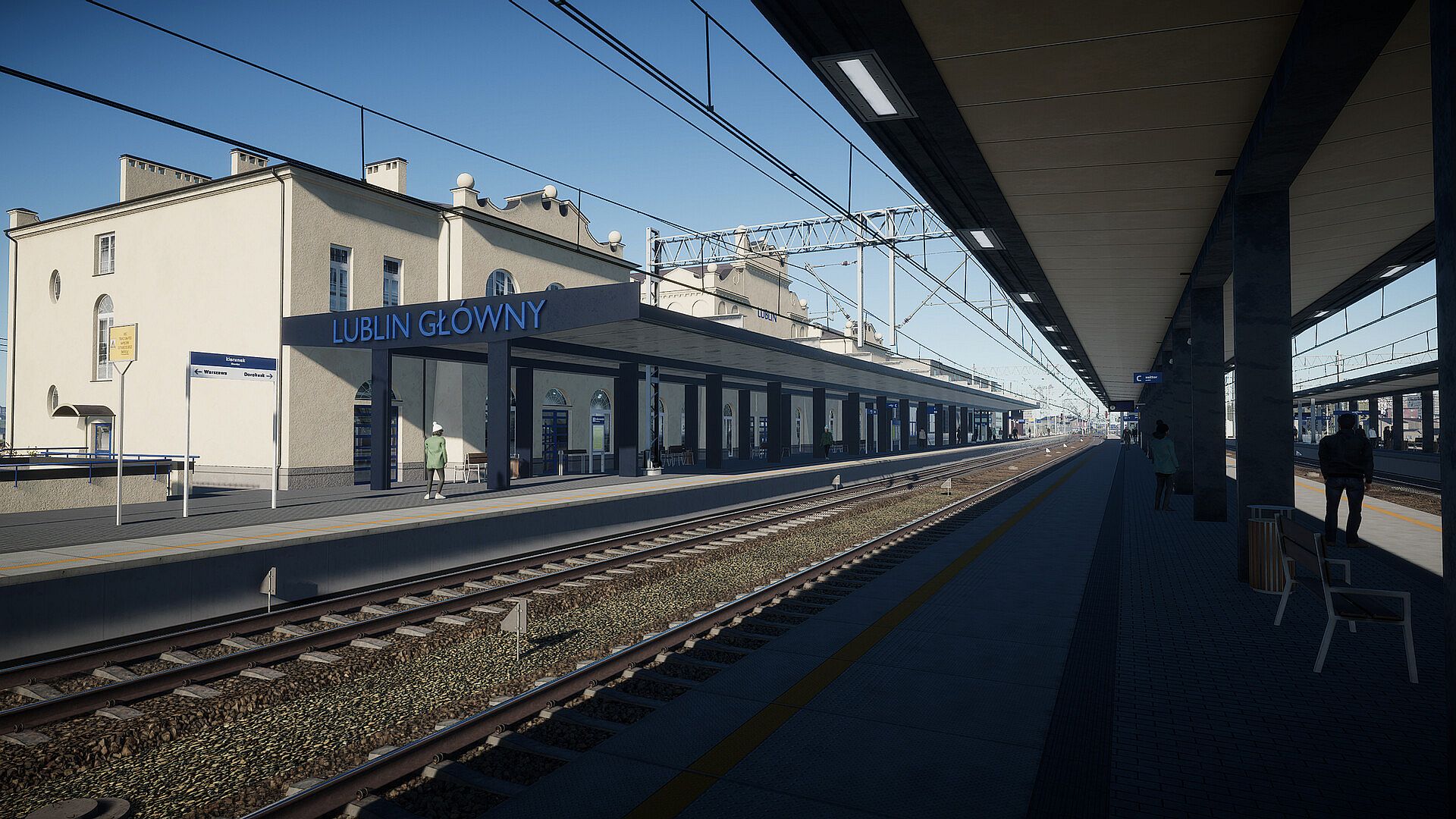
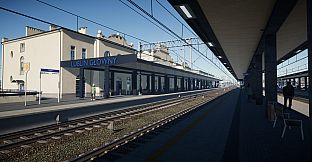
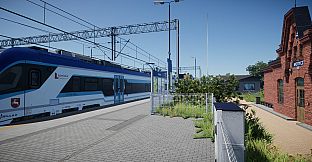
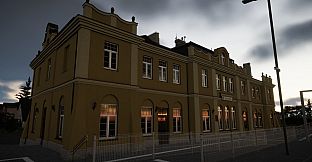
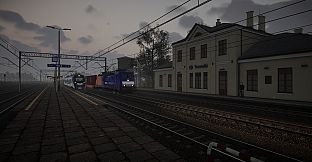
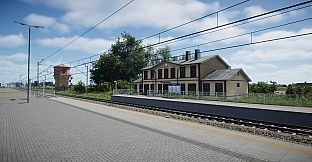
Core play revolves around precise timetable adherence and accurate platform stops while operating trains at speeds up to 160 km/h on upgraded sections or 120 km/h on older track. Drivers manage acceleration, braking, and signalling systems in detailed cabs that reflect real locomotive behaviour. The environment includes historic station buildings such as the large structure at Lublin Główny, wooden stops at locations like Gołąb and Klementowice, and brick architecture at Świdnik.
Dispatching adds another layer where players set routes, operate signals, and coordinate movement to prevent conflicts. Individual signal boxes offer focused control, while larger LCS centres oversee multiple stations simultaneously. A single misstep in routing or timing can create delays that ripple through the entire network, requiring careful attention to schedules and priorities.
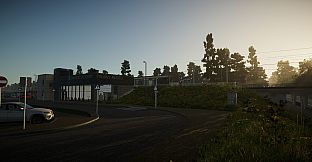
Realistic physics govern train movement, weather effects influence visibility and track conditions, and radio communication supports coordination between roles. The simulation emphasises geodetic accuracy in route layout, with varied scenery ranging from junctions on the Vistula to rural stretches leading toward Chełm.
Game Modes
Single-player scenarios provide structured sessions that introduce driving procedures, signal recognition, and basic dispatching tasks. These sessions allow practice with specific trains and sections of the network without external interference.
Multiplayer servers support cooperative sessions where participants fill driver or dispatcher positions across the shared world. Bots handle unoccupied trains and boxes, maintaining traffic flow while human players interact through realistic radio channels. Servers run persistent timetables that encourage teamwork to keep services on time.
Both modes draw from the same underlying systems, so skills developed in solo play transfer directly to group sessions. The Lublin Region integrates into this framework, offering new junctions at Dęblin, Jaszczów, and Rejowiec alongside the major hubs at Lublin Główny and Chełm.
The Lublin Region Route
The new line splits into two distinct characters. The section from Dęblin to Lublin supports higher speeds after modernisation, passing through stations with preserved wooden buildings. Beyond Lublin the character shifts to a non-modernised alignment limited to 120 km/h, where drivers must adapt to tighter curves and older infrastructure.
Key locations include the major junction at Dęblin, the historic Lublin Główny station, and the endpoint at Chełm. Intermediate stops feature the brick station at Świdnik and wooden structures at Minkowice. Dispatch options cover individual boxes as well as the LCS facilities at Dęblin, Lublin Główny, and Nałęczów.
This route adds variety to the existing network by contrasting fast modern running with more deliberate classic operations, all while maintaining the same emphasis on schedule precision and operational realism.
Is It Worth Playing?
The game receives very positive feedback from players who value authentic railway mechanics and the ability to switch between driving and dispatching roles. Its multiplayer cooperation stands out as a distinguishing element that creates dynamic network interactions not commonly found in similar titles.
Those interested in detailed train handling, signal management, and timetable challenges will find substantial depth across both single-player and group play. The ongoing addition of routes like Lublin Region demonstrates continued support for expanding the simulation.
Players seeking a focused railway experience with strong emphasis on realism and coordination should consider the title, particularly if they enjoy managing complex systems where individual decisions affect overall operations. The combination of precise controls and shared server dynamics provides lasting engagement for simulation enthusiasts.