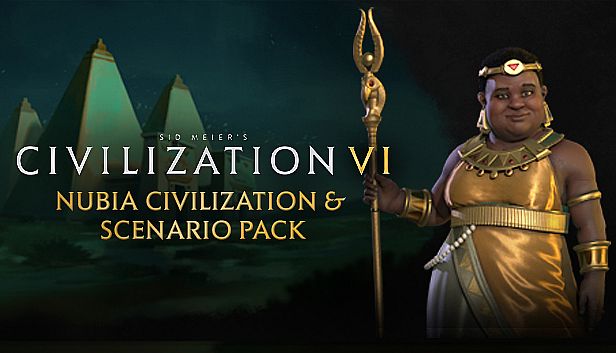












Sid Meier's Civilization VI: Nubia Civilization & Scenario Pack expands the core turn-based strategy experience by introducing the Nubian civilization led by Amanitore. This addition emphasizes rapid district construction, strong early ranged combat options, and specialized desert-based development in a game focused on empire building, technological progress, and victory through multiple paths.
Gameplay
Nubia receives production bonuses for ranged units along with faster combat experience gains for those units. Mines placed on strategic resources yield extra production while those on luxury resources provide additional gold. Amanitore grants every city a 20 percent production bonus toward all districts, which doubles to 40 percent when a Nubian Pyramid sits adjacent to the city center. This setup rewards players who prioritize infrastructure growth and position improvements effectively near population centers.
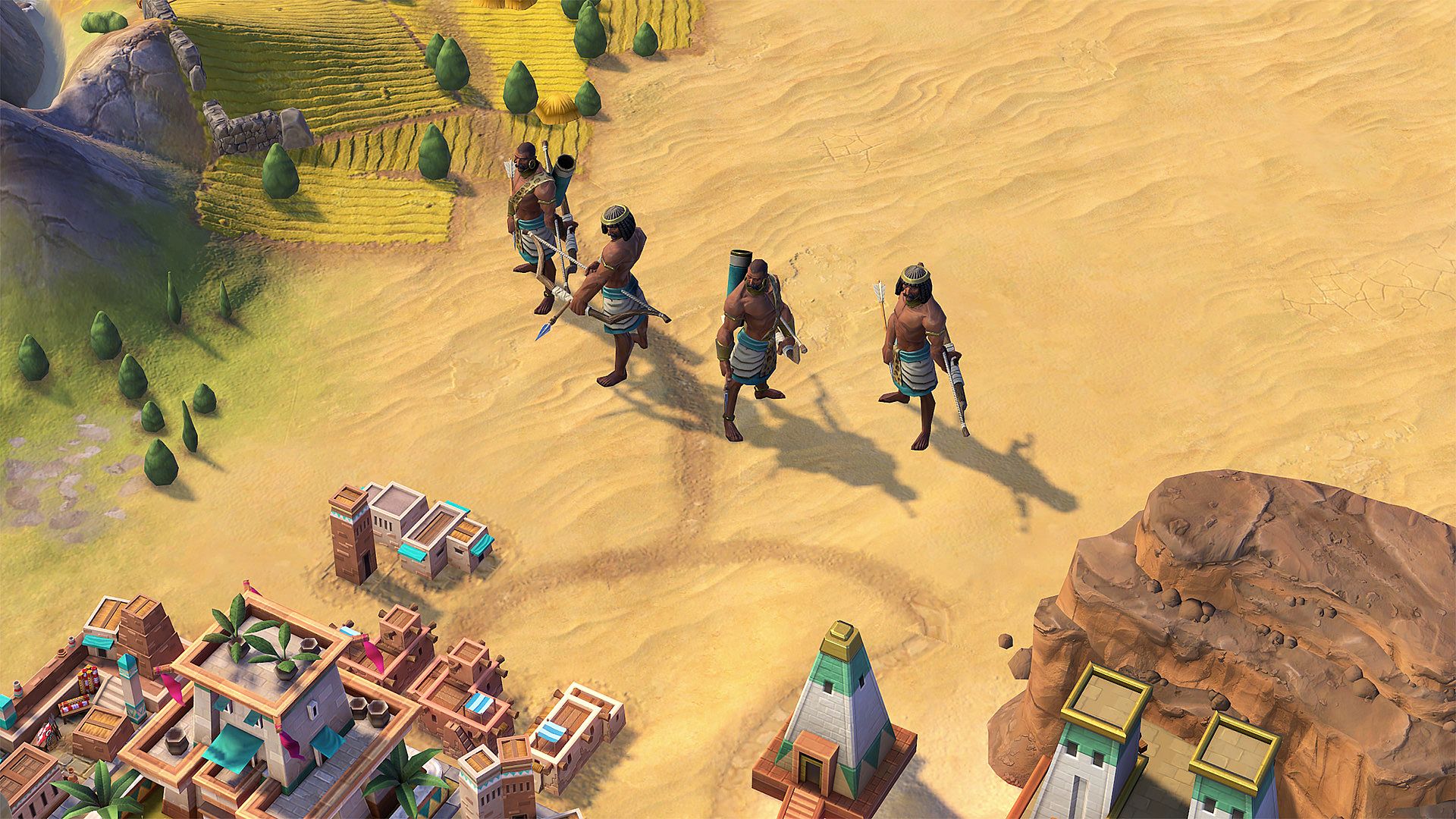
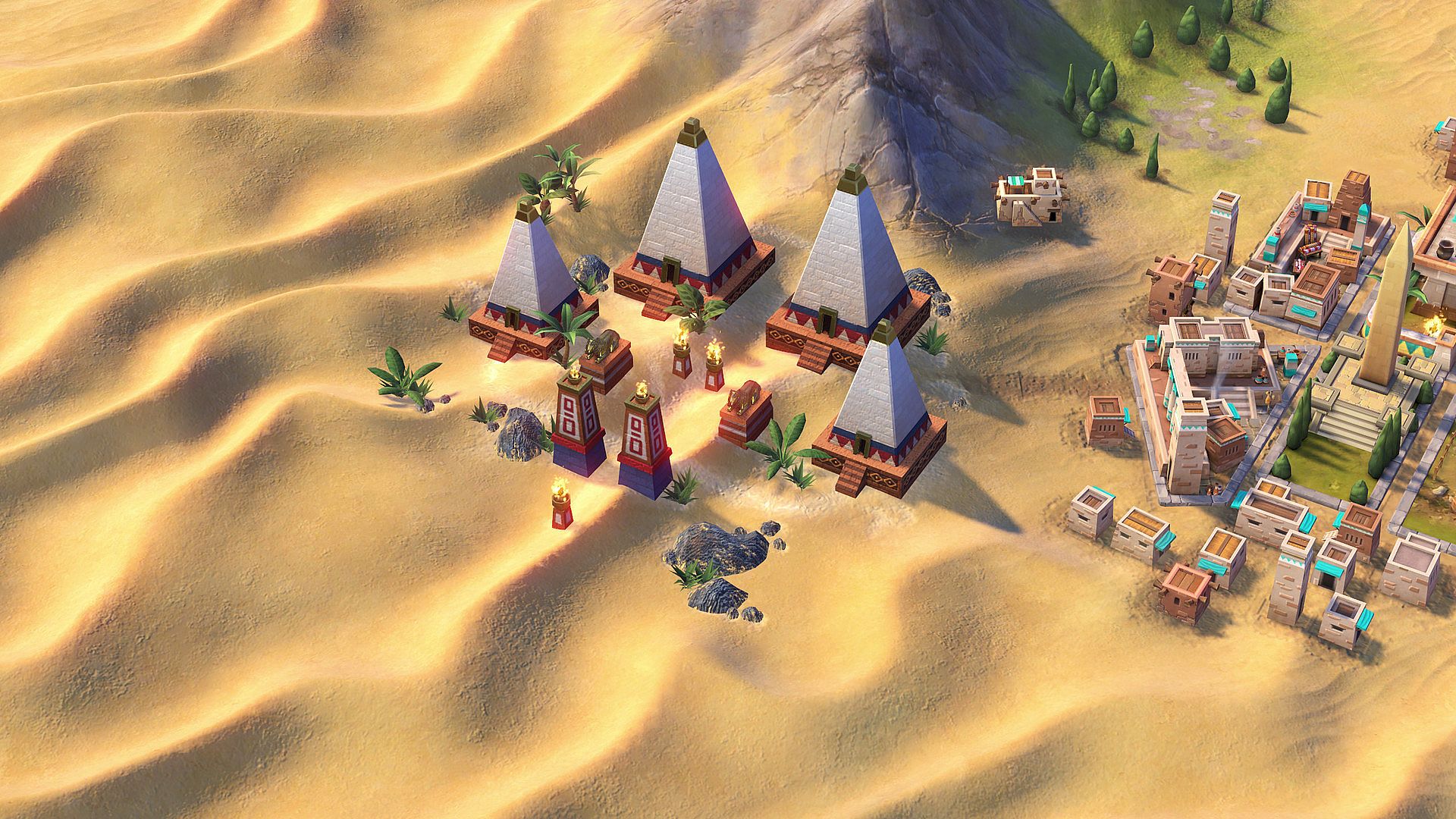
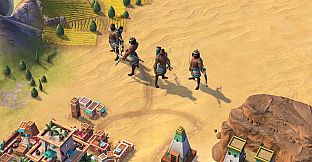
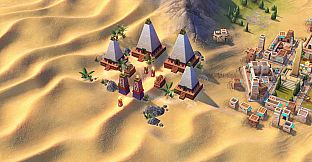
The Pitati Archer replaces the standard ancient archer with superior strength and movement speed while still upgrading along the ranged line to crossbowmen. The Nubian Pyramid can be constructed on desert tiles, desert hills, or floodplains. It generates faith, receives yield bonuses from neighboring districts, and provides food when placed next to a city center. These elements combine to support aggressive expansion and faith-based strategies without relying on traditional religious infrastructure early on.
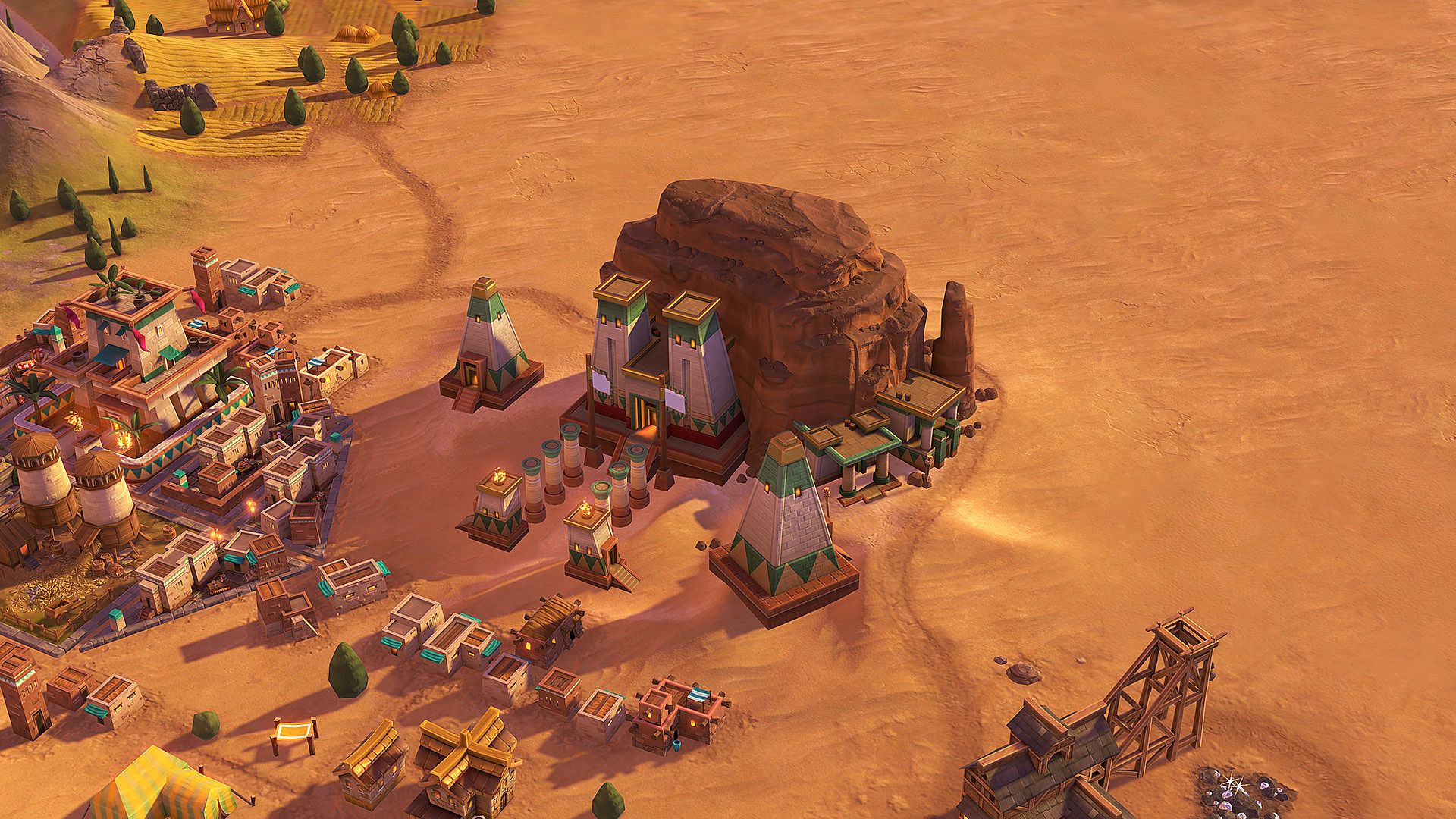
Jebel Barkal stands as the new wonder, deliverable only on desert hills. It supplies extra faith to all nearby cities, strengthening religious or cultural victory pursuits in arid regions. Overall, the mechanics favor players who scout for suitable terrain and balance military production with district efficiency.
Game Modes
The pack introduces the Gifts of the Nile scenario, a timed competition limited to 125 turns. Participants select either Nubia under Amanitore or Egypt and compete to construct seven Temples of Amun along the Nile River valley. The scenario incorporates custom rules, including naval unit movement along the river and waves of invading forces from external civilizations that challenge both players.
Victory goes to the first side to complete the required temples before the turn limit expires. The format encourages focused city planning, resource management, and occasional conflict while restricting standard settler production in favor of scenario-specific mechanics. Outside the scenario, Nubia integrates fully into standard single-player matches and multiplayer sessions, allowing the civilization's abilities to influence any victory condition available in the base game.
Unique Features and Mechanics
Nubian development shines through the interplay between the leader ability and the unique improvement. Placing pyramids strategically accelerates district output and unlocks faith generation on otherwise low-yield desert land. Ranged units benefit from both production efficiency and rapid promotions, creating opportunities for early military pressure or defensive setups that scale into later eras.
Resource management gains depth from the mine bonuses, which reward placement on strategic and luxury deposits. The overall loop centers on scouting desert-adjacent sites, rushing key districts, and leveraging faith yields to support beliefs or great people recruitment. These systems reward careful tile selection and long-term planning over rushed conquest alone.
Is It Worth Playing?
The pack suits players who enjoy optimization challenges within the established Civilization VI framework, particularly those drawn to desert starts, faith mechanics, and early-game unit strength. The scenario offers a distinct head-to-head race that differs from standard matches by enforcing a strict time limit and specialized objectives. Nubia performs well in domination or religious paths due to its production and combat advantages, while the wonder and improvement provide consistent support across multiple strategies.
Those seeking fresh civilization options with clear mechanical identity will find value in the focused bonuses and terrain synergies. The content remains accessible as a standalone addition that layers directly onto existing campaigns without requiring additional expansions for basic functionality.