






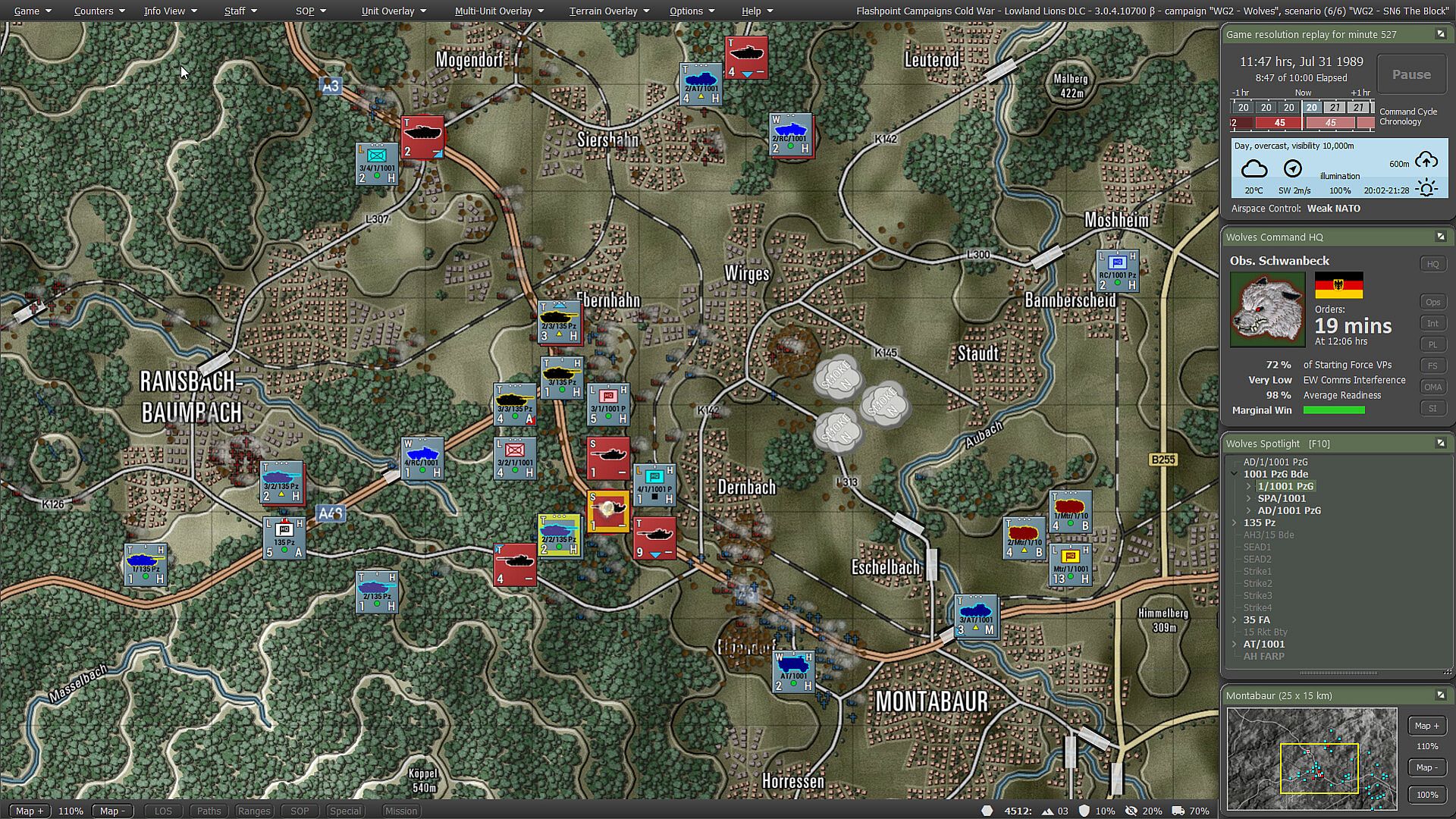
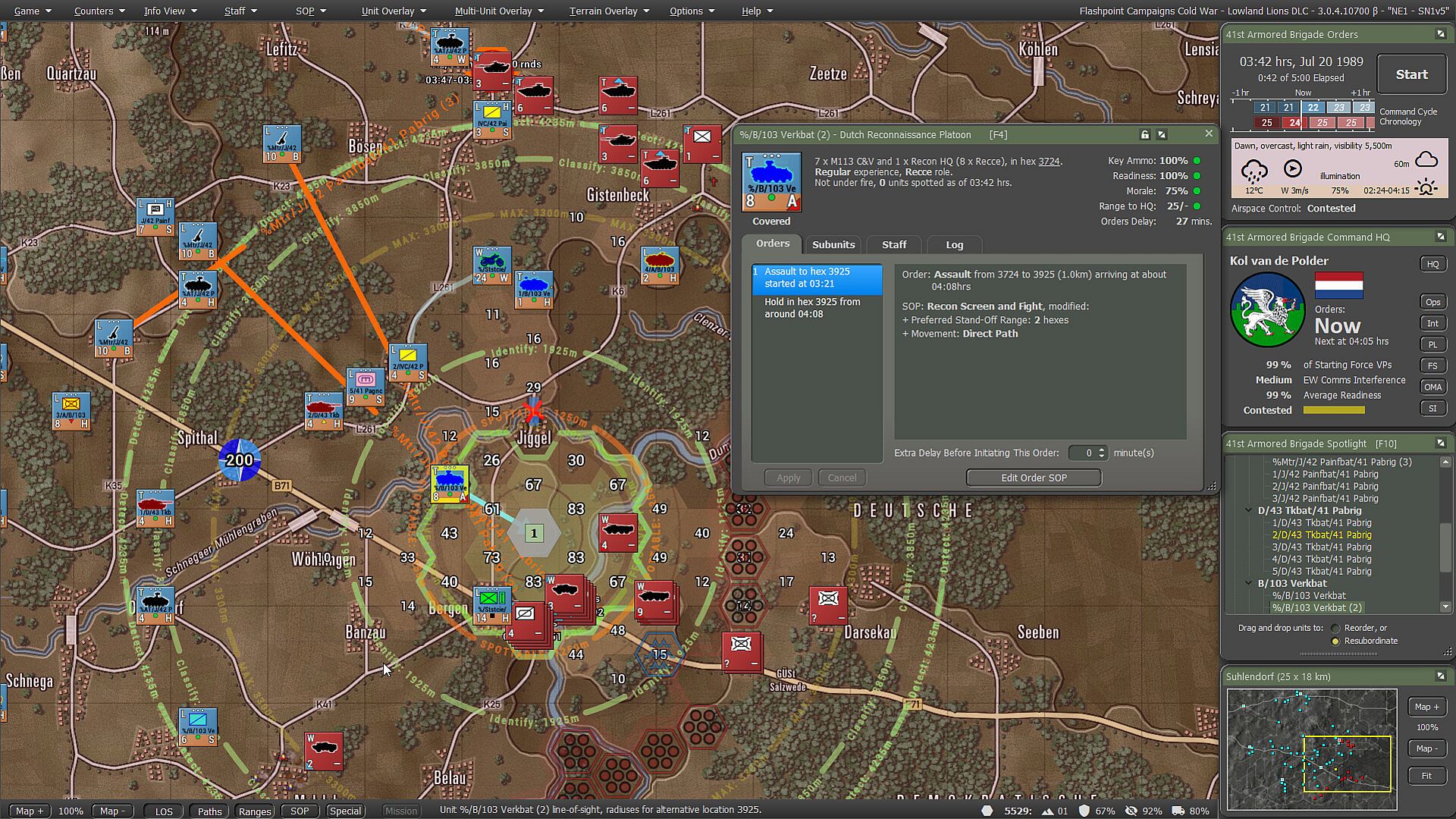
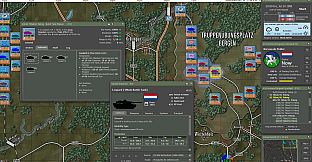
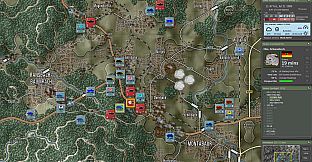
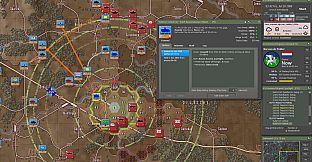
Flashpoint Campaigns: Cold War Lowland Lions is a strategy game set during a fictional 1989 outbreak of the Third World War in West Germany. Players command NATO forces, beginning with Dutch units, against advancing Warsaw Pact armies in a detailed simulation of operational combat.
Gameplay
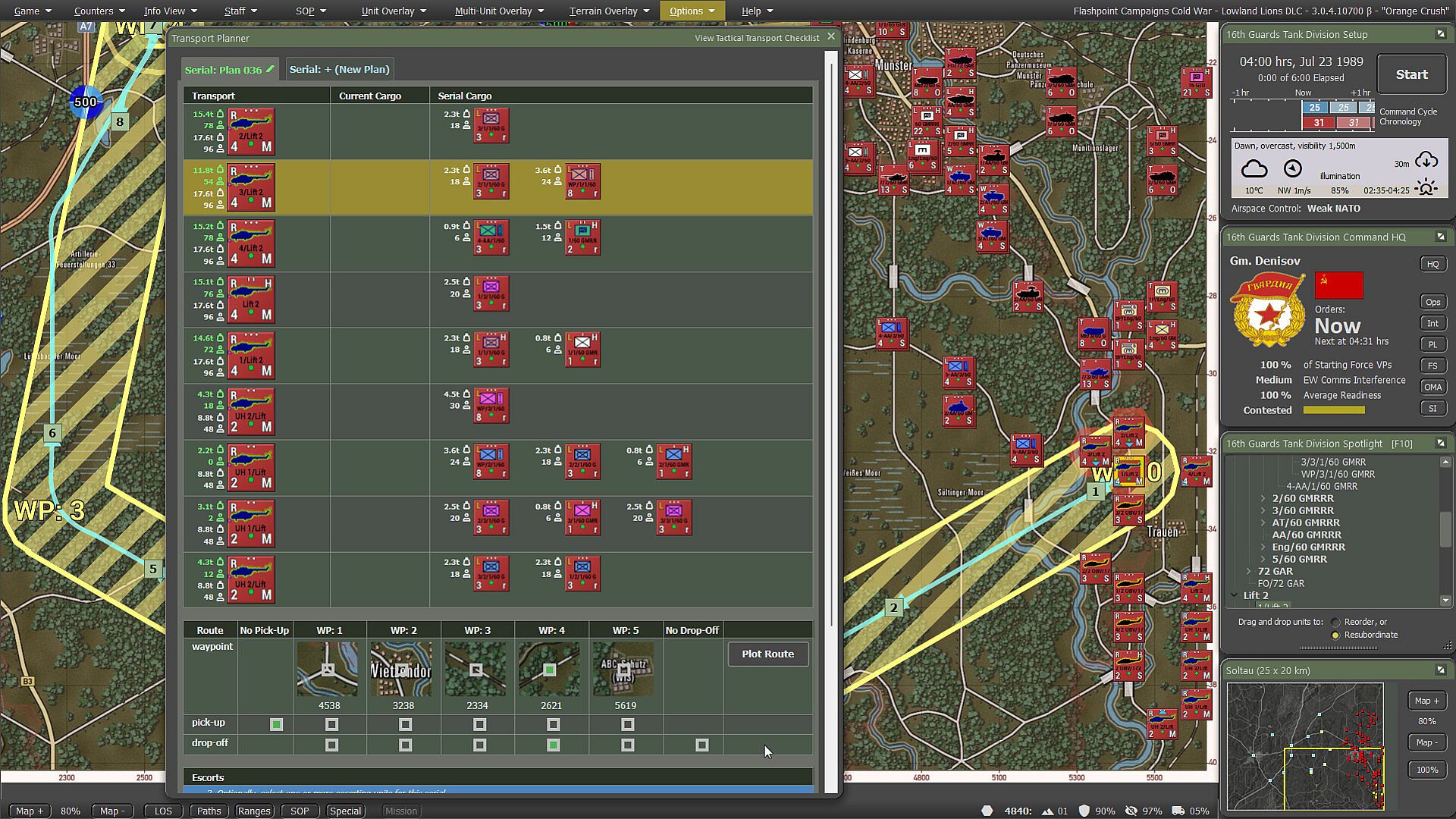
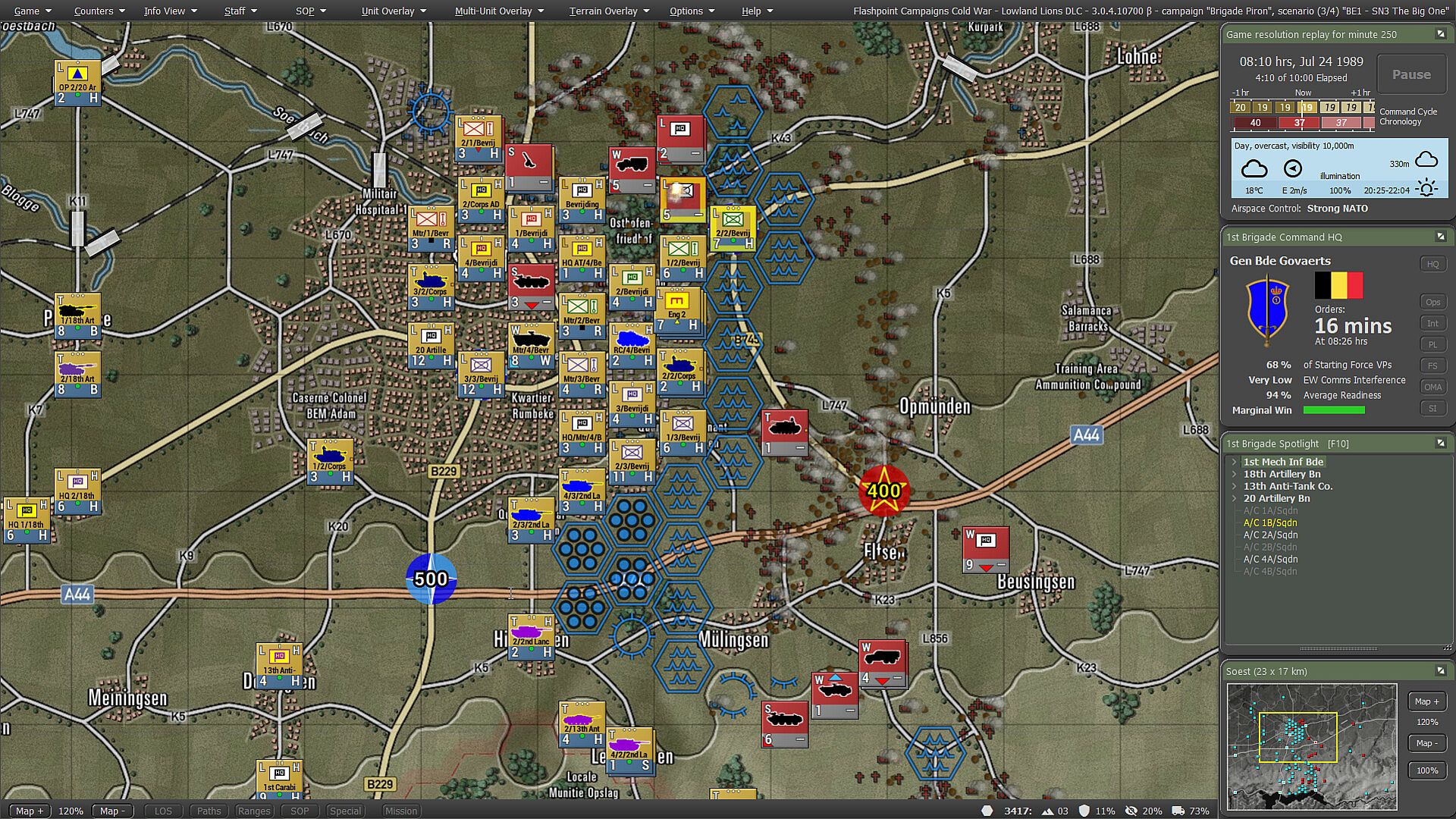
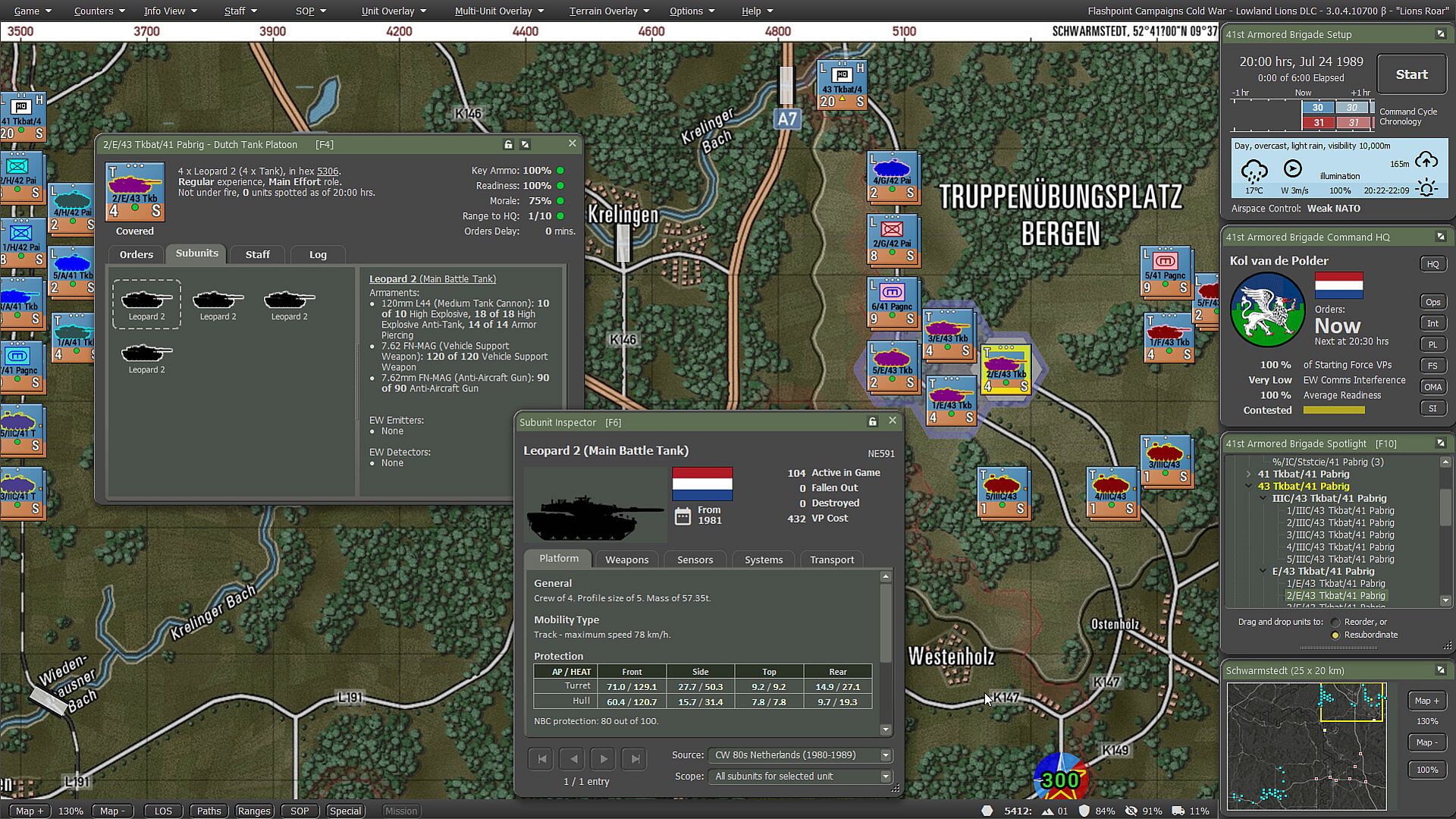
The core loop centers on issuing orders to military units across hex-based maps. Commanders direct platoons and companies by selecting destinations and movement speeds, allowing the simulation to handle combat resolution based on line of sight, terrain, and unit capabilities. This approach emphasizes planning and synchronization rather than direct control of individual engagements.
Authentic doctrinal elements appear through national formations. Dutch reconnaissance and armored battalions focus on screening and delaying actions in the opening hours of conflict. Units reflect real equipment and tactics of the era, with movement rates and engagement ranges drawn from historical data. The system supports both real-time pauses and structured turn execution, giving players time to assess developments without constant micro adjustments.
Scenarios unfold across varied terrain in the Low Countries and German border regions. Intelligence reports and ground radar play a role in initial setup, mirroring the narrative tension of sudden escalation. Players manage reinforcement arrivals and defensive positioning while adapting to breakthroughs or flanking maneuvers.
Game Modes
Lowland Lions delivers content through structured campaigns and independent battles. The Dutch I Corps campaign spans three linked scenarios that cover the first hours of the invasion, with each scenario also available for standalone play. A separate Belgian campaign follows four scenarios focused on containing Soviet advances.
West German forces receive six scenarios centered on stay-behind operations behind enemy lines. These emphasize unconventional defensive tactics and prolonged resistance. Eight additional scenarios feature U.S. units, drawing from established series mechanics for combined arms engagements.
Twelve standalone scenarios round out the total of twenty-five. All support singleplayer execution, with options for custom pacing through the scenario editor. Multiplayer occurs via asynchronous systems that allow opponents to submit moves independently.
Campaign Structure and Formations
New formations expand available options for Dutch, Belgian, West German, and U.S. forces. These include specialized reconnaissance elements, armored units, and support assets tailored to each nation's role in the broader NATO response. The campaigns progress chronologically where possible, linking tactical decisions across multiple maps.
Standalone battles offer flexible entry points for shorter sessions. They isolate key engagements without requiring completion of prior missions, making the expansion accessible for targeted practice or experimentation with different force compositions.
Is It Worth Playing?
Lowland Lions suits players who value detailed military simulations and deliberate decision making. The emphasis on realistic unit behavior and national differences rewards careful study of terrain and timing. Reviews highlight the addictive quality of the planning process and the depth of the underlying engine.
Positive reception centers on the volume of new content and the fidelity of Cold War era mechanics. The expansion integrates smoothly with the base game, extending existing campaigns while introducing fresh factions and operational challenges. Those familiar with hex-based wargames will find familiar systems enhanced by modern interface improvements.
Players seeking fast-paced action or extensive customization may find the focus on simulation less appealing. For enthusiasts of operational strategy and historical what-if scenarios, the addition of Dutch, Belgian, and West German campaigns provides substantial replay value through varied objectives and force mixes. The game remains actively supported with ongoing scenario development potential.