




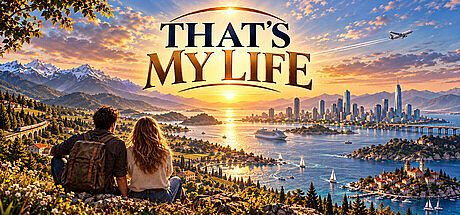


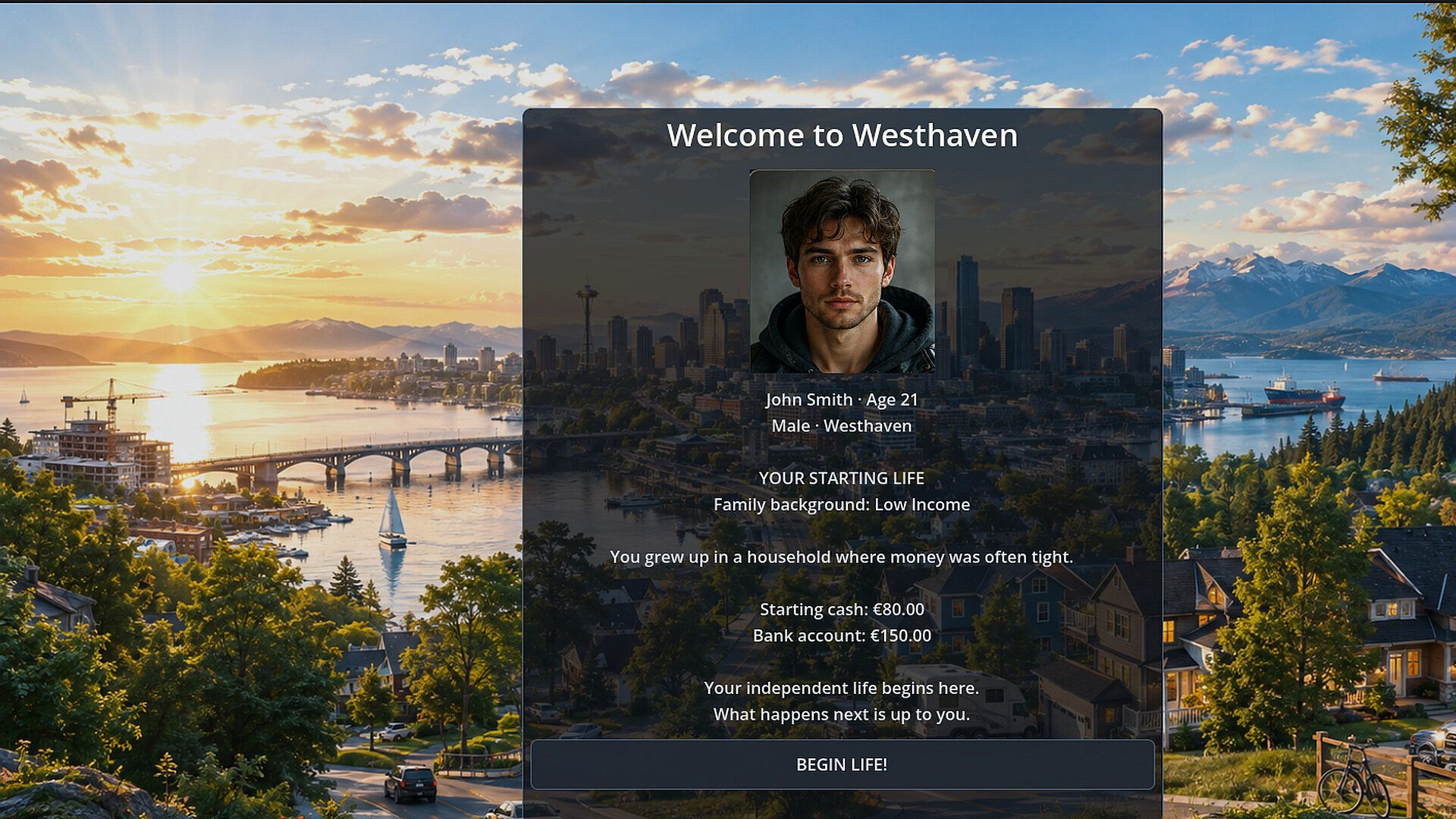
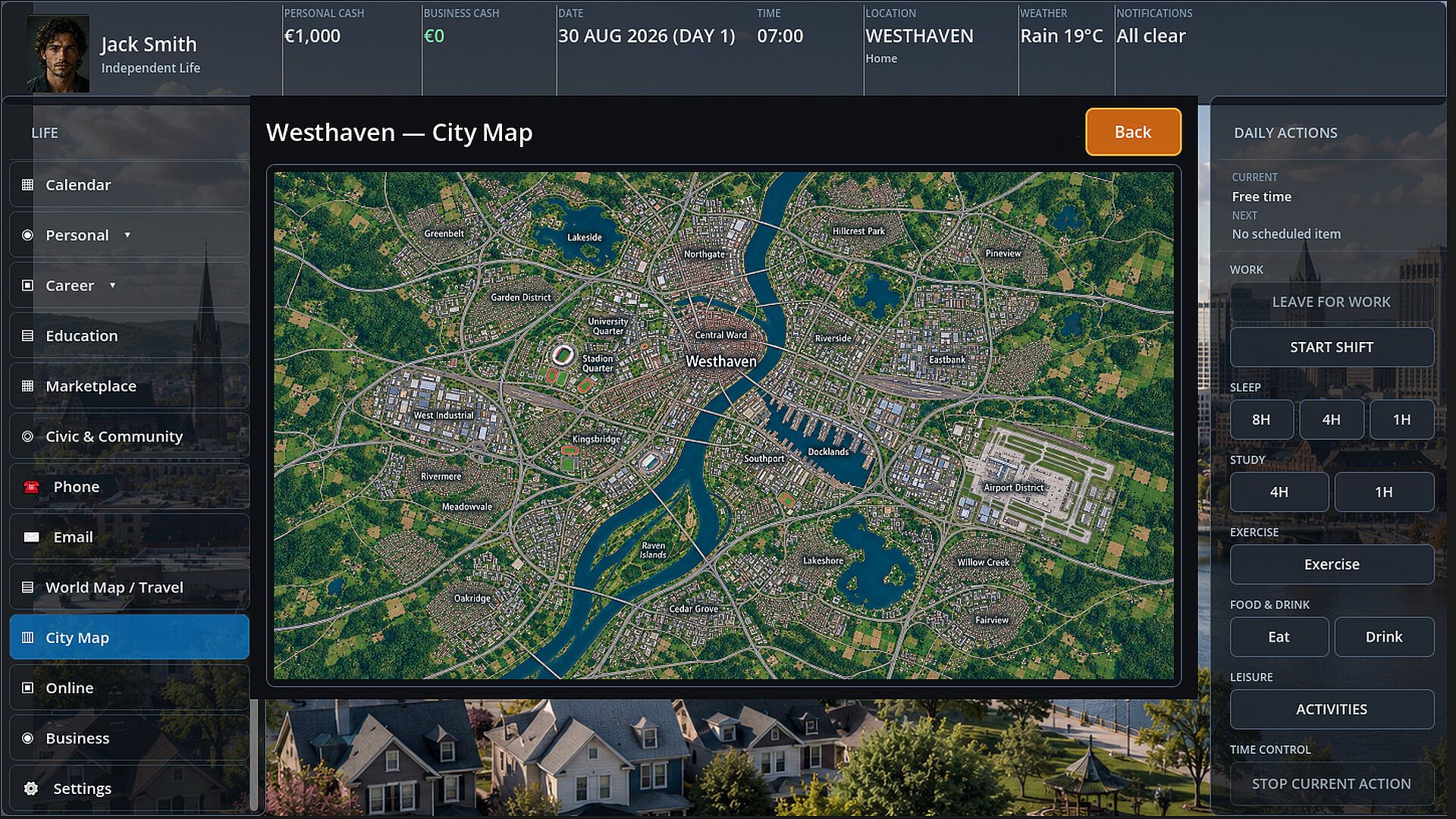
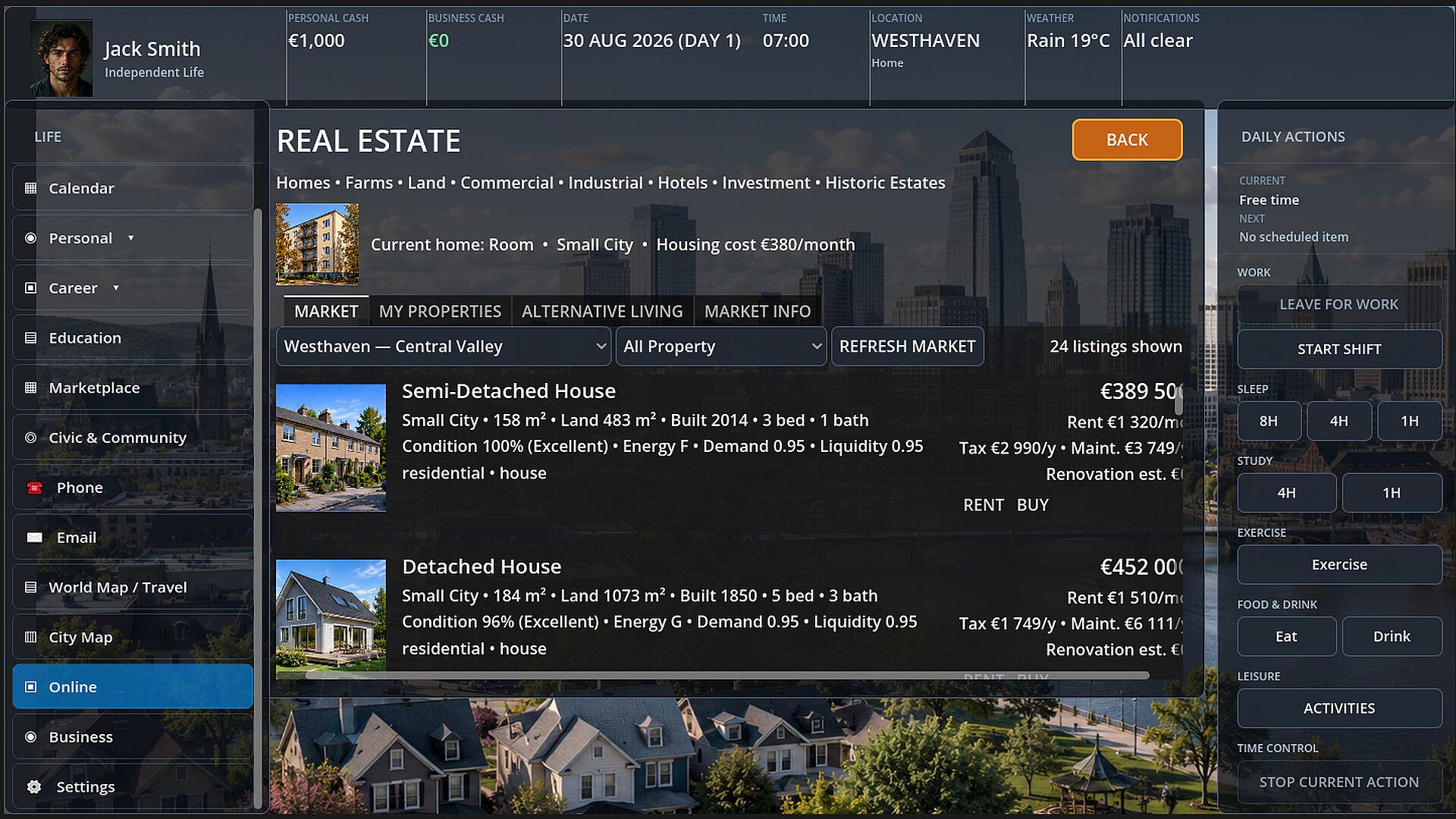
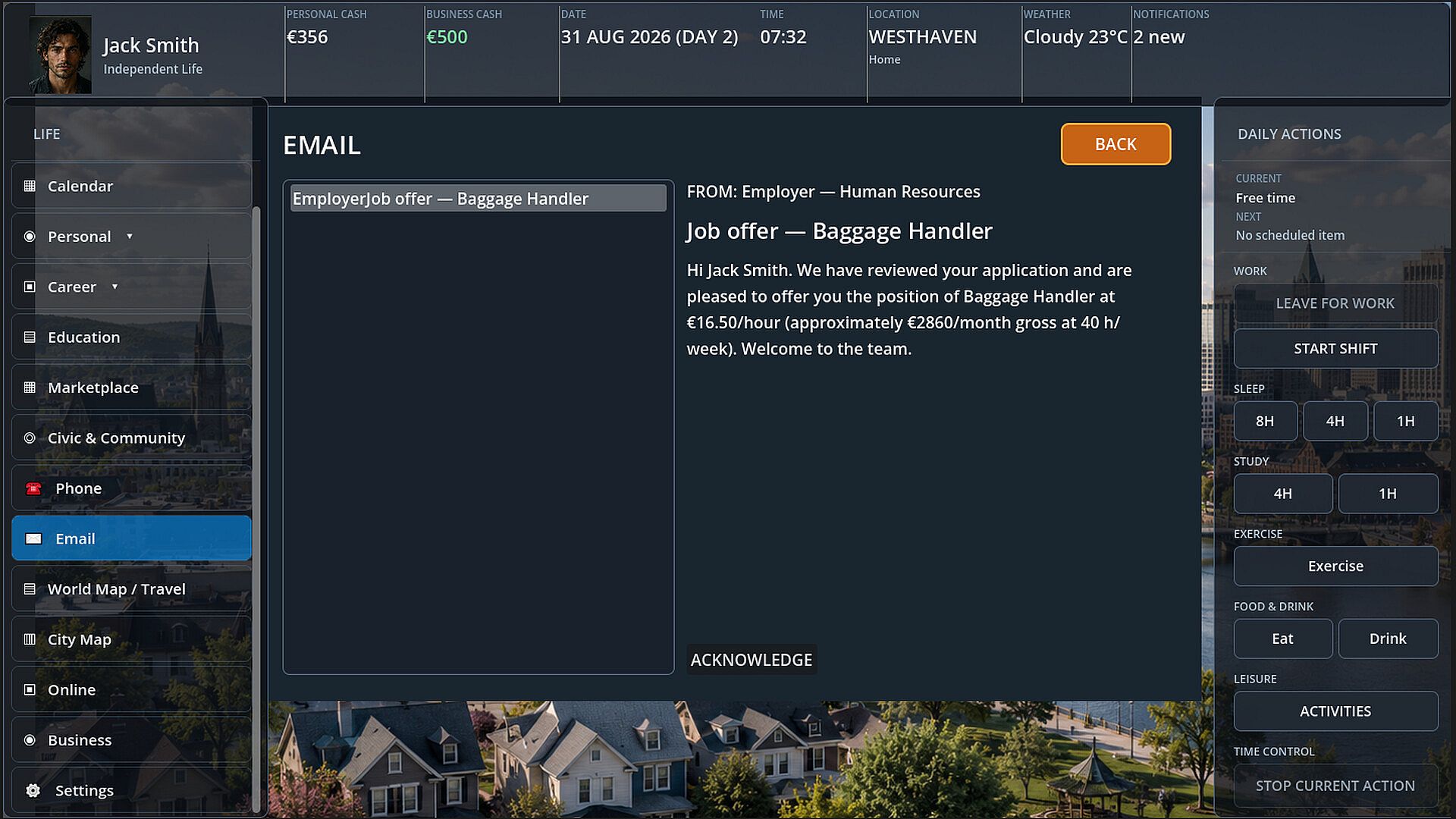
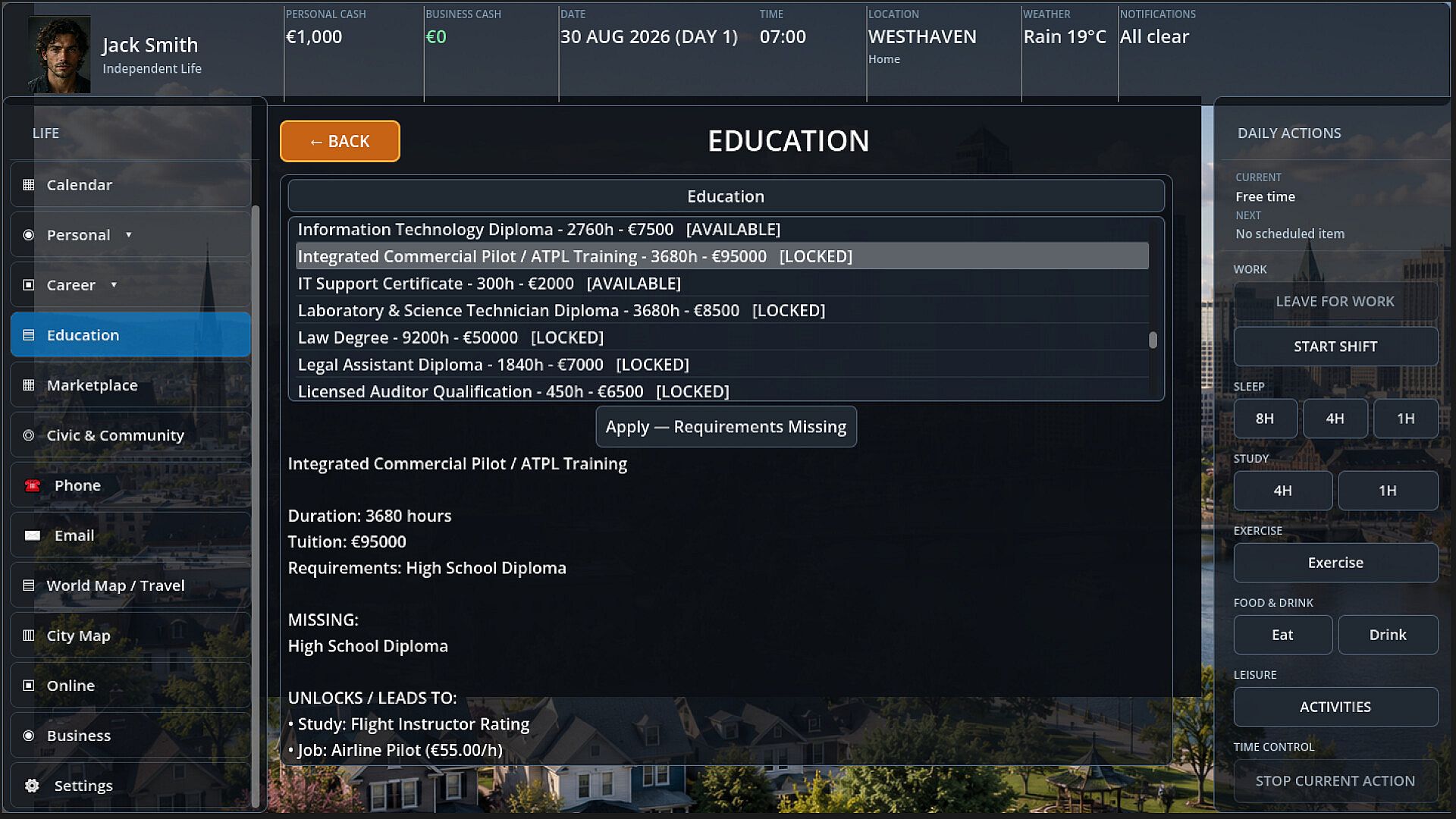
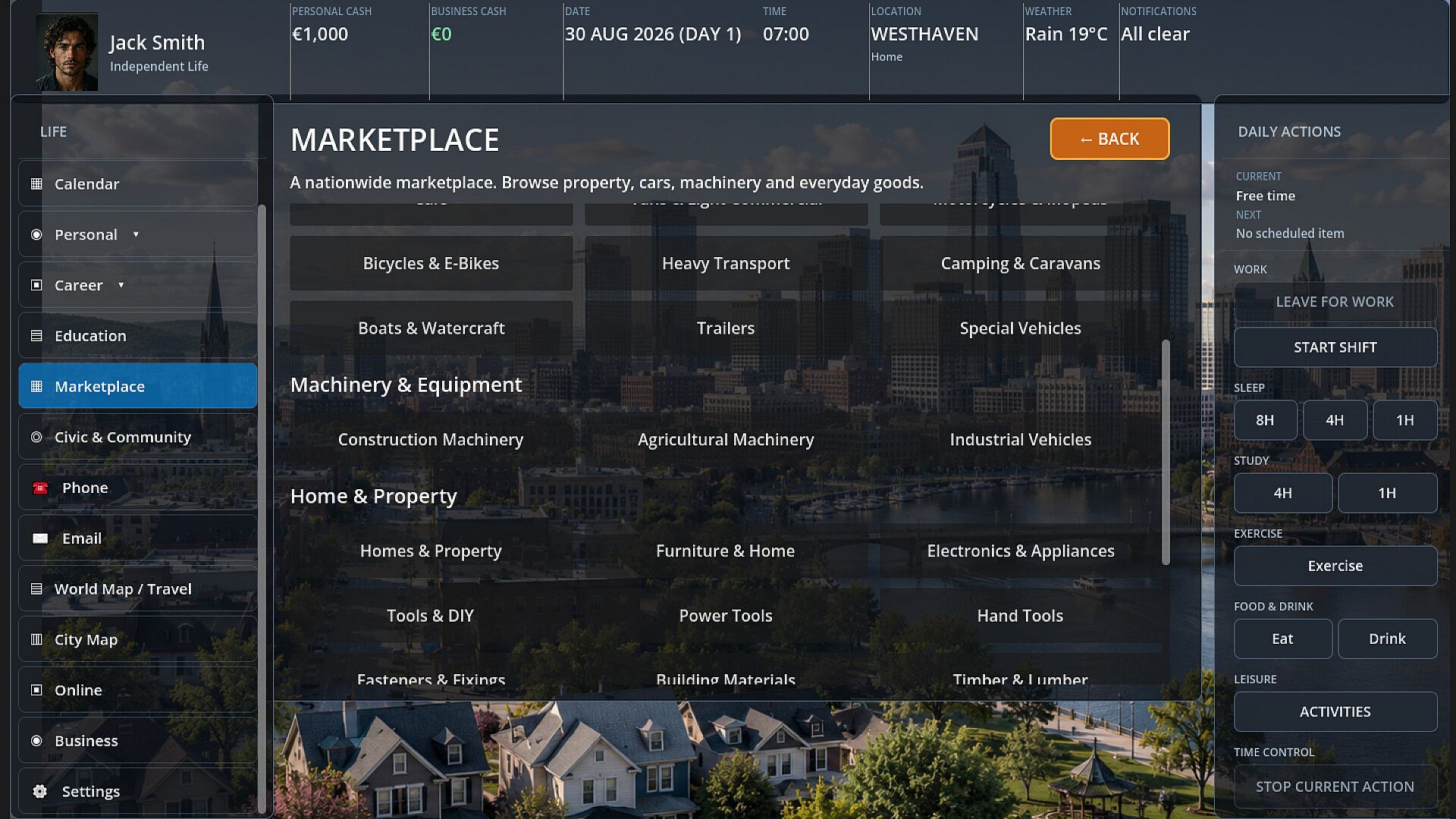

That's My Life is an indie RPG simulation game that places players in a single persistent world where every choice ripples across careers, finances, relationships and society. Developed for PC, it connects education, employment, business ownership, property management, politics and crime into one continuous life rather than separate systems.
Gameplay
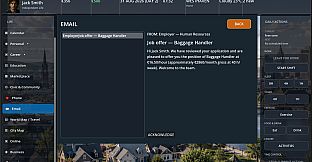
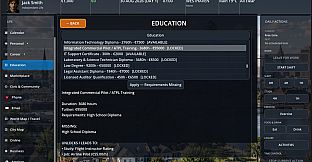
The core loop revolves around managing time, resources and consequences in a connected economy. Education opens specific job paths, while work generates income alongside profession-specific events that can influence health, colleagues and future options. Players select from hundreds of jobs and educational routes, then decide how to allocate limited hours each day across multiple responsibilities.
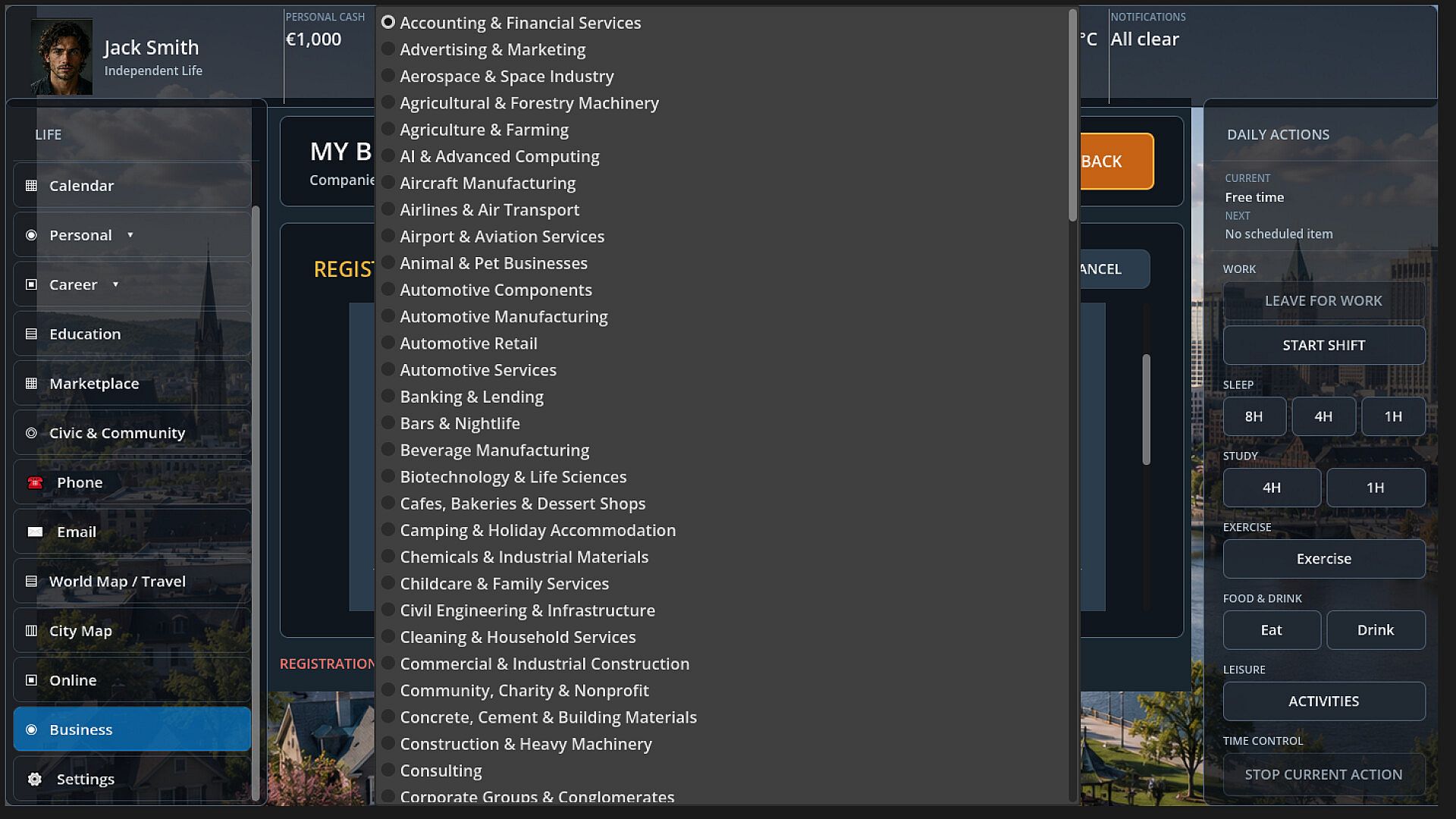
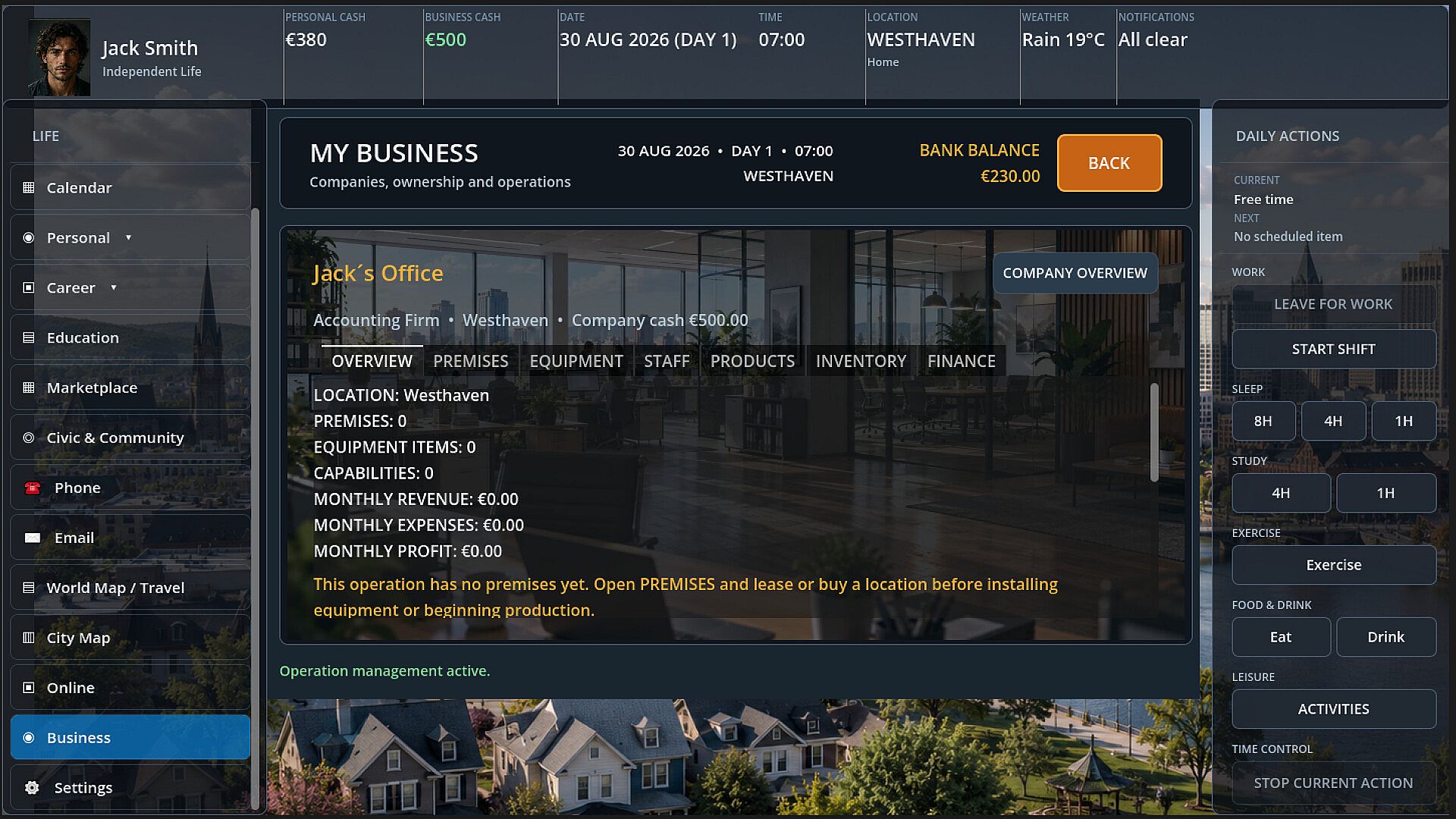
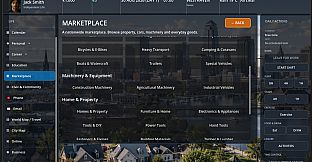
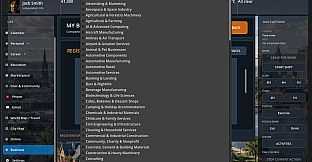
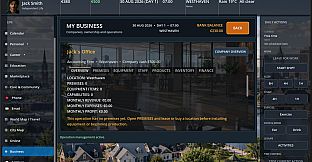
Business management extends from small operations to full vertical integration across production chains. Factories track materials, equipment, workers and market demand, allowing owners to source externally or control every stage from raw extraction to retail sales. Personal finances include loans, investments and advanced trading mechanics that tie into the broader economy of thousands of products.
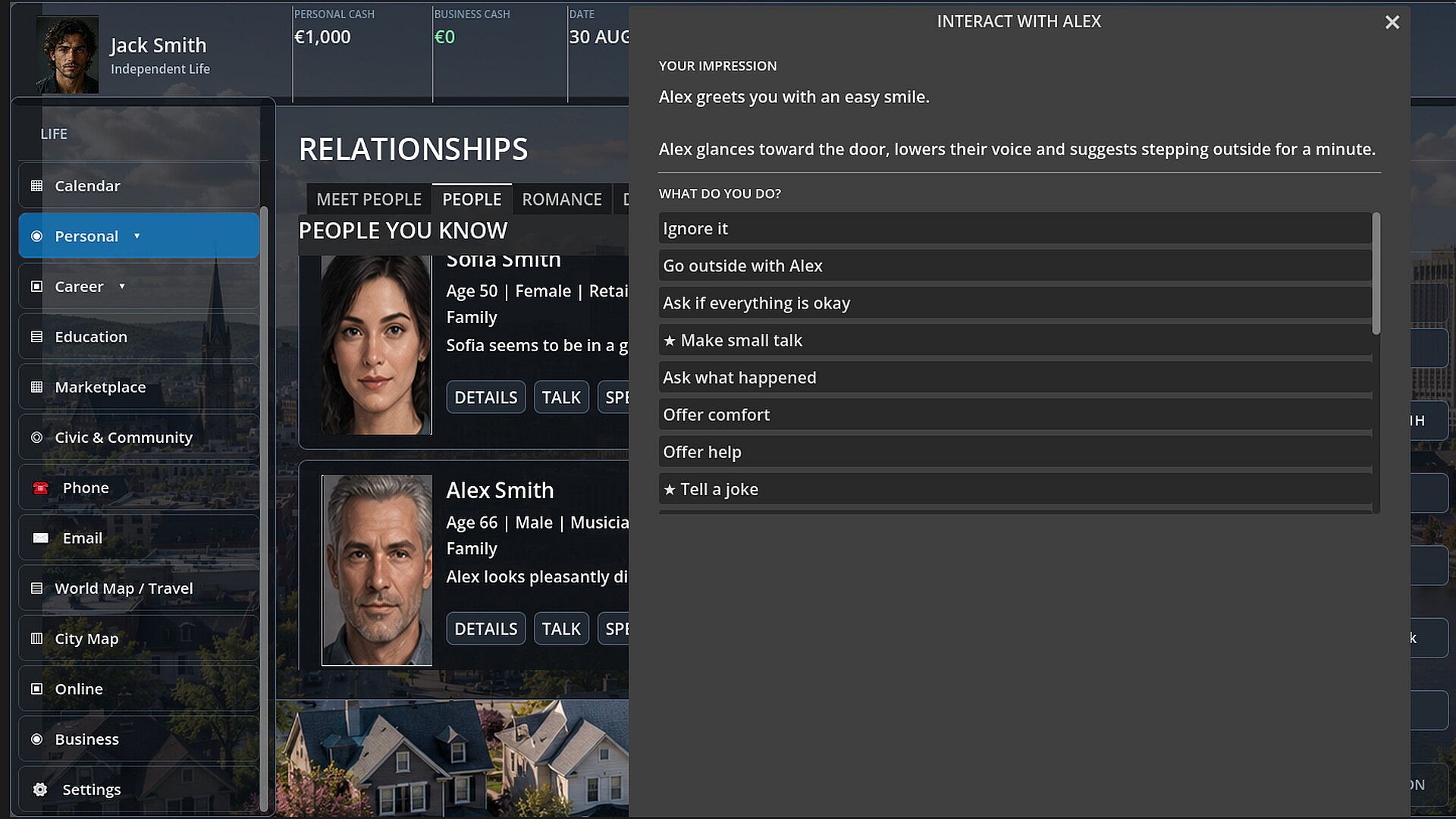
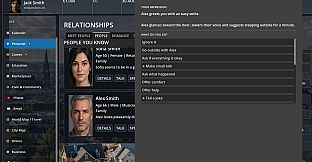
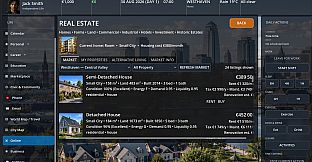
Property ownership brings active responsibilities. Rental units feature individual NPC tenants who can miss payments or report issues, turning passive income into ongoing management tasks. Daily life factors such as appearance and hygiene affect NPC reactions, while relationships evolve through independent NPC initiatives rather than menu-only interactions.
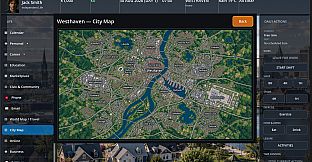
Failure forms a natural part of progression. Job loss, debt or legal trouble can redirect a life toward welfare, retraining or new ventures. The simulation tracks long-term effects across generations through inheritance and family changes, all within the world of Auravia and its 111 settlements that offer varied opportunities for relocation.
Game Modes
That's My Life operates as a single-player sandbox without separate game modes. All systems function inside one unified simulation where politics, crime and conventional careers compete for the same limited time and resources. Players pursue any combination of paths, from competitive sports to elected office, with no predefined victory condition or required progression.
The absence of distinct modes emphasizes interconnected consequences. A criminal act can affect reputation and employment long after the event, while political decisions alter rules that impact businesses and daily life for every character. This design keeps the experience focused on one evolving life rather than switching between isolated scenarios.
Key Systems and Mechanics
Specializations, certifications and skill development allow mid-life career shifts or combinations of work and study. Workplace incidents vary by profession, creating unique decision points for healthcare workers, law enforcement or factory staff. NPCs maintain memories of past interactions and initiate contact based on relationships, adding depth to social elements.
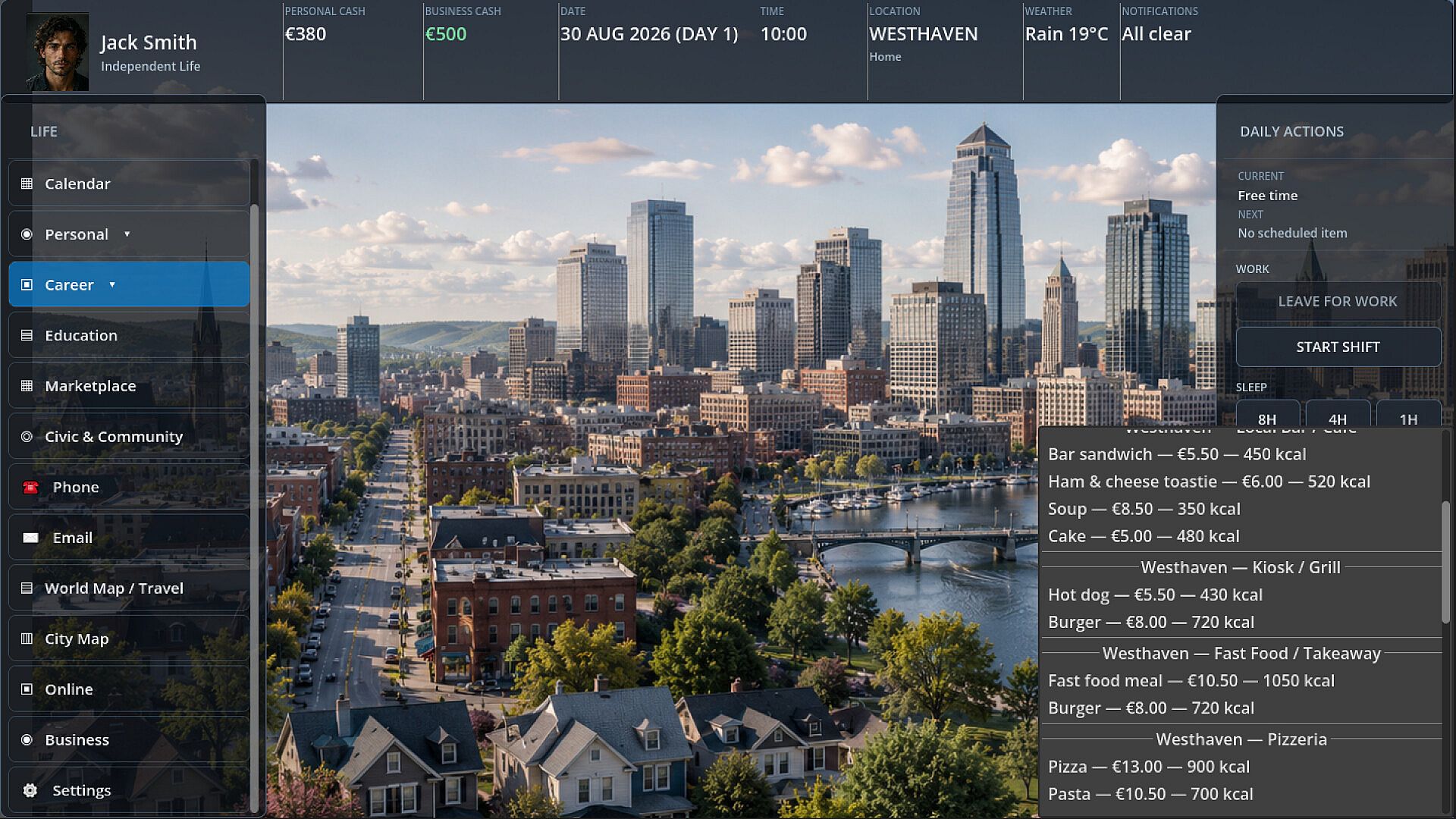
The economy links consumer purchases to international trade and manufacturing. Players can engage in futures trading or margin activity while managing personal debt and investments. Health, family responsibilities and location all constrain available actions, forcing prioritization across decades of simulated time.
Is It Worth Playing?
That's My Life targets players who enjoy detailed life simulators with overlapping systems rather than isolated minigames. Its strength lies in the persistent world where business decisions affect relationships and political involvement changes economic rules for everyone. The game supports flexible playstyles, from modest living to large-scale industrial networks or risky ventures that can lead to setbacks and rebuilds.
With a planned release on October 12, 2026, and no player reviews available yet, suitability depends on interest in complex, consequence-driven simulation. Those drawn to open-ended single-player experiences that reward long-term planning and adaptation will find the interconnected mechanics a natural fit. The title avoids forced success narratives, allowing lives to unfold through player choices alone.











