


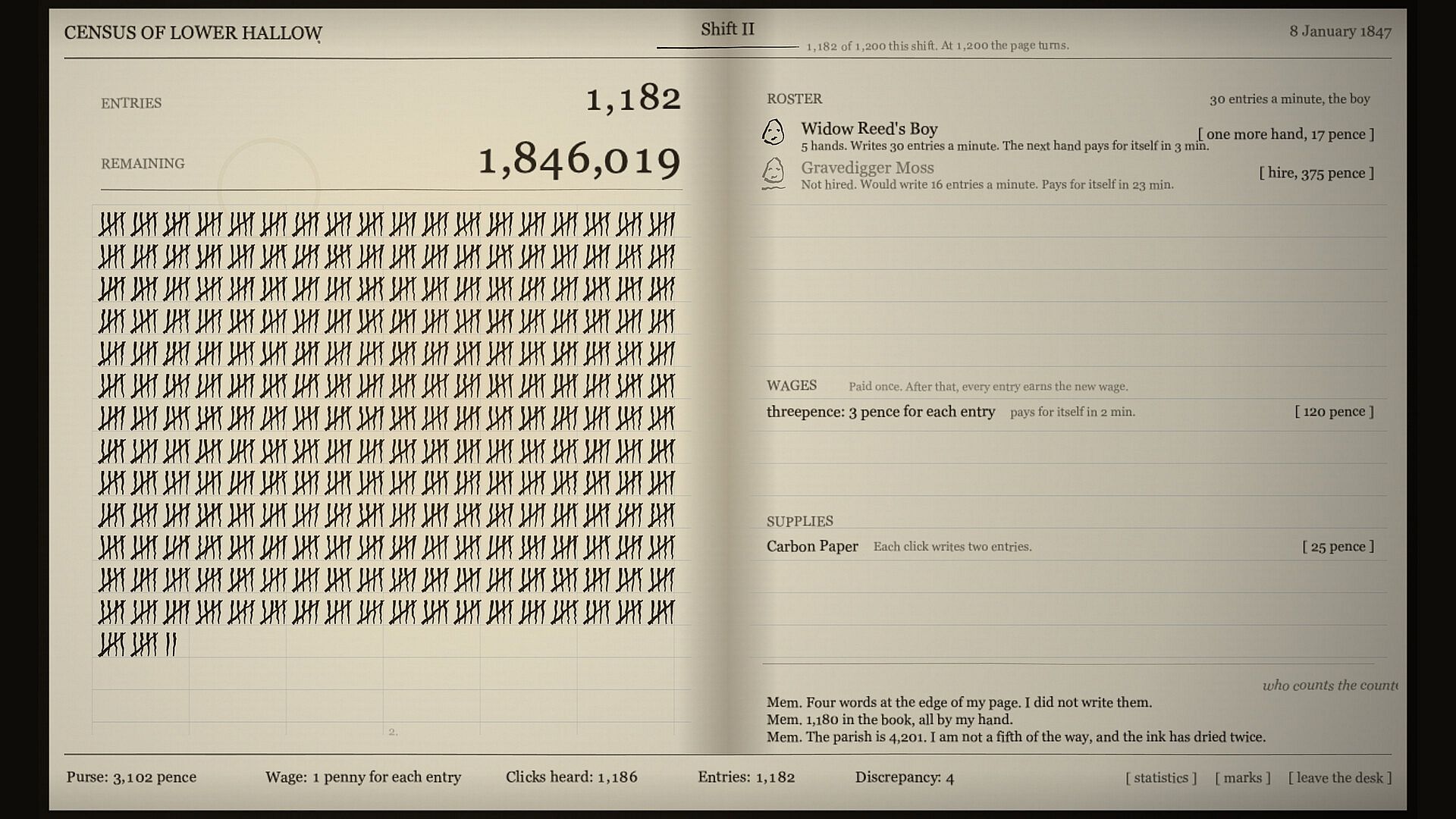

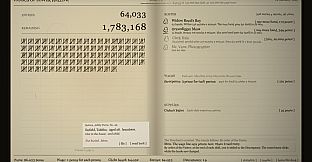
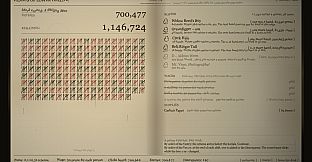

TALLY is an indie casual simulation game for PC that places players in the role of an enumerator responsible for recording every resident in the county of Hallowshire. The county holds 1,847,201 people according to the Vestry, and the task requires entering each one into a ledger with nothing more than a pen and a small payment per entry. The experience centers on meticulous record keeping under constant pressure from discrepancies that arise naturally during play.
Gameplay
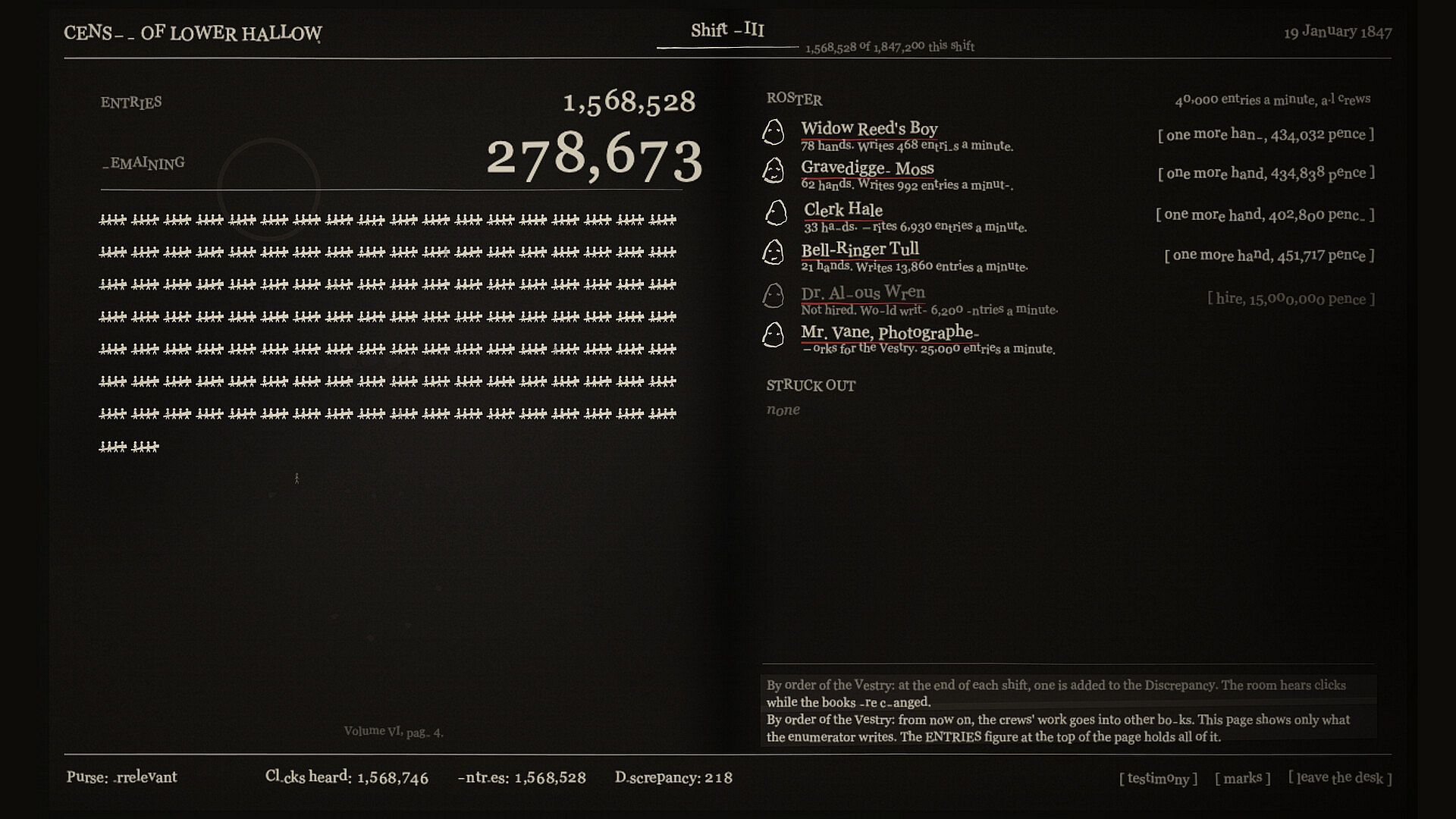
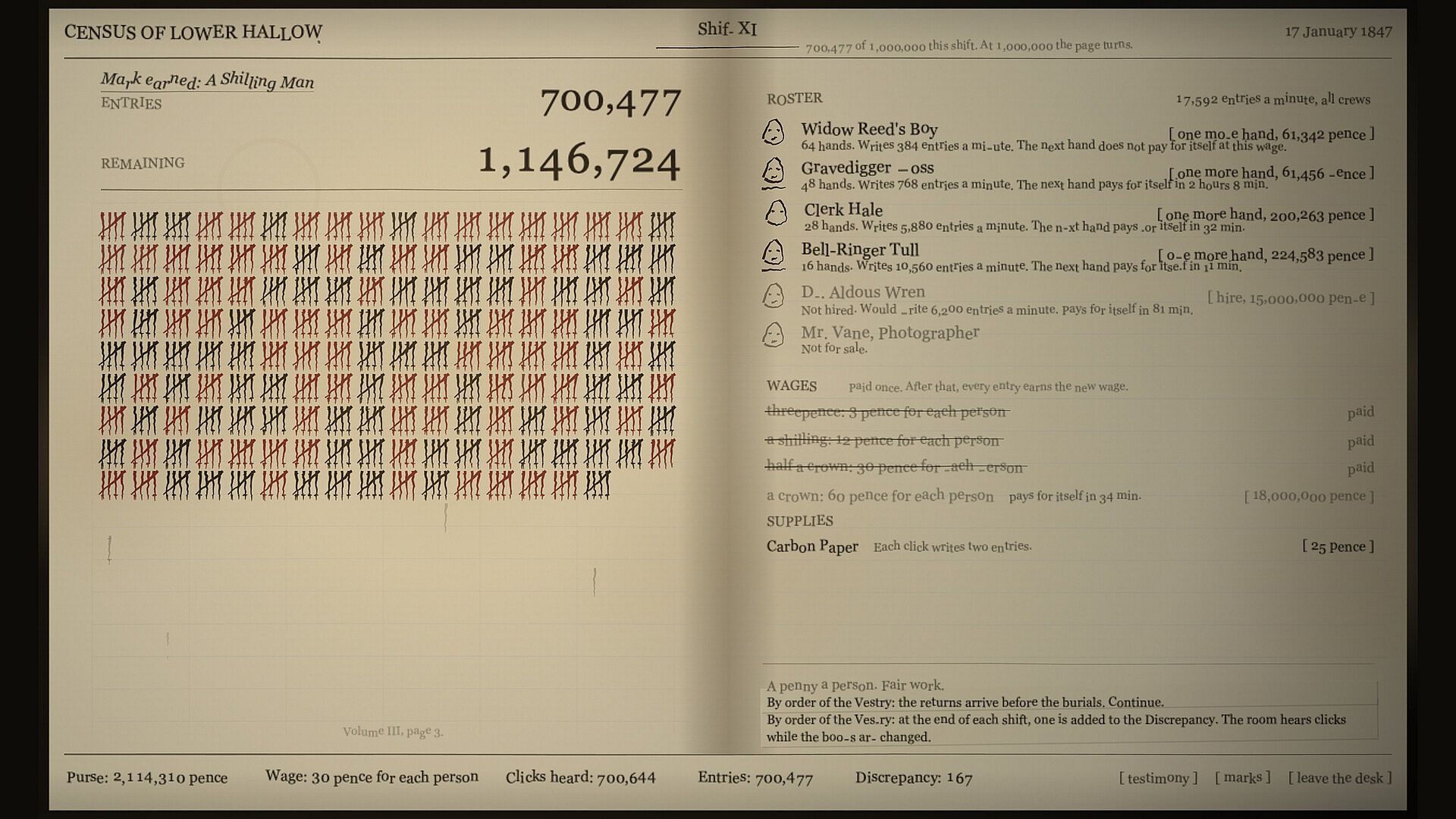
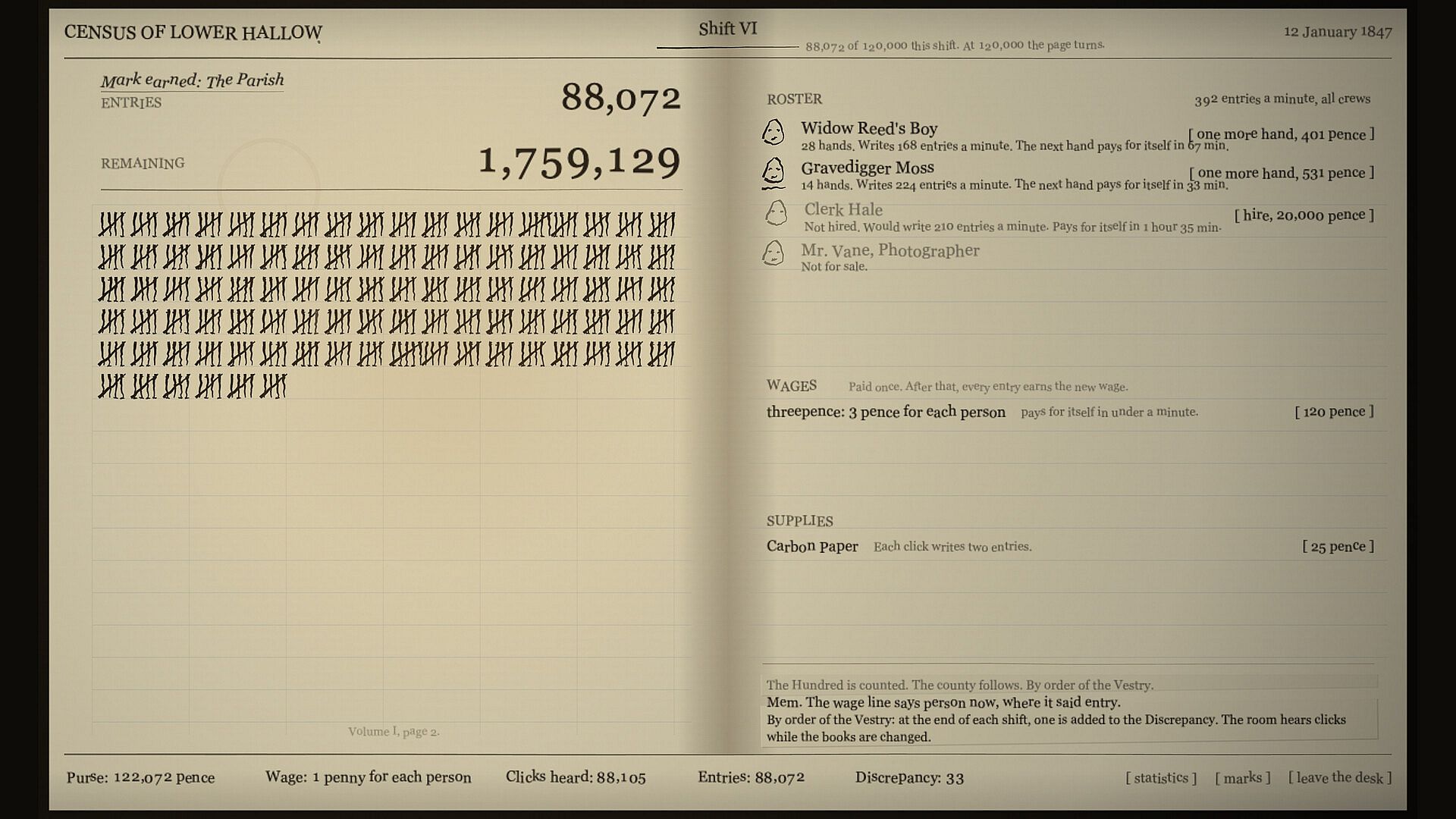
The core loop revolves around maintaining an accurate ledger while a separate count of strokes heard in the room runs slightly ahead at all times. This difference represents the margin of error that players must manage through careful work or by addressing issues as they appear. Assistants become available for hire, including figures such as Widow Reed's boy, a gravedigger, a clerk, a bell ringer, and a doctor whose records sometimes precede actual events. These helpers continue counting during periods of rest, yet their entries may not always align with what the player would have chosen.
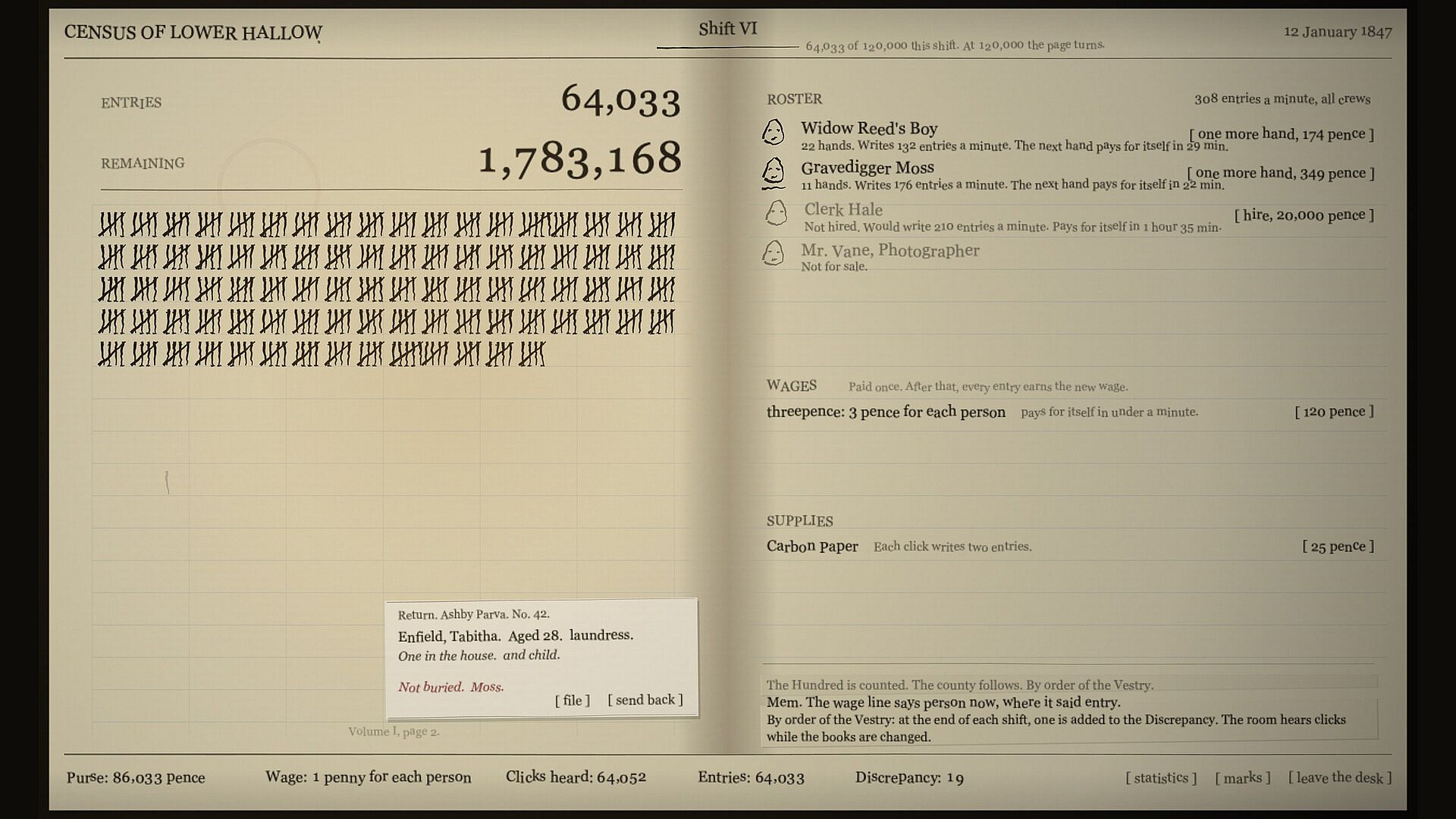
Slips arrive from the twelve parishes that make up the Hundred. Each slip must be reviewed for internal consistency before filing or returning it. An infant listed with a trade, a death recorded for a future date, or a household already present in the book signals a false return. Filing an inconsistent slip risks later correction when the name is struck out and the associated people disappear from the records. The process demands repeated cross checks to prevent such outcomes.
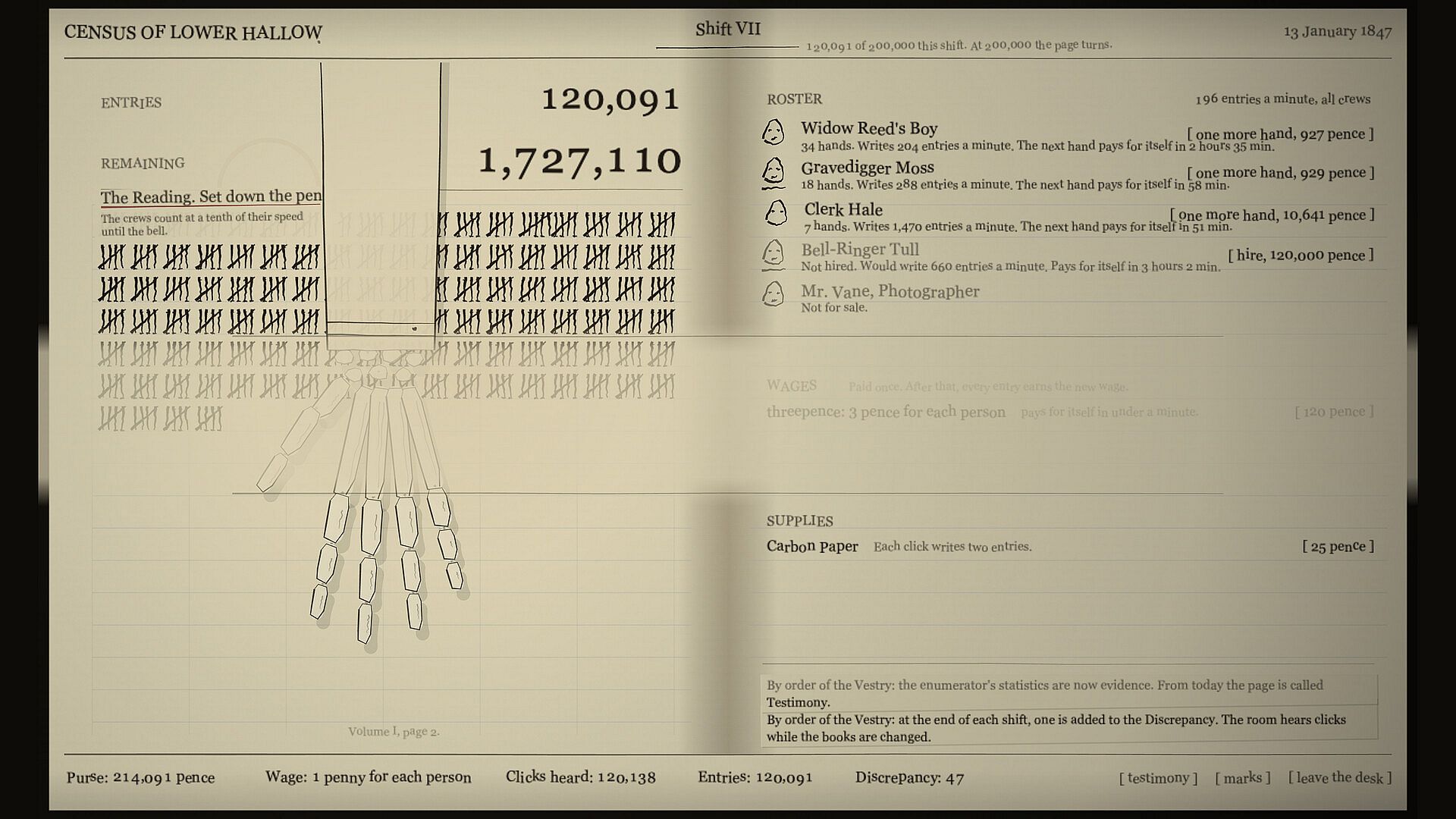
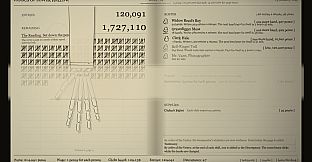
A reading occurs at the bell once returns are prepared. The room falls silent as a hand rests on the page and names from the player's own book are read aloud. For each name the player must decide whether to keep the entry or strike it. Any false return previously filed by the player's hand appears first in this reading, creating direct accountability for earlier choices. The pen remains available even while the hand lies across the page and the fingers spread.
Game Modes
TALLY operates as a single continuous simulation experience without separate named modes. Play unfolds through the ongoing cycle of entering residents, hiring and overseeing assistants, processing incoming parish slips, and responding to the periodic reading at the bell. The tension between the player's ledger and the independent stroke count persists regardless of pace, whether the player works steadily or pauses. Decisions about which slips to file and which to return shape the state of the book over time, while the reading enforces consequences for any inconsistencies that slip through.
The simulation rewards deliberate pacing and repeated verification. Hiring assistants introduces variables because their independent counts continue without direct supervision. Processing returns requires spotting internal contradictions before they affect the main ledger. The reading phase turns prior choices into immediate tests of accuracy. These elements combine into one cohesive loop that players navigate through careful attention to detail rather than through distinct gameplay variants.
Core Mechanics and Tension
Every entry carries weight because the book maintains its own tally alongside the player's work. The gap between the two figures grows steadily, forcing ongoing attention even during quieter periods. Assistants provide relief from constant manual effort yet introduce the possibility of mismatched records that must later be reconciled. Parish slips add another layer, as each one arrives with potential errors that the player must catch or accept the risk of later correction.
The reading at the bell serves as the central accountability moment. Names drawn from the player's own entries are presented for judgment, and any previously filed false return surfaces immediately. This structure creates a closed system where earlier decisions return as direct challenges. Players must weigh speed against precision throughout, knowing that unchecked discrepancies compound over time.
Who the Game Appeals To
TALLY suits players who enjoy thoughtful simulation experiences built around administrative tasks and the consequences of small oversights. The mechanics emphasize careful observation, consistent verification, and measured decision making rather than fast reflexes or resource collection. Those drawn to indie titles that explore quiet tension through systems of record keeping and oversight will find the loop engaging. The game rewards patience and attention to detail in a setting where errors carry lasting effects on the final book.
Is It Worth Playing?
The simulation delivers a focused experience centered on ledger management, assistant oversight, return verification, and accountability during the reading. Players who appreciate deliberate pacing and the satisfaction of maintaining accuracy amid accumulating discrepancies will likely find the loop compelling. The absence of separate modes keeps the focus on the single evolving book and the persistent gap between the player's entries and the room's independent count. Those seeking a casual yet precise simulation of administrative responsibility with built in consequences for inconsistency may find TALLY a worthwhile addition to their library. The game remains available on PC for those interested in this style of play.