

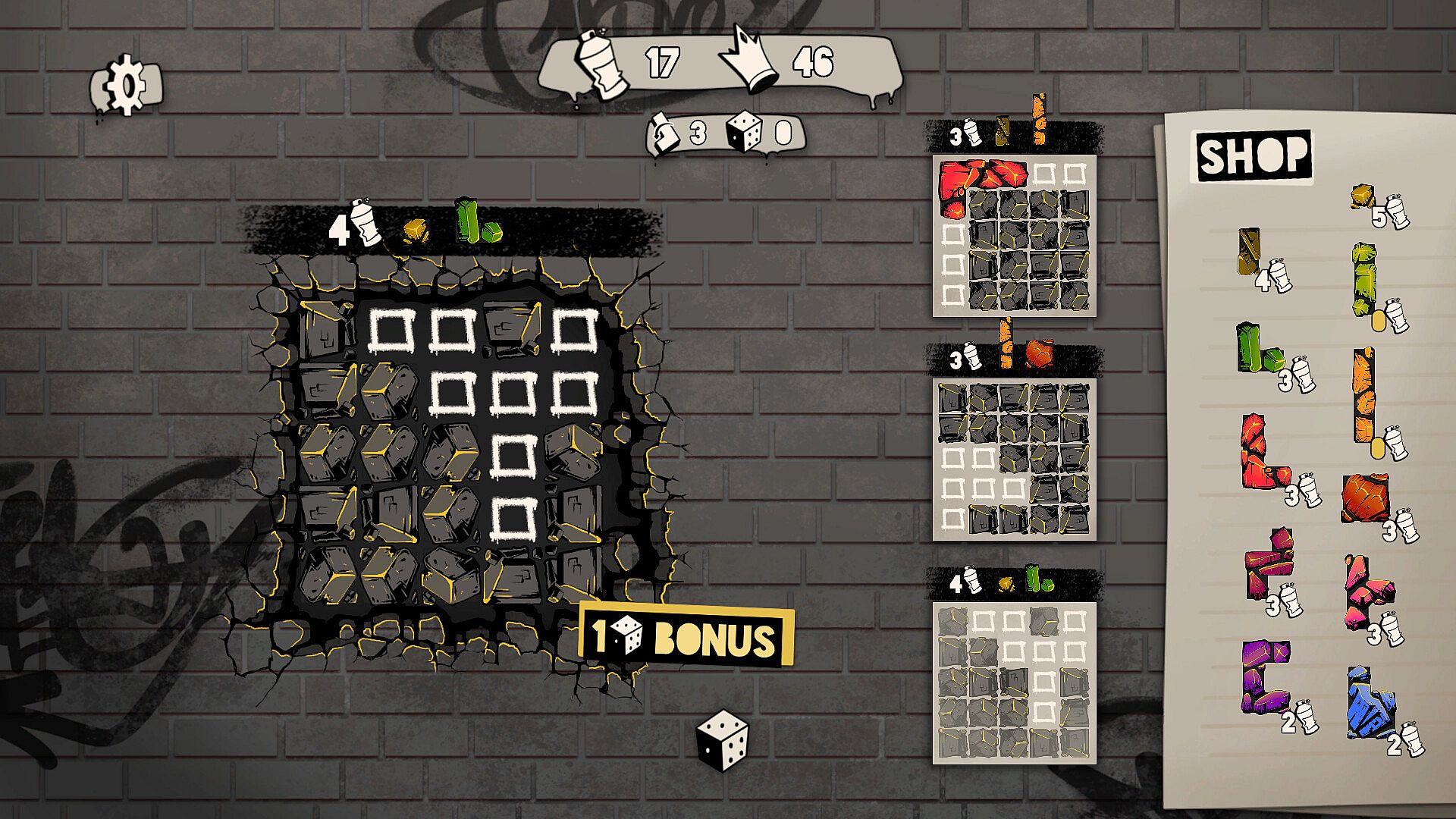
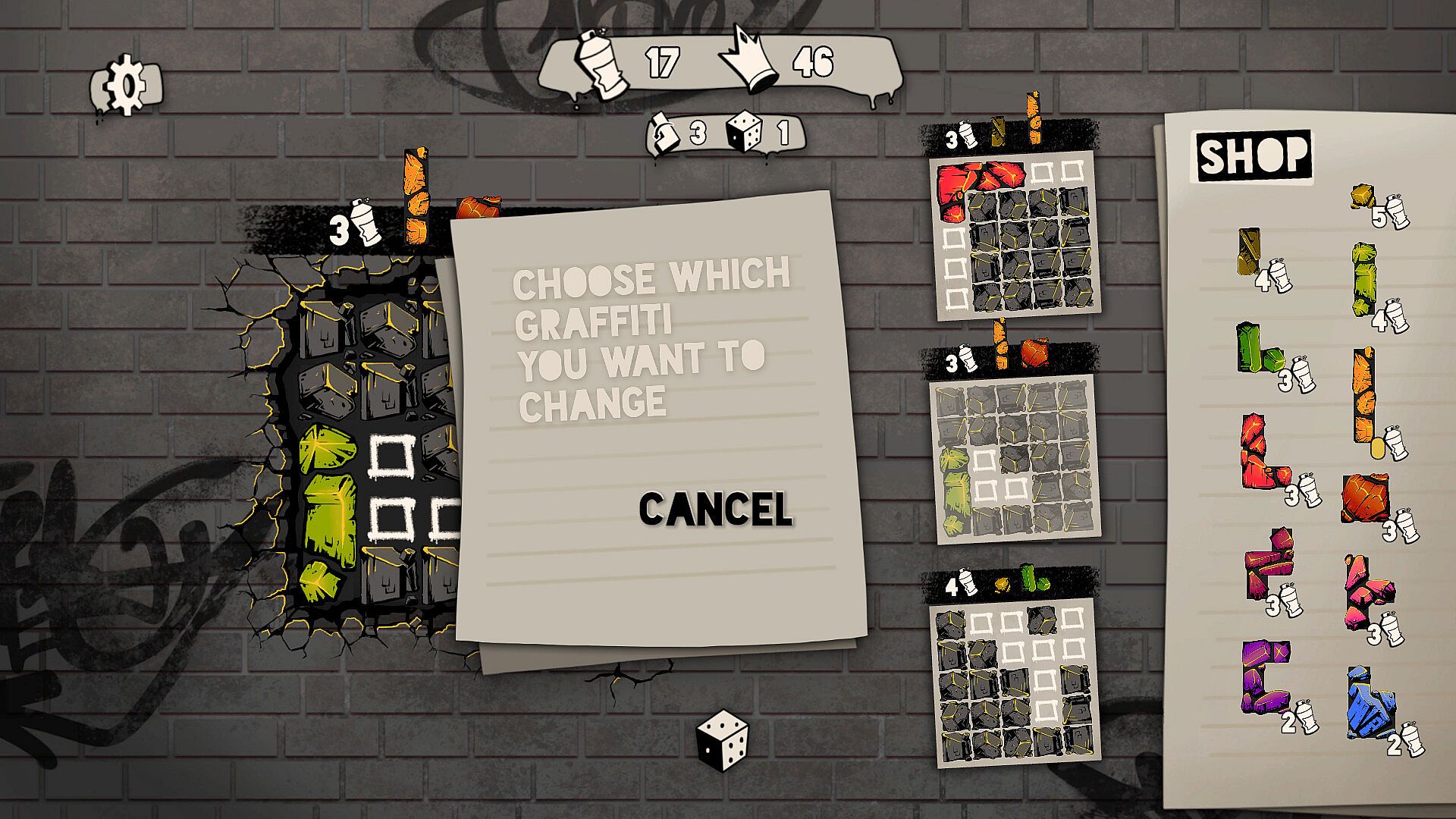
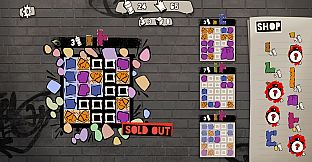
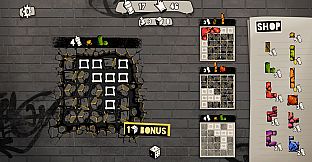
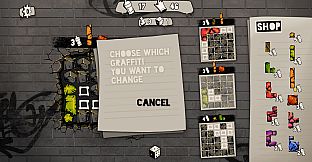
Tagablock is a single-player puzzle game that blends strategy and casual elements on PC. Players use colors and a spray can to complete graffiti pieces on procedurally generated walls while managing limited paint resources and handling occasional setbacks.
Gameplay
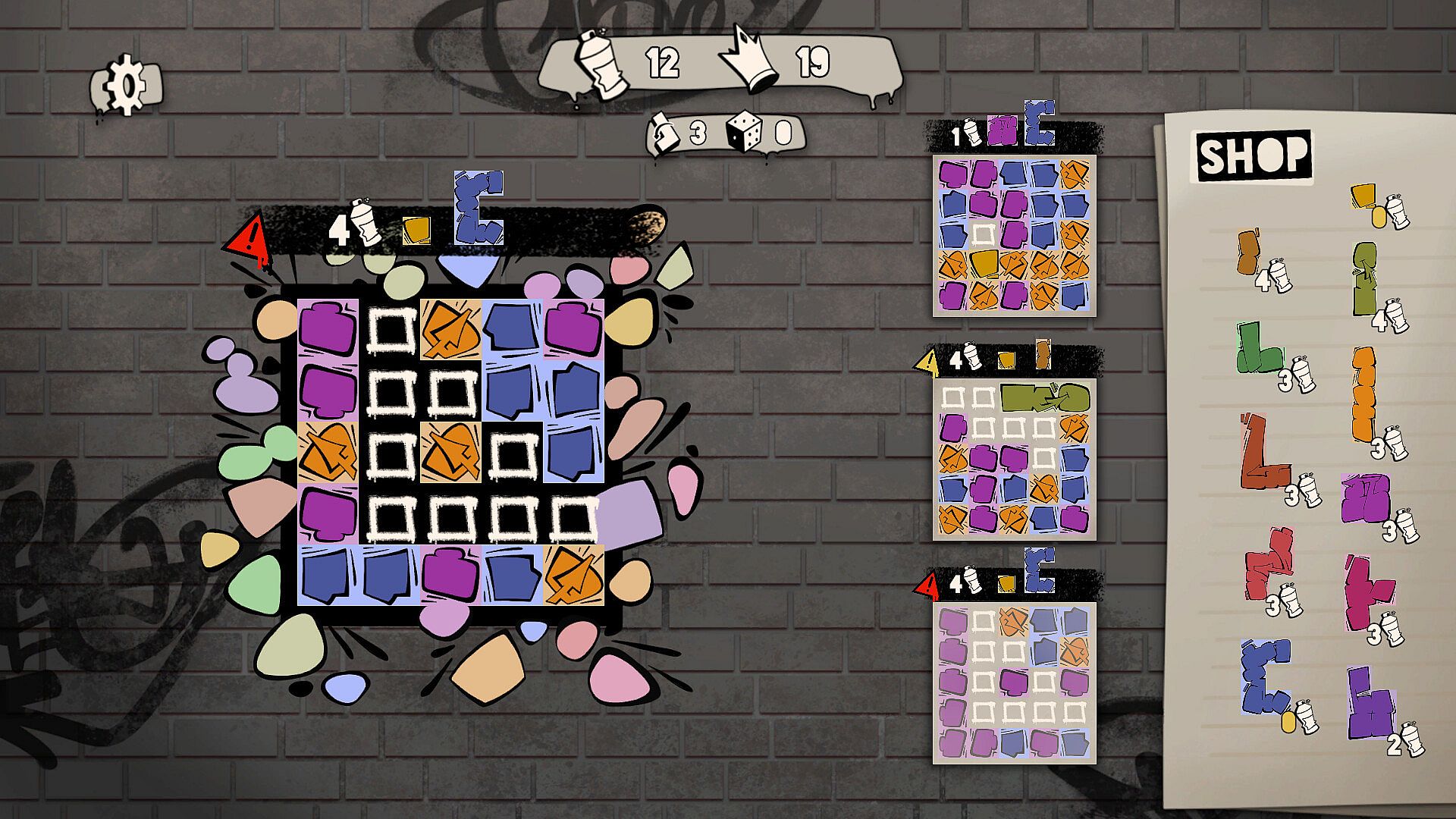
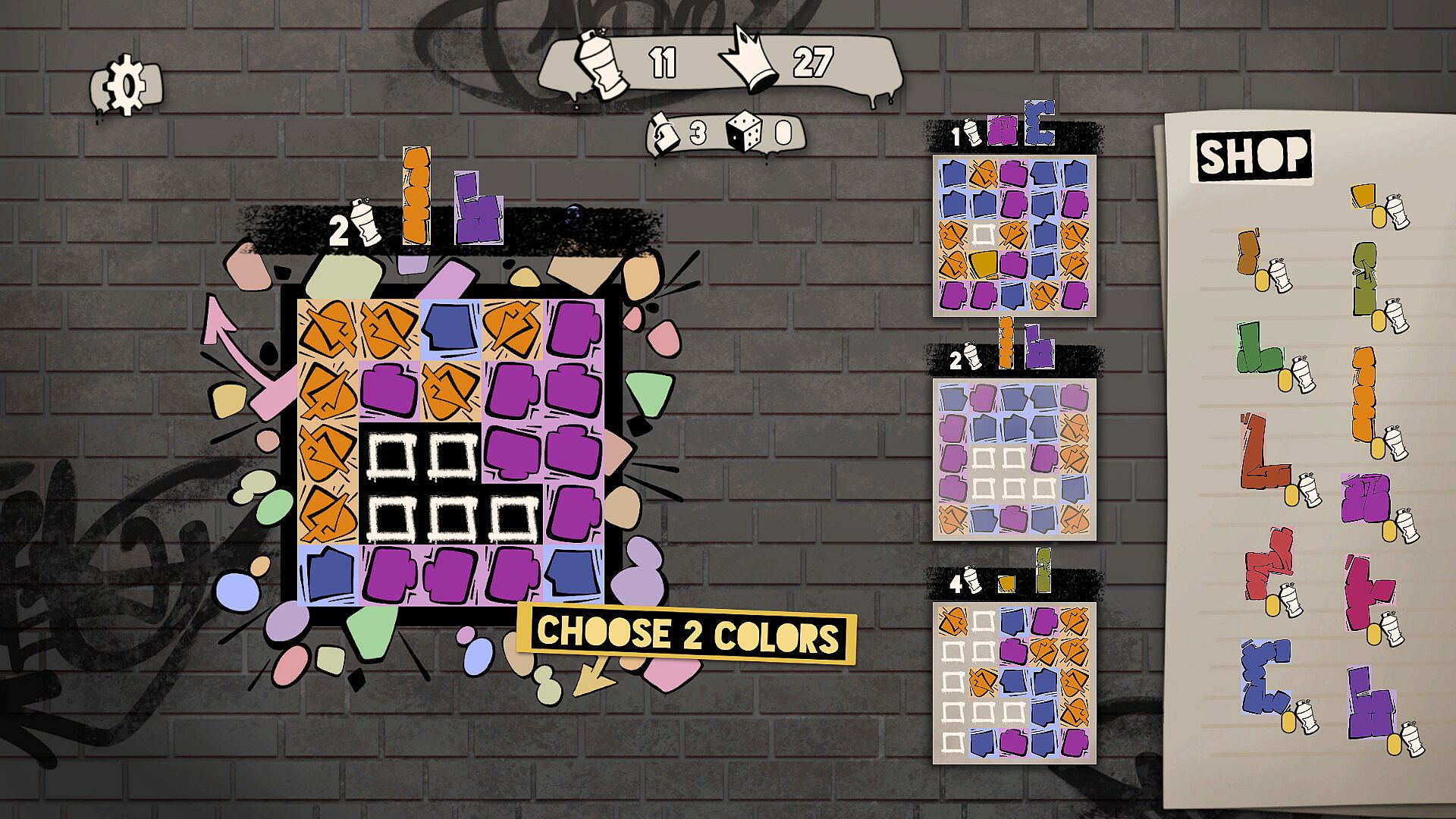
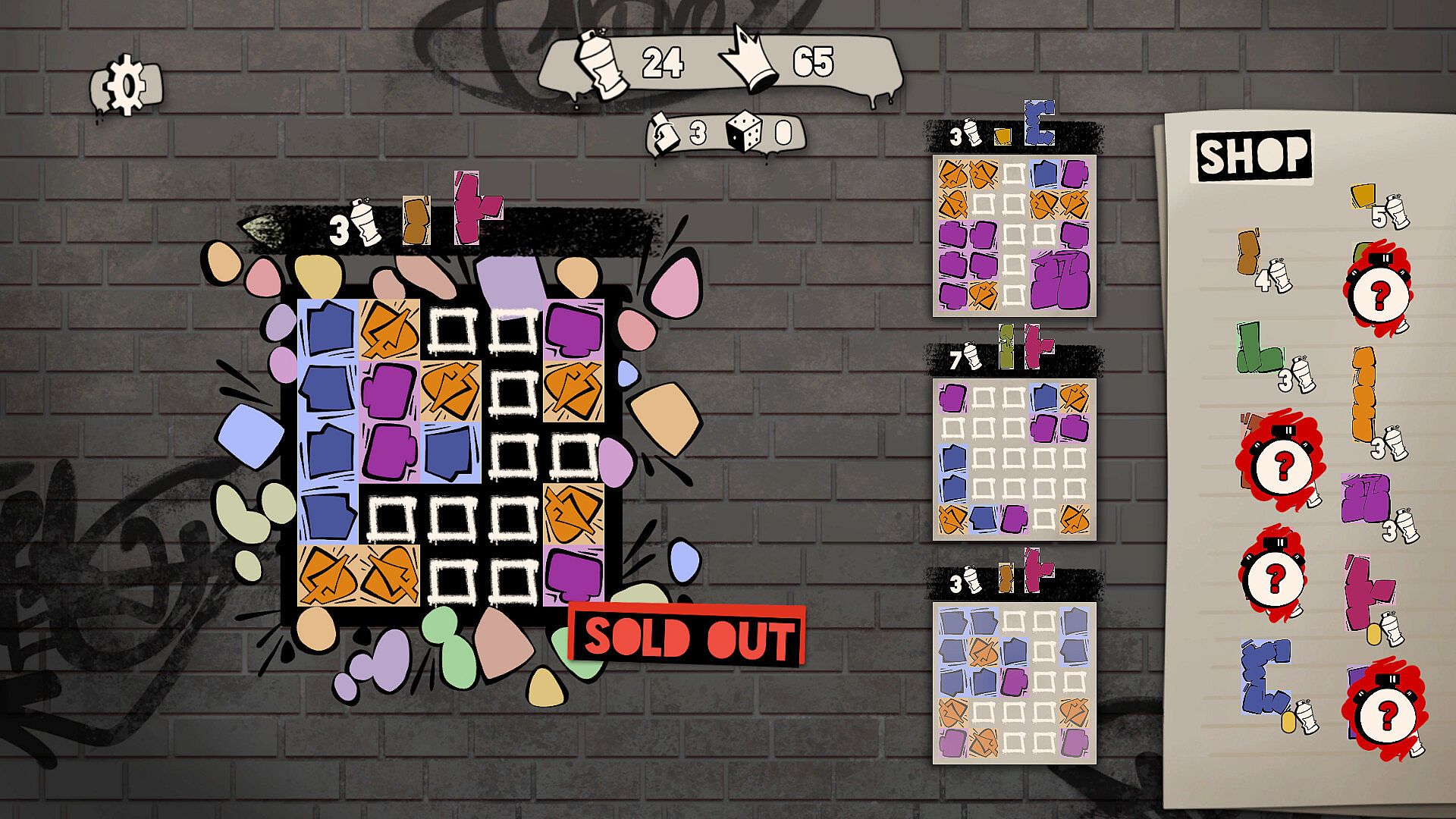
The core loop centers on decorating walls with colored graffiti pieces. Each session involves planning placements carefully to match the requirements of three active pieces. Paint serves as the main resource, and its cost requires thoughtful decisions about which piece to advance first and when to switch focus. Procedural generation ensures that every wall layout presents fresh arrangements of spaces and constraints, so no two attempts unfold identically. Unexpected events add tension, such as a shop running out of paint or a wall section becoming unavailable, forcing players to adapt their approach or accept the risk of continuing. Controls rely entirely on the mouse for selecting, rotating, and placing elements, keeping the experience straightforward yet precise. Two original relaxing tracks accompany play, paired with numerous custom sound effects that reinforce the focused atmosphere without distraction.
Game Modes
Tagablock operates as a single-player experience centered on endless procedural challenges. Sessions revolve around completing graffiti pieces under resource limits, with progression driven by careful planning across multiple simultaneous objectives. The design emphasizes solo puzzle-solving rather than competitive or cooperative structures, allowing uninterrupted focus on color placement and inventory decisions. Procedural variety replaces fixed levels, creating an ongoing series of unique configurations that test resource allocation and adaptability in each run.
Key Mechanics
Resource management forms the strategic backbone, as players balance three graffiti pieces against a finite paint supply. Rewards from completing sections influence future choices, encouraging players to evaluate trade-offs before committing paint. Setbacks introduce variability, requiring quick reassessment of priorities when paint becomes scarce or walls close off. The mouse-only interface supports rotation of paint colors and object manipulation, making every action accessible while still demanding spatial foresight. Procedural generation extends to the arrangement of graffiti targets and available spaces, ensuring repeated playthroughs encounter novel combinations of constraints and opportunities.
Who the Game Appeals To
Tagablock suits players who enjoy deliberate puzzle-solving and light strategy in a relaxed setting. Its casual accessibility through simple controls pairs with deeper planning layers that reward foresight and flexible thinking. Those drawn to indie titles with procedural elements and resource systems will find the endless wall challenges engaging, particularly when seeking short sessions that still demand concentration. The combination of visual decoration and economic decisions creates a steady rhythm suitable for focused solo play.
Is It Worth Playing?
Tagablock remains in a coming-soon state with no user reviews available yet. Its verified features center on procedural puzzle-solving, paint-based resource management, mouse-driven controls, and relaxing audio. The game targets individuals who appreciate planning ahead in single-player puzzle formats and handling occasional disruptions without complex systems. For players seeking an original casual strategy experience built around color placement and adaptive decision-making, the described mechanics provide a clear foundation worth monitoring once released. Those preferring multiplayer or established content libraries may find the solo procedural focus narrower in scope.