













Project Megamall is a pixel art strategy and simulation game for PC in which players manage the construction and daily operations of a shopping mall. The premise centers on settling a family debt by turning a plot of land into a profitable retail destination, with every decision from layout to staffing shaping long-term success.
Gameplay
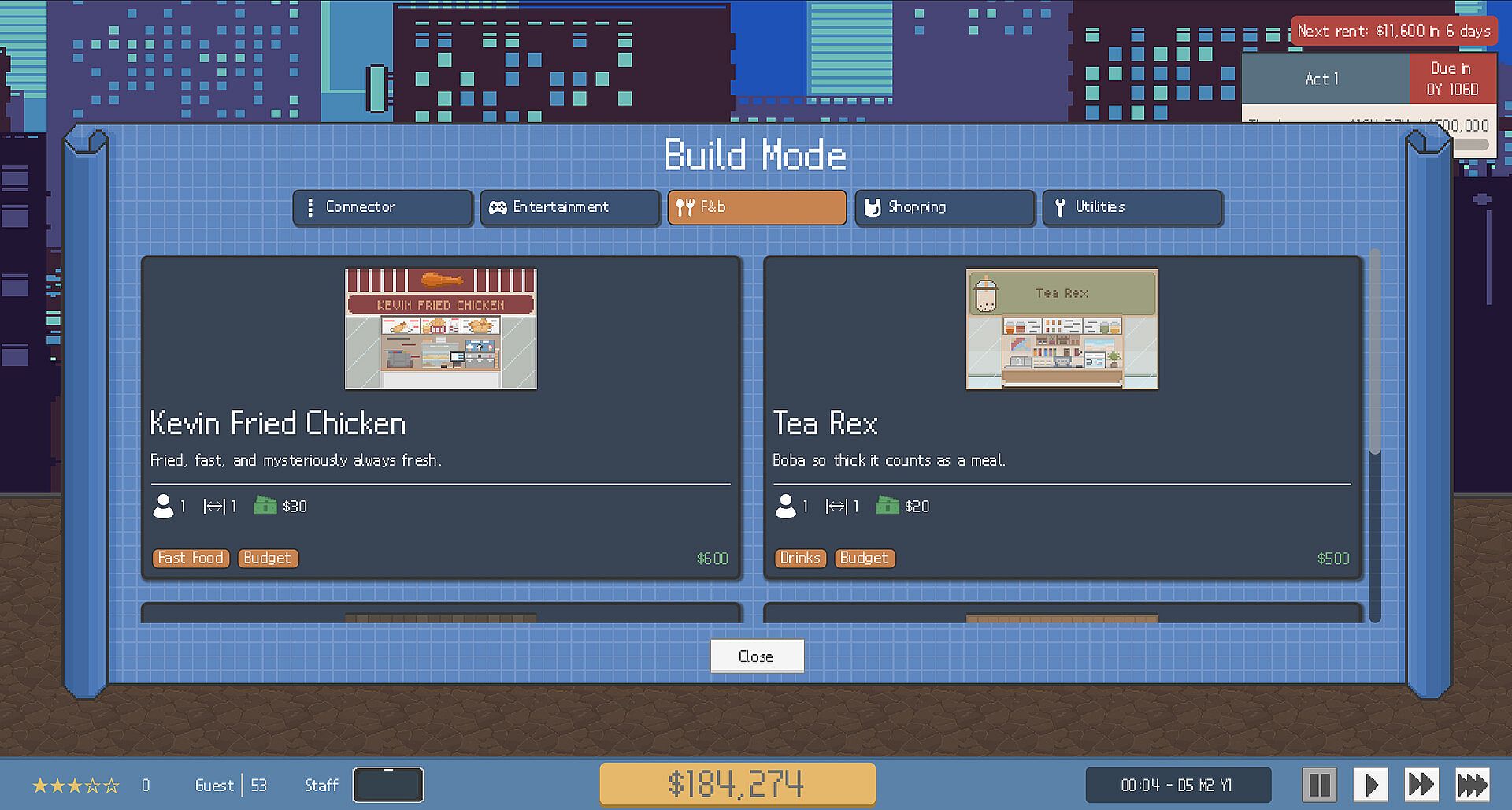
Players alternate between nighttime planning phases and daytime customer service. During the build period, shops stack across multiple floors and connect through stairs, escalators, or elevators. More than twenty distinct room types appear, ranging from coffee shops and fried chicken outlets to cinemas, arcades, and car showrooms. Placement creates measurable effects: positioning a snack bar beside a cinema boosts sales, while clustering luxury stores can attract pickpockets. Dozens of hidden combinations reward experimentation, and successful pairings are logged in a dedicated Combo Book for future reference.
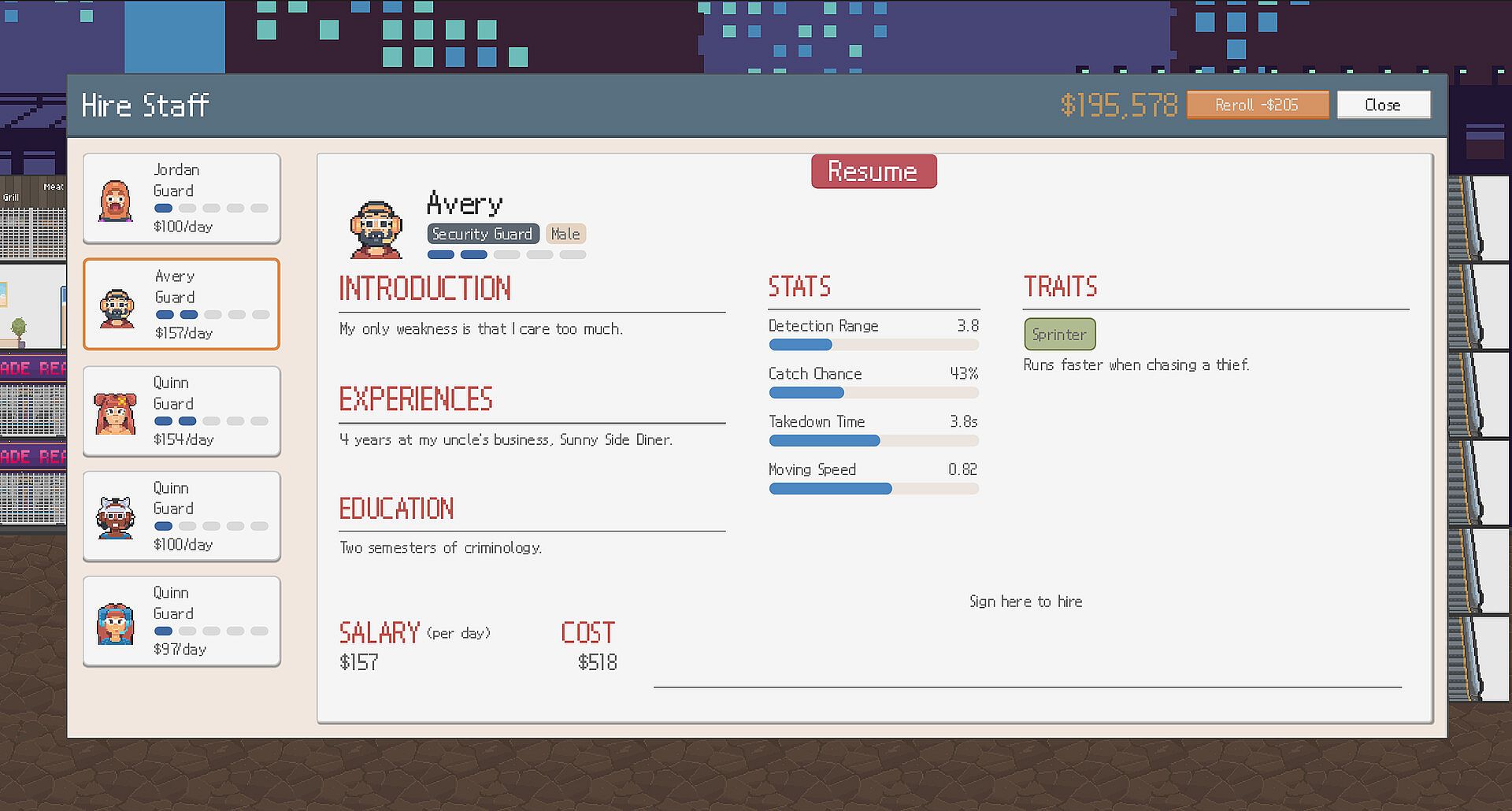
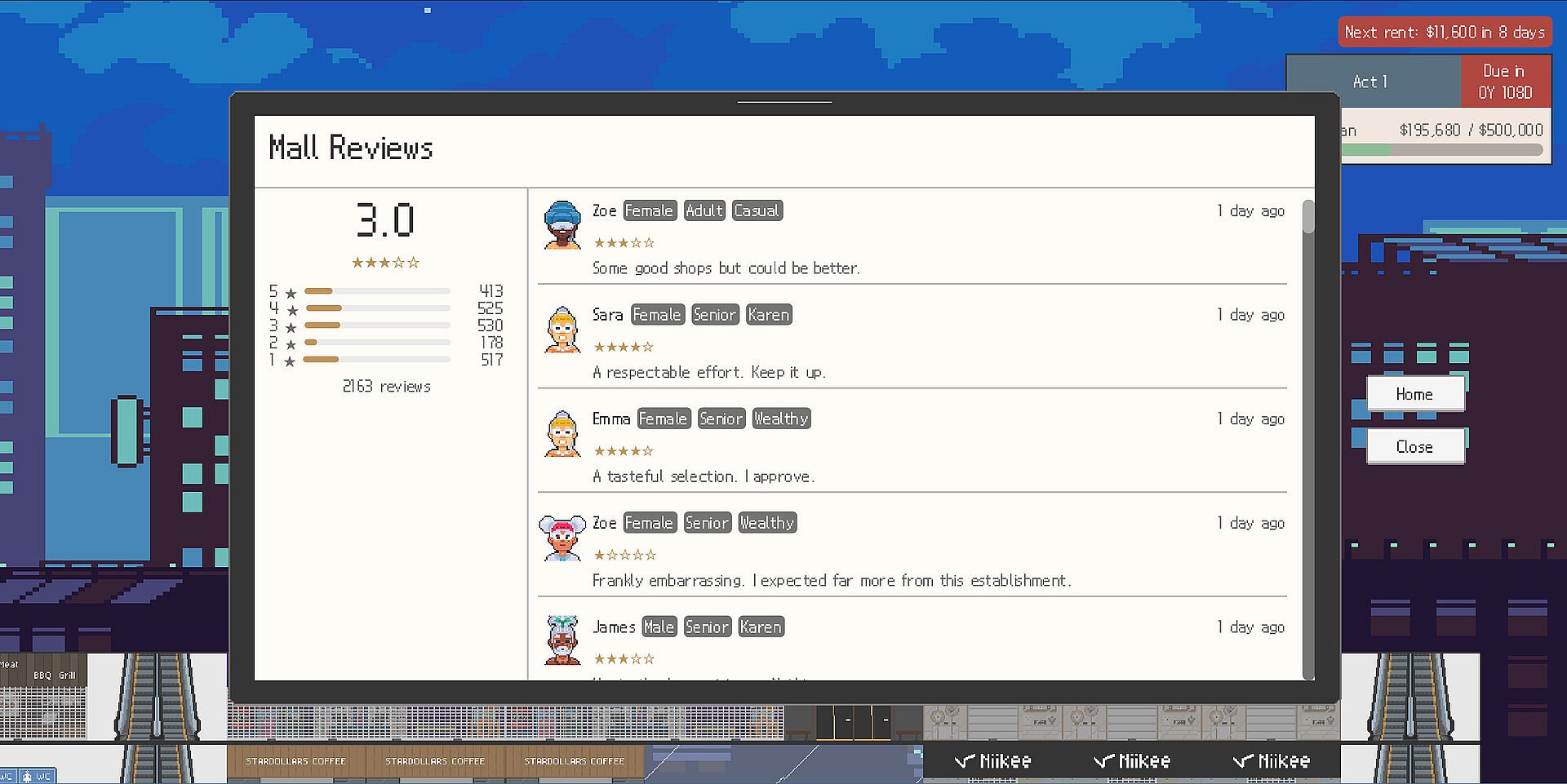
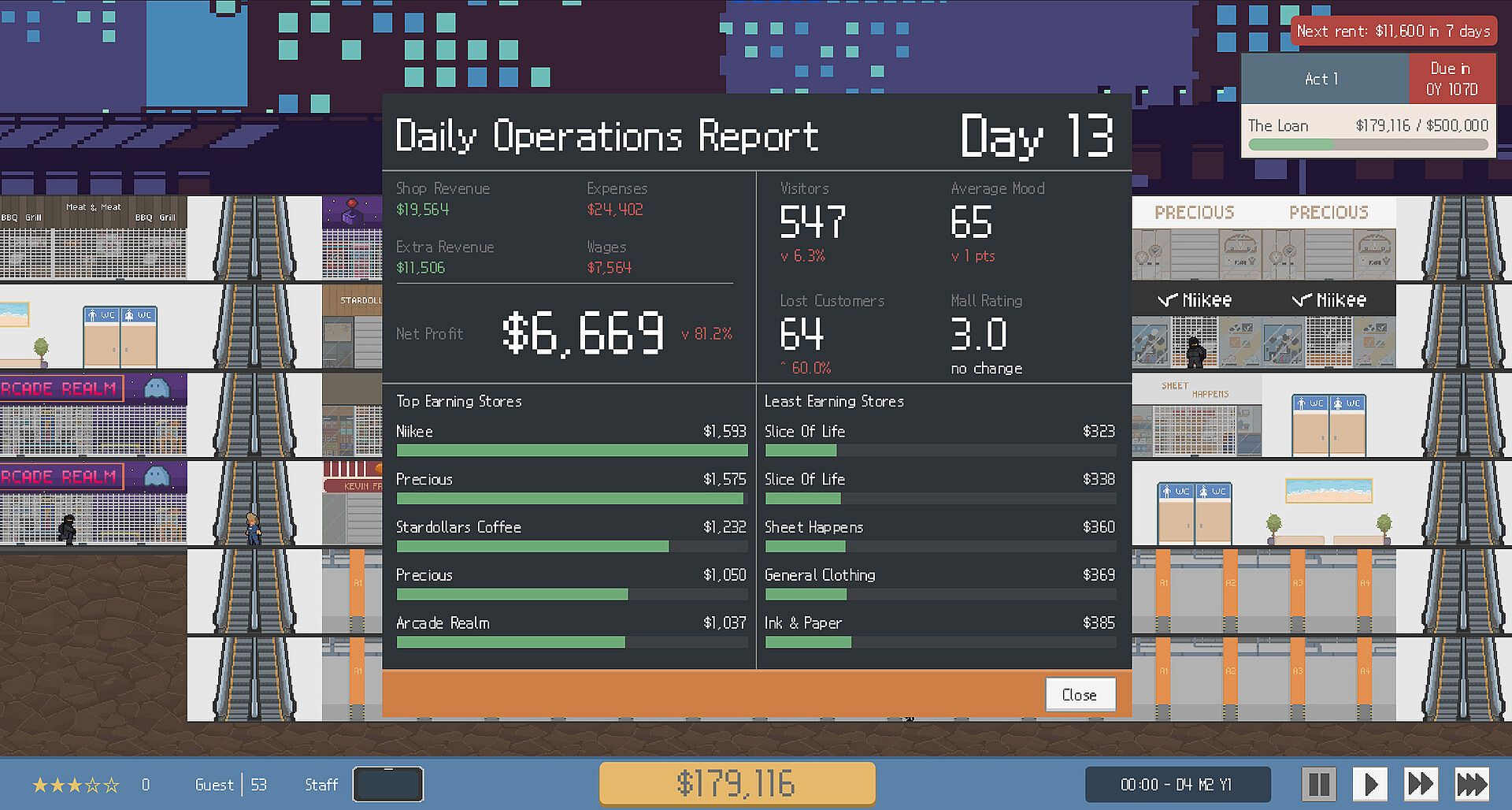
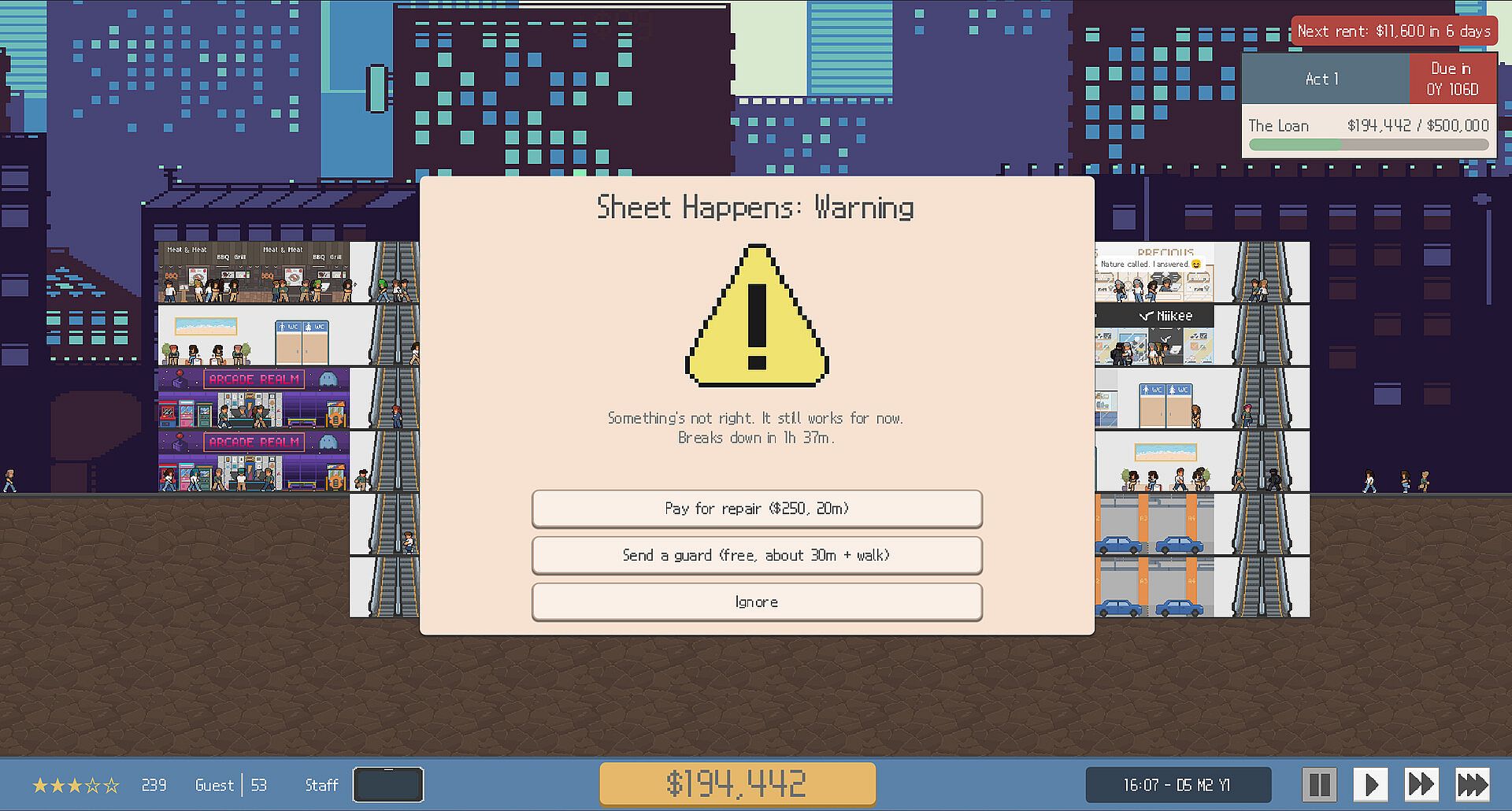
Staff hiring introduces another layer of management. Clerks, janitors, and guards each reveal only one trait at the point of recruitment. The remaining traits surface through performance, sometimes requiring extra payment for full disclosure beforehand. Daily challenges include thieves, litter, storms, Black Friday surges, lost children, and demanding customers. Equipment failures while visitors remain inside demand immediate repairs to avoid lawsuits. Customer reviews and daily reports provide feedback that unlocks milestone upgrades, each carrying its own trade-offs.
Game Modes
The core experience follows a single-player management loop built around debt repayment and mall expansion. Nighttime construction gives way to open hours where shoppers move through the space, purchasing goods, using facilities, and generating complaints or praise. Progress tracks through sales figures, review scores, and milestone completions. Once the initial debt clears, the game continues without a hard endpoint, allowing players to pursue further growth or experiment with different layouts and staff combinations.
Building and Management Systems
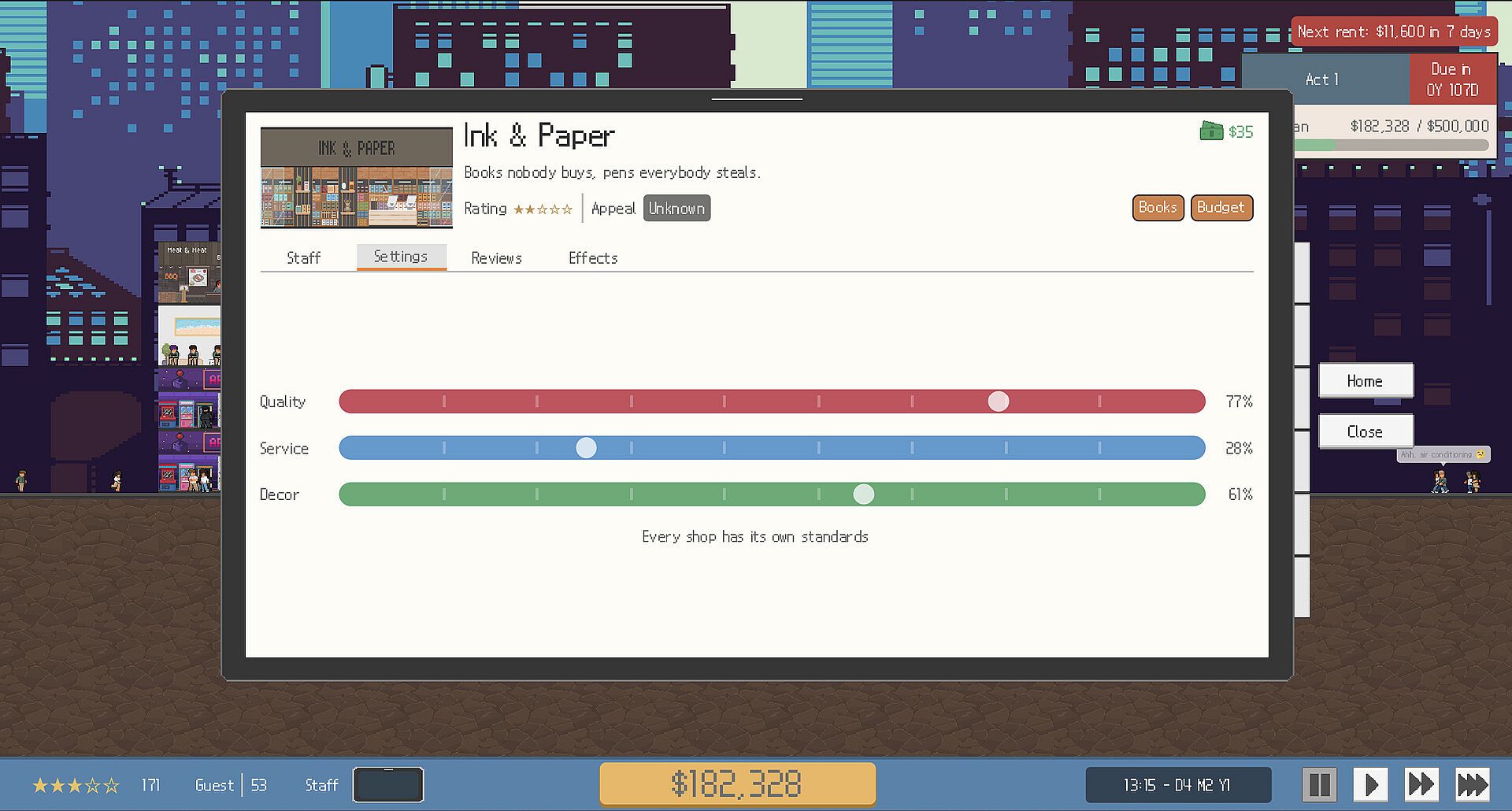
Vertical expansion forms the backbone of progression. Each new floor increases capacity but requires careful routing so customers can reach every level without frustration. Facilities such as restrooms and seating areas improve overall floor reputation when placed strategically. Staff traits influence efficiency, security, and maintenance, forcing players to weigh short-term costs against long-term reliability. Random events test preparedness, while review reading and report analysis guide incremental improvements. The Combo Book encourages repeated playthroughs by rewarding discovery of synergistic arrangements that increase revenue or reduce problems.
Is It Worth Playing?
Project Megamall targets fans of deliberate, systems-driven simulation games who enjoy optimizing layouts and responding to customer feedback. Its pixel art style and focused scope suit players comfortable with single-player management titles that emphasize planning over action. Because the game remains in development with a coming-soon release date, no player reviews or long-term update history exist yet. Those drawn to the described mechanics of floor stacking, combo discovery, and staff trait management will likely find the experience engaging once it launches, particularly if they value thoughtful placement and incremental progress over fast-paced competition.












