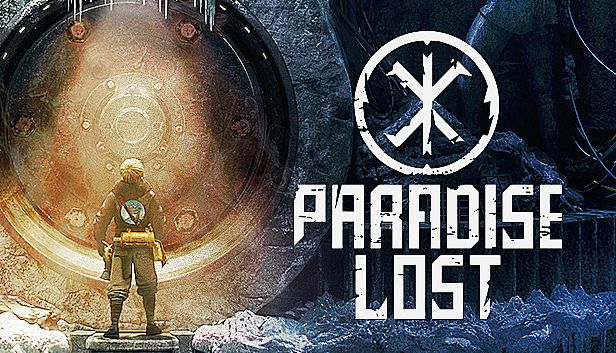















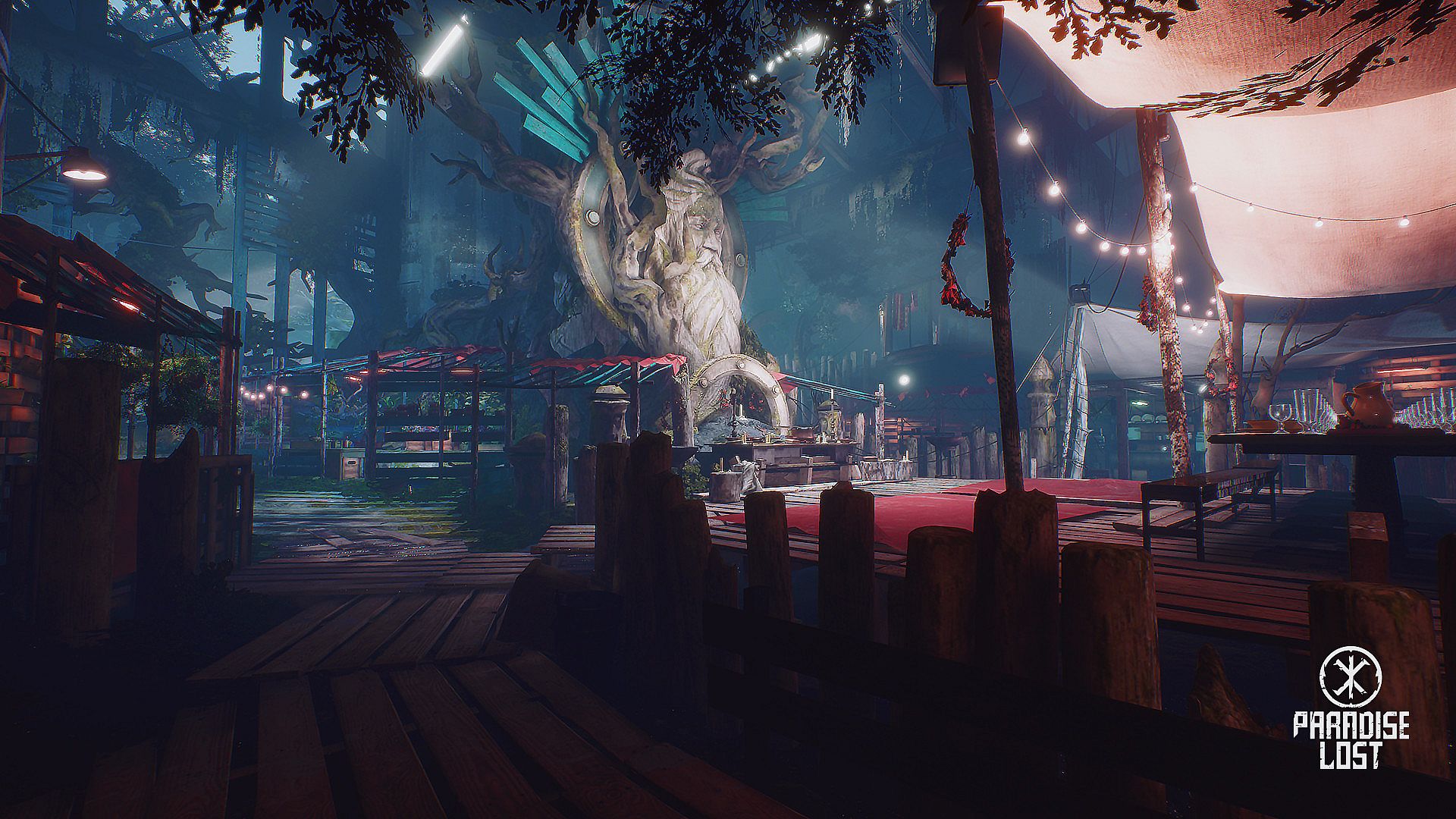
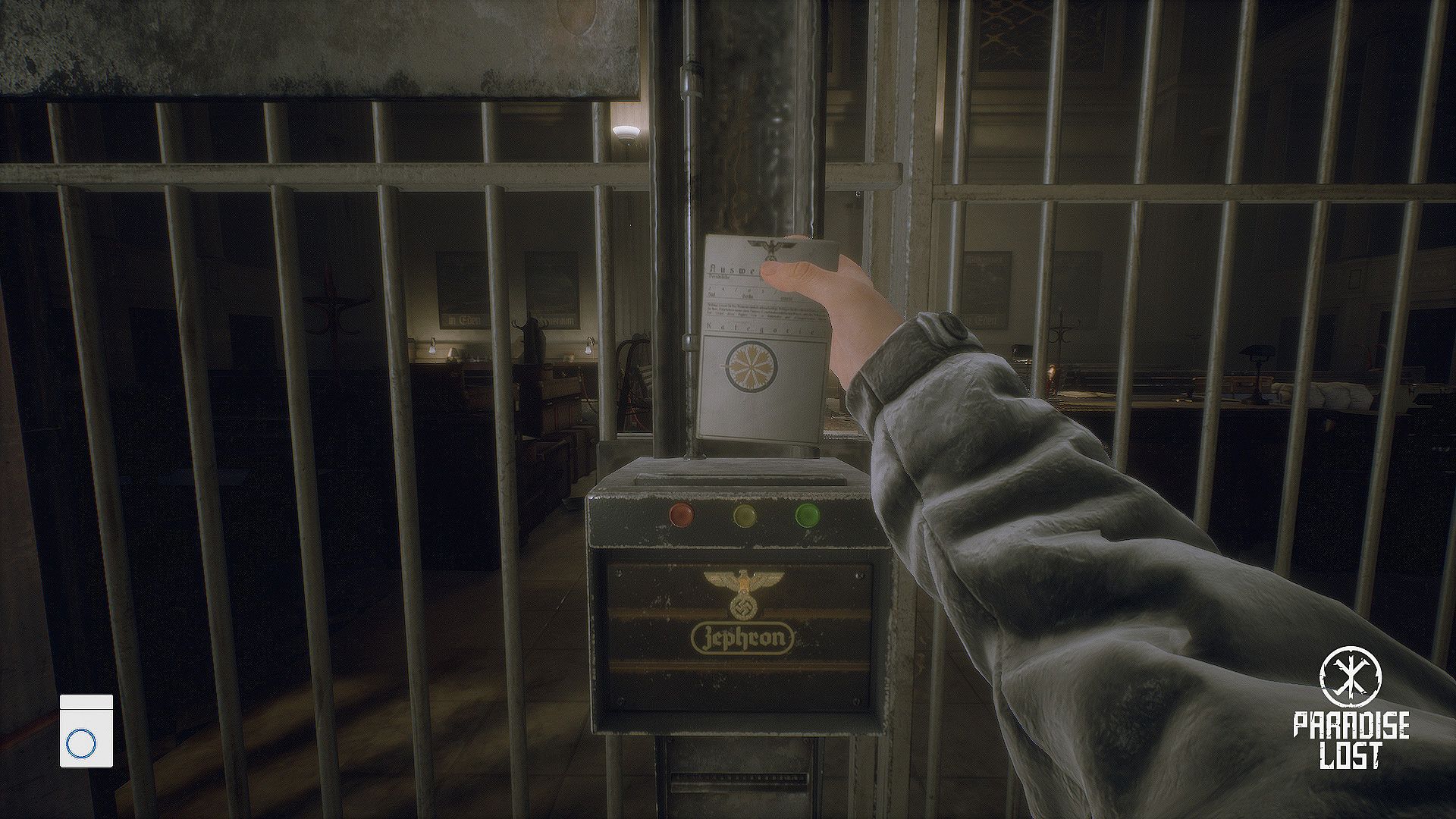
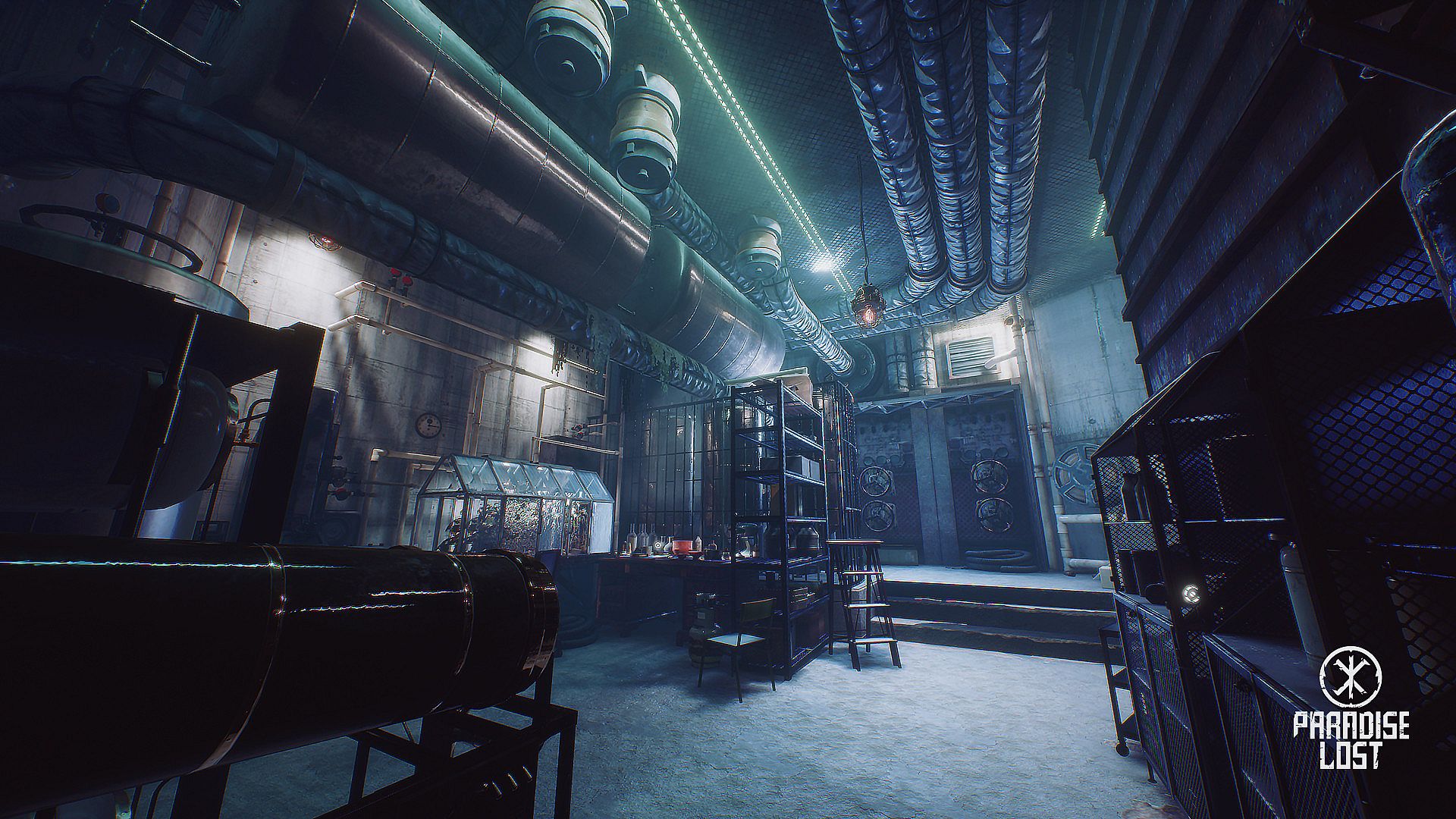
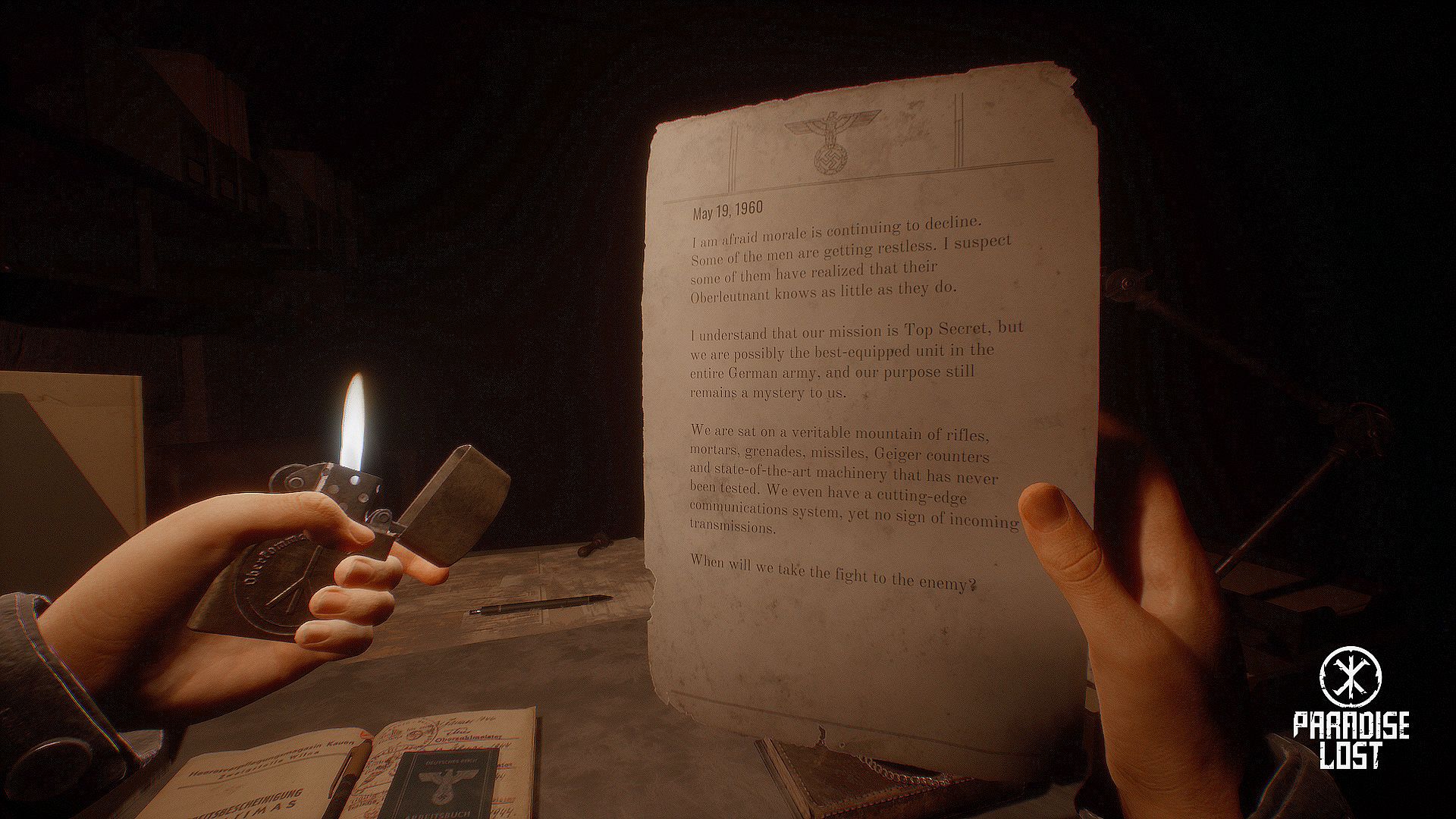
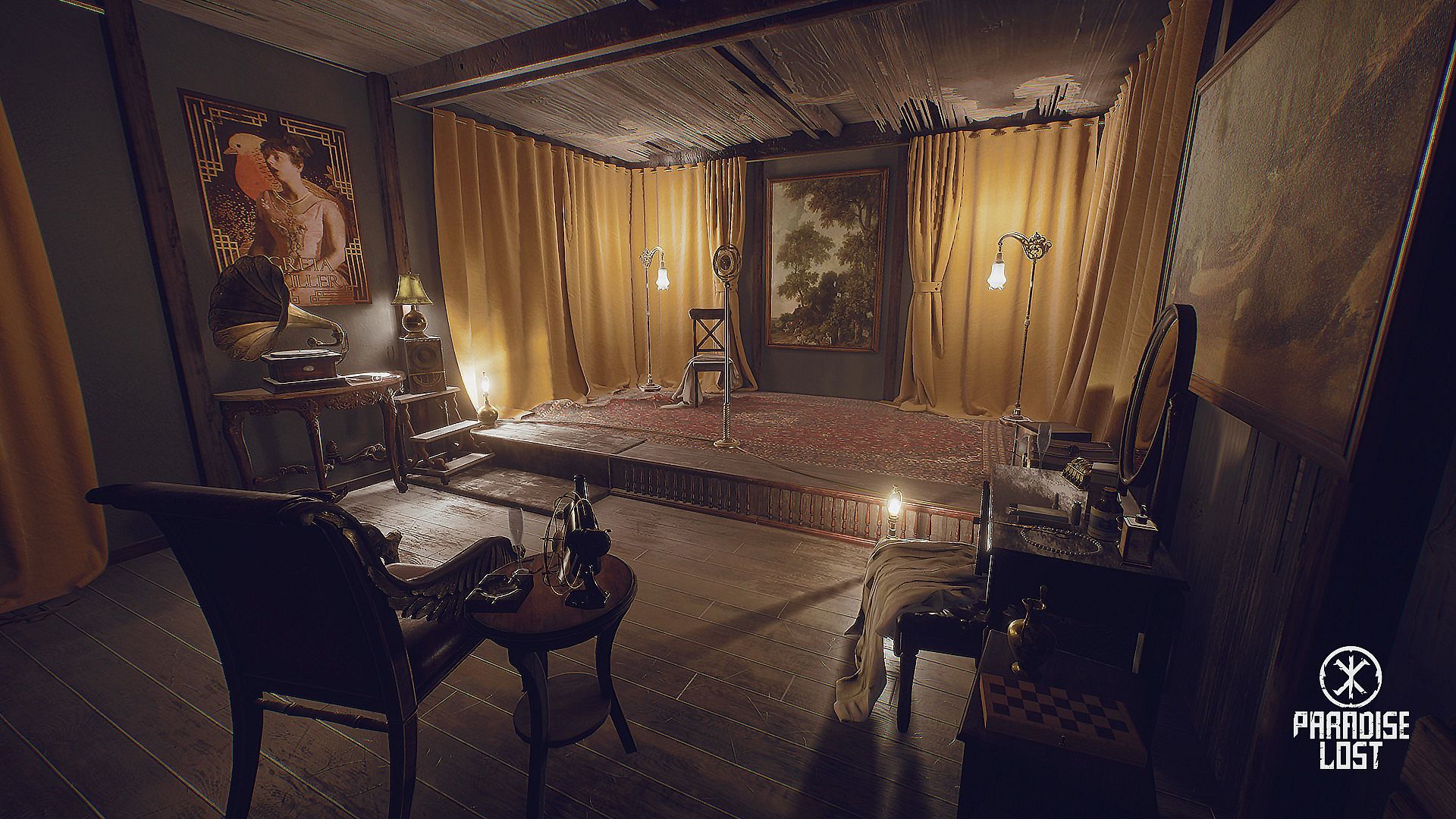
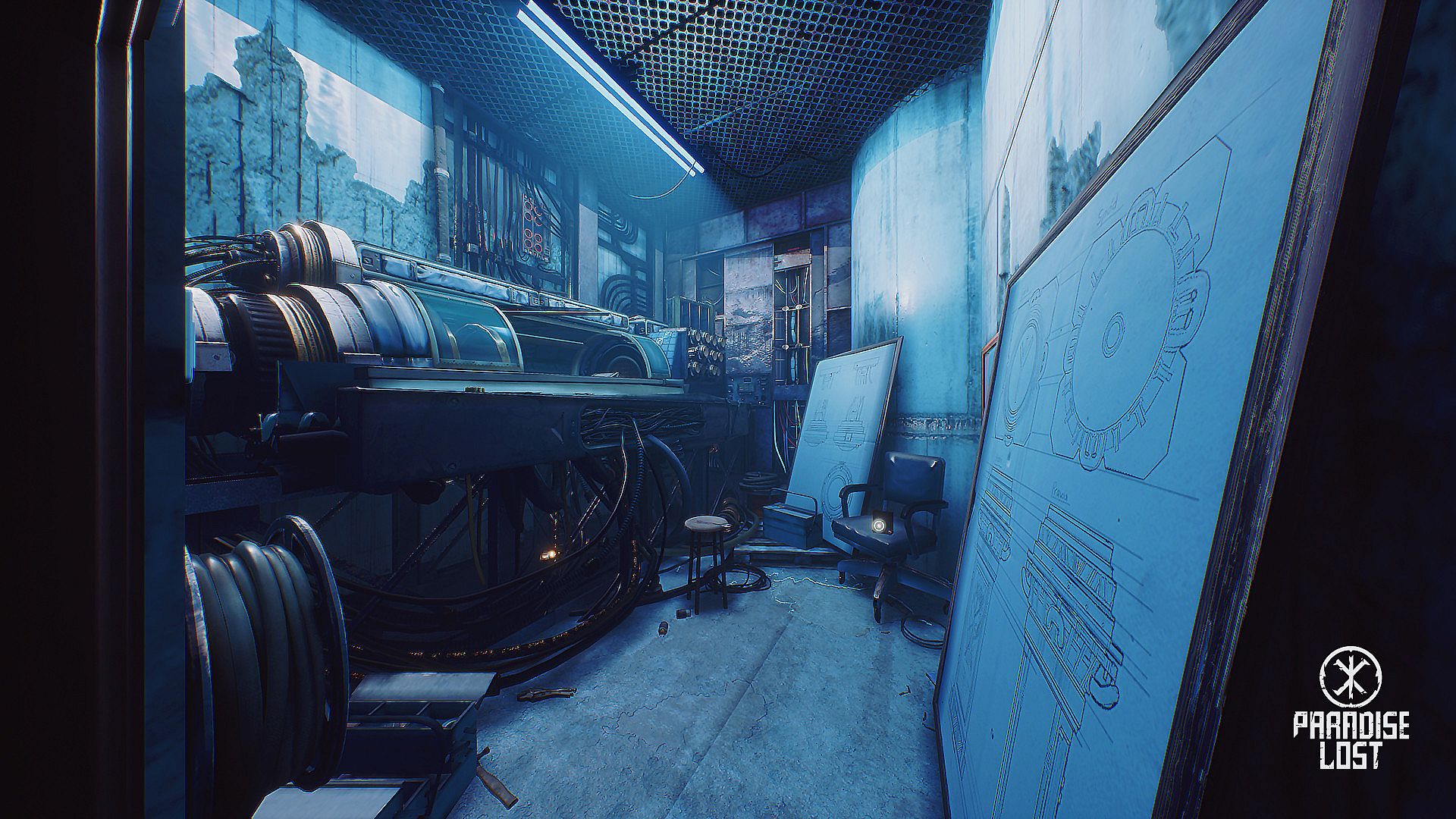
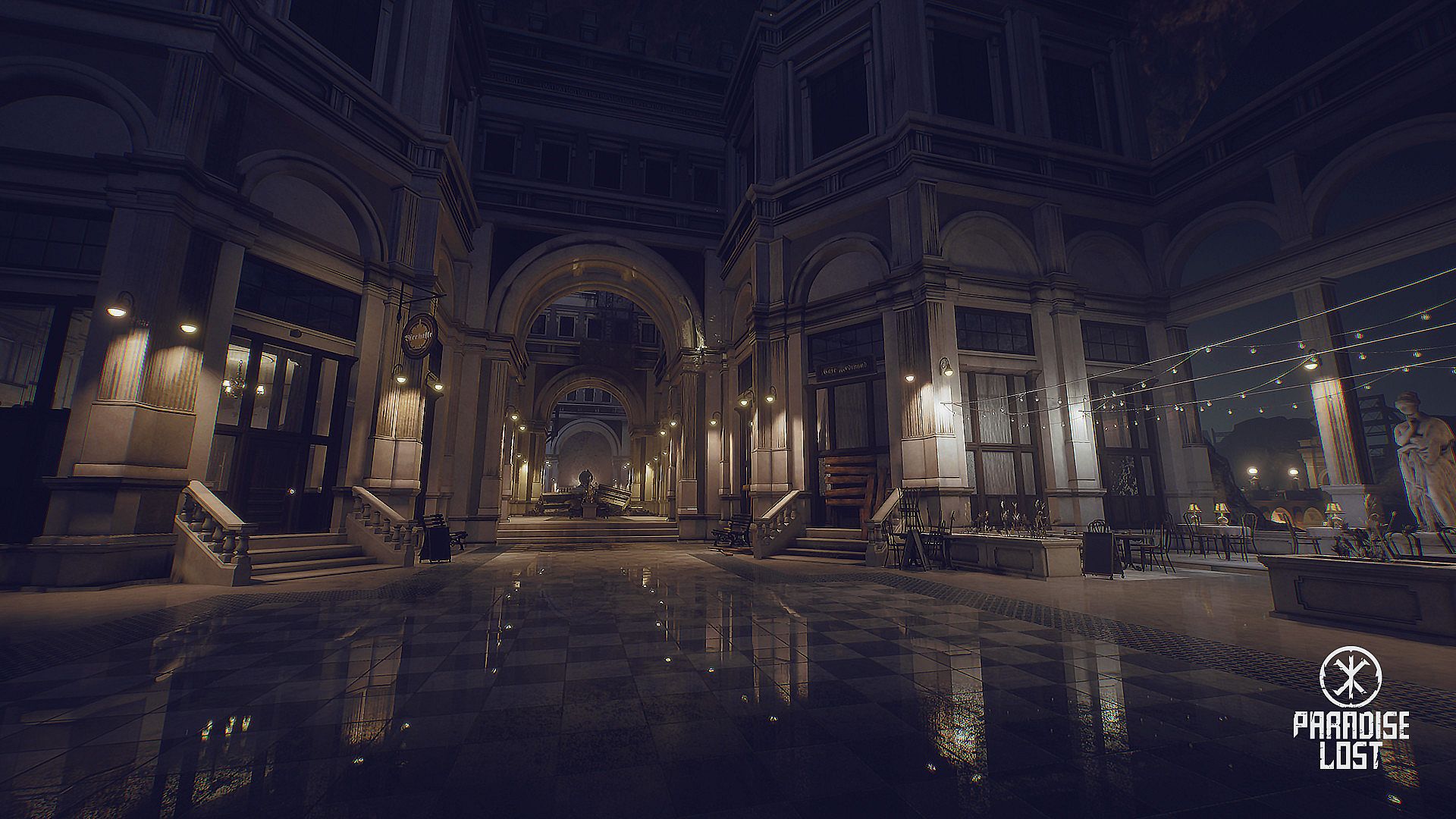
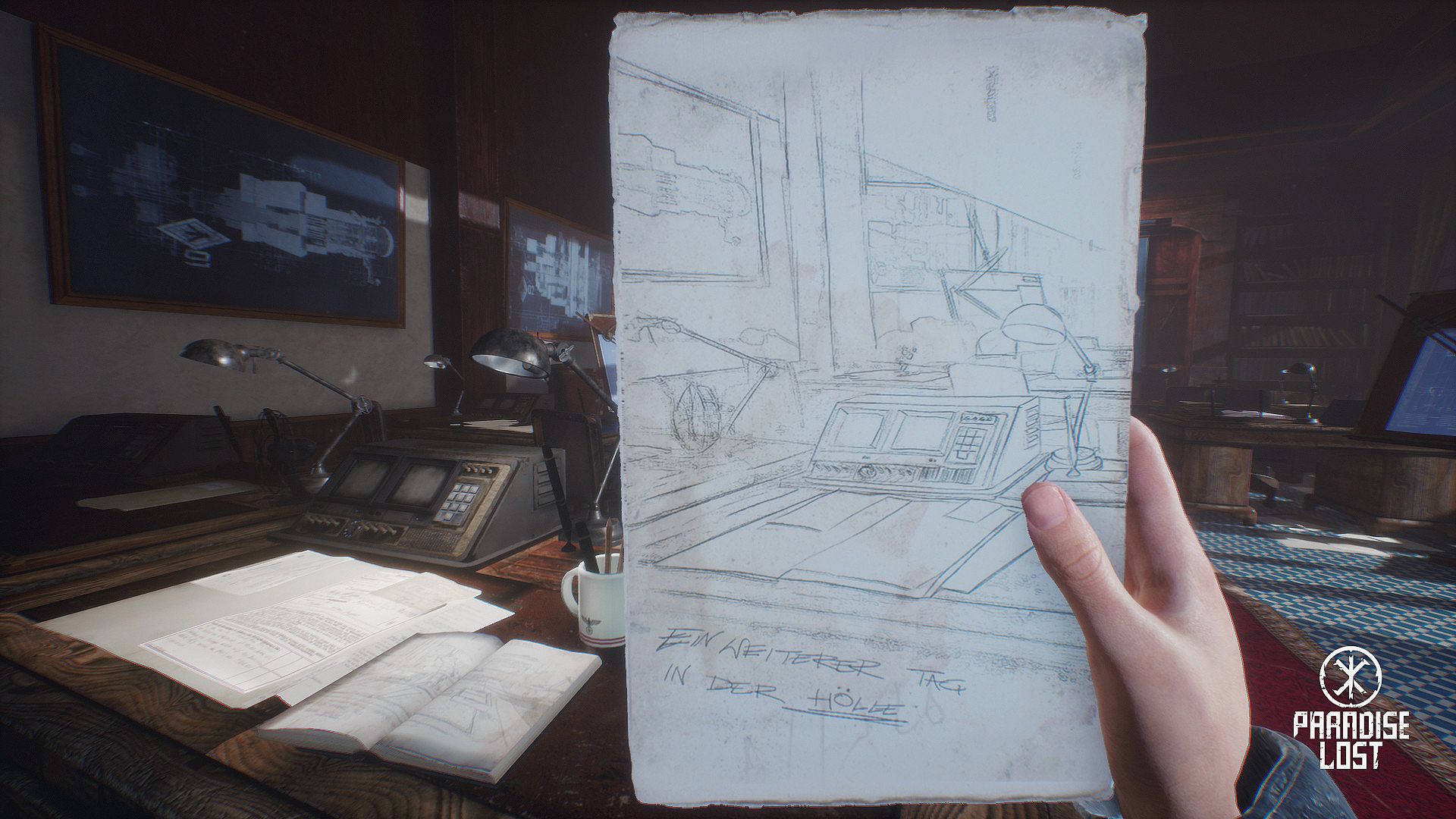
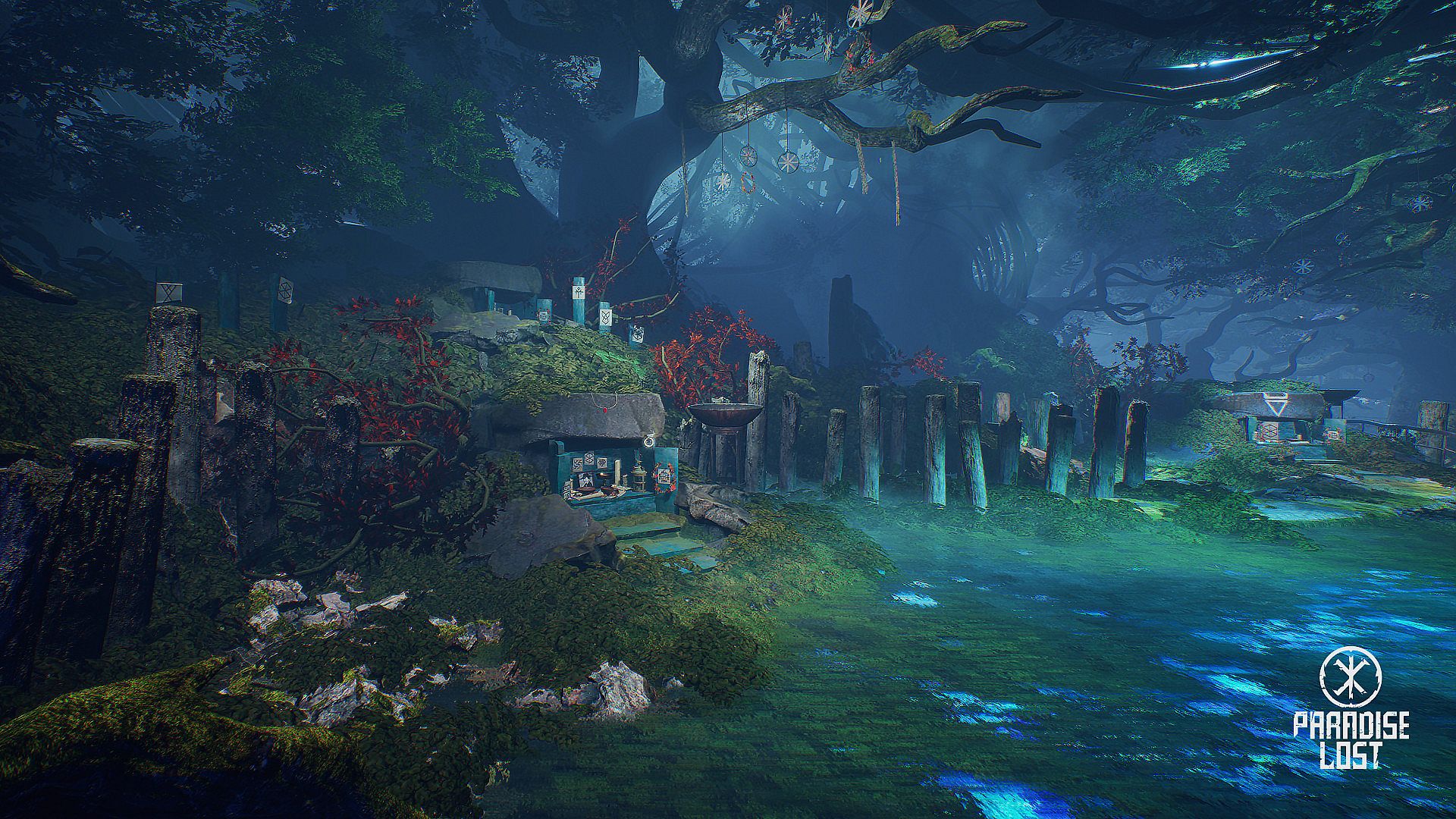
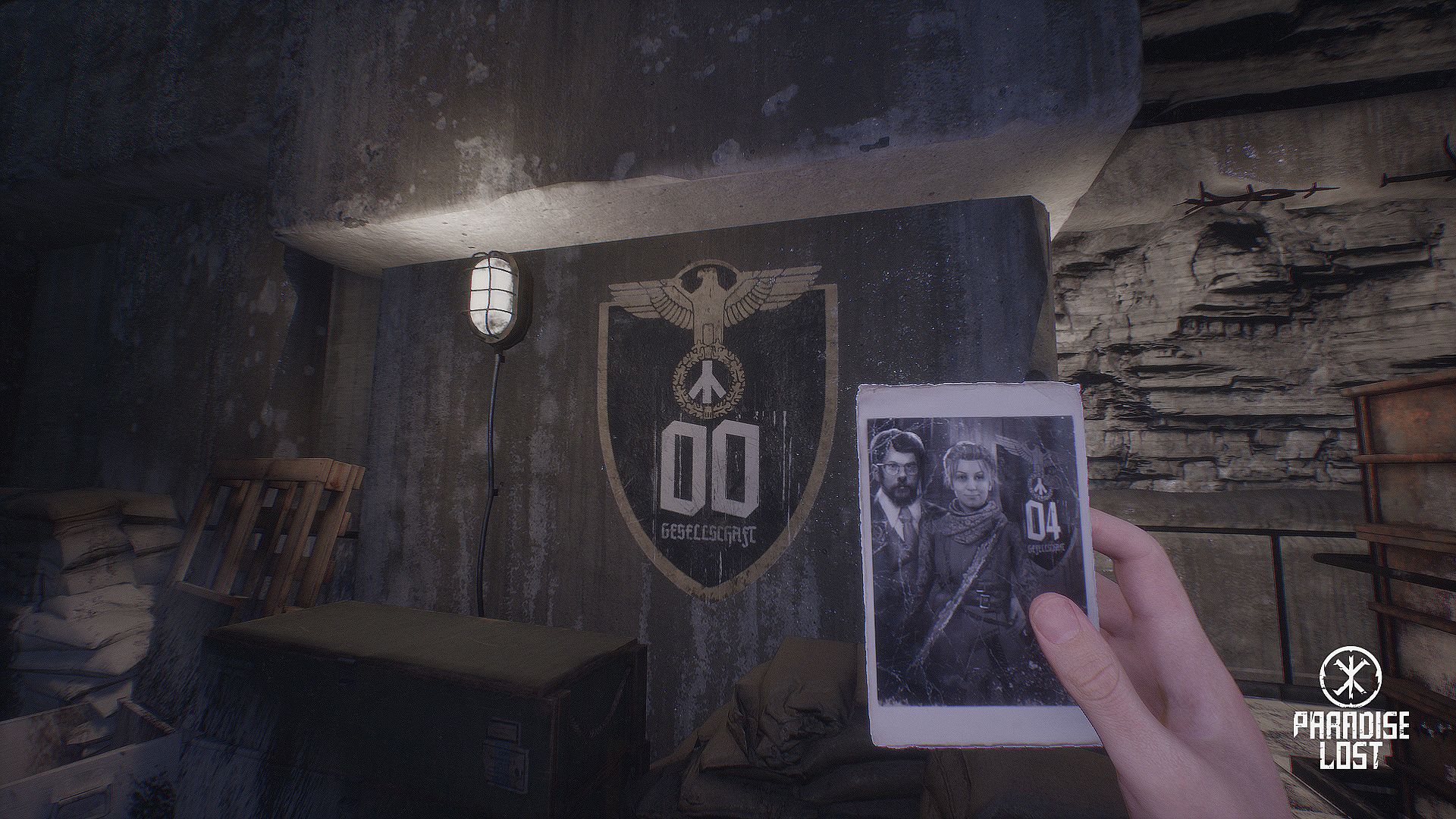
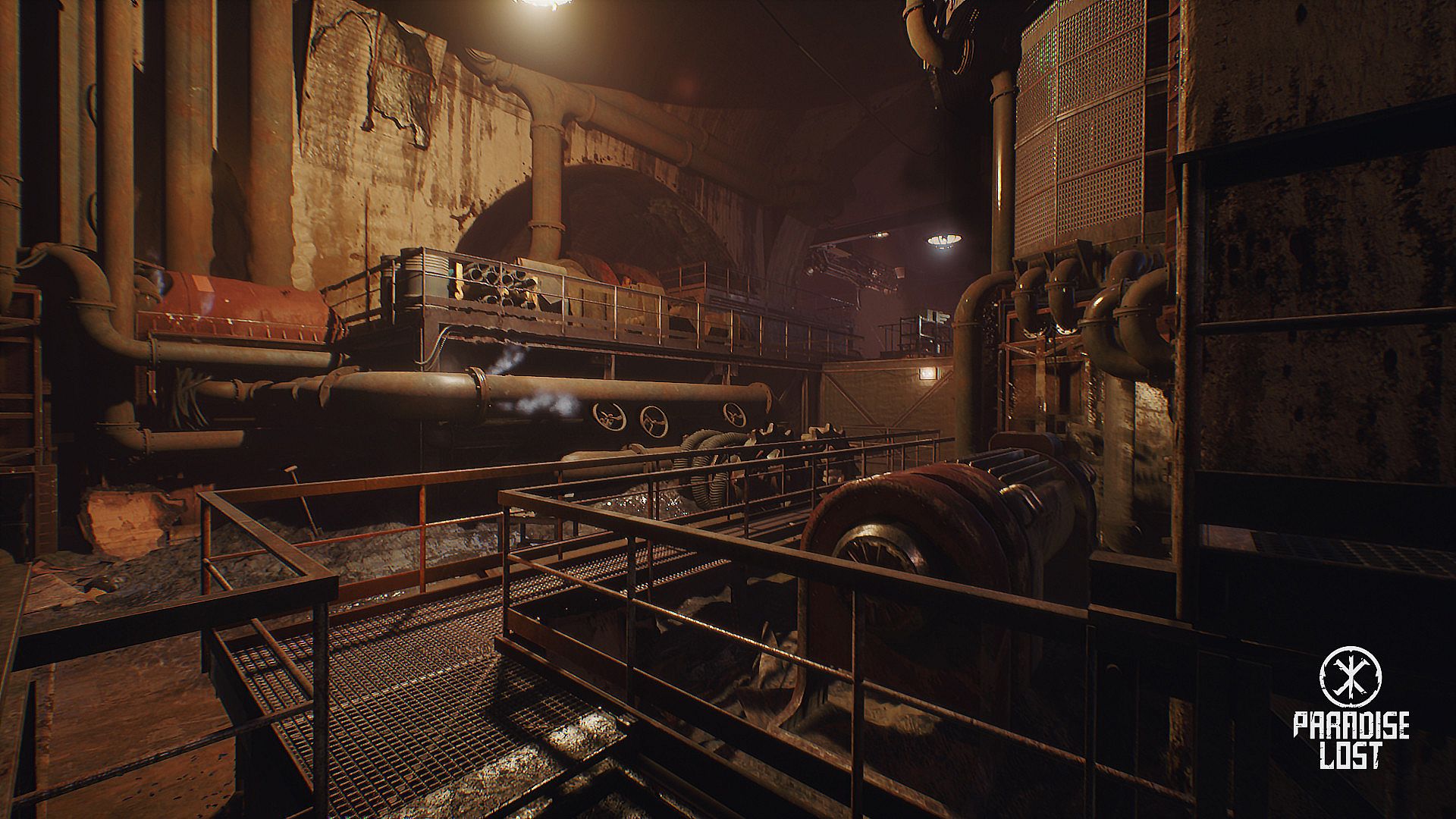
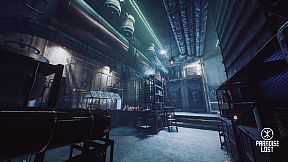
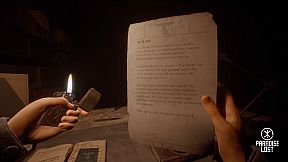
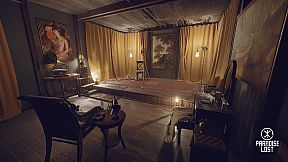
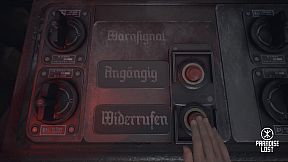
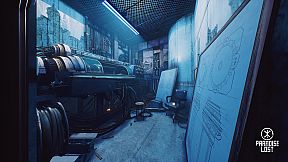
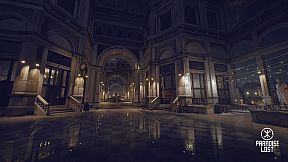
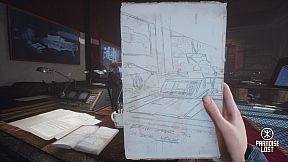
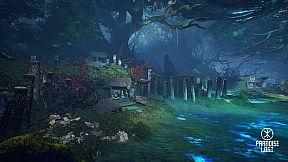
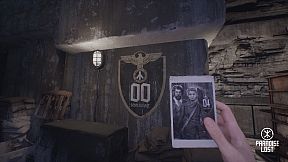
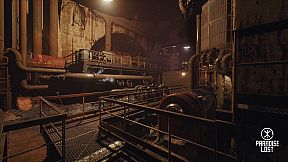
Paradise Lost é um jogo de aventura indie ambientado em uma história alternativa onde a Segunda Guerra Mundial se estendeu por décadas e culminou em um desastre nuclear que devastou grande parte da Europa. A narrativa acompanha Szymon, um menino de doze anos que atravessa os ermos irradiados da Polônia após perder a mãe. Ele descobre um enorme bunker nazista abandonado e passa a investigar a identidade de um homem que aparece em uma fotografia guardada por ela. A história se desenrola pela exploração de uma instalação subterrânea retrofuturista, onde a tecnologia industrial se mistura a símbolos pagãos eslavos e vestígios de uma cidade oculta.
Gameplay
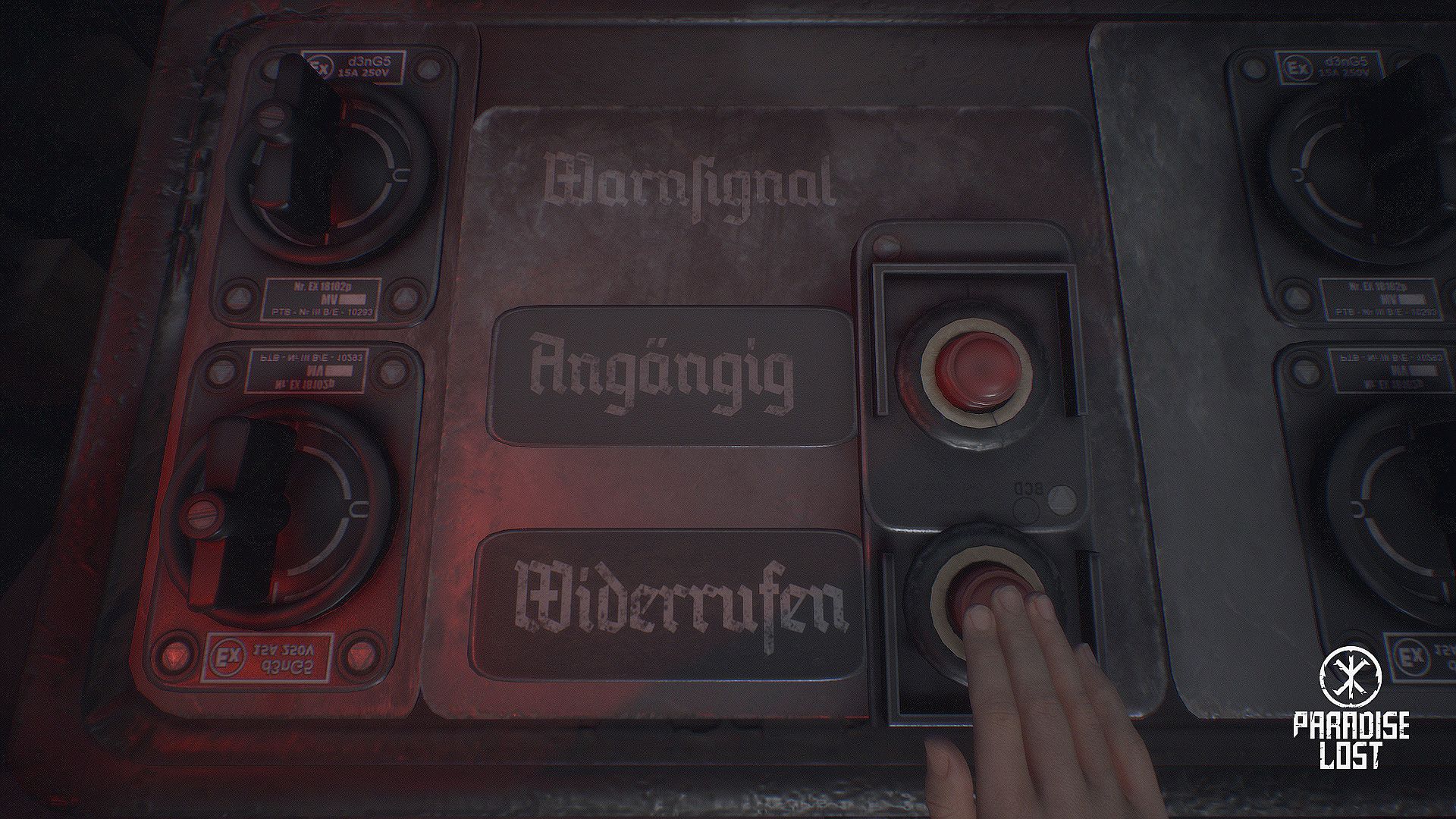
O ciclo principal consiste em percorrer ambientes detalhados, examinar objetos e absorver informações por meio de áudio logs e elementos narrativos espalhados pelo cenário. O deslocamento é intencional e sem pressa, convidando o jogador a observar a extensão dos corredores, laboratórios e alojamentos do bunker. As interações são simples: abrir portas, ativar terminais e reconstruir eventos a partir de documentos e gravações, sem quebra-cabeças complexos ou combates. A atmosfera surge do contraste entre a maquinaria avançada e os motivos antigos, pontuada por contatos via rádio com uma garota chamada Ewa, que orienta a exploração e motiva a descida aos níveis mais profundos.
Modos de Jogo
Paradise Lost oferece uma única experiência narrativa contínua, sem modos ou ramificações. O progresso é linear pelas seções do bunker, revelando sua história desde as origens nazistas, passando pela ocupação de rebeldes poloneses, até o destino final de seus habitantes. A estrutura prioriza a descoberta no ritmo do jogador, com pontos de verificação ligados a marcos da trama em vez de fases ou desafios tradicionais.
História e Cenário
A linha temporal alternativa situa a ação na Polônia dos anos 1980, ainda marcada pelo conflito prolongado e pela radiação. A jornada de Szymon expõe camadas do passado do bunker, incluindo experimentos, rebeliões e a incorporação de elementos culturais misteriosos ao seu projeto. A presença de Ewa pelos sistemas de comunicação da instalação cria um fio pessoal, sugerindo ligações com o homem da fotografia, sem exigir combate ou gerenciamento de recursos. O cenário mantém a premissa pós-apocalíptica, mas destaca o isolamento do mundo subterrâneo.
Vale a Pena Jogar?
Paradise Lost agrada quem busca aventuras contemplativas e centradas na história, em vez de ação ou sistemas complexos. Sua mecânica minimalista proporciona uma exploração focada de um bunker de história alternativa intrigante, embora alguns considerem o ritmo lento e as vozes irregulares. O jogo está disponível como título completo para um jogador, sem atualizações ou conteúdo adicional. Quem aprecia walking simulators atmosféricos e narrativas baseadas em descobertas encontrará coerência entre duração e tom do gênero, enquanto quem prefere ritmo mais acelerado ou maior profundidade mecânica pode preferir outras opções.