




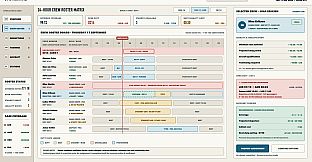
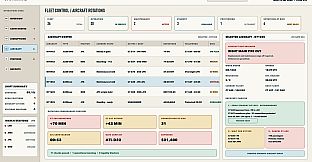
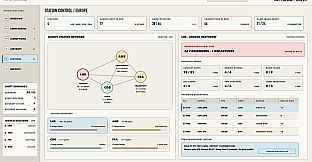
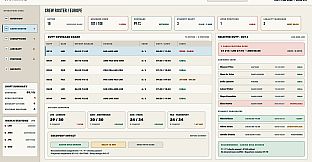
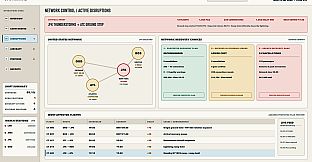
Ops Normal: Airline Operations Control Center is a single-player strategy and simulation game set in the high-pressure environment of an airline operations control center. Players step into the role of recovering a disrupted daily schedule rather than building an airline from scratch, managing the ripple effects of real-world operational challenges on PC.
Gameplay
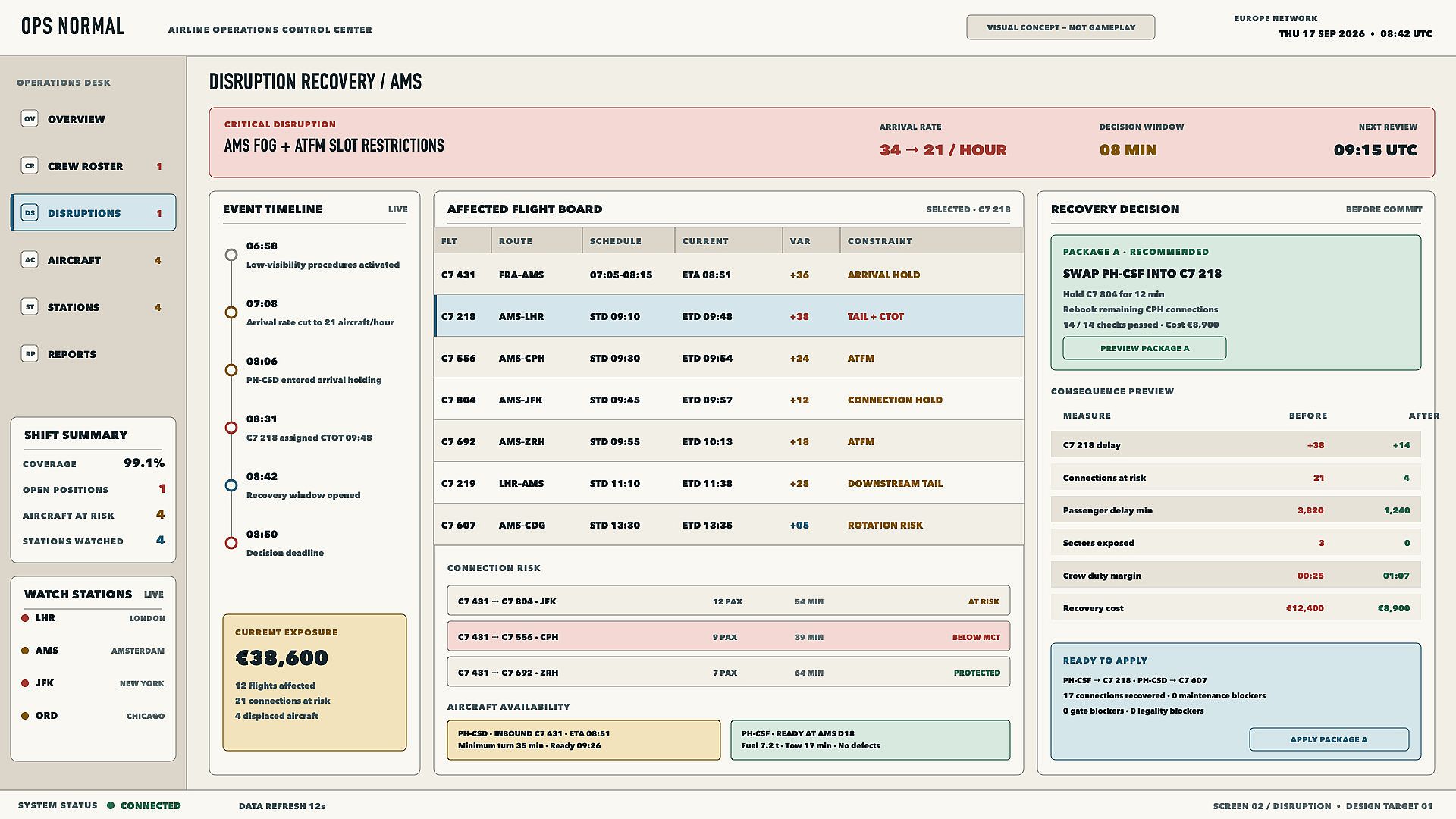
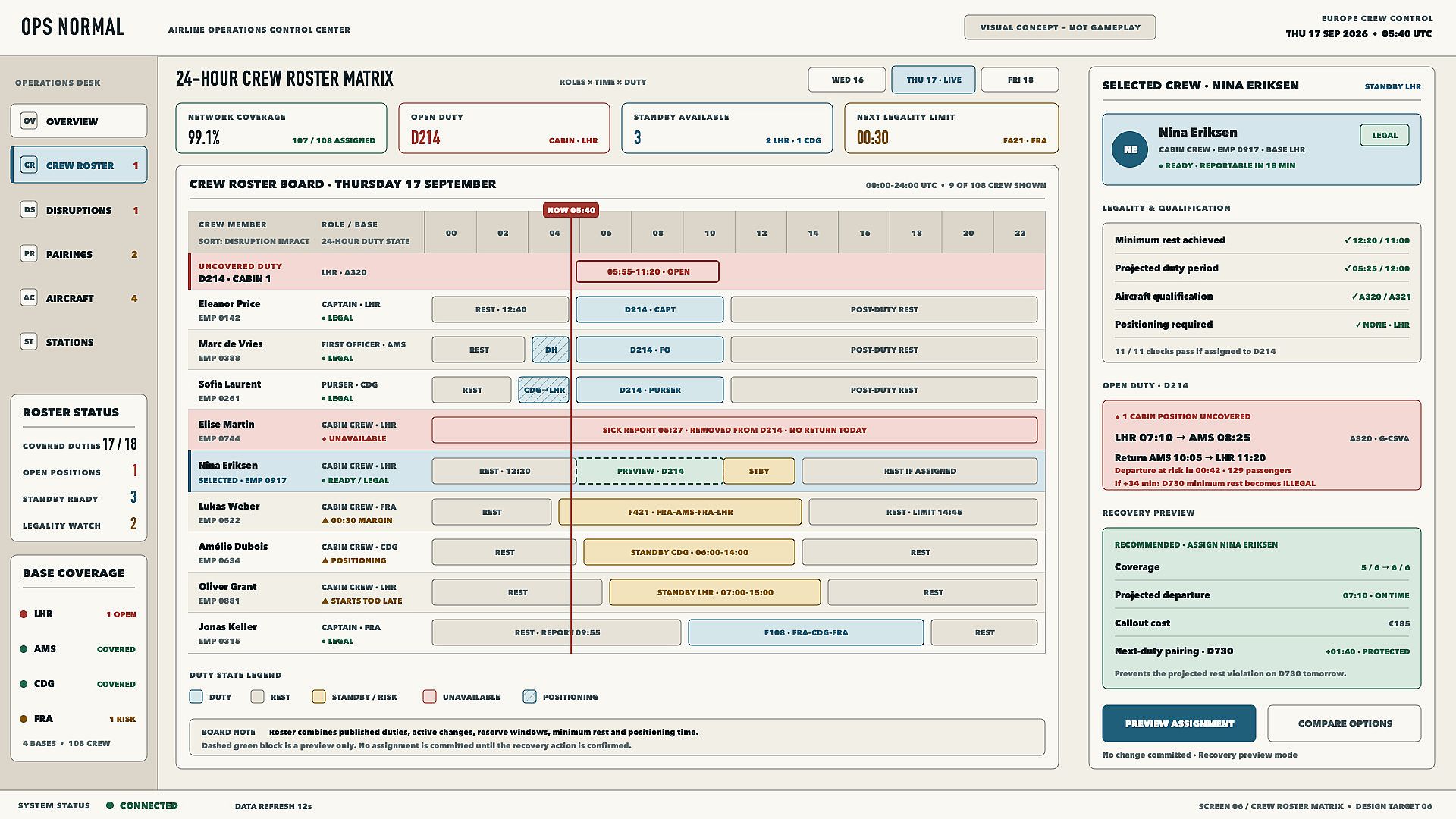
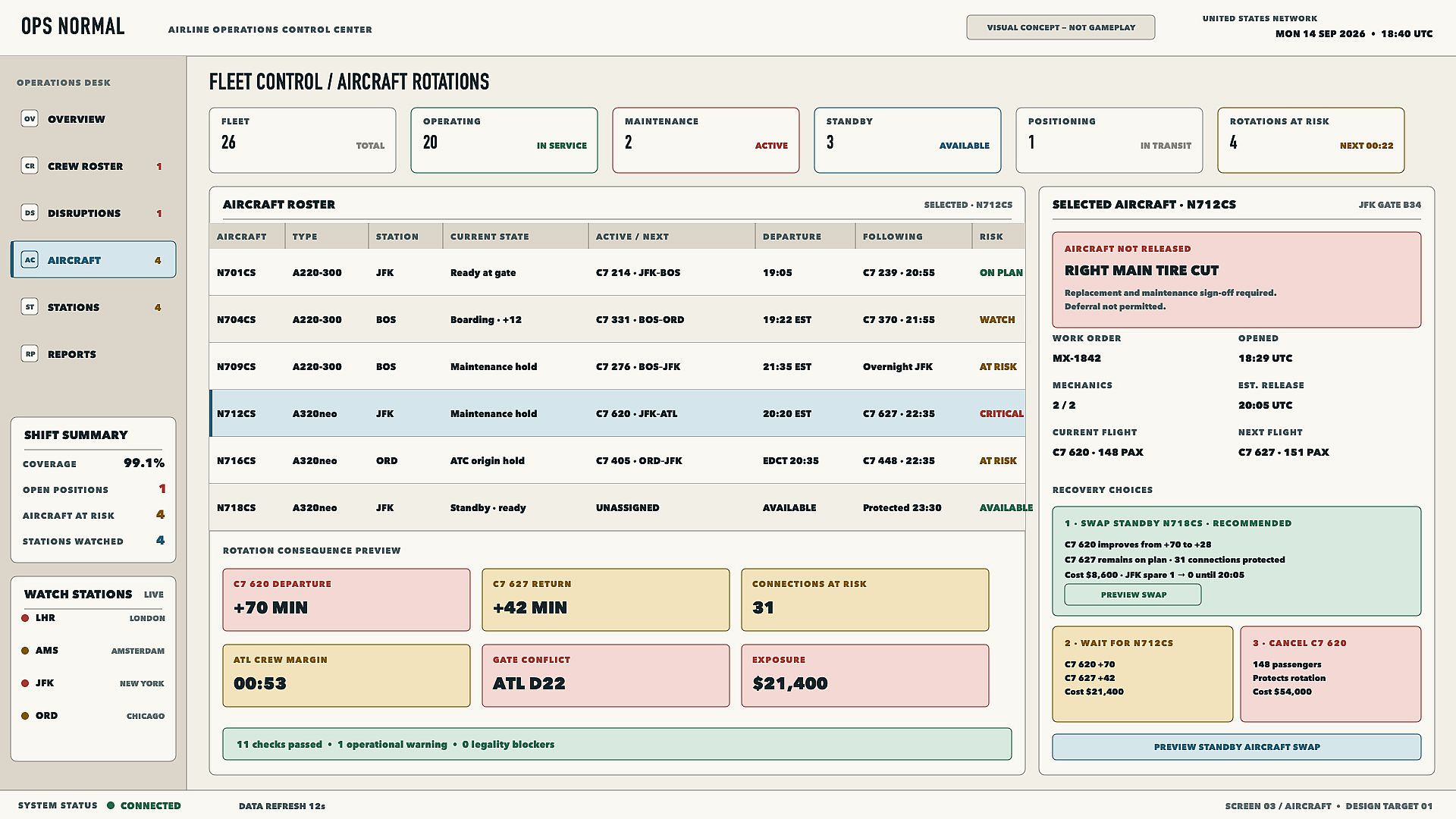
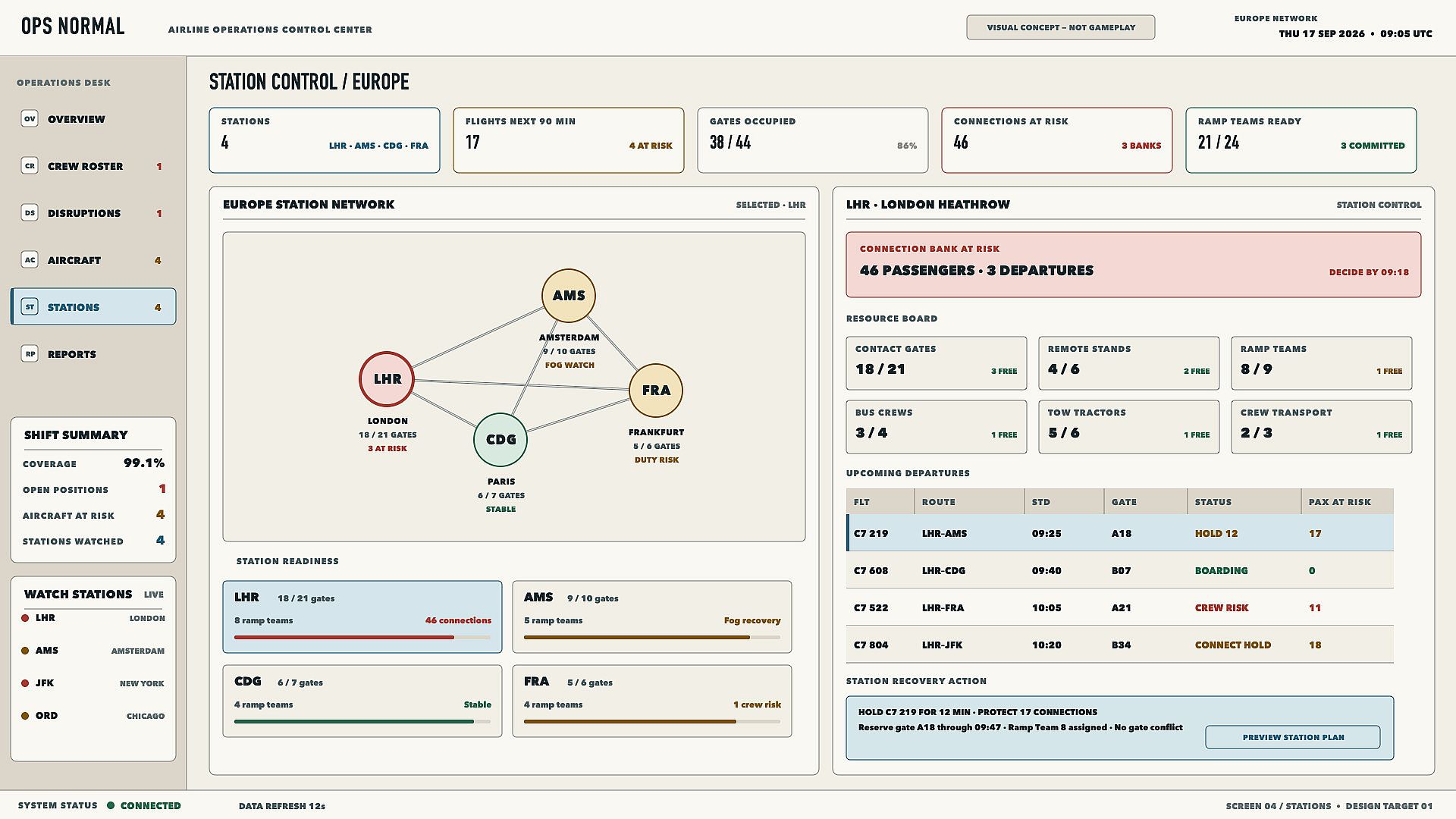
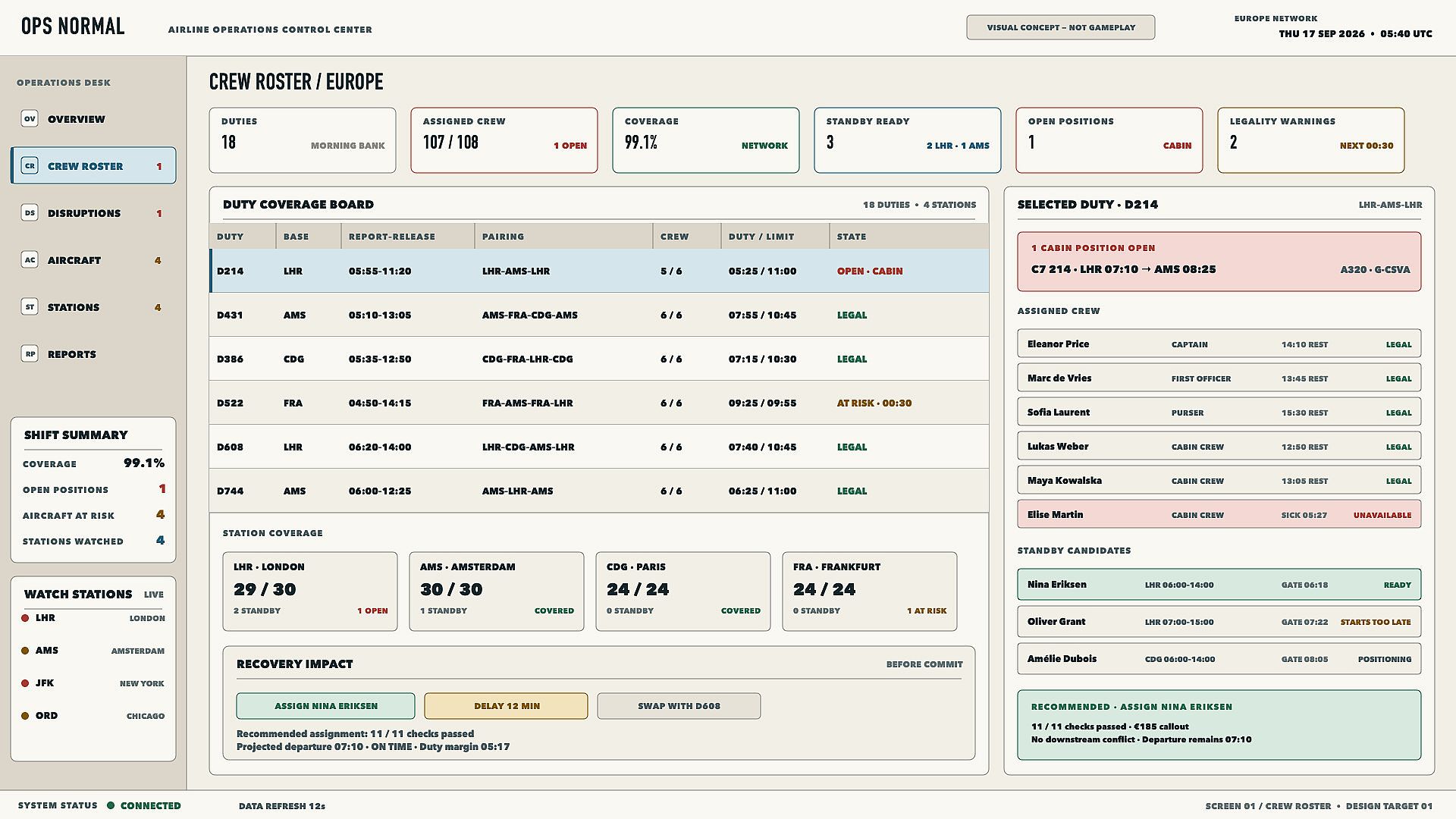
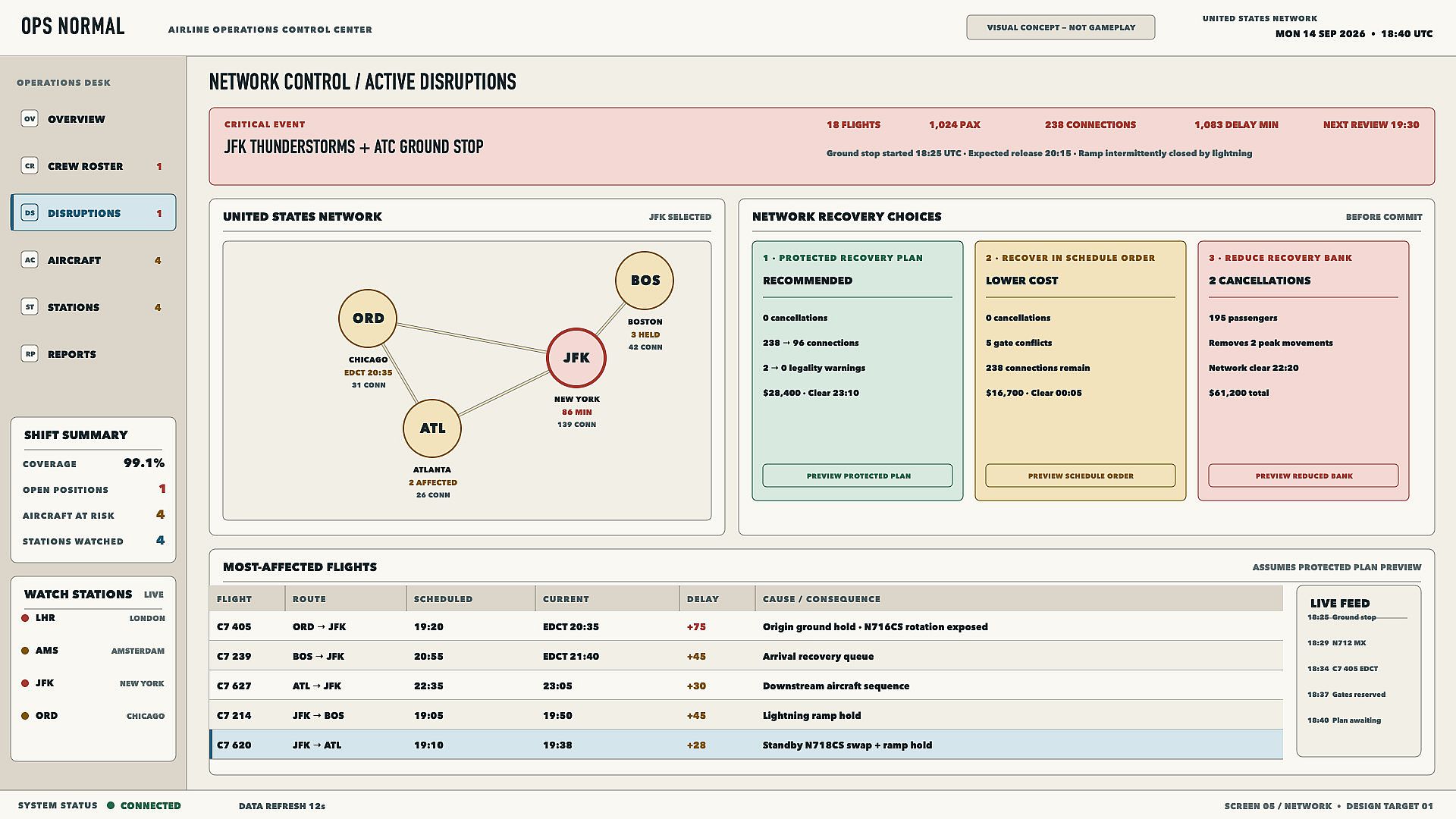
The core loop centers on inheriting an active flight schedule and restoring it amid ongoing disruptions. A captain calling in sick, an inbound delay cascading into the next crew duty, or a grounded aircraft breaking its rotation can each trigger separate issues whose combined effects demand coordinated responses. From a single workstation interface, players track flights, aircraft rotations, crew coverage, and pairings while responding to sick calls, no-shows, delays, weather events, and technical problems.
Recovery actions include deploying standby and reserve coverage, swapping or repositioning aircraft, rebuilding pairings, arranging positioning travel, and handling unplanned layovers. Every choice alters the positions of people and planes, the availability of resources, and the exposure of later flights. Preview tools allow evaluation of key moves before commitment, while monitoring displays show standby coverage, spare aircraft availability, costs, and emerging conflicts.
Legality functions as a strict constraint rather than a suggestion. Crew members must meet requirements for qualifications, rest, availability, location, and duty legality. Recovery checks detail why an option is unavailable and highlight downstream consequences of permitted changes, ensuring illegal assignments never serve as shortcuts. Each solution carries trade-offs: using a spare aircraft for one departure may expose another rotation, and the crew member resolving today's issue may be essential tomorrow. Players balance safety, legality, on-time performance, crew management, cost, and communication as the schedule keeps advancing.
Game Modes
The experience operates as a continuous single-player simulation without separate named modes. Players work through a shift, making decisions that protect upcoming days and hand off a viable operation to the next team. An end-of-shift report summarizes recoveries achieved, costs incurred, and problems passed downstream.
Complexity, guidance levels, and disruption pressure can be adjusted independently. These settings allow tailoring the challenge without altering core legality rules, supporting focused practice on specific aspects of operations control or broader scenario testing.
Key Systems and Mechanics
Central mechanics revolve around resource management under constraints. Aircraft and crew pairings form the backbone of the schedule, and disruptions force constant reallocation. Standby and reserve pools provide immediate coverage options, while repositioning and layover arrangements extend recovery reach. Cost tracking and conflict forecasting encourage forward planning, as short-term fixes can create longer-term vulnerabilities.
Communication and timing play supporting roles. Acting early limits the spread of issues, and the ongoing movement of the schedule means delays in response compound quickly. The system emphasizes that no single metric dominates; success requires maintaining overall operational integrity across multiple dimensions.
Is It Worth Playing?
Ops Normal suits players interested in detailed operational simulations that prioritize constraint satisfaction and consequence management over open-ended empire building. The focus on recovering an inherited schedule, combined with hard legality limits and visible trade-offs, delivers a grounded representation of airline operations control work. Those who enjoy single-player strategy titles centered on resource allocation, planning under uncertainty, and balancing competing priorities will find the mechanics align closely with that preference. As a coming-soon title with no released player data, its appeal rests on the described systems and the depth of disruption handling they enable. Tuneable parameters further support repeated playthroughs at varying intensities without changing fundamental rules.












