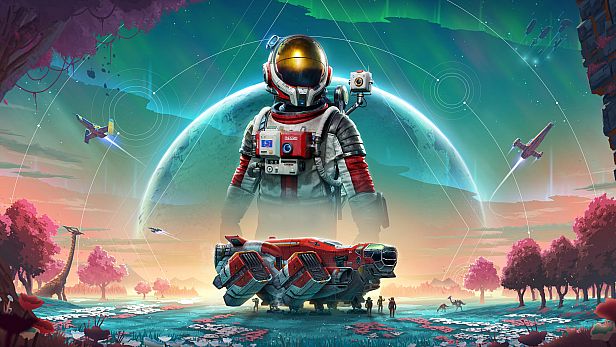





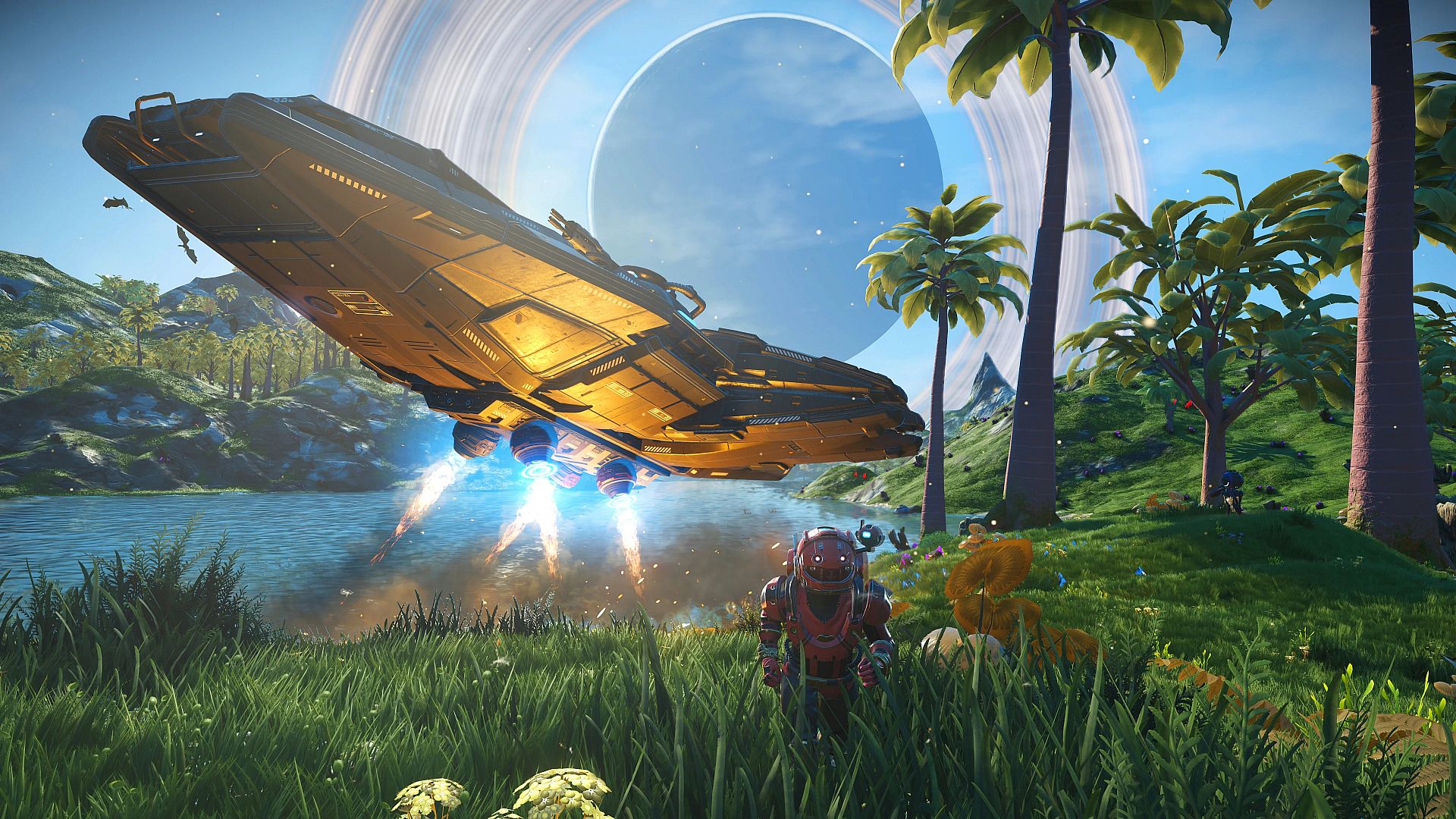
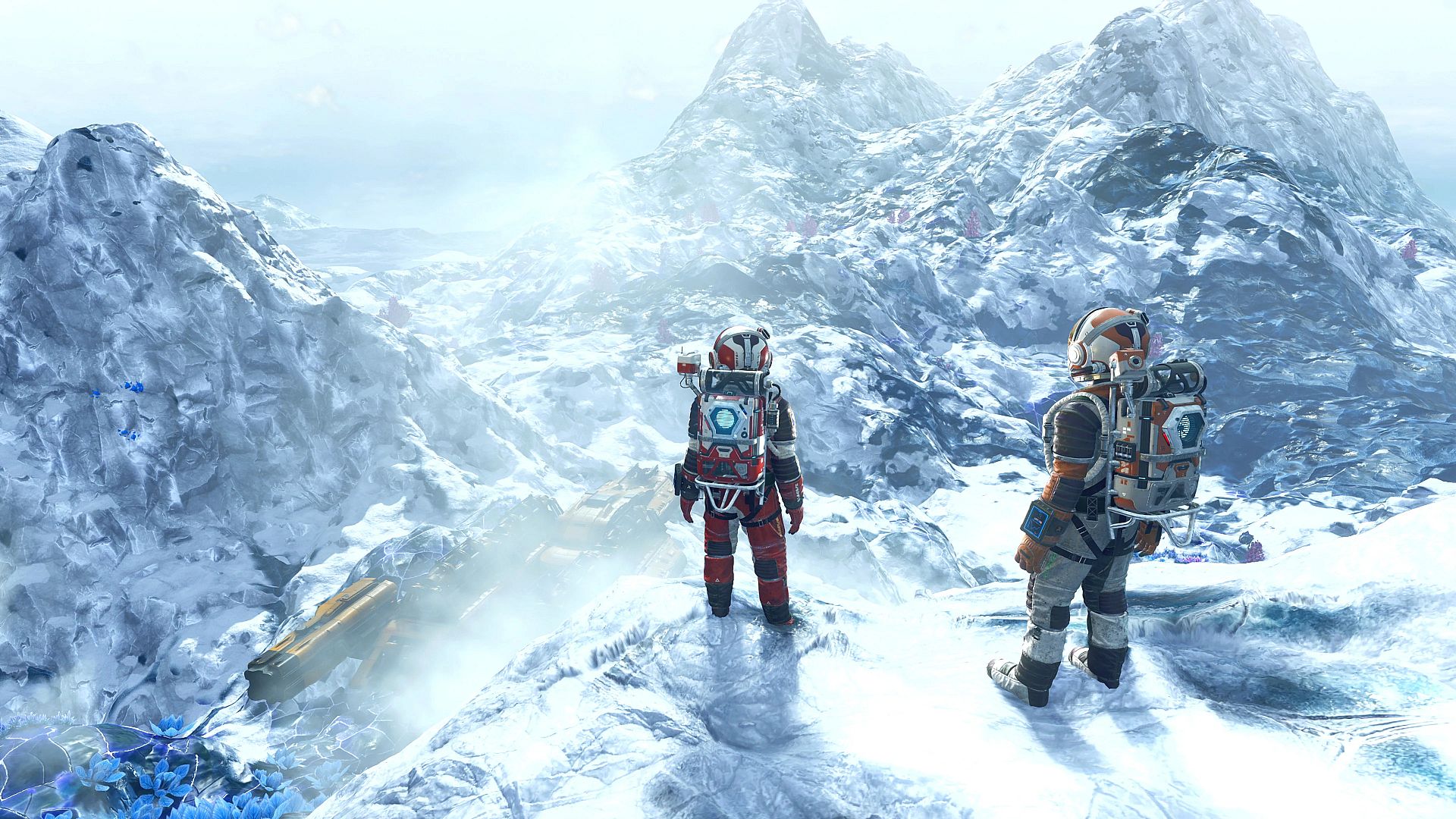
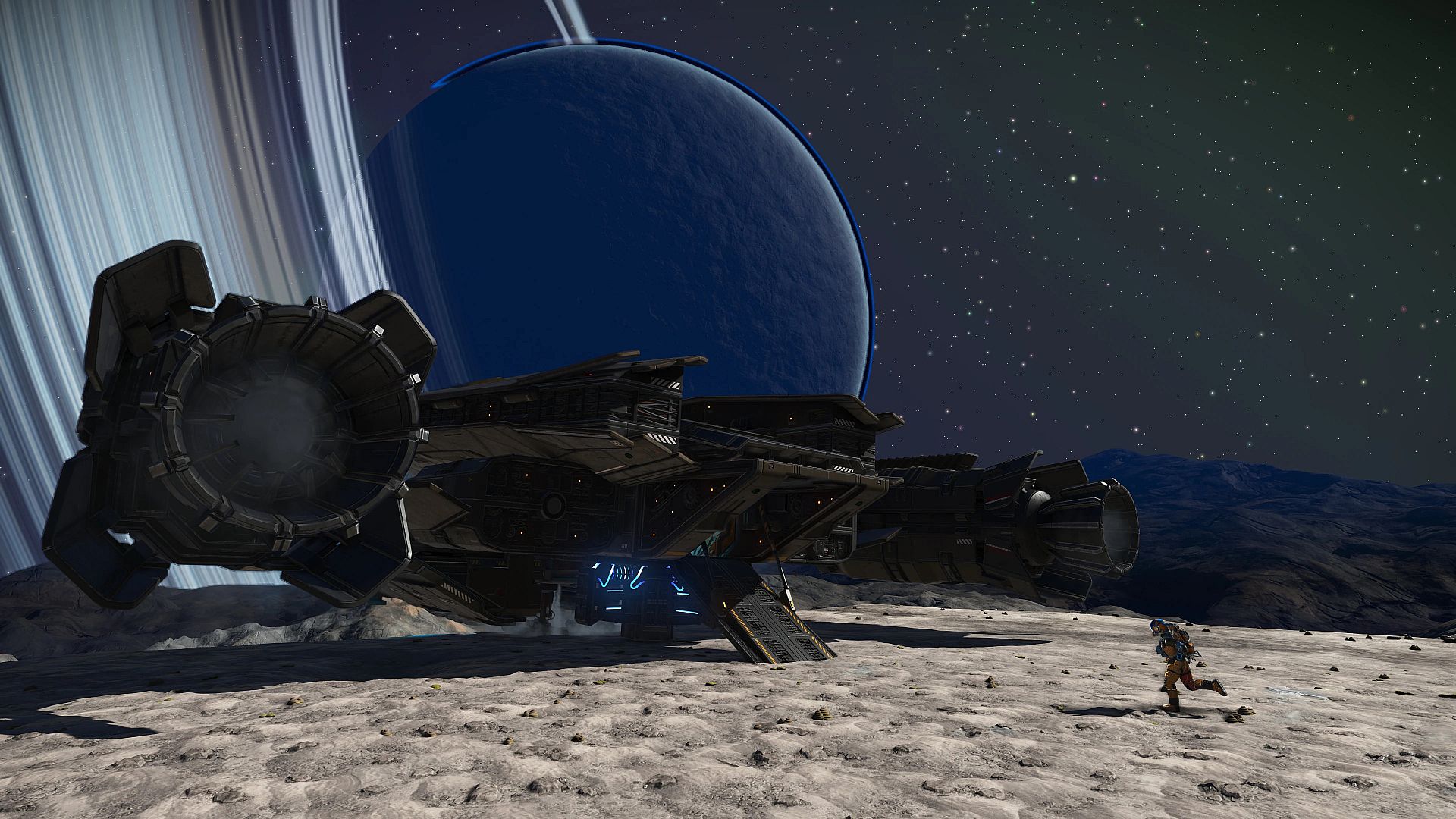
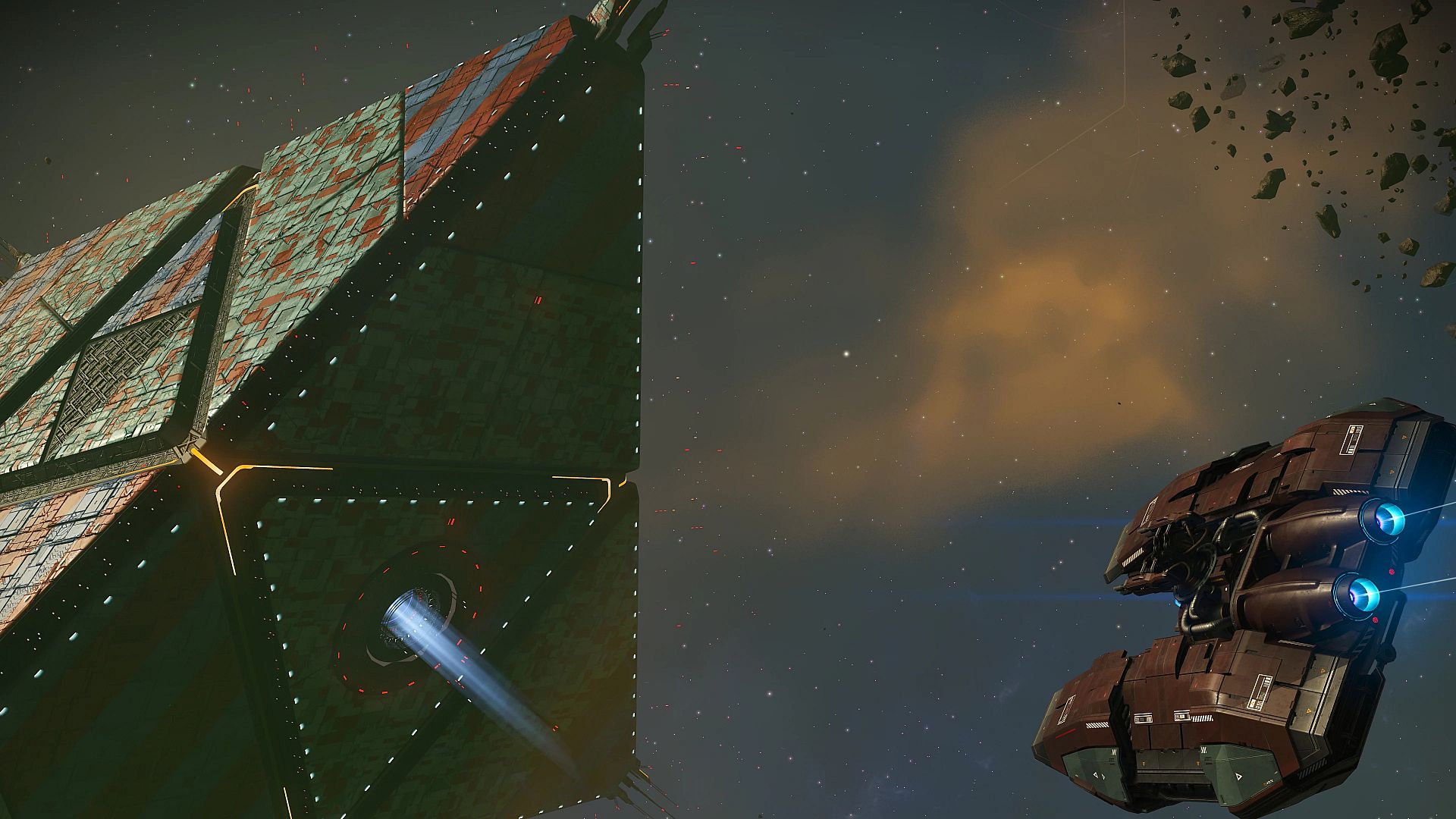
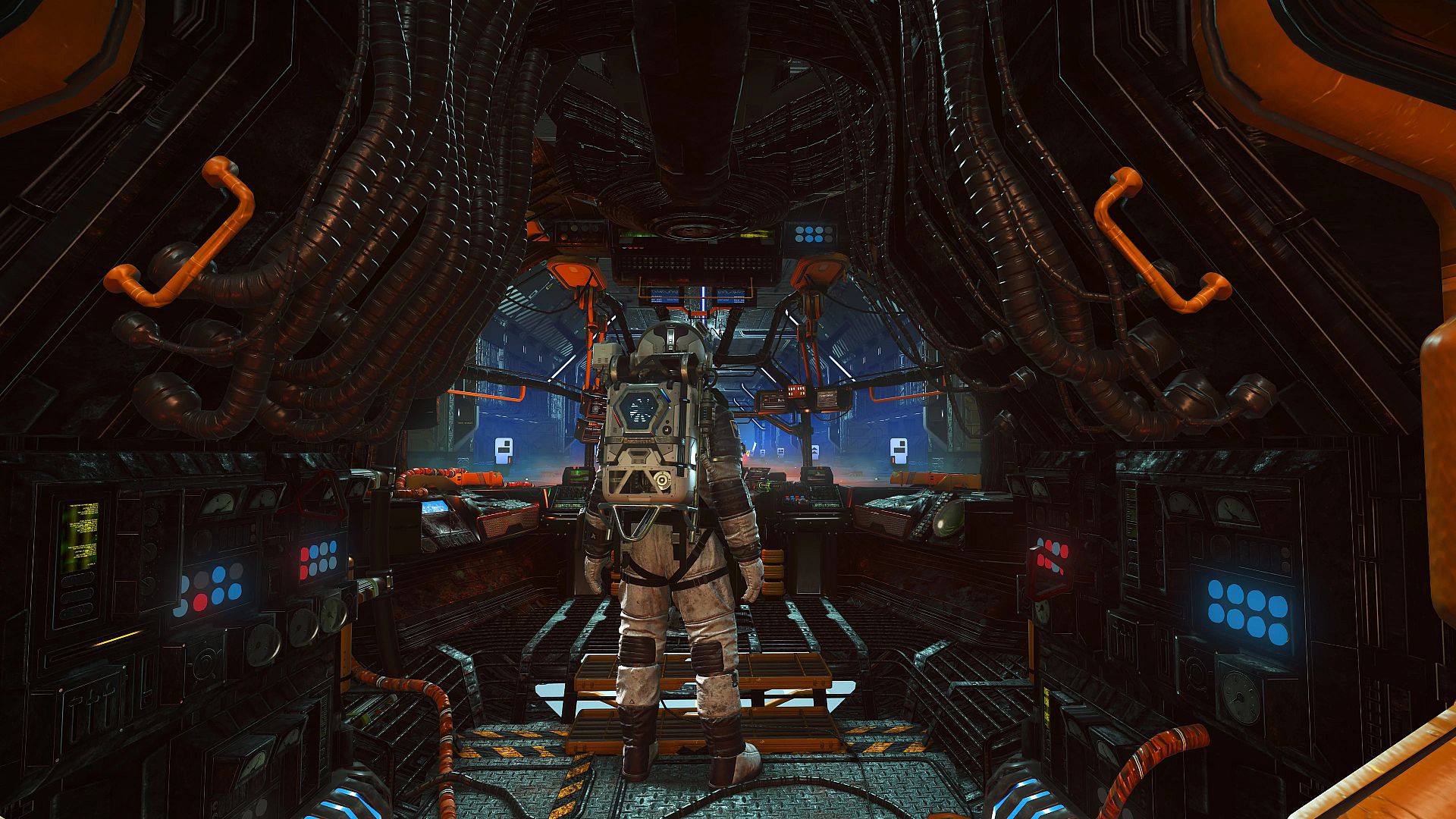
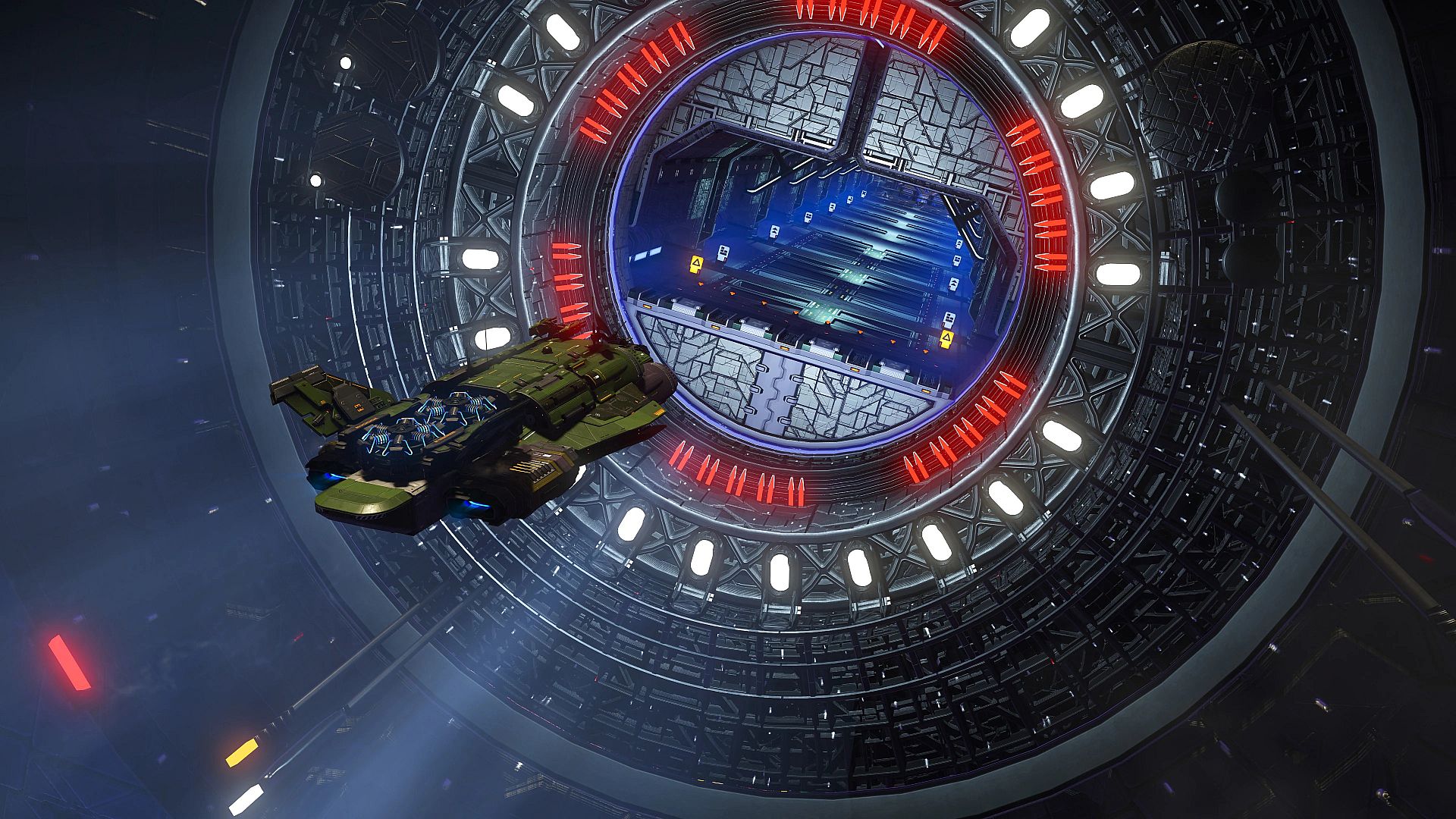
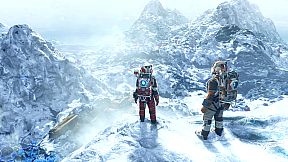
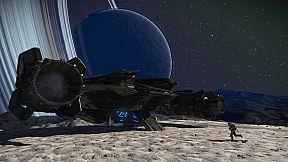
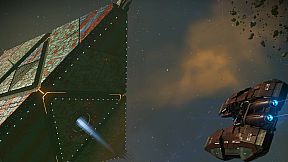
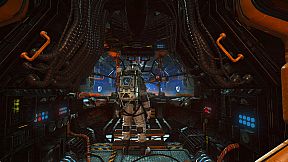
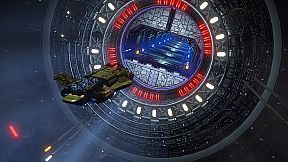
No Man's Sky is an action-adventure survival game available on PS4 and PS5 that places players in a procedurally generated universe filled with unique planets, alien lifeforms, and interstellar travel. Every star system offers distinct worlds to land on, resources to gather, and hazards to navigate while following a central mystery that pulls explorers toward the galaxy's core. The version on PlayStation includes all major updates through Worlds Part I, delivering refined terrain, water systems, lighting, and atmospheric effects alongside core mechanics like ship upgrades, suit enhancements, and weapon customization.
Gameplay
Core play revolves around landing on planets to scan flora and fauna, mine minerals, and manage limited resources while avoiding environmental dangers or aggressive creatures. Players repair and upgrade their starting ship to enable faster travel between systems, engage in space combat against pirates, or dock at stations to trade goods and accept missions. Base building allows construction of outposts on suitable planets, providing storage and crafting stations that support longer expeditions. Survival elements require attention to hazard protection, inventory management, and technology repairs, with consequences for poor preparation during deep-space journeys or hostile encounters. The loop encourages repeated visits to different worlds, where procedural generation ensures varied terrain, weather, and life signatures on each landing.
Game Modes
Several modes adjust the challenge and focus to suit different preferences. Normal mode provides a balanced experience with standard resource availability and recoverable inventory on death. Survival mode increases hazards, reduces resource density, and applies stricter penalties for death or ship destruction. Creative mode removes resource costs and survival threats entirely, allowing unrestricted building and exploration. Permadeath mode deletes the save file upon death, raising stakes for every decision. Relaxed mode softens survival pressures for a more forgiving pace, while Expedition mode supports time-limited community events with shared milestones and rewards. Difficulty sliders in custom setups let players tweak elements like damage taken, scanner recharge rates, and starting conditions without locking into a preset.
Exploration and Progression
Progression centers on discovering new star systems, improving multi-tools for better scanning and mining, and expanding exosuit capacity for longer trips away from the ship. Factions such as the trade-focused Gek, science-oriented Korvax, and combat-ready Vy'keen offer missions and reputation gains that unlock better equipment and dialogue options at stations. Sentinels patrol many planets and react to resource gathering or disturbances, adding tension during surface activities. Regular free updates have expanded planetary variety and added quality-of-life features like improved visuals from Worlds Part I, keeping the universe feeling fresh for returning players.
Is It Worth Playing?
Player reception on PlayStation remains strong, with consistent praise for the scale of the universe and the steady stream of free content additions that continue years after launch. The game suits those who enjoy open-ended exploration, resource management, and gradual power growth through upgrades rather than linear story campaigns. Multiplayer elements allow shared bases and cross-platform play, though solo journeys form the primary experience. Those seeking a vast space sandbox with survival depth and ongoing developer support will find substantial value in the current version, especially at the included price point that bundles the full update history through Worlds Part I. Short sessions for scanning a new planet or longer campaigns charting toward the center both deliver satisfying progression without artificial time gates.