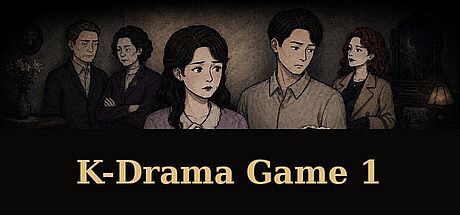



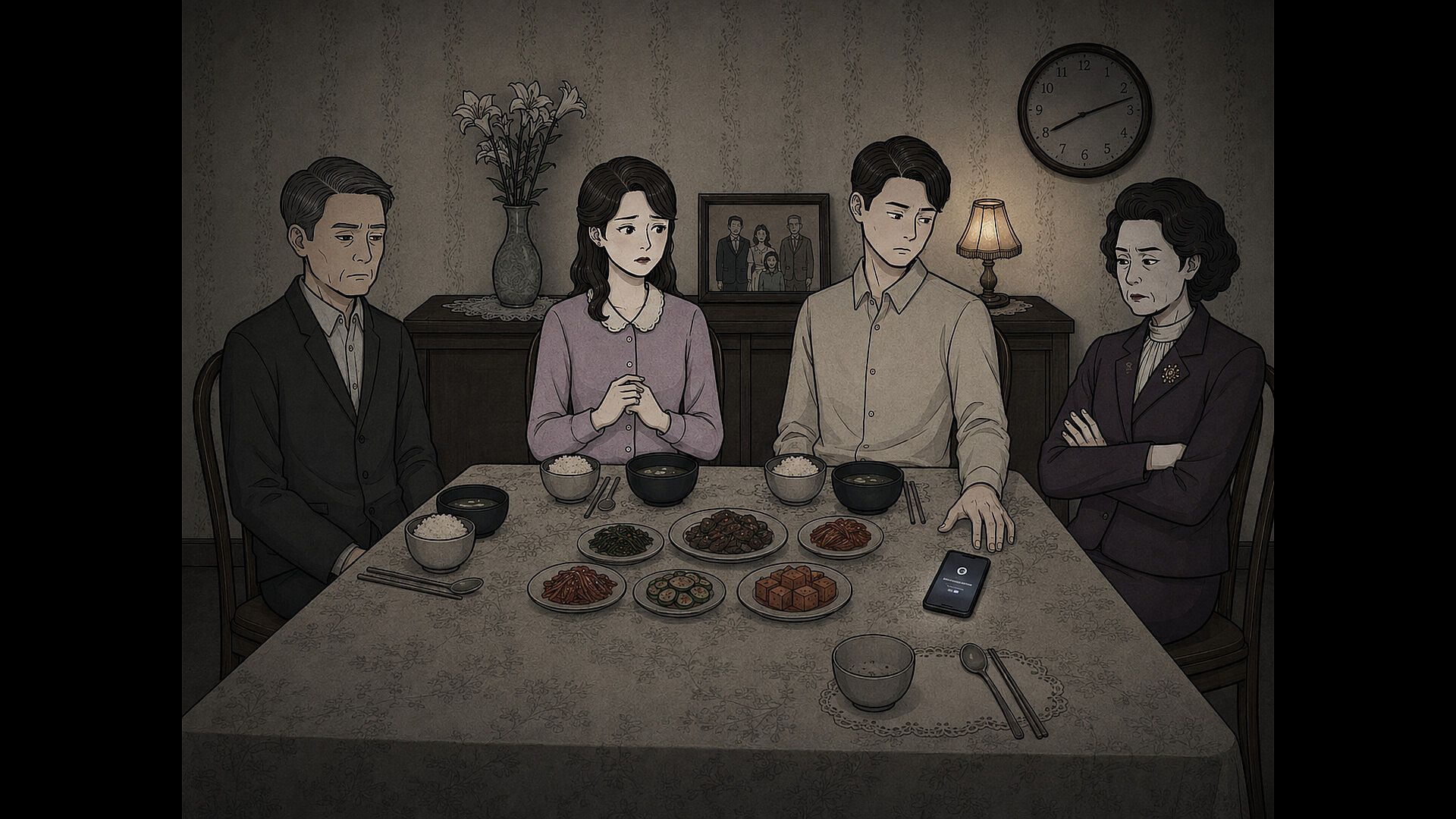
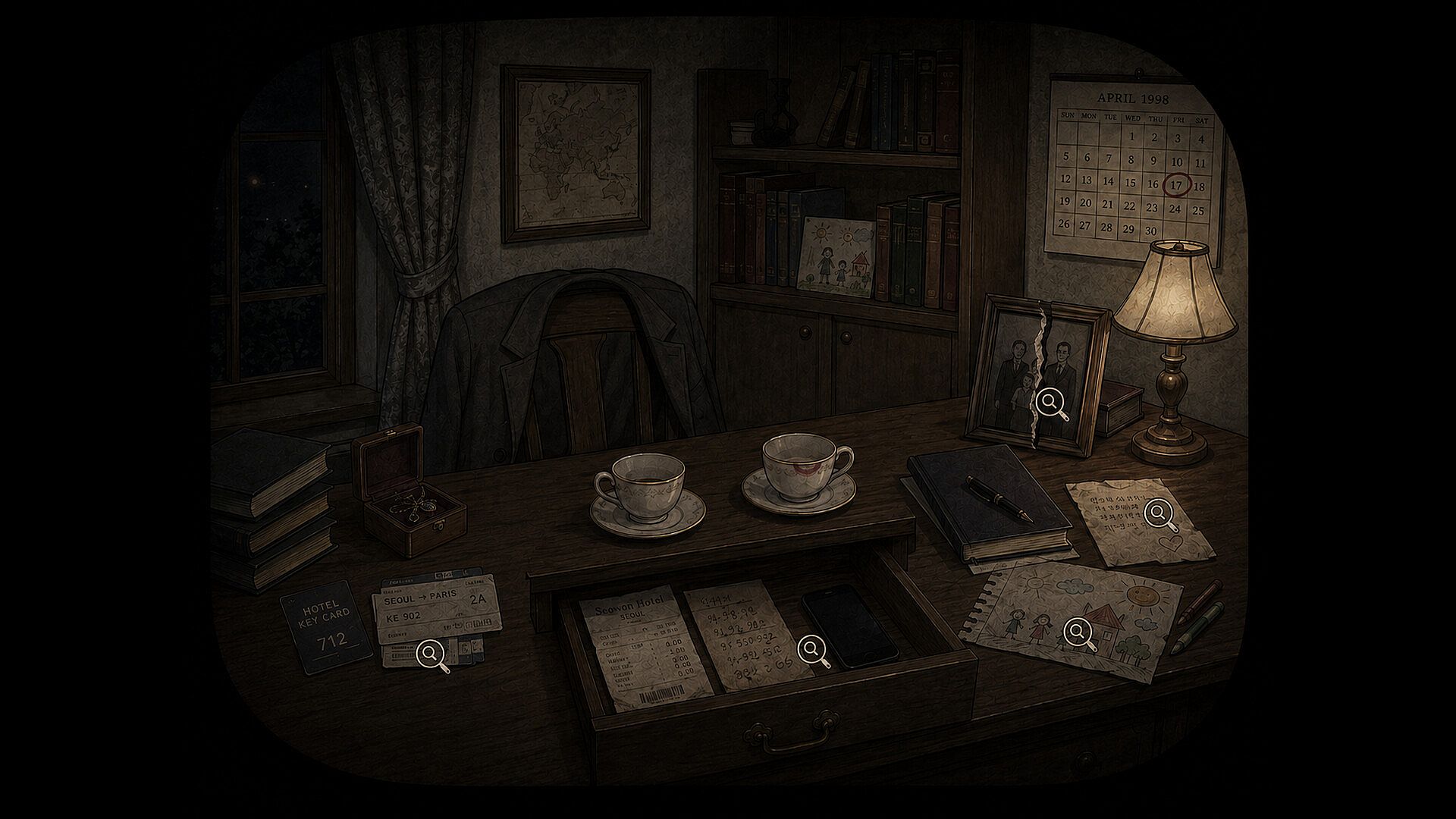




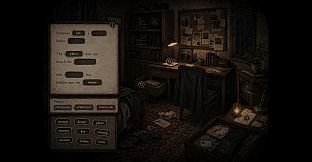


K-Drama Game 1 is an indie adventure game on PC that places players in the role of an investigator unraveling a story of love, jealousy, suspicion, secrets, and lies. The narrative begins with the familiar trappings of a K-drama, where a wife grows convinced her husband is unfaithful, yet the clues lead in unexpected directions and every supporting character harbors hidden motives. Players examine detailed scenes, hidden objects, conflicting statements, locations, timelines, and relationships to determine what actually occurred.
Gameplay
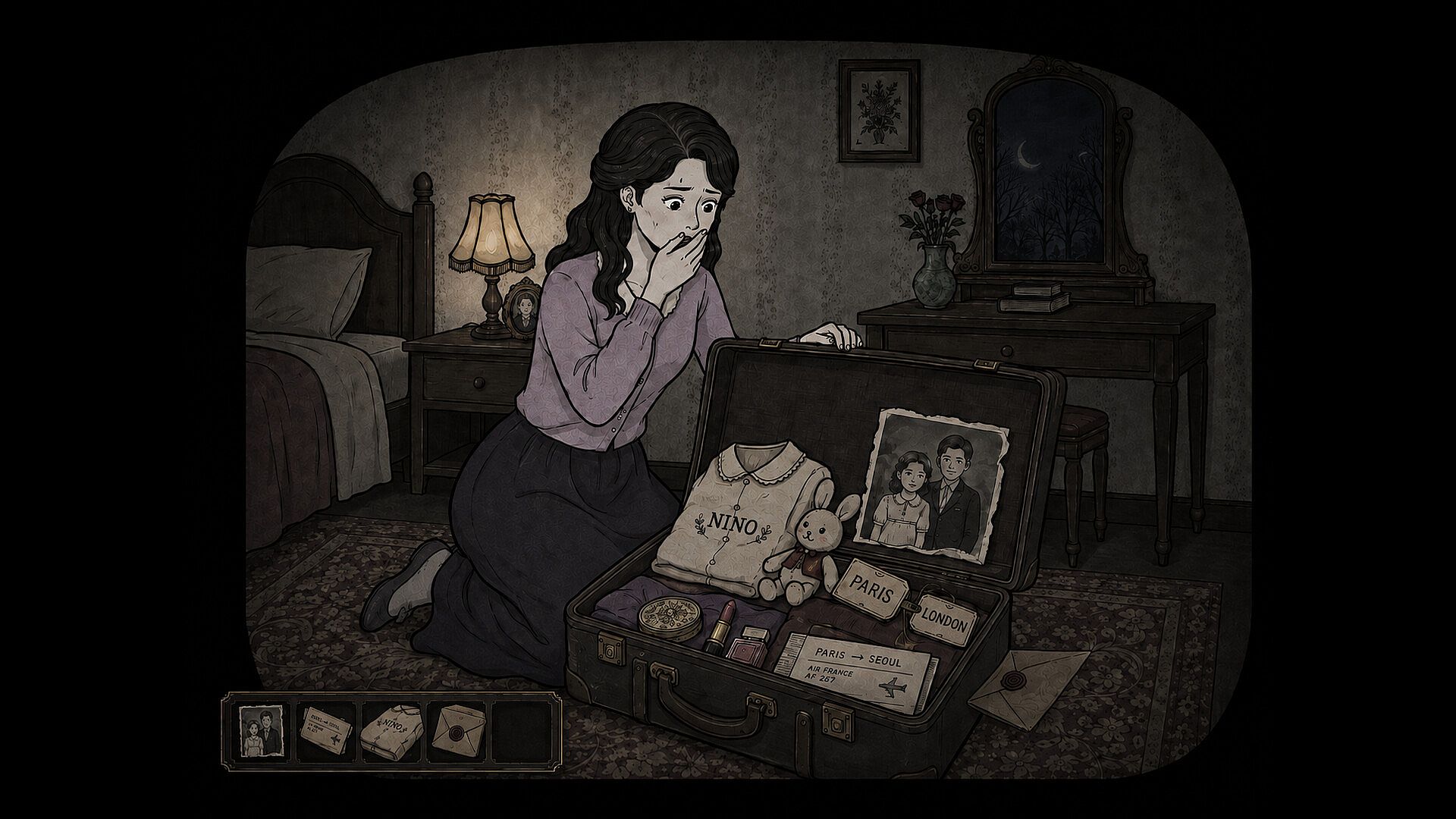
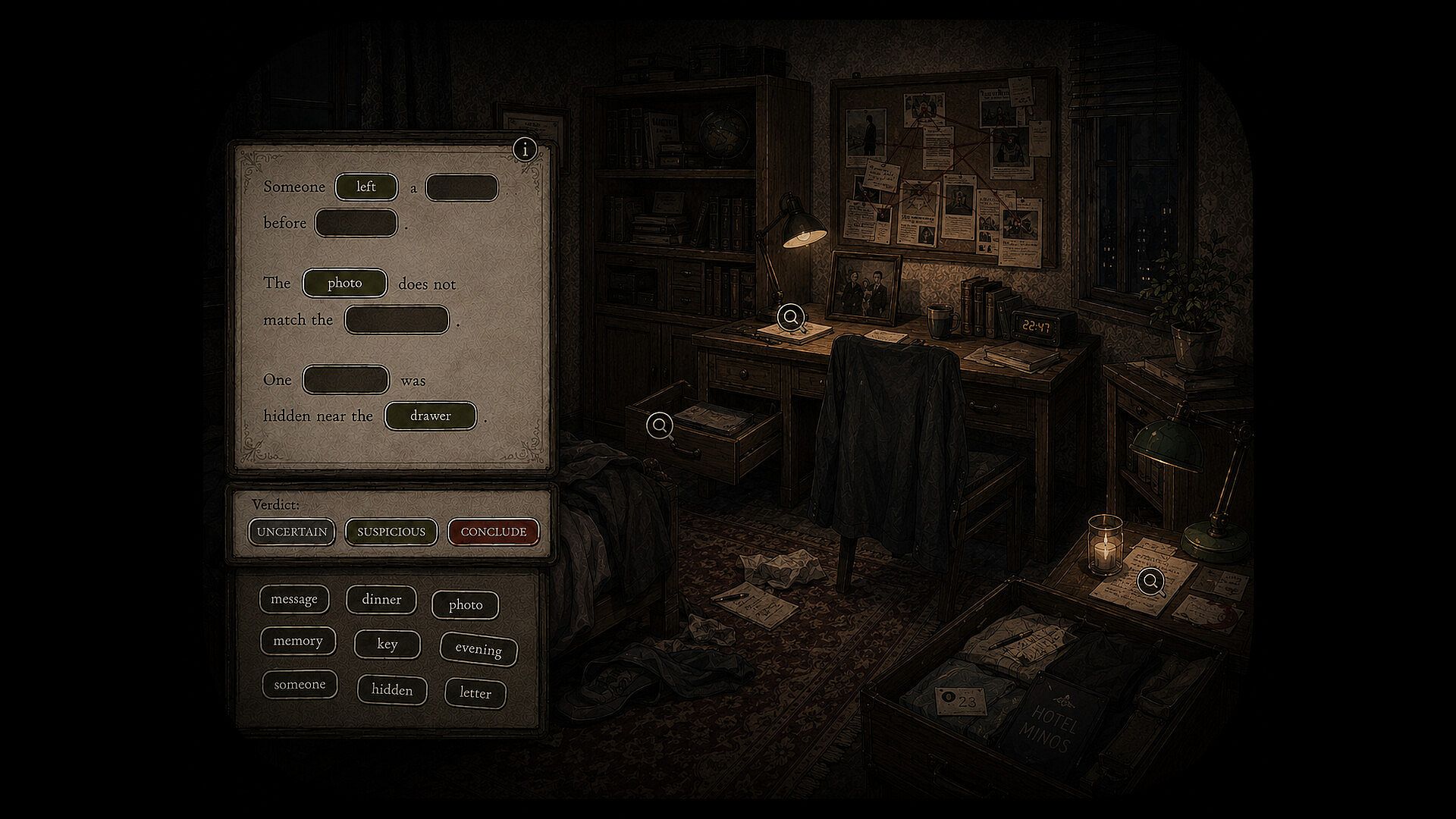
The core loop centers on careful observation and logical deduction. Players visit narrative scenes and gather physical evidence while noting how each character describes events. Contradictions between spoken words and visible actions become key leads. Timelines must be reconstructed from multiple accounts, and relationships between characters shift as new information surfaces. Some clues remain inaccessible at first, forcing decisions about which lines of inquiry to prioritize. Deduction puzzles require matching evidence to conclusions, with clear right and wrong outcomes that alter the path forward. As the investigation progresses, previously straightforward scenes gain new layers of meaning through major revelations.
Game Modes
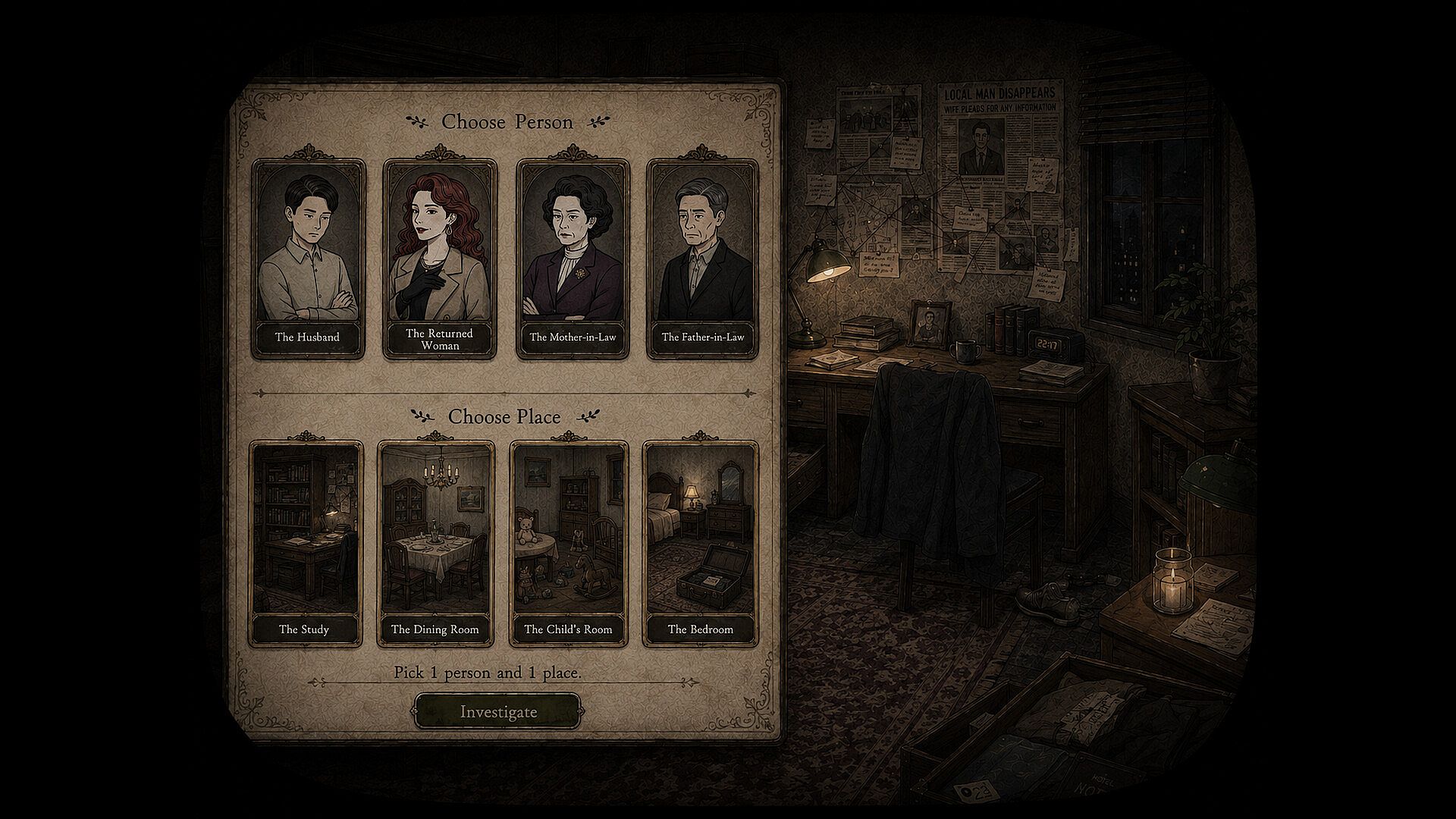
The game operates entirely as a single-player experience. There are no multiplayer options or competitive elements. Instead, players manage limited investigative resources by selecting which people and incidents to examine at any given time. Choices about which clues to pursue directly influence how much of the full picture becomes visible. The structure encourages replay through different selection orders that reveal alternate interpretations of the same events.
Story and Narrative
The plot opens with the appearance of a polished domestic drama before shifting into something more complex. Initial suspicions about an affair serve as the entry point, but the surrounding cast of characters each carry their own concealed histories. Evidence collected from scenes often contradicts the polished surface presented at the start. Revelations arrive through careful cross-referencing rather than sudden exposition, and the story rewards players who track inconsistencies across multiple accounts. The single-player mystery format keeps the focus on personal deduction without external interruptions.
Is It Worth Playing?
Players who enjoy narrative-driven adventure games built around evidence collection and logical puzzles will find a focused experience here. The mechanics emphasize deliberate pacing and repeated examination of scenes rather than action or exploration in an open world. Those drawn to stories that reward attention to detail and accept that not every thread resolves neatly will appreciate the structure. The game suits solo sessions where the goal is piecing together a shifting truth from conflicting perspectives. Availability on PC makes it accessible for anyone interested in this style of interactive mystery without additional hardware requirements.