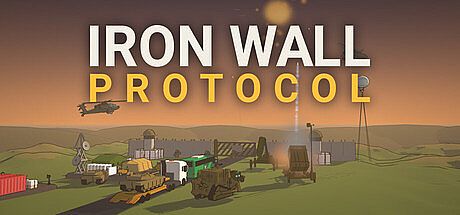


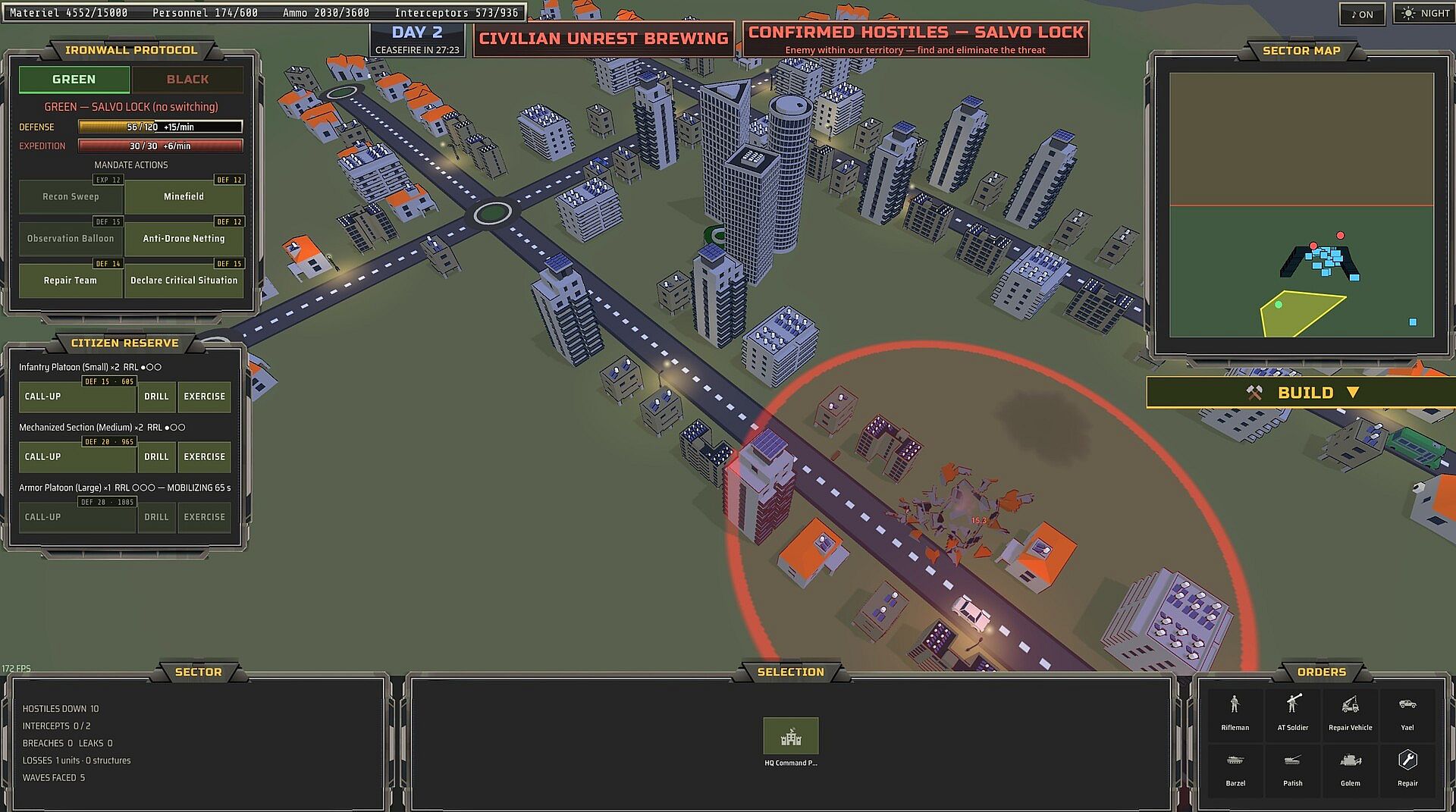
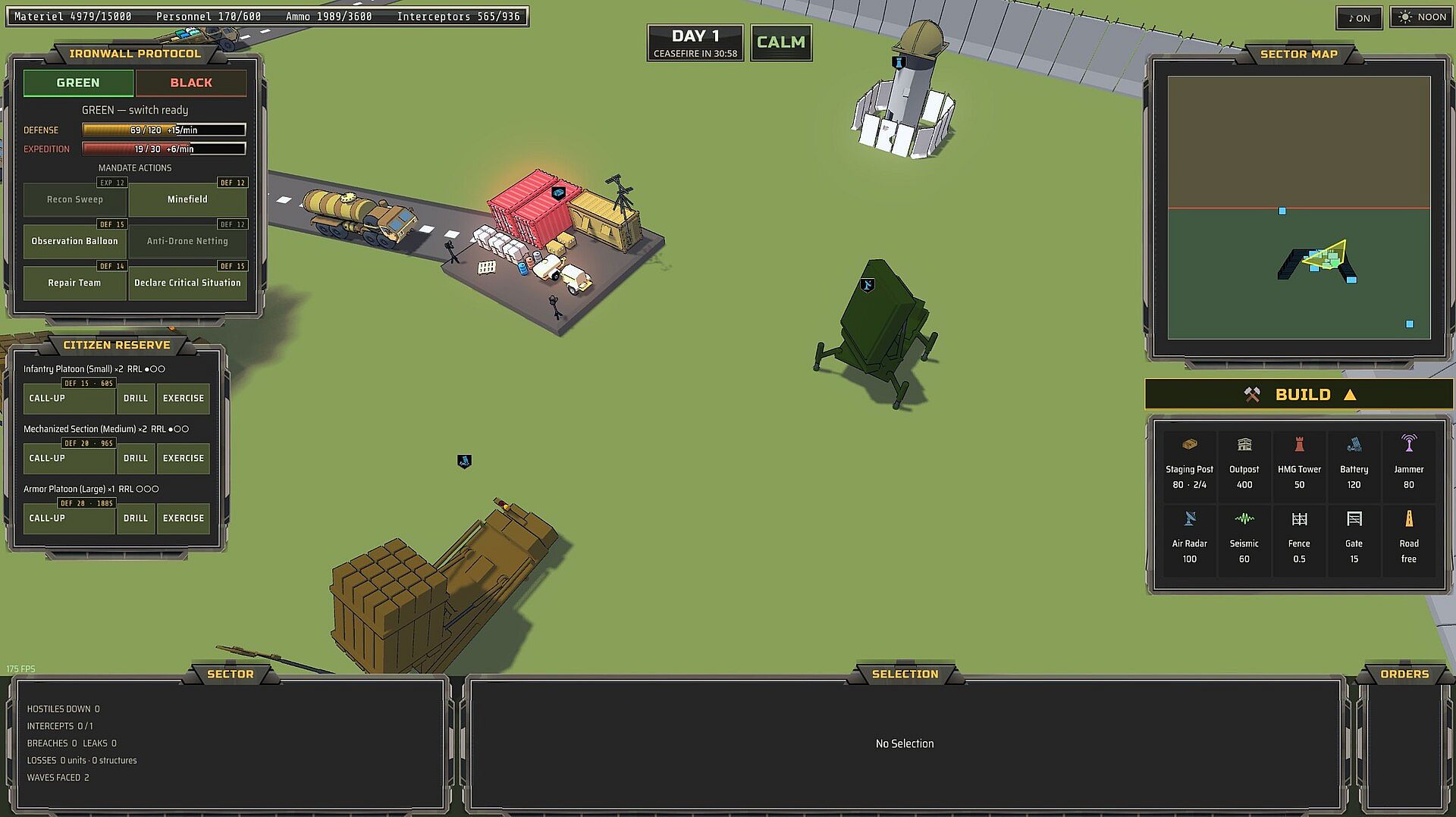
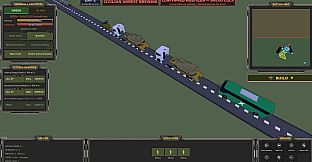
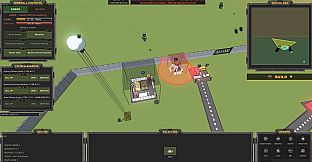
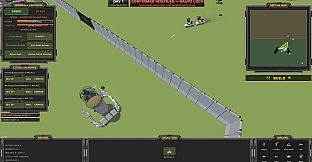
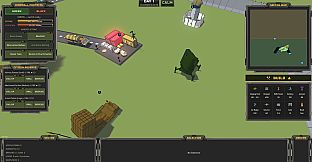
Iron Wall Protocol is a singleplayer strategy game that blends real-time strategy with tower defense elements. Players manage a border sector for the small nation of Kav against the persistent pressure of the Ash Front.
Gameplay
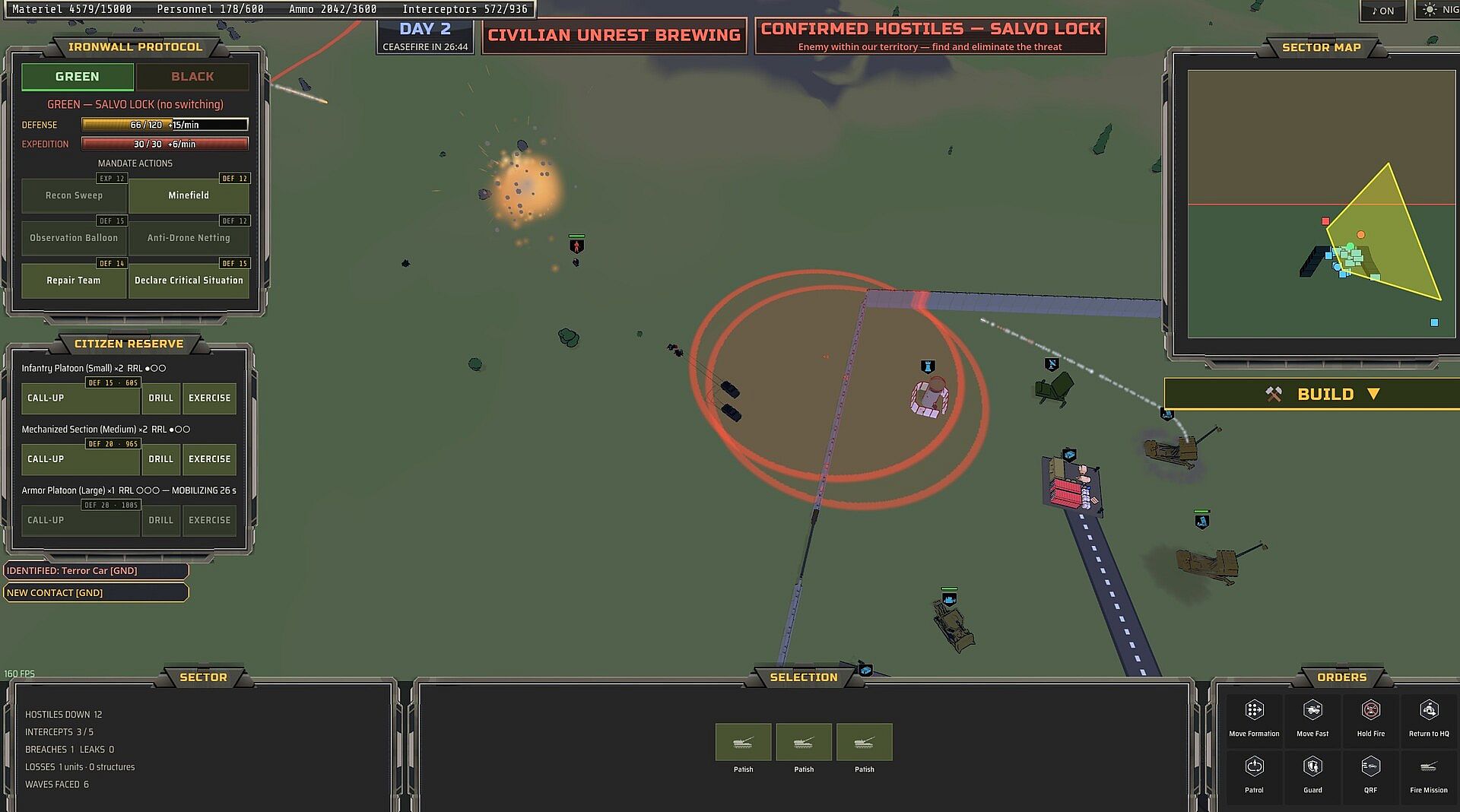
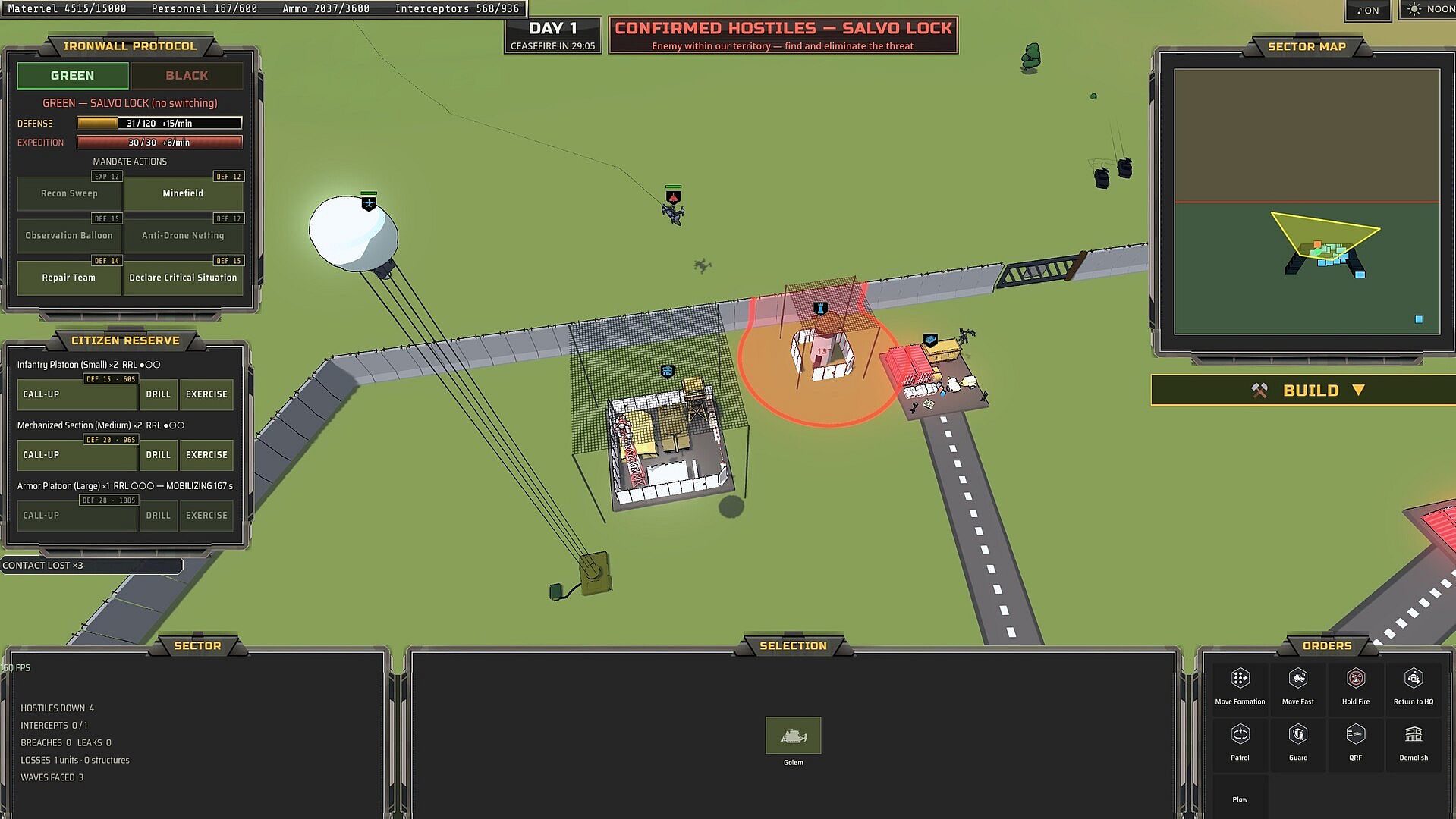
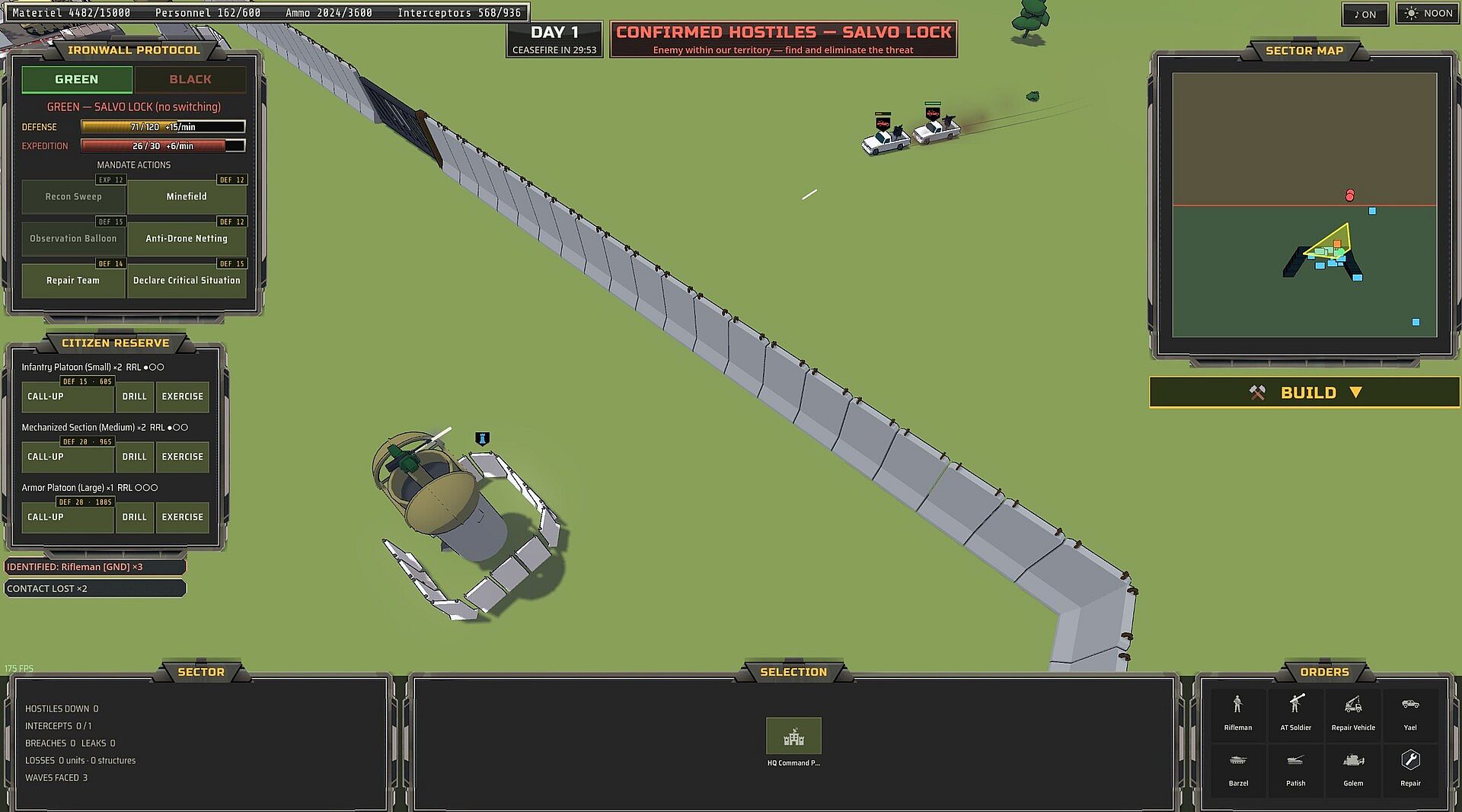
The core loop centers on holding a defensive line while deciding when to shift into limited offensive actions. Roads connect the rear town to forward positions and must remain intact to keep supplies flowing. Cutting a road quickly starves distant sectors of materiel and personnel. Players raise physical barriers such as fence lines, gates, sentry towers, missile batteries, and minefields while placing sensors including radar, thermal towers, seismic detectors, and a single tethered observation balloon that can be lost permanently if destroyed.
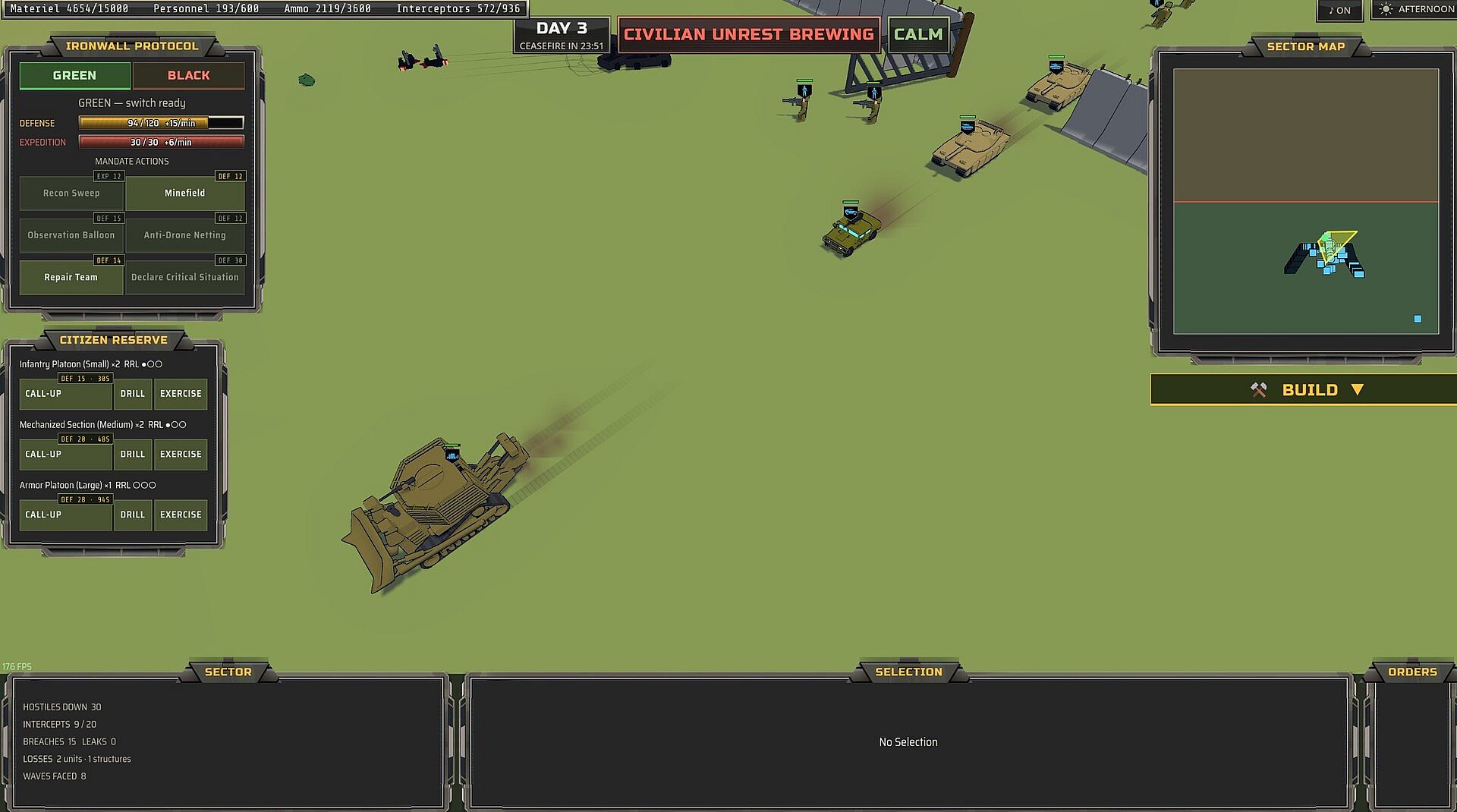
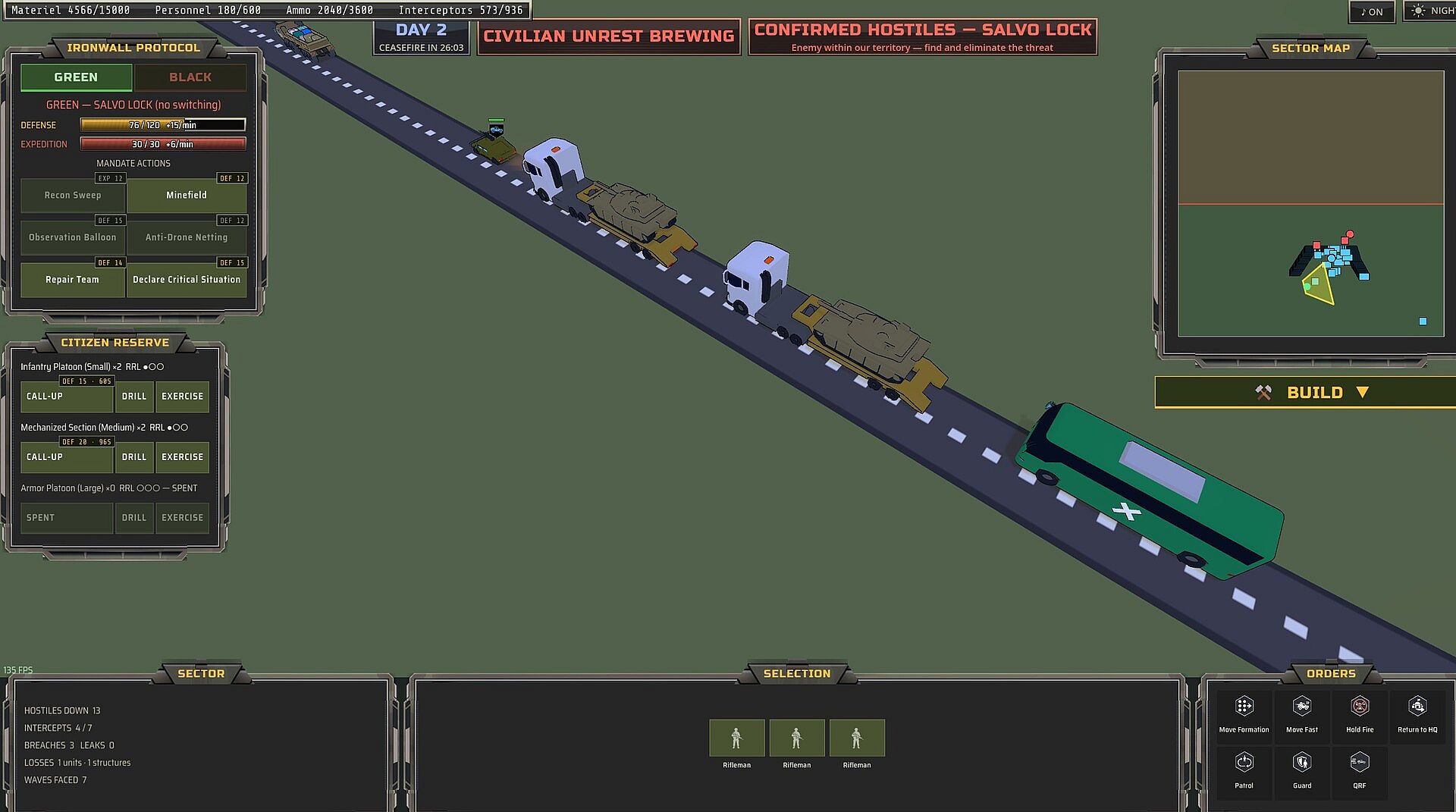
Units form the standing force. Tanks, APCs, patrol rovers, and rifle squads receive patrol routes and quick-reaction orders so they respond automatically to breaches. Reserves arrive only as physical convoys through the rear gate rather than instant teleports. Drilling these forces during quiet periods improves their arrival speed and combat performance. Contacts appear first as unidentified markers until overlapping sensors provide enough data to classify them as targets.
Mandate serves as the political resource that limits major actions. Building and training consume materiel and personnel, but heavy calls such as air strikes, reserve activations, or declaring a critical situation draw directly from Mandate. This resource regenerates slowly and at different rates depending on posture. Overreacting to attacks or allowing rockets to reach the town behind the line reduces future supply flow and tightens limits. The enemy strategy focuses on forcing wasteful Mandate expenditure over time.
Game Modes
Campaign mode generates each war from a seed that determines terrain, the layout of the defended town, the mix of threats, and mission-specific twists listed on cards. Three fronts become available at once across varied landscapes such as wooded hills, basalt plateaus, and desert flats. Players choose the order in which to tackle them. The generator adapts subsequent missions based on observed player tendencies, creating different wars even from the same starting seed. Only the prologue uses a hand-crafted map.
Skirmish mode offers a single generated mission with a handful of adjustable toggles for quick standalone play. Commander profiles track ranks, a collection of medals, and a flag displayed on the headquarters building.
Offensive Options and Match Structure
Remaining purely defensive leads to gradual defeat. Switching to the Black posture opens the map for deep recon sweeps that locate hidden enemy outposts, air strikes on marked targets, on-call gunship support, counter-tunnel charges, and airborne insertions of eight soldiers at any chosen point. Destroying every outpost ends the conflict early. The trade-off appears in sharply reduced Mandate regeneration, a real-time posture change that leaves forces vulnerable during the transition, and the risk that the enemy exploits the moment of weakness.
Each match follows a compressed seven-day timeline. Early days feature probes and isolated salvos. Mid-period threats combine elements such as drone screens paired with fence-cutting teams, followed by salvos and vehicle rushes. The final night brings a concentrated storm lasting roughly ten minutes before the ceasefire sirens sound. Survival to that point or the destruction of all outposts counts as victory.
Is It Worth Playing?
Iron Wall Protocol suits players who enjoy deliberate, systems-driven strategy sessions with clear cause-and-effect mechanics rather than fast-paced action. The single-developer Godot title uses flat-shaded low-poly visuals that remain readable during busy moments and run on modest hardware. No multiplayer components exist, and the experience stays focused on one sector at a time. Commander progression and generated campaigns provide replayability for those who appreciate managing resources under political constraints and adapting to procedurally varied threats. The game remains in active development by its creator with no announced seasons or additional content beyond the core systems described.