


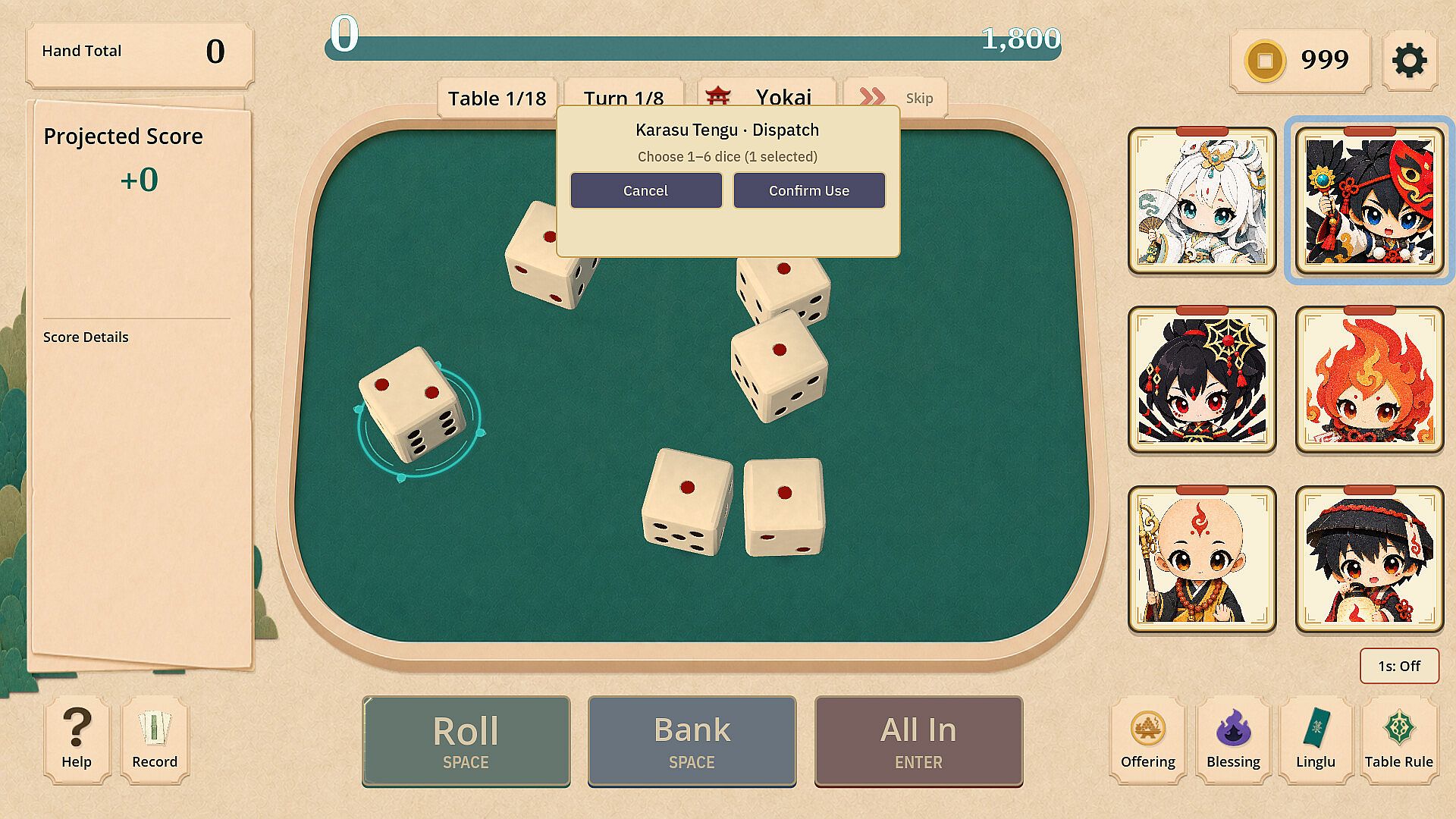

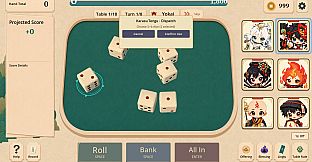
Hyakki Dice is a strategy indie casual game on PC that blends dice rolling with roguelite progression and yokai collection. Players build scoring combinations from dice rolls, choose which dice to set aside, and decide whether to bank points or risk another roll for higher rewards. The core tension comes from managing risk across runs where a single decision can multiply gains or wipe out progress.
Gameplay
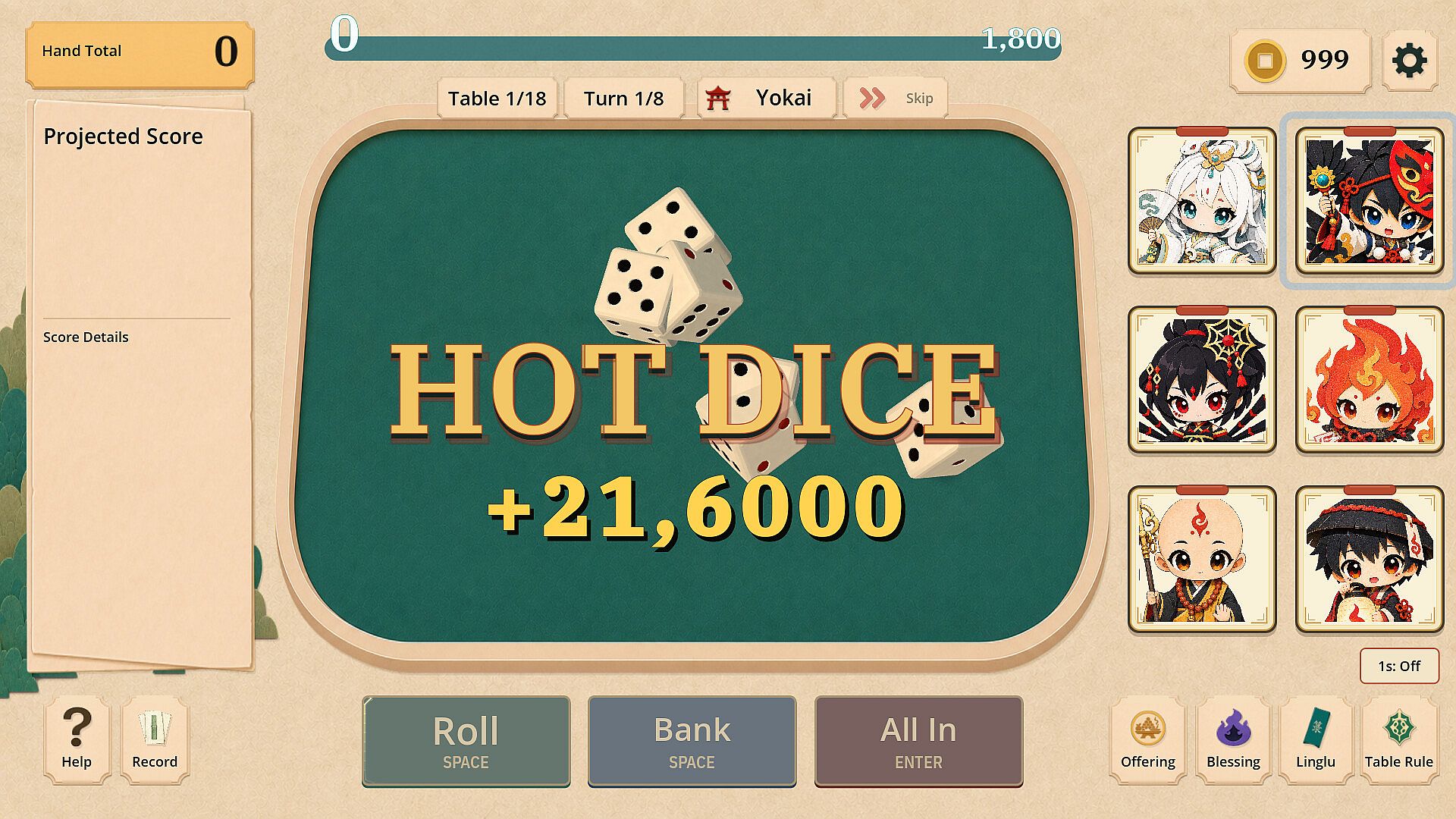
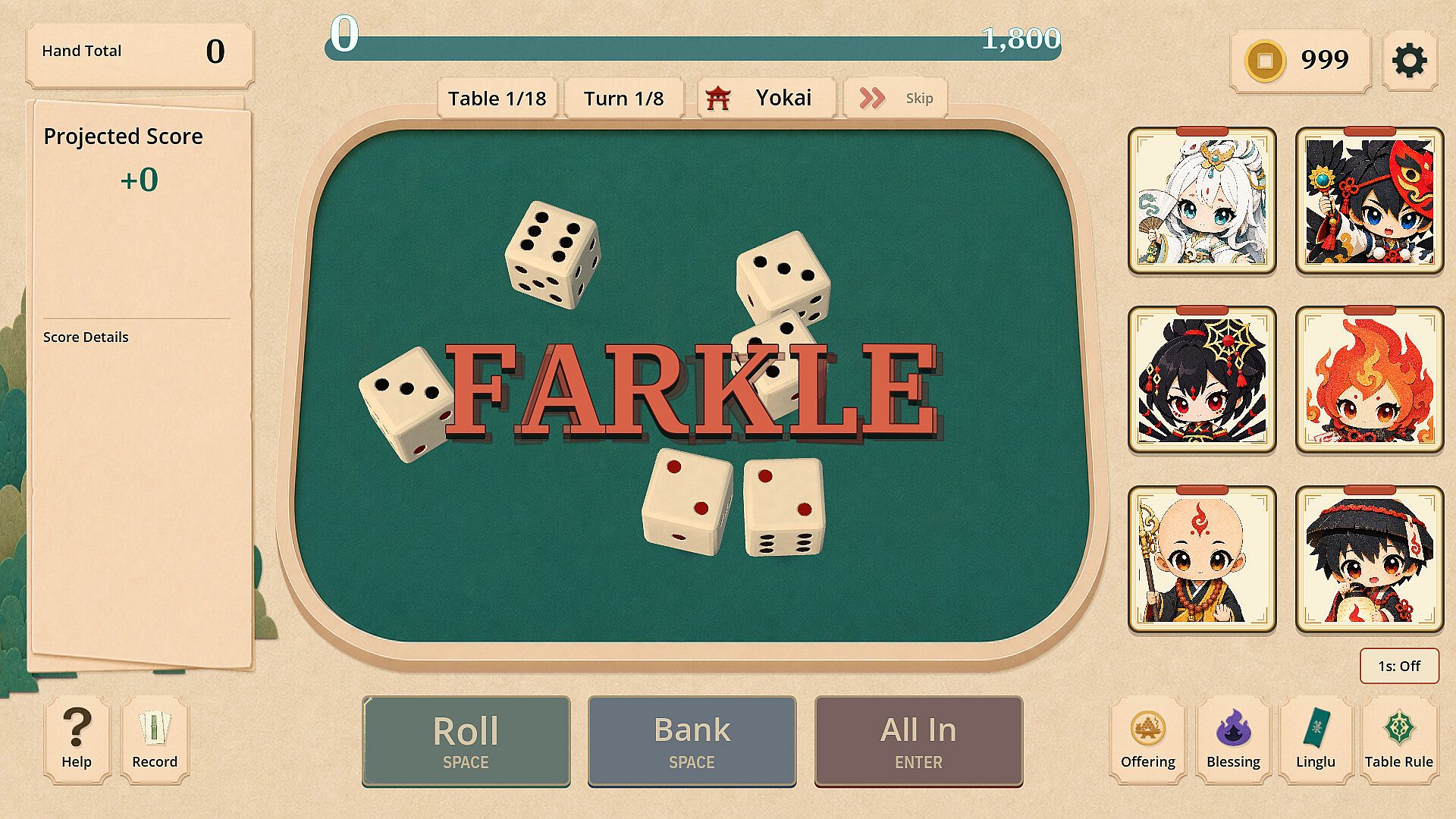
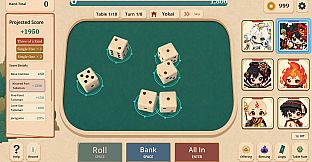
The central loop revolves around rolling dice to form combinations such as singles, straights, or matching sets. After each roll, players set aside desired dice and face the choice to bank accumulated points or continue. Another roll can activate Hot Dice, returning all dice to the pool for further attempts, but it also carries the chance of a Farkle that erases every unbanked point from the current hand. Reading the table state and shaping the dice pool becomes essential for consistent scoring.
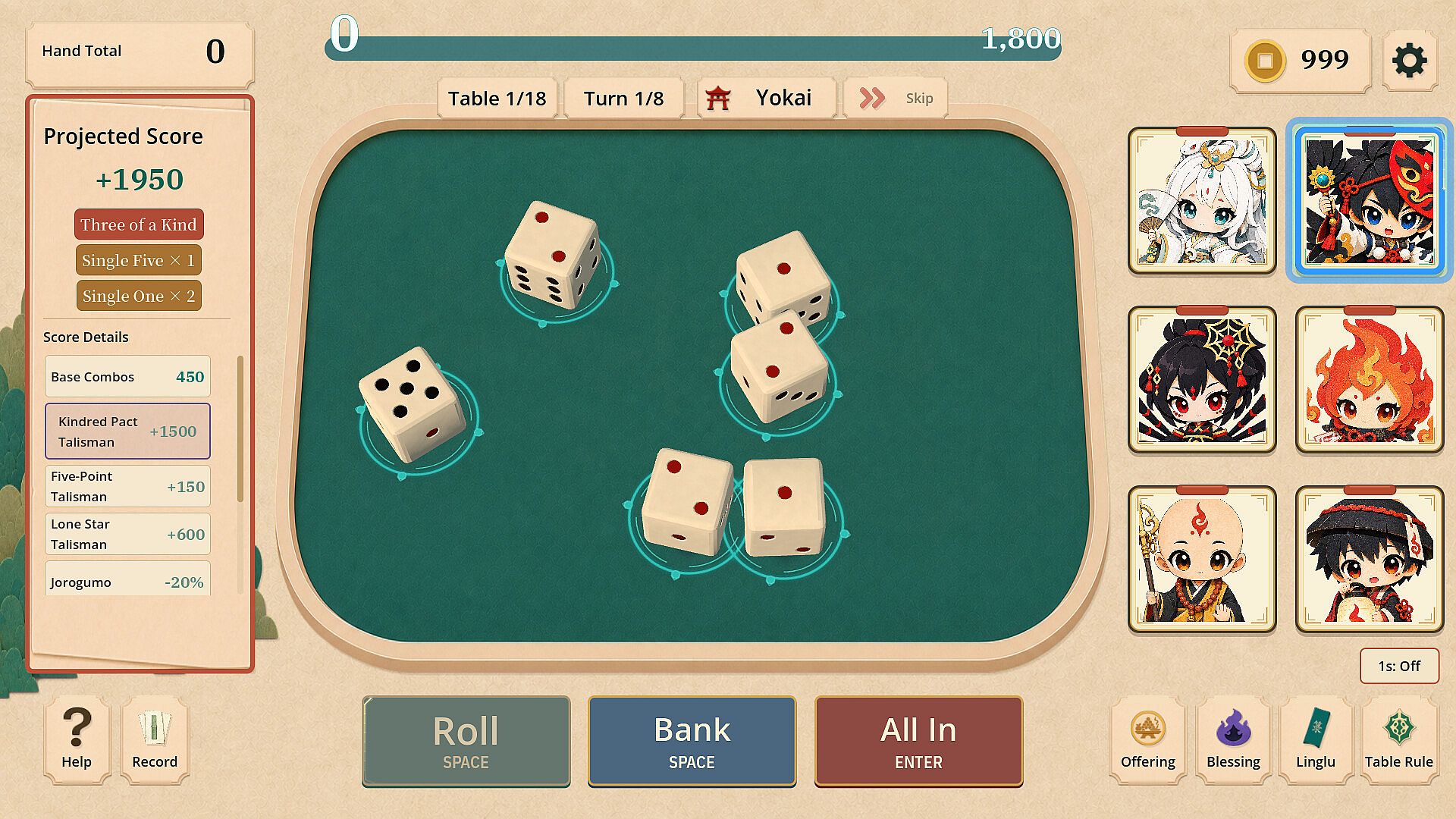
Shikigami form the persistent engine of each run. A roster of 62 unique yokai responds to specific triggers including rolls, set-aside dice, banking actions, gold spent, Offerings used, and table rules. Only active Shikigami resolve, and they do so from left to right in the lineup. Players recruit, swap, and reorder a limited selection to chain abilities and turn ordinary rolls into sequences of effects. Different trigger conditions connect across the roster, creating layered interactions that evolve as the run progresses.
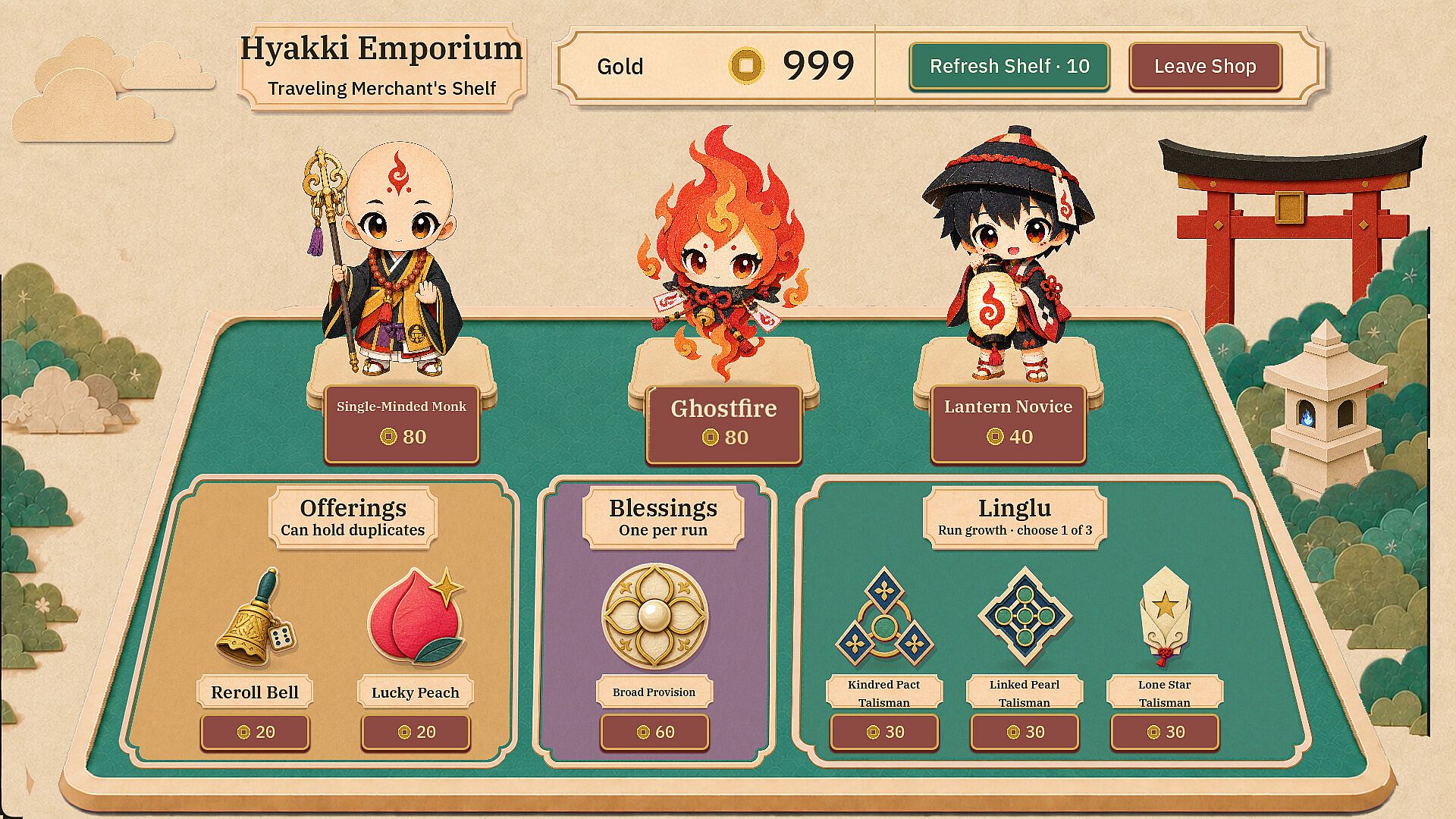
Four interlocking systems support build variety. The 62 Shikigami define abilities and resolution order. Twelve Offerings serve as single-use tools that intervene in dice outcomes or resource flow at key moments. Twenty-eight Blessings persist for the entire run and alter shops, capacity limits, gold earnings, skips, and route options. Four Talisman paths strengthen specific scoring patterns such as single 1s, single 5s, straights, and matching sets, each advancing up to level 10. These systems interact directly: Shikigami can generate or consume Offerings, Blessings modify shop availability, and Talismans reinforce preferred dice patterns into reliable engines. Limited gold, slots, and refreshes at the Hyakki Caravan force meaningful choices with every purchase.
A full journey covers six rounds across eighteen tables divided into three escalating tiers. Higher tiers raise point targets and introduce new rules that change turn structure, scoring values, die faces, and resource costs. Players may skip selected tables in exchange for a Skip Seal, trading an immediate loss for later shop access or build advantages. The route itself becomes part of the risk calculation, as no single build guarantees success and every roll presents multiple viable answers.
Game Modes
Hyakki Dice centers on solo roguelite runs that emphasize repeated attempts to improve builds and reach higher scores. Each run follows the same structure of rounds and tables while allowing different paths through recruitment, upgrades, and route decisions. The absence of separate competitive or cooperative modes keeps focus on mastering the dice economy and Shikigami synergies within the core single-player experience.
Core Mechanics and Progression
Progression ties directly to the four systems working together rather than isolated upgrades. Gold earned from successful banks funds purchases at the caravan, where limited inventory pushes players toward complementary choices. Table rules shift across tiers, requiring builds to adapt on the fly instead of relying on one dominant strategy. The limited lineup size encourages experimentation with trigger order and ability combinations that only reveal their full potential after several runs.
Resource management extends beyond points. Gold, shop refreshes, and capacity slots remain constrained, so every decision at the caravan influences the direction of the current build. Skip Seals add another layer by converting a skipped table into a future opportunity, rewarding players who plan routes several steps ahead.
Is It Worth Playing?
Hyakki Dice suits players who enjoy dice-based strategy games with heavy emphasis on risk assessment and build crafting. The interplay between Shikigami triggers, Offerings, Blessings, and Talismans creates depth that rewards careful lineup construction and timely banking decisions. Those drawn to roguelite runs that force adaptation across escalating challenges will find consistent engagement in the six-round structure and table variety. The game remains in active development following its recent listing, with the core systems already providing a complete loop for repeated play sessions. Fans of casual strategy titles that combine simple inputs with layered decision-making will likely appreciate the focused single-player format and yokai-themed presentation.