

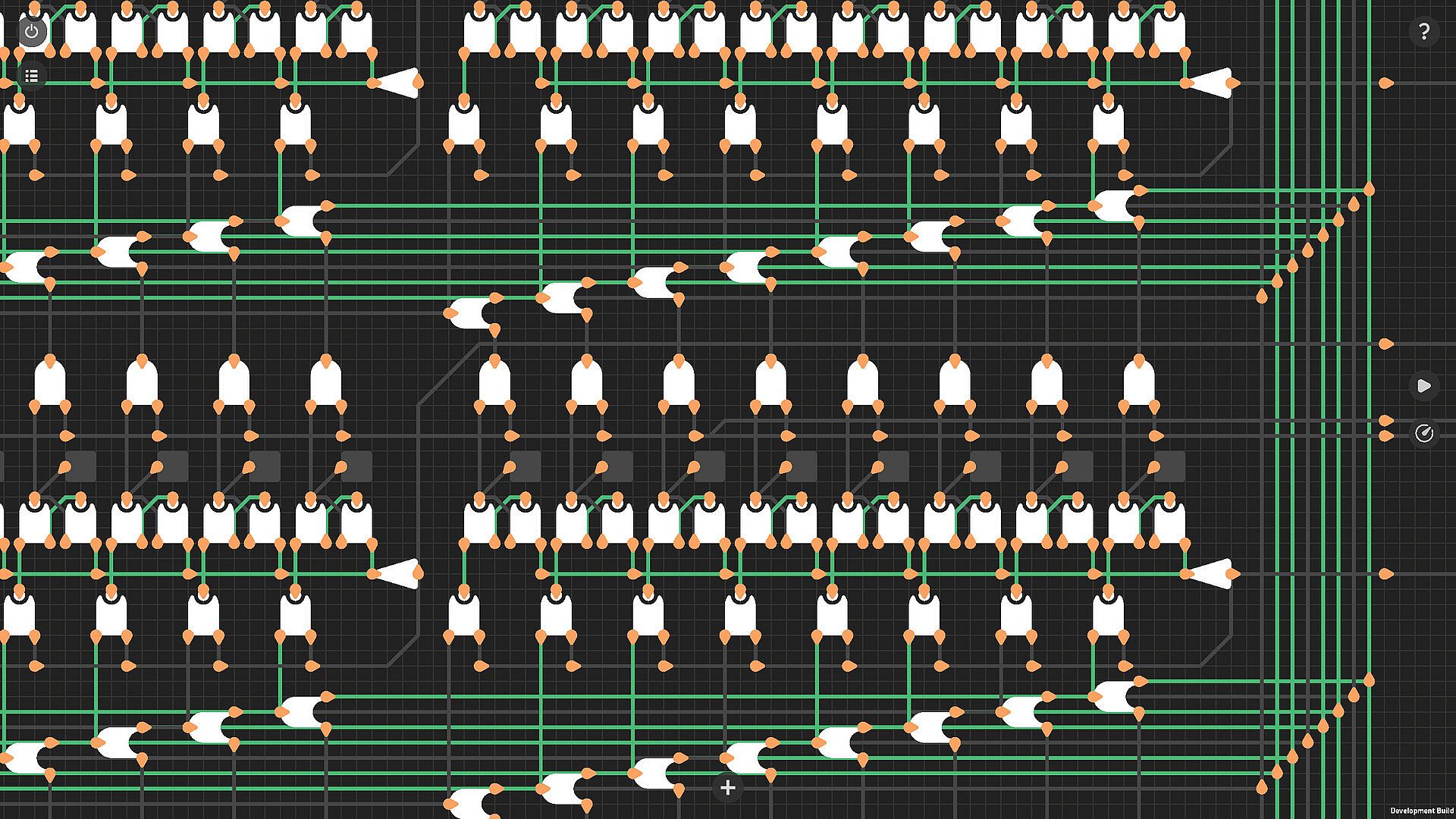
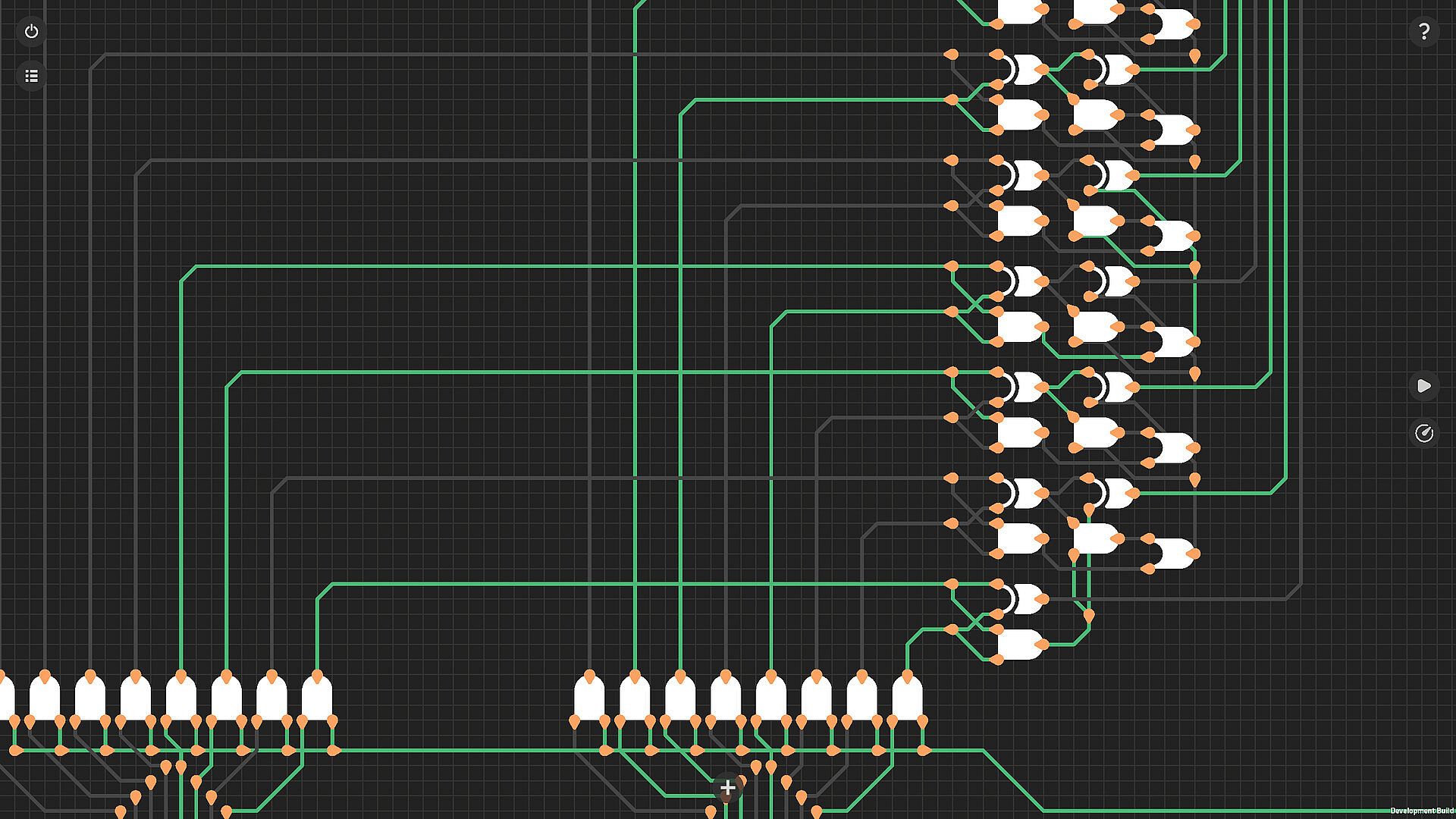
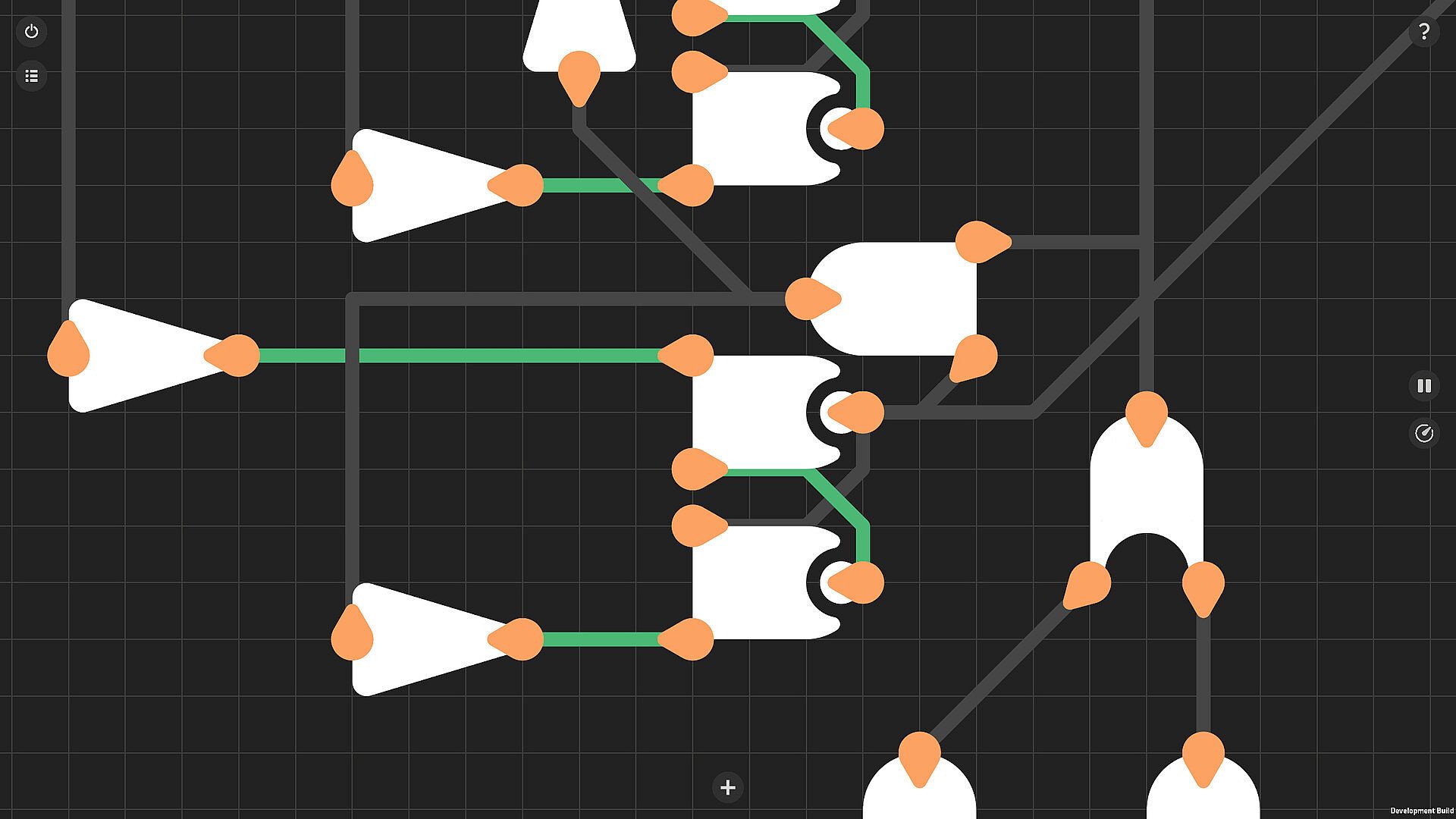
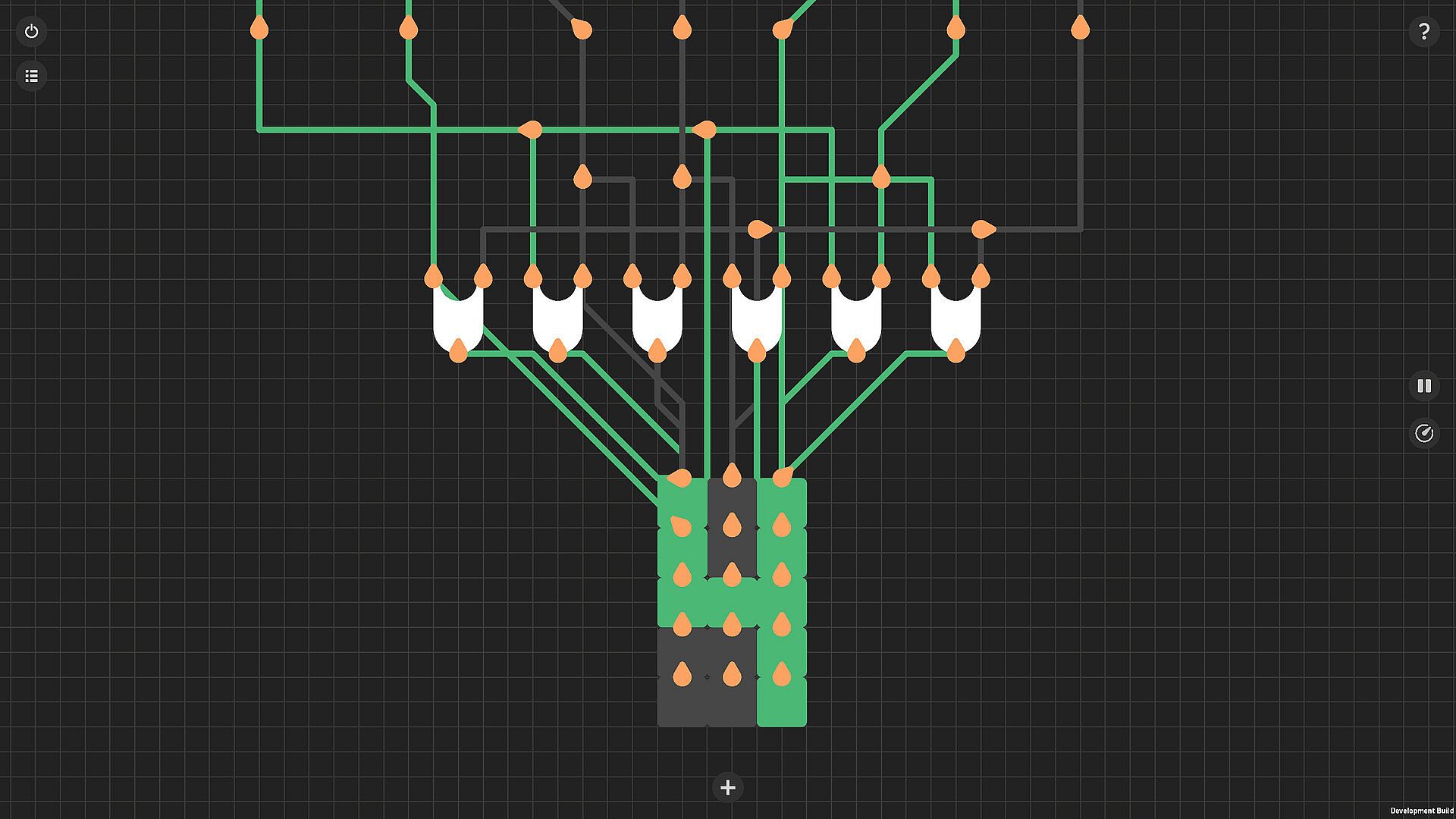
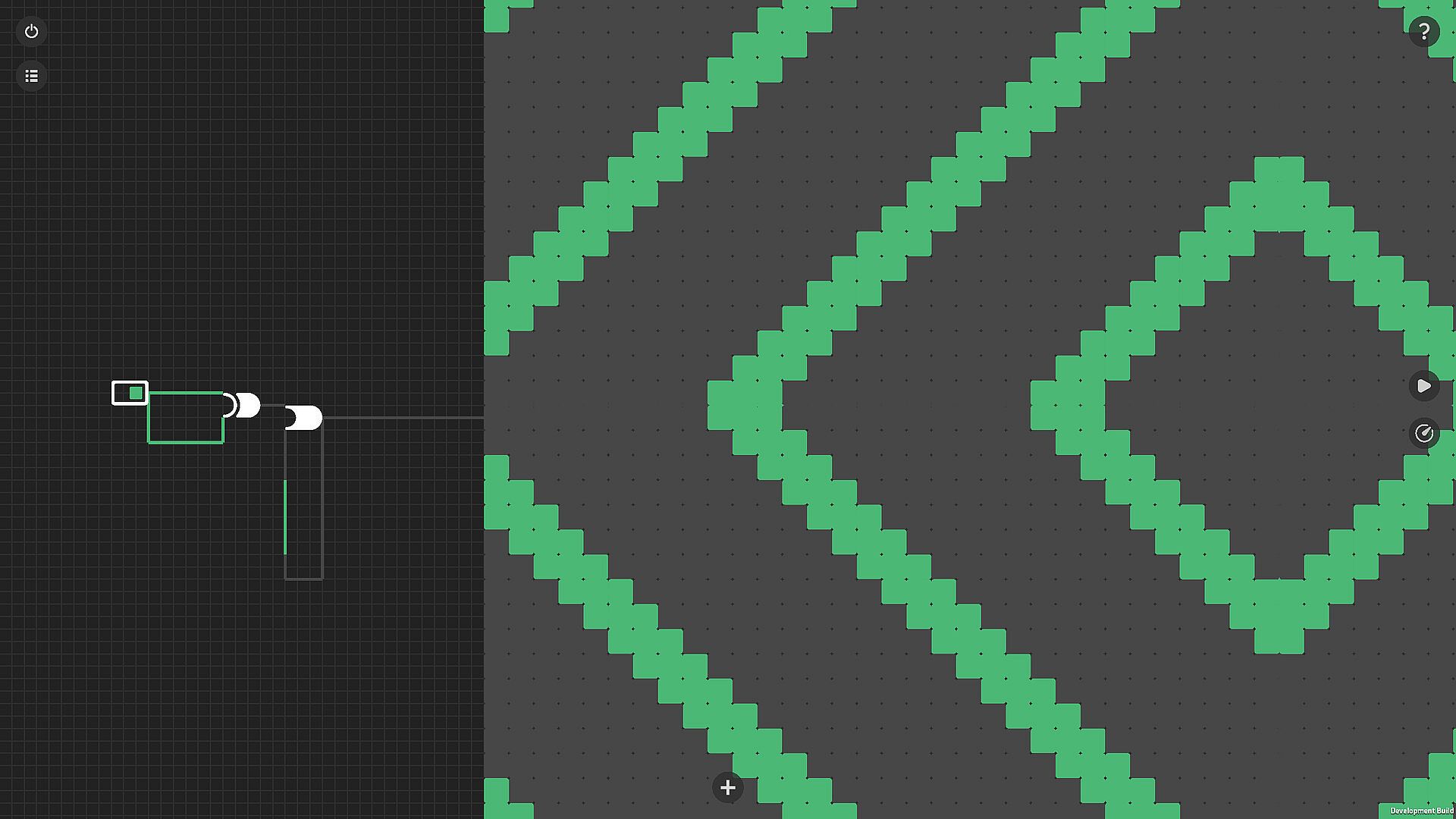
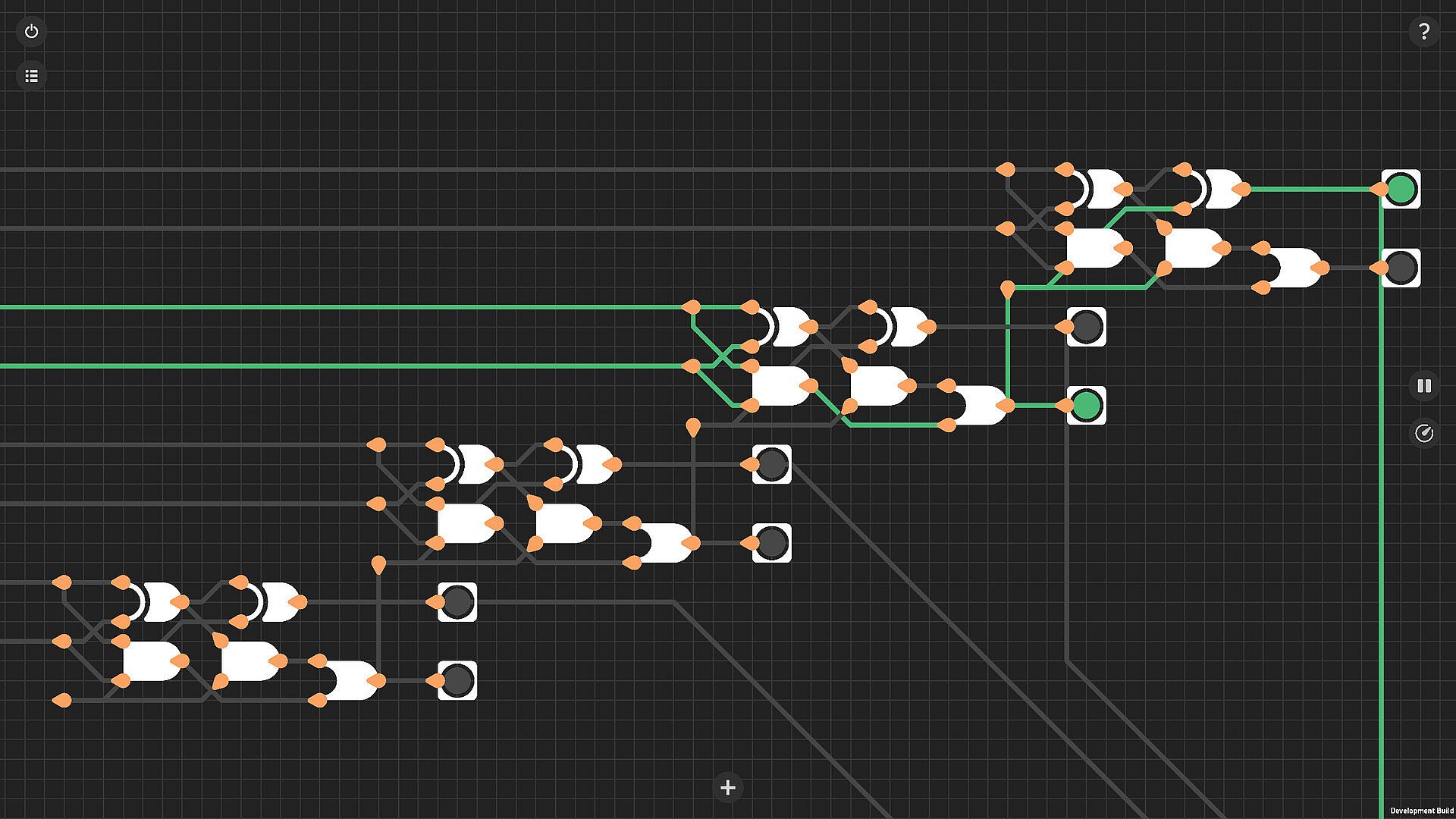
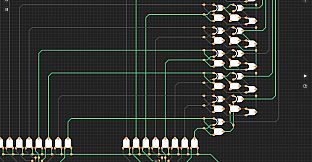
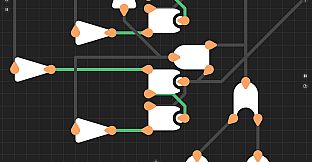
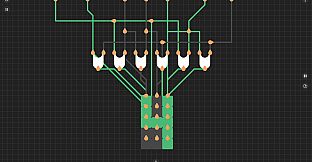
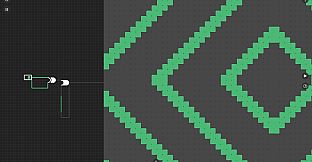
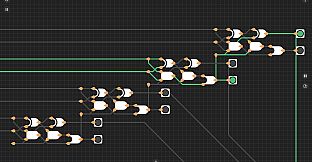
Gate Logic is a simulation game for PC that centers on constructing and testing digital logic circuits. Players work with a set of Boolean logic gates including NOT, AND, OR, NOR, XOR, and XNOR placed across an infinite grid-based workspace. The focus remains on creating functional electronic designs from basic components, with tools that support both simple experiments and elaborate builds.
Gameplay
The core loop involves placing gates on the canvas and connecting them to form circuits that process binary signals. Input toggles allow manual control, and these can be assigned to keyboard keys for quick testing during runs. Output elements appear as LEDs, with an option to switch them into pixel mode so larger arrangements can form visual displays or simple screens.
Simulation controls provide precise oversight. The process can pause at any moment, advance one step at a time, or reverse to previous states, which helps isolate issues in complex arrangements. When running continuously, a frequency slider adjusts the speed to match the needs of the current circuit, whether for slow observation or faster iteration.
Modular design receives strong support through the ability to import existing save files directly into an active workspace. This turns completed sections into reusable blocks that slot into new projects without rebuilding from scratch each time.
Game Modes
Gate Logic operates primarily as an open sandbox where players experiment freely on the grid. There are no predefined levels or structured campaigns, so the experience centers on self-directed creation rather than guided challenges.
Debugging forms a key activity, with the step and reverse functions turning circuit testing into an interactive process. Players can build, observe signal flow, adjust connections, and refine designs in real time.
Sharing and expansion happen through the integrated workshop system. Users upload their own circuits for others to download and incorporate, while browsing available creations provides inspiration or ready-made modules for personal projects.
Key Features and Mechanics
The infinite canvas removes any spatial limits, allowing circuits to grow in any direction as complexity increases. Gate variety covers common Boolean operations, giving flexibility for both basic logic and more advanced combinations like exclusive or operations.
Keyboard-bound inputs add a layer of interactivity during live simulation. This setup suits scenarios where repeated testing requires quick state changes without pausing to click on-screen elements.
Pixel-mode outputs expand the creative scope beyond pure functionality. Builders can arrange LEDs to represent characters, patterns, or simple animations once the underlying logic drives them correctly.
Frequency adjustment and manual stepping together support different workflows. Slower speeds aid in tracing signal paths through dense gate clusters, while higher speeds demonstrate overall behavior in completed designs.
Is It Worth Playing?
Gate Logic suits anyone interested in digital logic, electronics fundamentals, or creative circuit design. The combination of precise simulation controls and modular import tools makes it practical for both learning exercises and ambitious personal projects.
Players who enjoy open-ended building without time limits or competitive elements will find the infinite grid and workshop integration rewarding. The ability to step through simulations backward and forward reduces frustration during troubleshooting, encouraging experimentation with larger or more intricate systems.
Those seeking structured progression or multiplayer features may find the sandbox focus less engaging, as the game emphasizes individual creation and sharing over guided content. Availability on PC keeps the barrier low for anyone with an interest in Boolean logic or visual circuit work.
Overall, the verified mechanics deliver a focused toolset for circuit construction that rewards patience and iterative refinement. It stands as a specialized simulation for hobbyists and students alike who value direct control over signal behavior and reusable components.