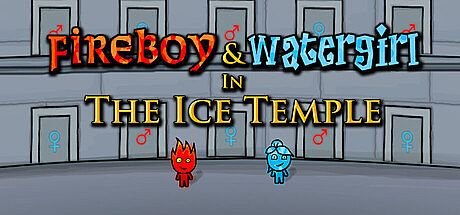




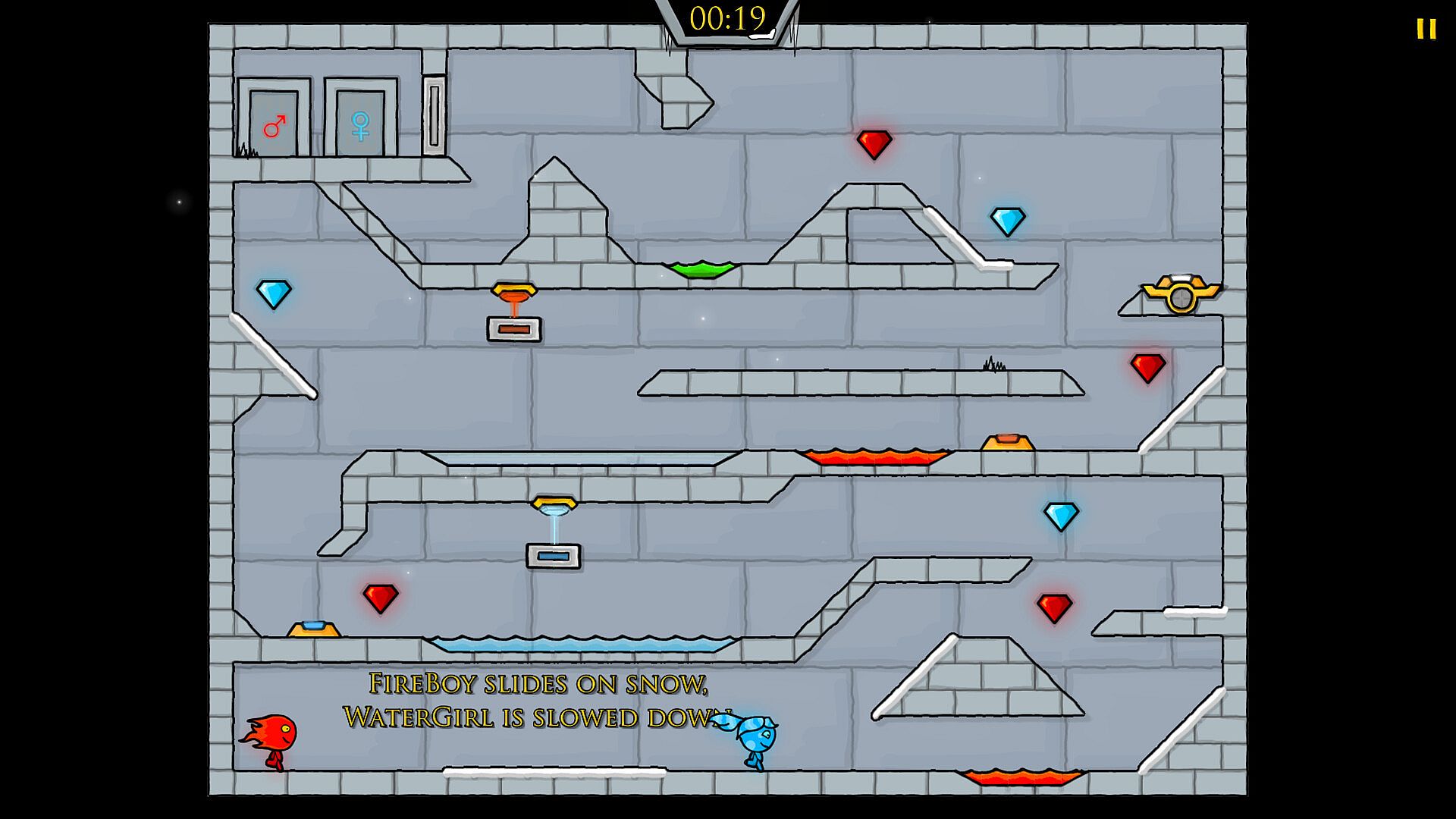
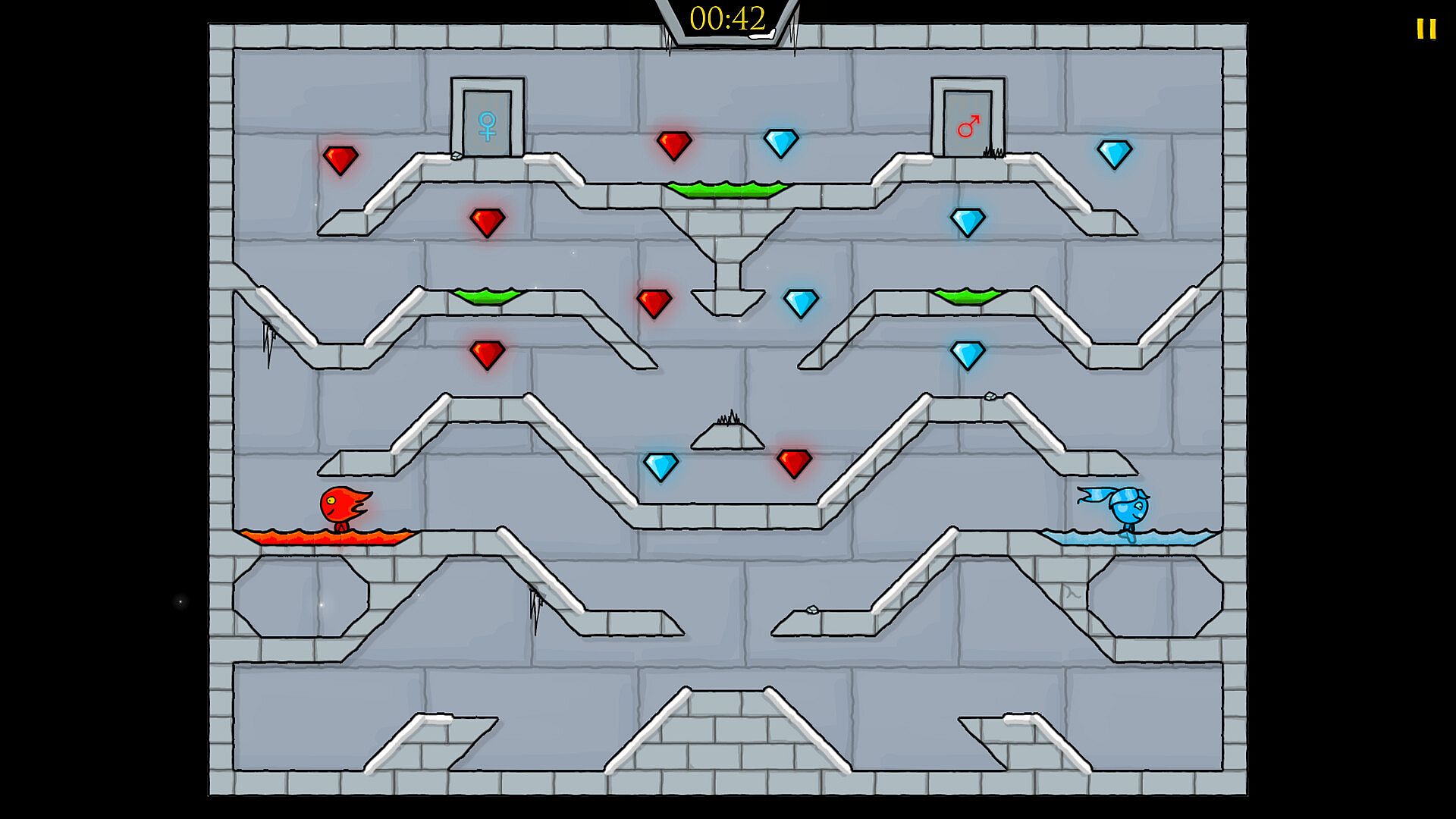
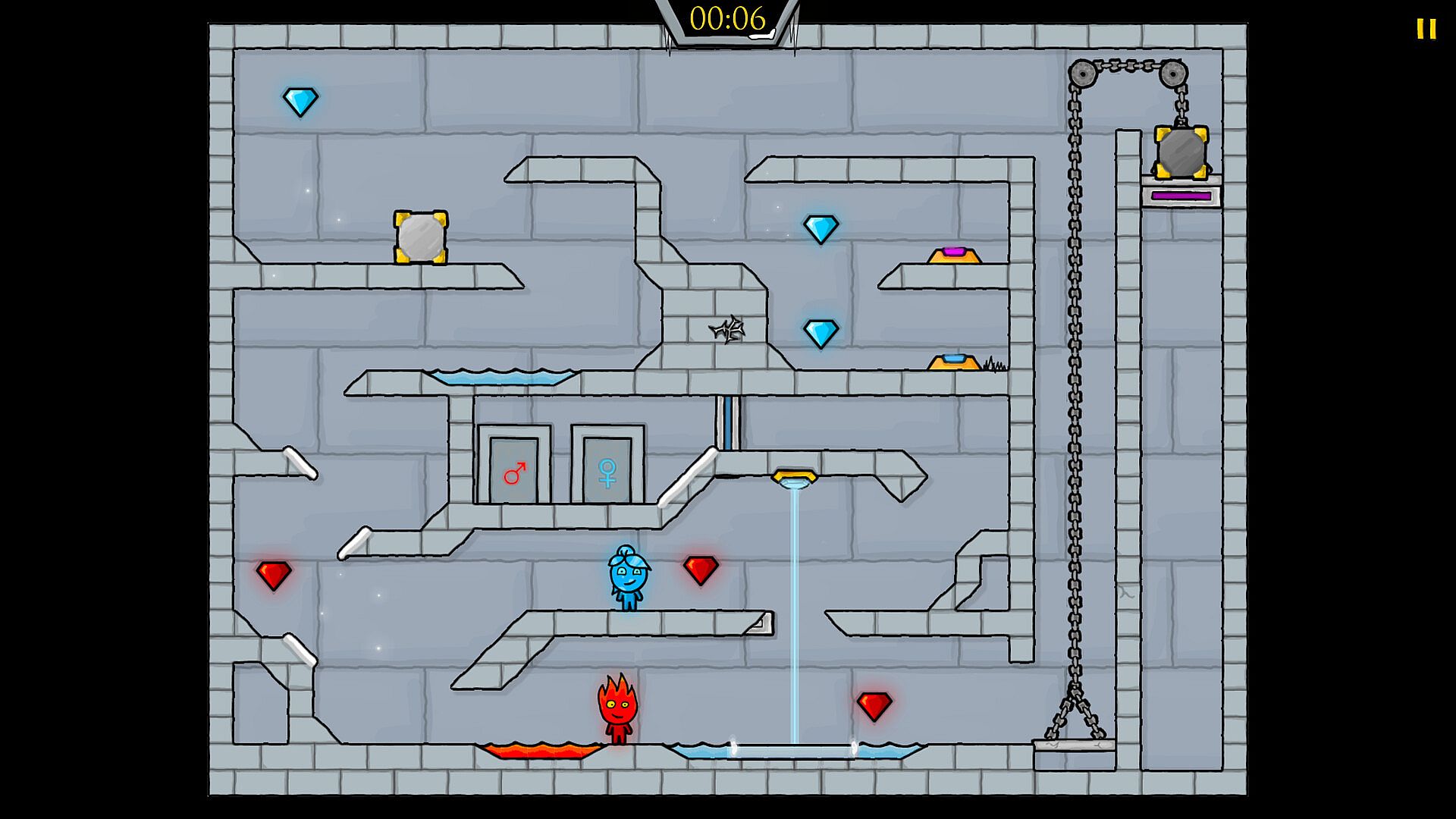
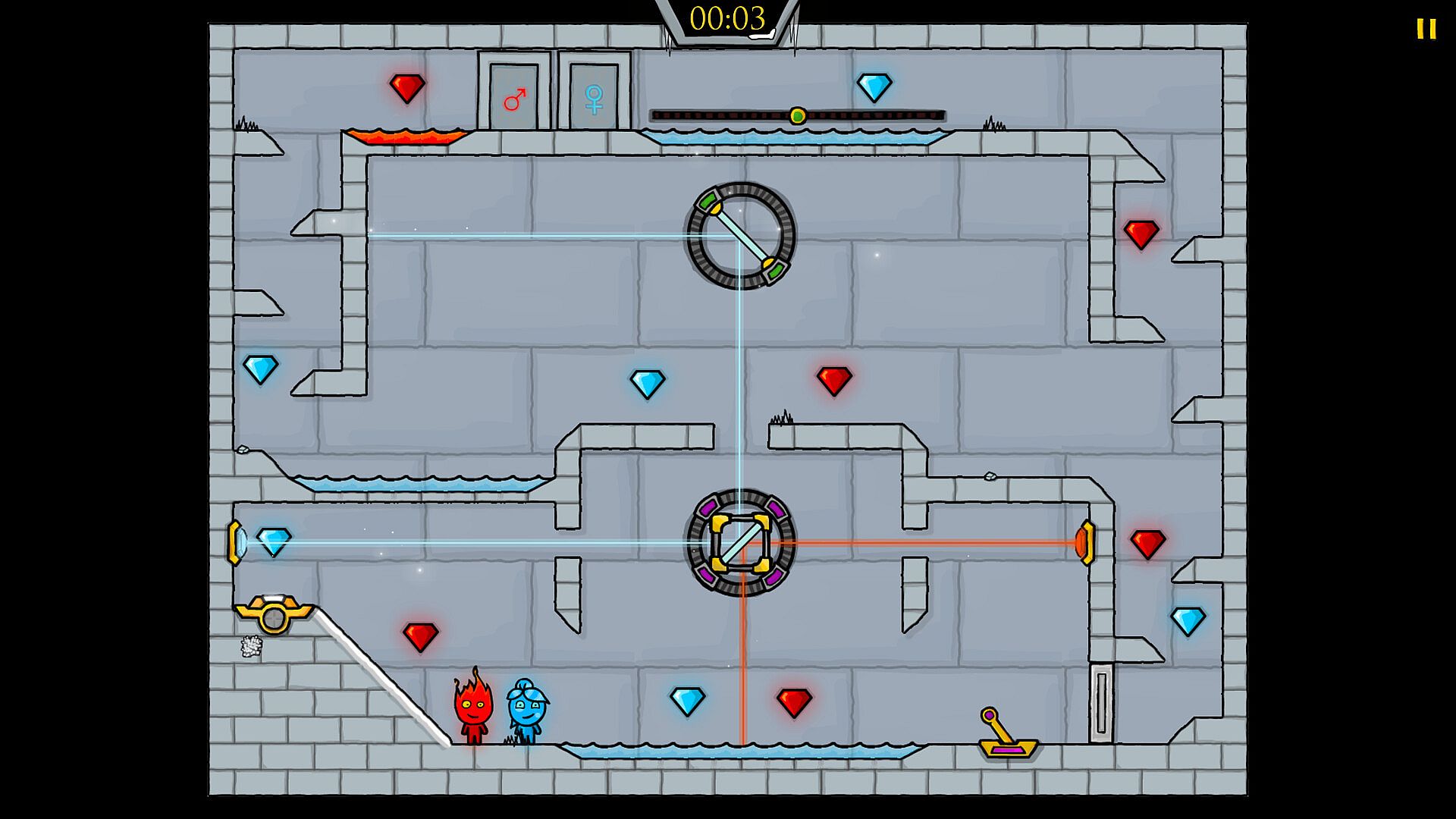
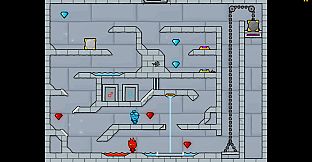
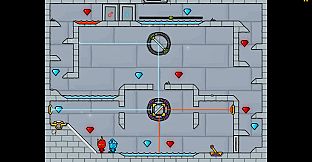
Fireboy & Watergirl 3: The Ice Temple is a puzzle-platformer that challenges players to guide two characters through a series of icy levels filled with environmental hazards and timing-based obstacles. Fireboy moves faster on ice while Watergirl slows down, and the pair must coordinate to activate switches, redirect beams that freeze or thaw water, and navigate slippery surfaces without touching forbidden elements. The game supports both solo play, where one person controls both characters, and local co-op on a shared keyboard, with additional remote options available through platform features.
Gameplay
Core movement relies on distinct physics for each character. Fireboy cannot enter water and gains speed on ice, while Watergirl cannot touch lava and struggles with traction on frozen ground yet climbs icy slopes more easily. Levels incorporate levers, pressure plates, and colored beams that alter water states between liquid and solid forms. Players collect diamonds scattered across each stage while racing against optional timers. Precise jumps and synchronized actions become essential as ice alters momentum and prevents standard footing on many surfaces.
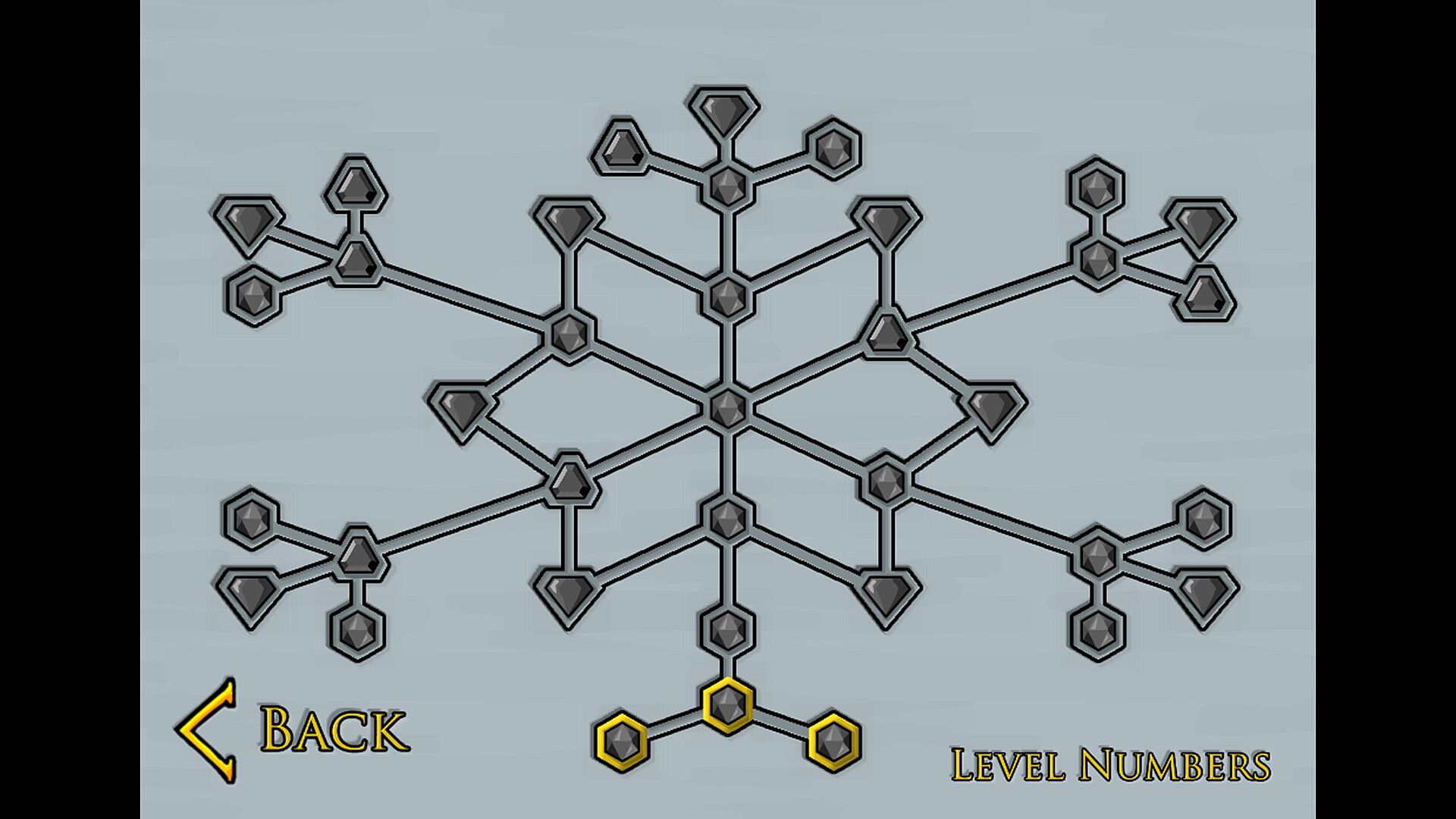
Progression builds through increasingly complex room designs where one character often holds a mechanism open for the other to pass. Environmental interactions expand beyond basic hazards to include sliding trajectories and wall-assisted stops. The emphasis stays on spatial awareness and repeated attempts to refine routes rather than combat or exploration in open areas.
Game Modes
The primary experience centers on sequential level completion in the Ice Temple setting. Solo mode lets a single player switch between or simultaneously manage both Fireboy and Watergirl using separate control schemes. Local co-op assigns one set of inputs to each character on the same device, encouraging real-time communication and division of tasks. Remote play features extend the co-op option across separate machines without requiring additional software beyond the host platform's built-in tools.
No separate competitive or versus modes exist. All activity focuses on cooperative puzzle resolution and diamond collection within the fixed level structure. Difficulty scales naturally through tighter timing windows and more interdependent mechanisms rather than through selectable difficulty settings.
Level Design and Challenges
Each stage presents compact, self-contained puzzles that test the ice-specific movement rules introduced in this entry. Early levels introduce basic sliding and beam redirection, while later ones combine multiple mechanics such as simultaneous activation of distant switches and careful positioning to avoid sliding off platforms. The temple layout features vertical shafts, narrow corridors, and interconnected chambers that reward experimentation with character order and timing.
Collectibles appear in positions that often require one character to create a path or hold a gate for the other. Failure states reset the current stage, promoting iterative improvement without permanent setbacks. The overall design maintains a consistent focus on teamwork mechanics even during solo sessions.
Is It Worth Playing?
This title suits players who enjoy methodical co-op puzzle-platformers with clear cause-and-effect mechanics. The ice layer adds meaningful variation to movement and puzzle solutions compared with earlier entries in the series, rewarding patience and coordination. Local keyboard sharing works well for two players in the same room, and remote options broaden accessibility for separated friends.
Those seeking fast action or single-player narrative depth may find the deliberate pace and puzzle focus less engaging. The game remains available on PC with no ongoing seasonal content or major updates required for the core experience. It delivers a self-contained set of levels that can be completed in multiple sessions, making it a solid choice for short cooperative play sessions or solo puzzle solving.