

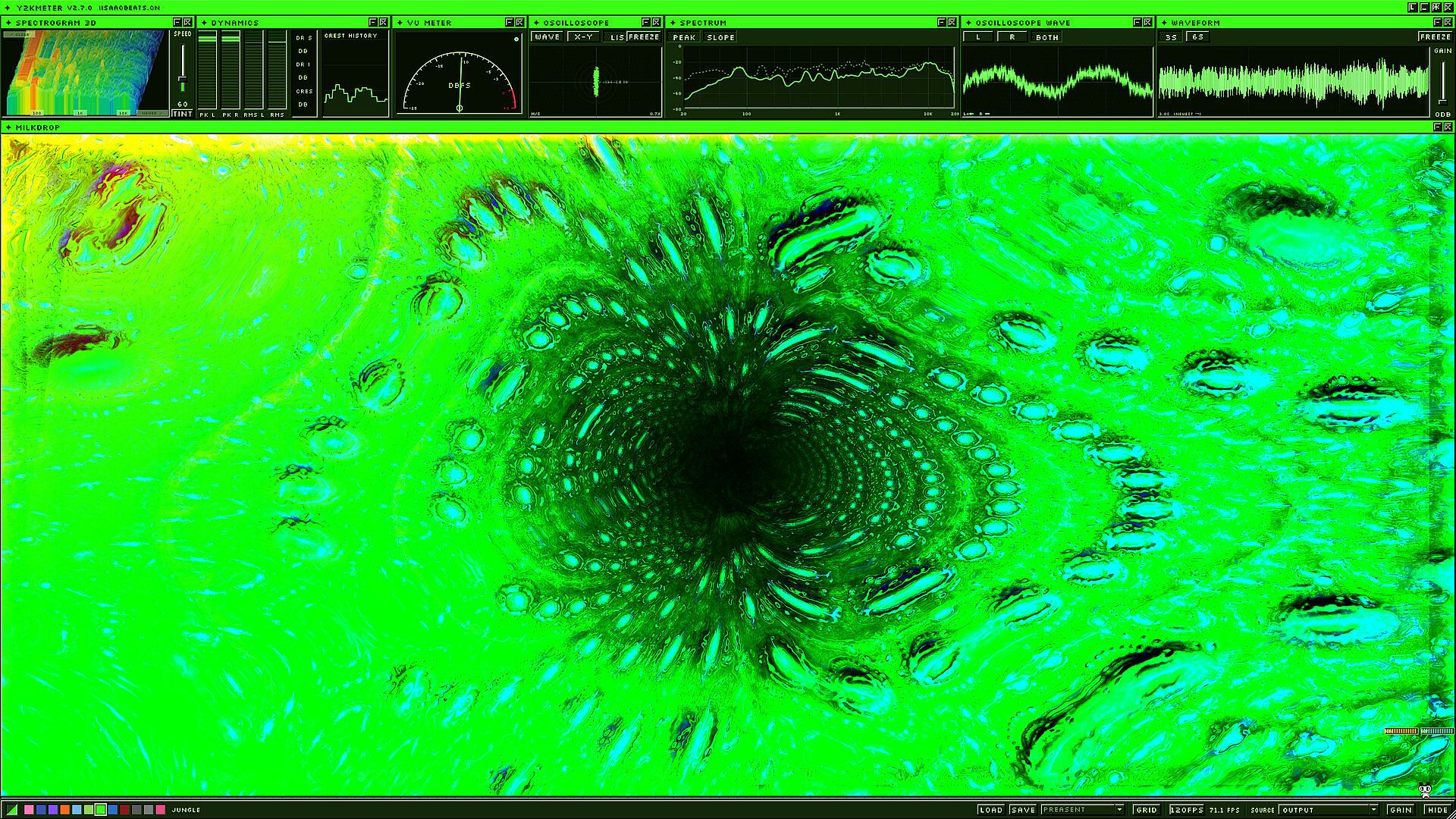
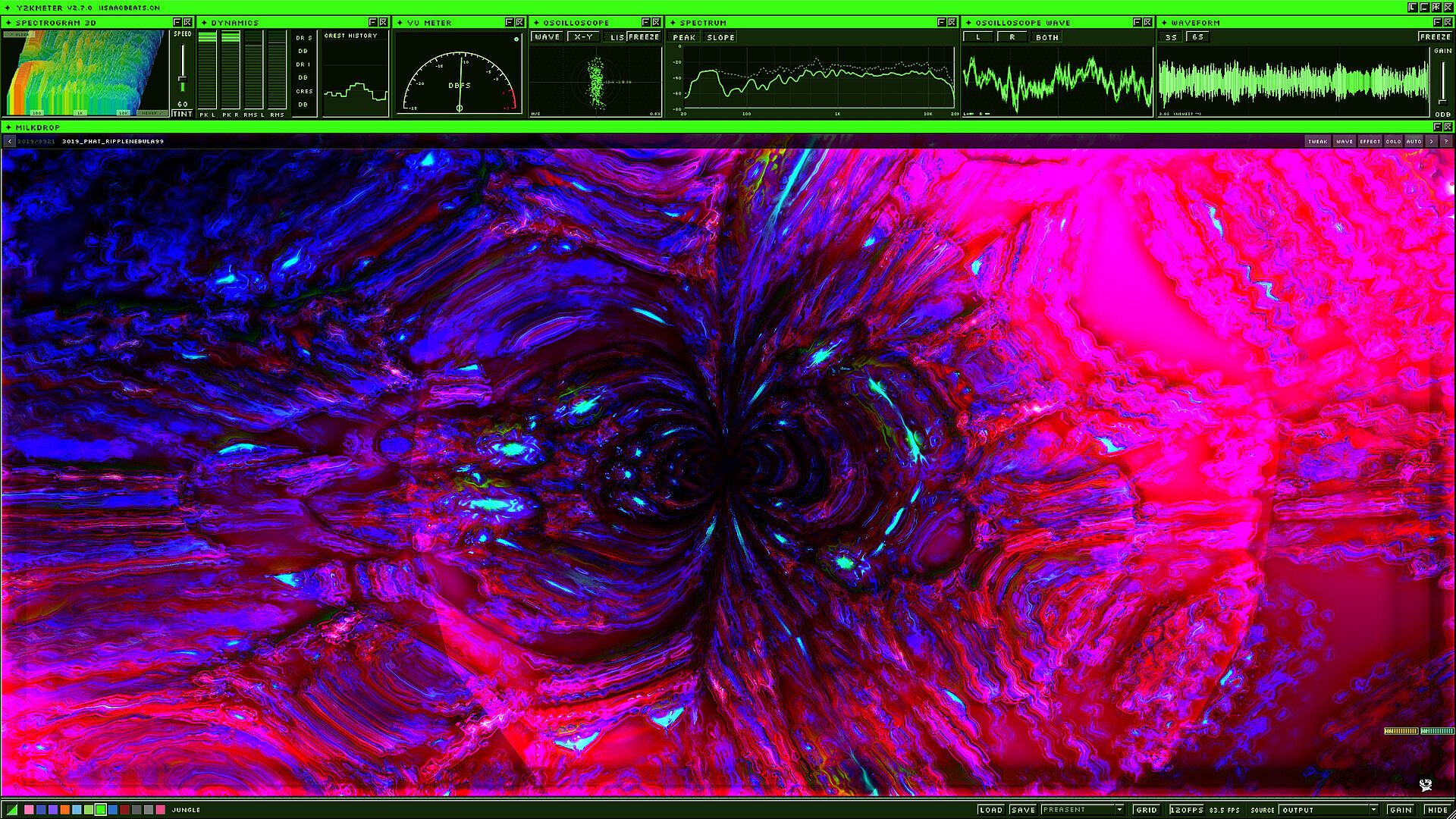
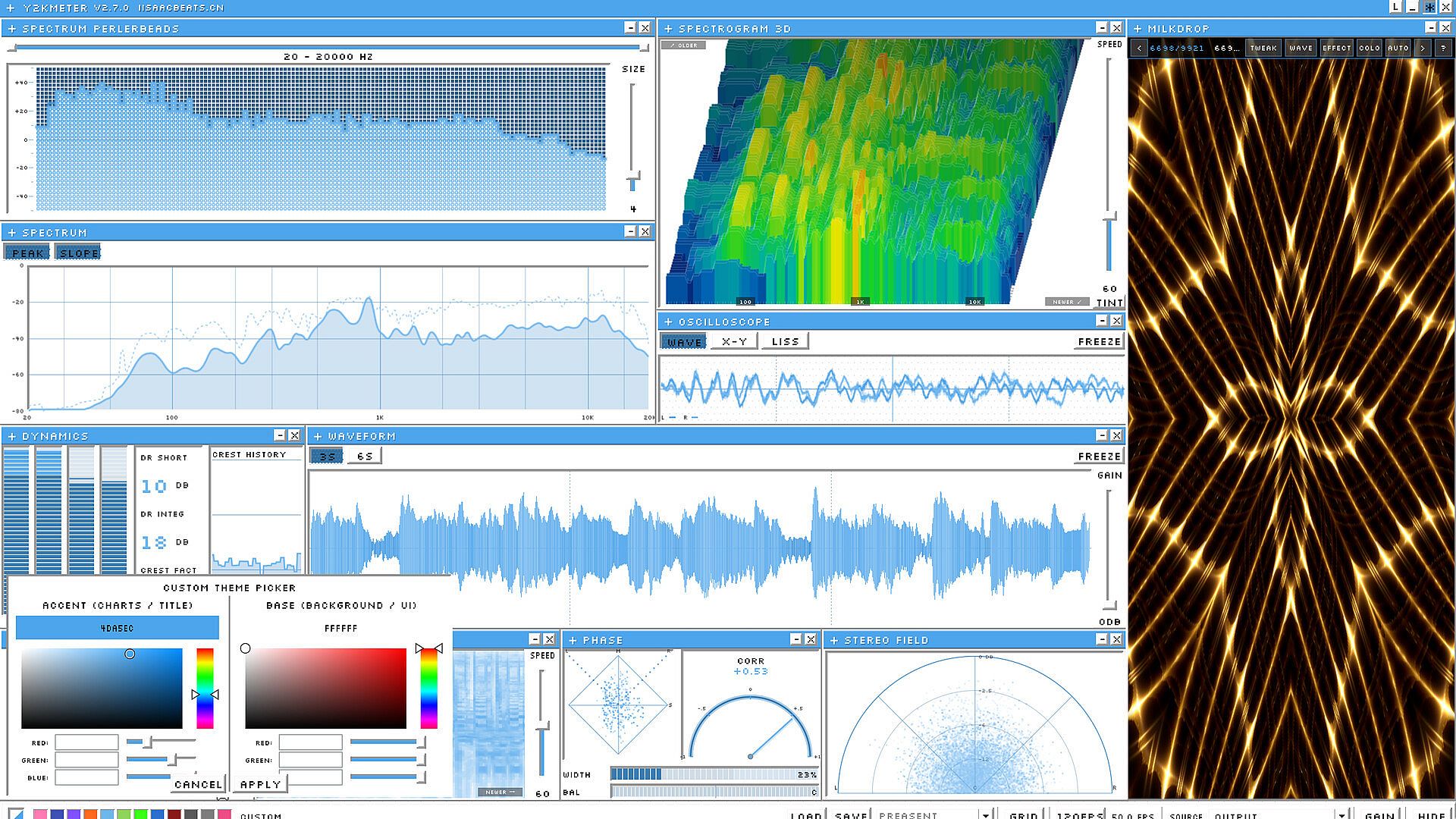
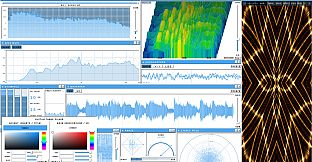
Y2K Meter is a free to play indie casual game available on PC that blends professional audio analysis tools with a distinctive retro pixel aesthetic drawn from late 1990s and early 2000s desktop interfaces. It functions as standalone software that captures incoming audio signals and renders them through visible pixel displays while offering interactive elements that turn the experience into a desktop companion rather than a traditional title.
Gameplay
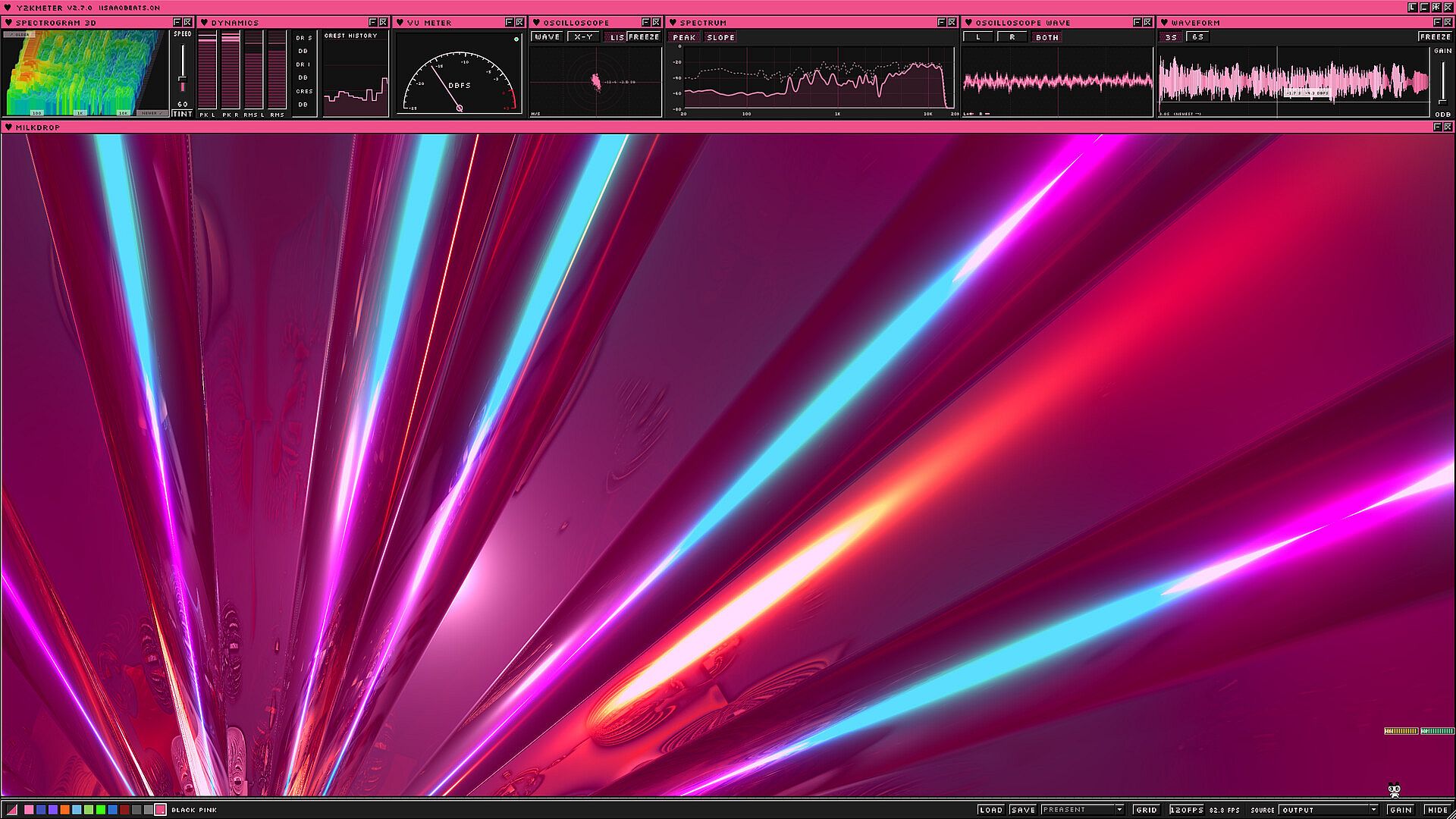
The core loop centers on launching the application and immediately processing live audio from any source playing on the system. Loudness readings follow ITU-R BS.1770-4 standards with momentary, short-term, and integrated LUFS values. Stereo meters track RMS and true peak levels on left and right channels, while a phase correlator provides correlation, width, and balance data alongside a goniometer Lissajous display. Dynamic range tools show peak, RMS, crest factor, and both short-term and integrated measurements.
Frequency analysis appears through a logarithmic spectrum display spanning 20 Hz to 20 kHz with dual FFT resolutions for sharp low-end detail. A pixel-tile spectrogram offers waterfall views and a three-dimensional perspective. Additional readouts include a stereo oscilloscope in waveform, X-Y, and Lissajous modes, a semicircular stereo field radar, an analog VU meter, and a scrolling waveform with pitch tinting and sibilance highlights. Real-time tempo and key estimation sit alongside a recorder that captures input as 32-bit float WAV files for up to one hour with rolling exports.
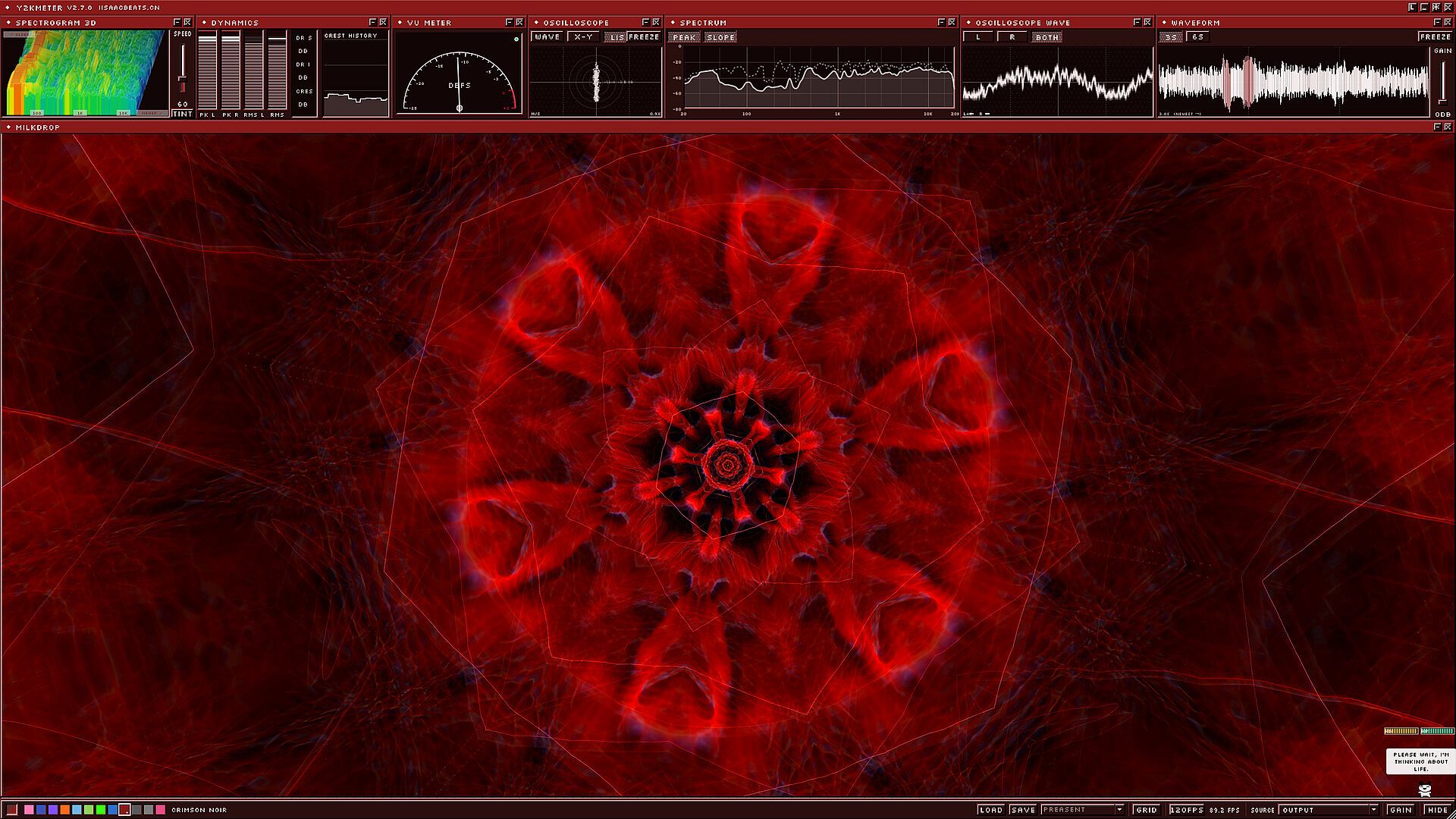
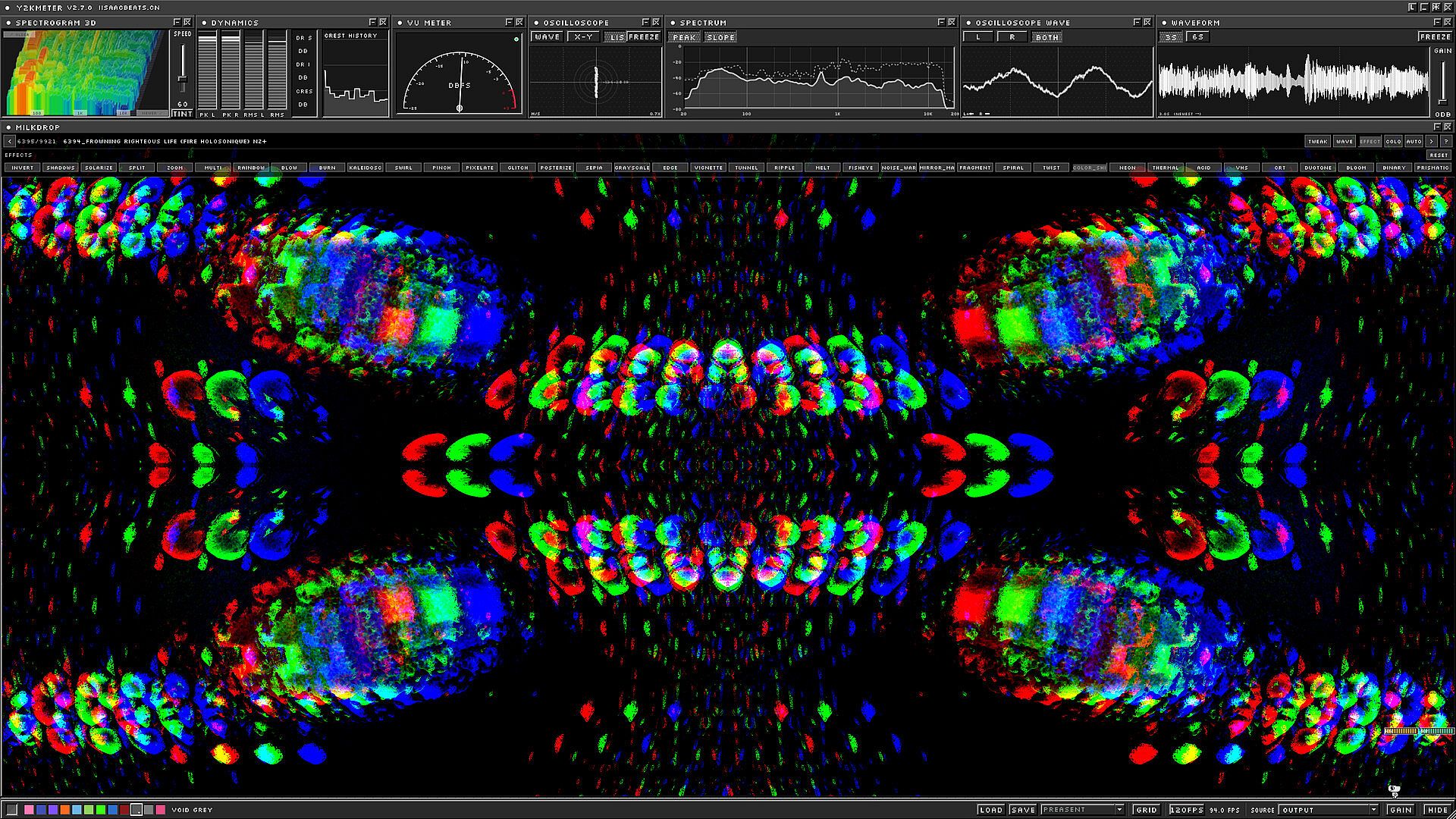
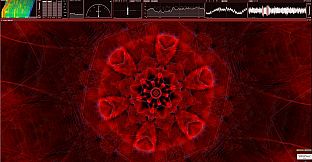
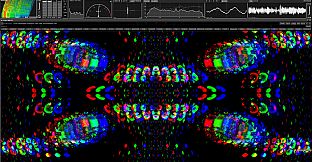
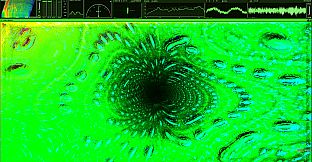
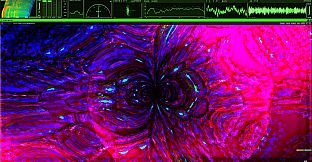
Interaction extends beyond passive viewing. A virtual pet module reacts to the audio signal with states for hatching, feeding, sleeping, sickness, and departure. Milkdrop visuals render through a libprojectM engine using thousands of presets, supported by four control panels for color adjustments, post-processing effects, waveform shapes, and geometric tweaks. Users can drop images to generate fuse-bead pixel art backgrounds. Every module responds to clicks and drags with live data bubbles, while a particle canvas reacts to mouse input with force fields, combo chains, emoji bursts, and bounces.
Game Modes
Four intensity settings cycle through off, chill, normal, and party levels to adjust overall activity and particle behavior, with the current choice saved alongside custom layouts. Workspace customization includes freeform drag-and-drop placement of all modules, persistent save and load presets, and three window presentations ranging from full interface chrome to hidden elements or a slim stick strip. A pseudo-fullscreen option restores on subsequent launches. Theme options start with a default black pink pixel scheme and extend through an OKLCH-based palette generator that creates readable color schemes from a single seed color, complete with its own library of saved themes.
Is It Worth Playing?
Y2K Meter suits players seeking a free to play casual experience that combines functional audio metering with playful retro visuals and interactive desktop elements. The standalone nature allows immediate use without additional hardware or software dependencies, and the pixel aesthetic paired with responsive modules creates an engaging background presence during music playback or production work. Those who enjoy tinkering with visualizers, virtual companions, or customizable workspaces will find the toy-like reactions and layout freedom rewarding. As a free title with no paywalls mentioned, it offers low-risk entry for anyone curious about retro-futuristic audio tools on PC. The emphasis on real-time analysis and customization makes it particularly relevant for users who value both utility and decorative charm over conventional game progression systems.