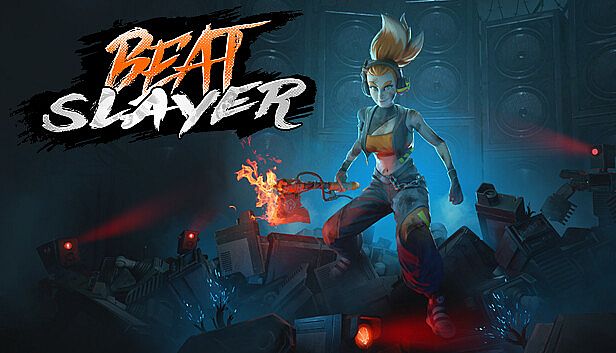










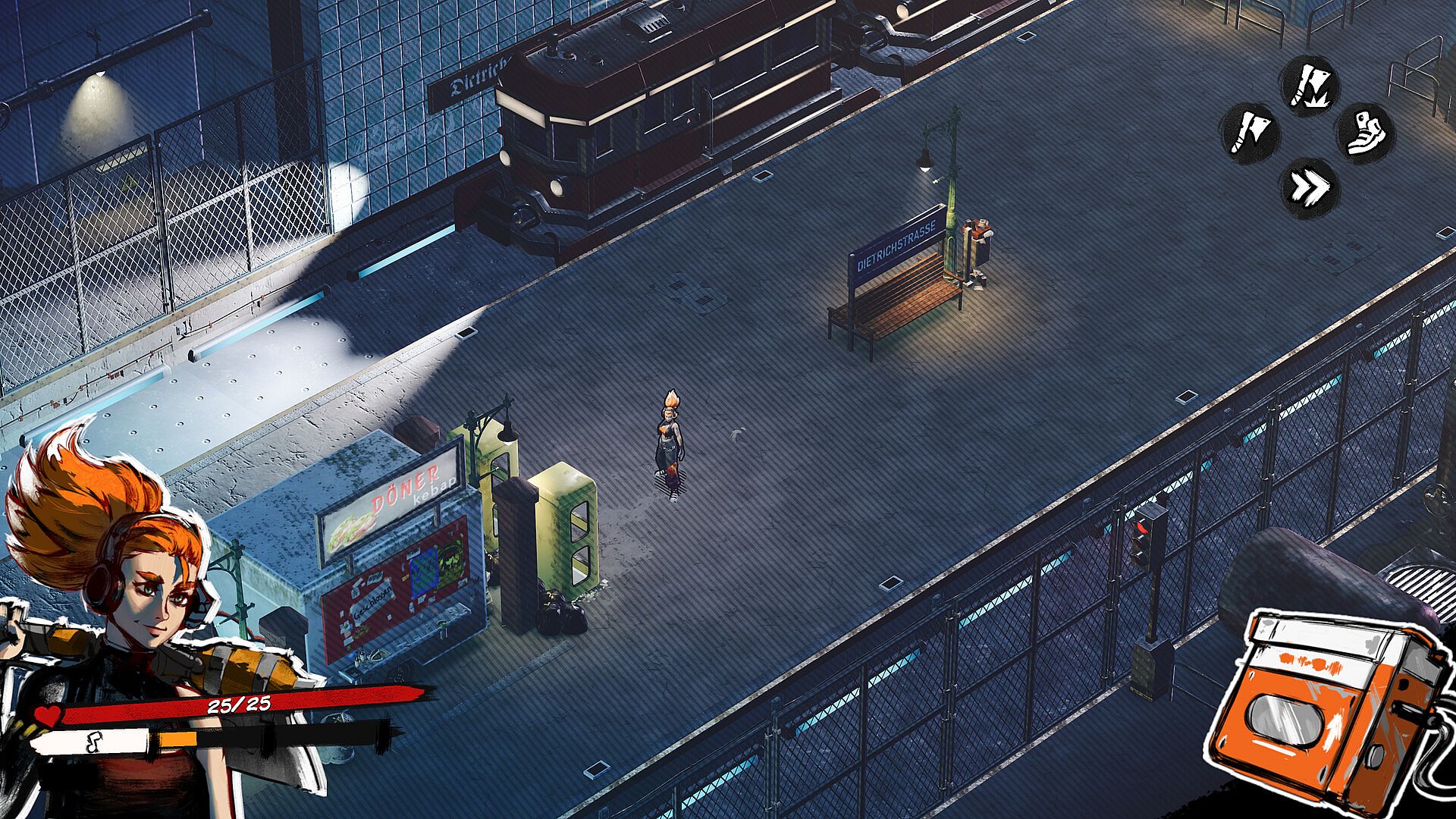
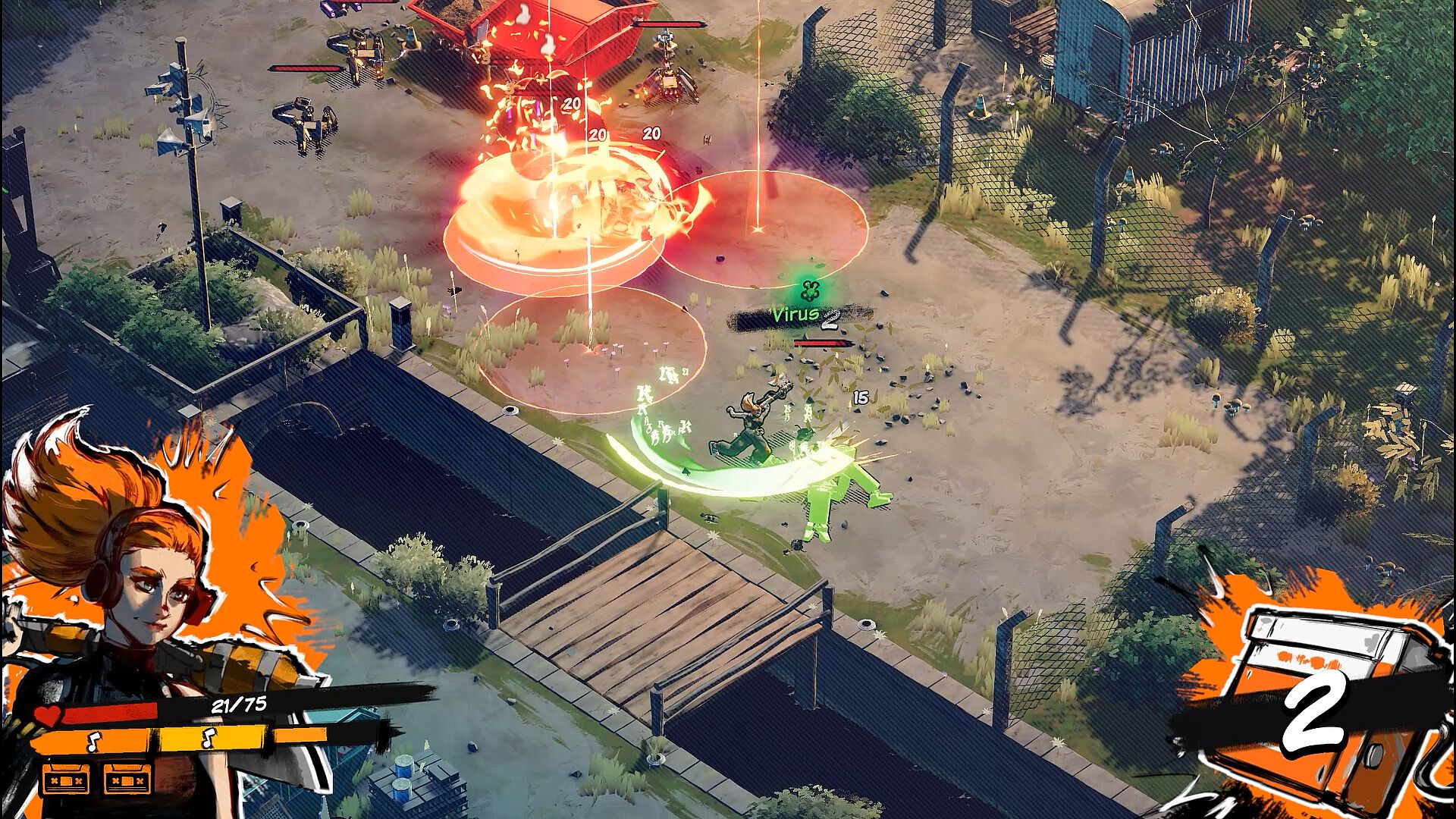
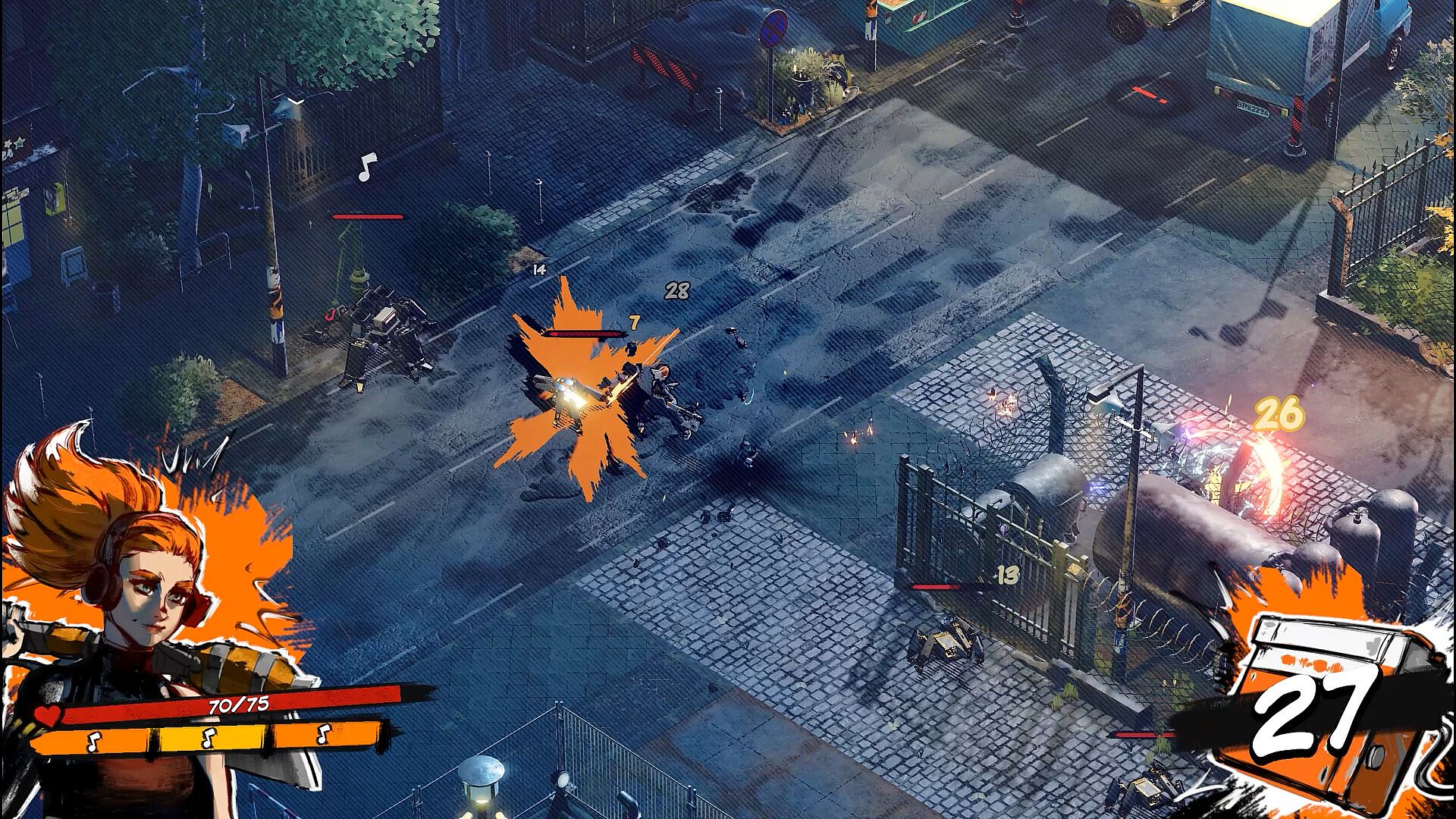
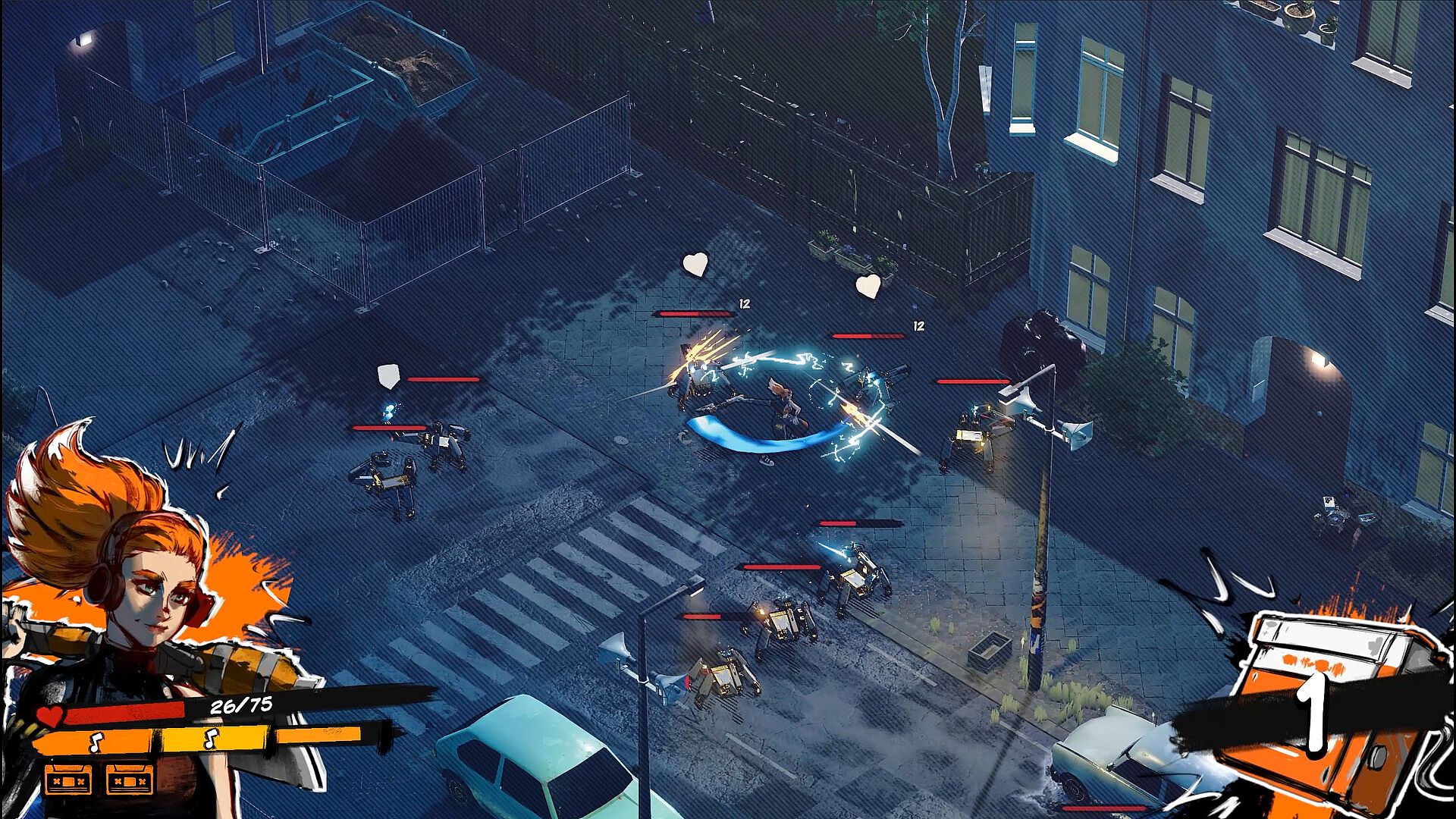
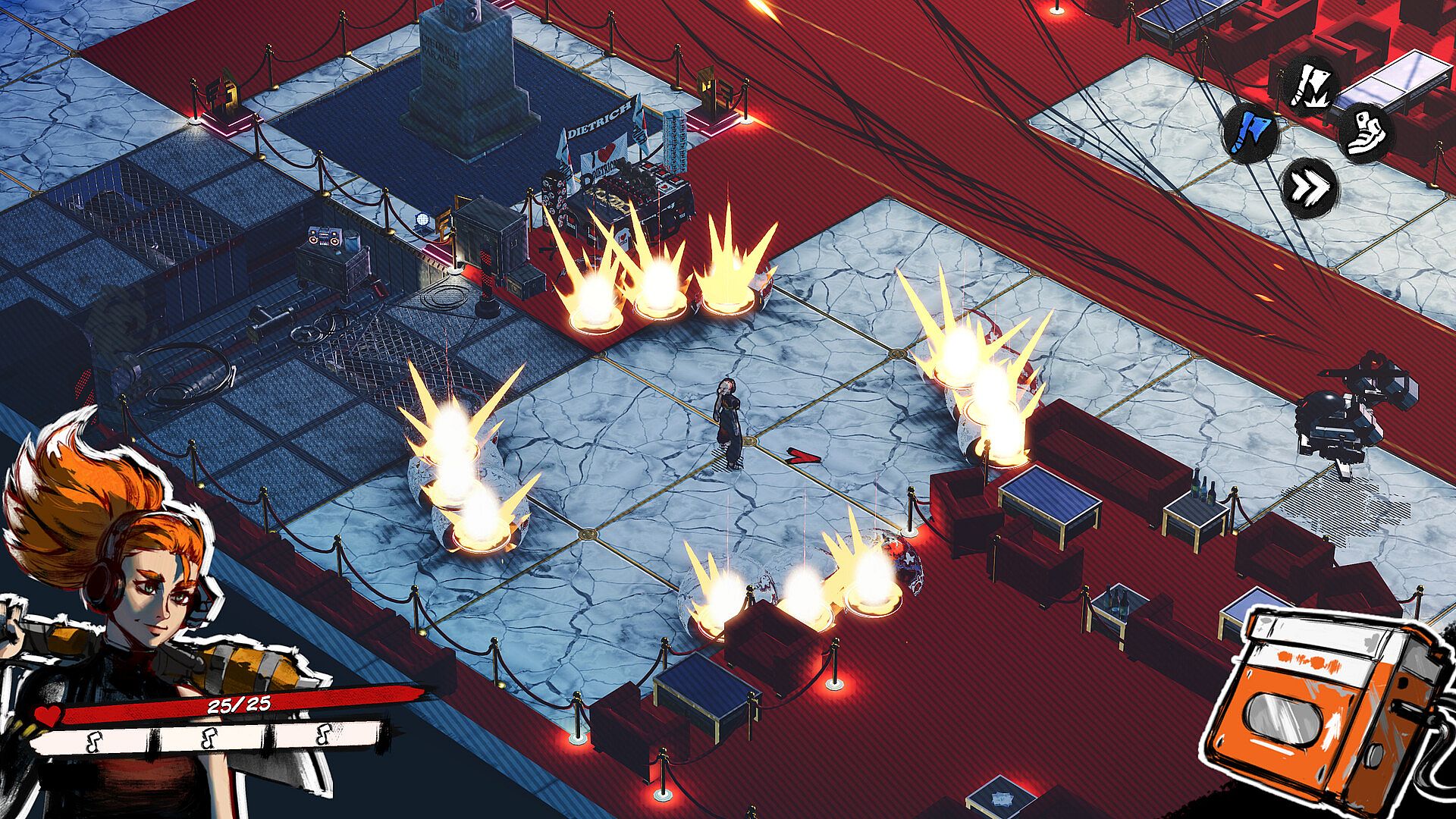
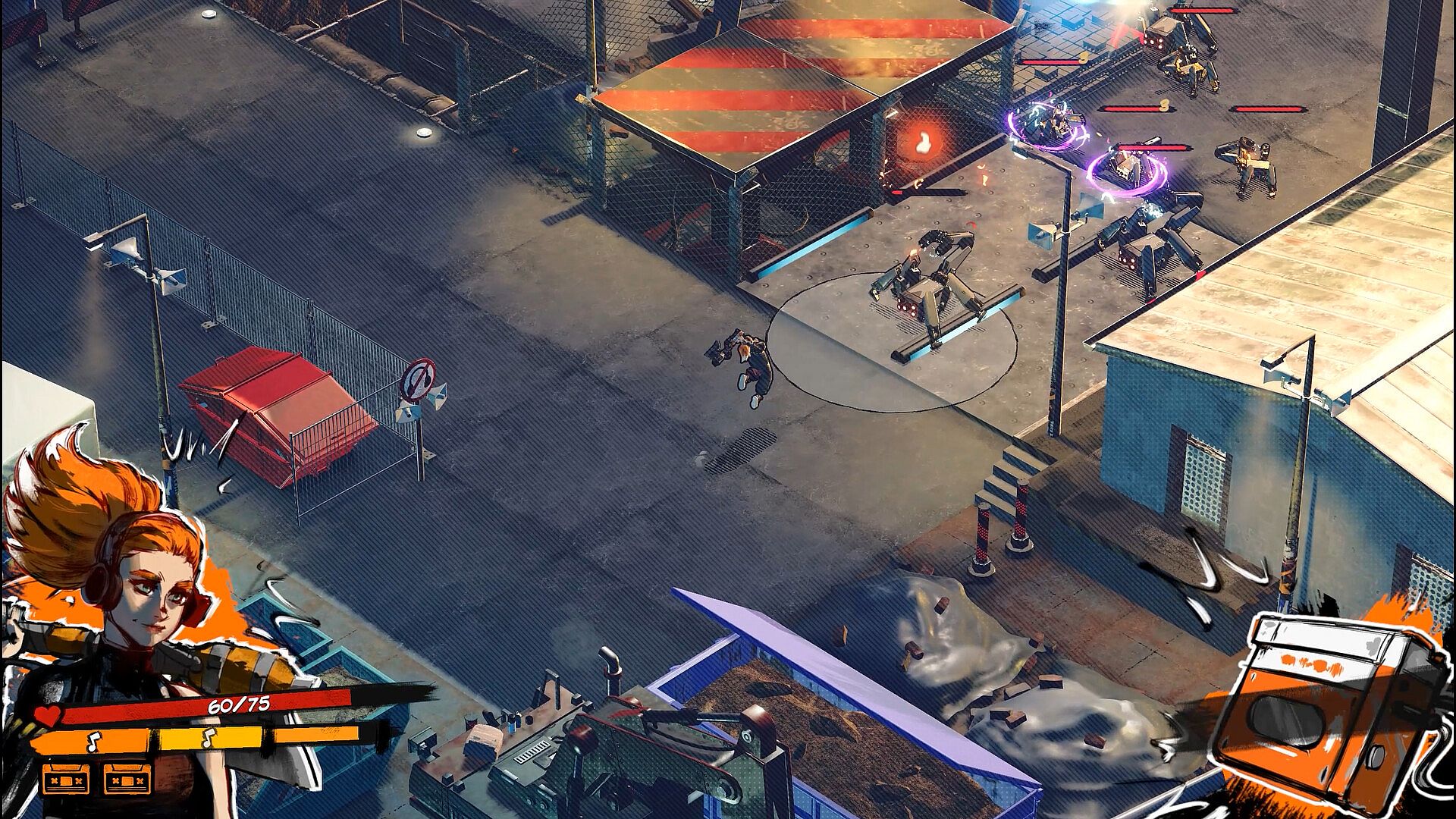
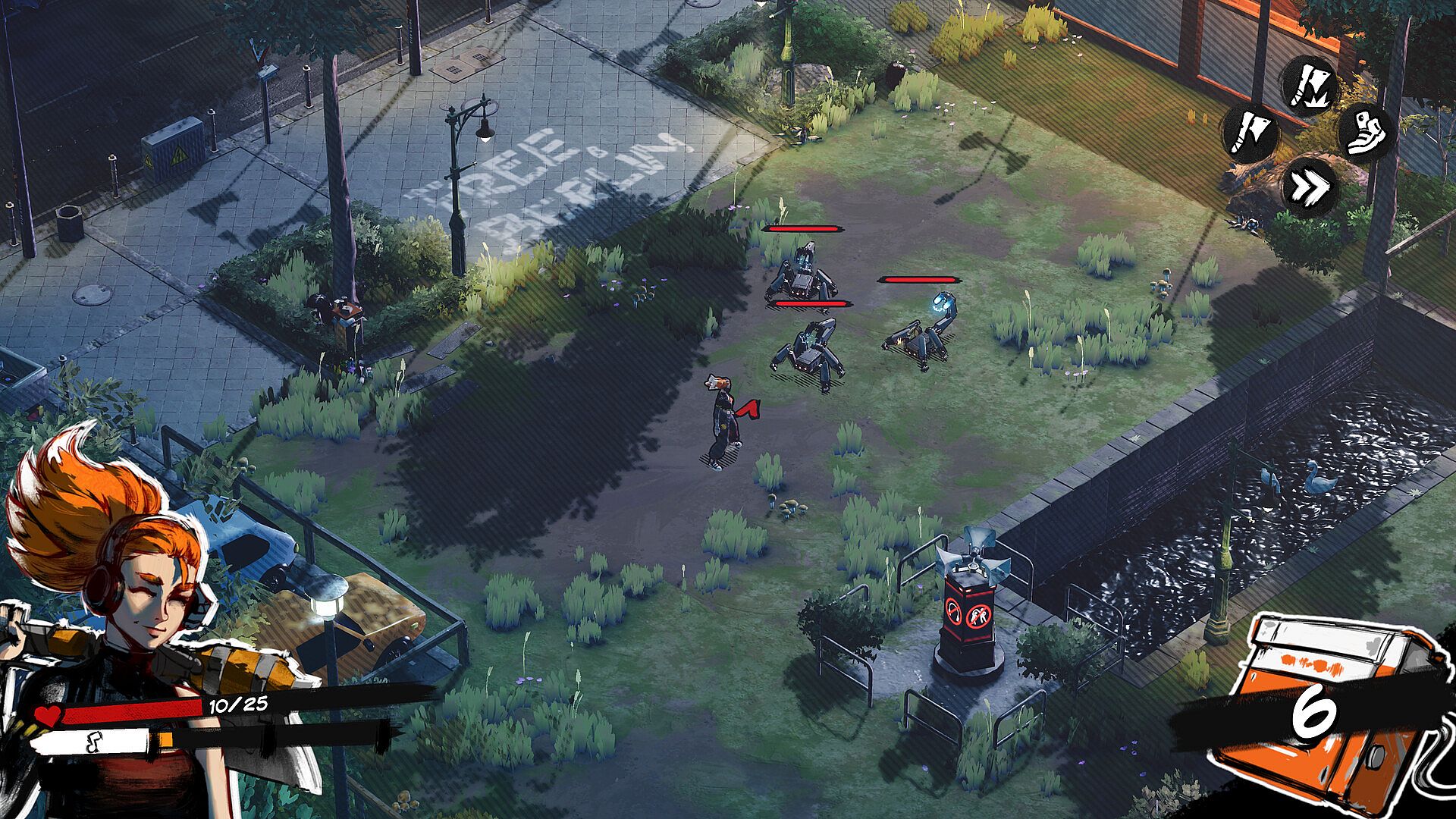
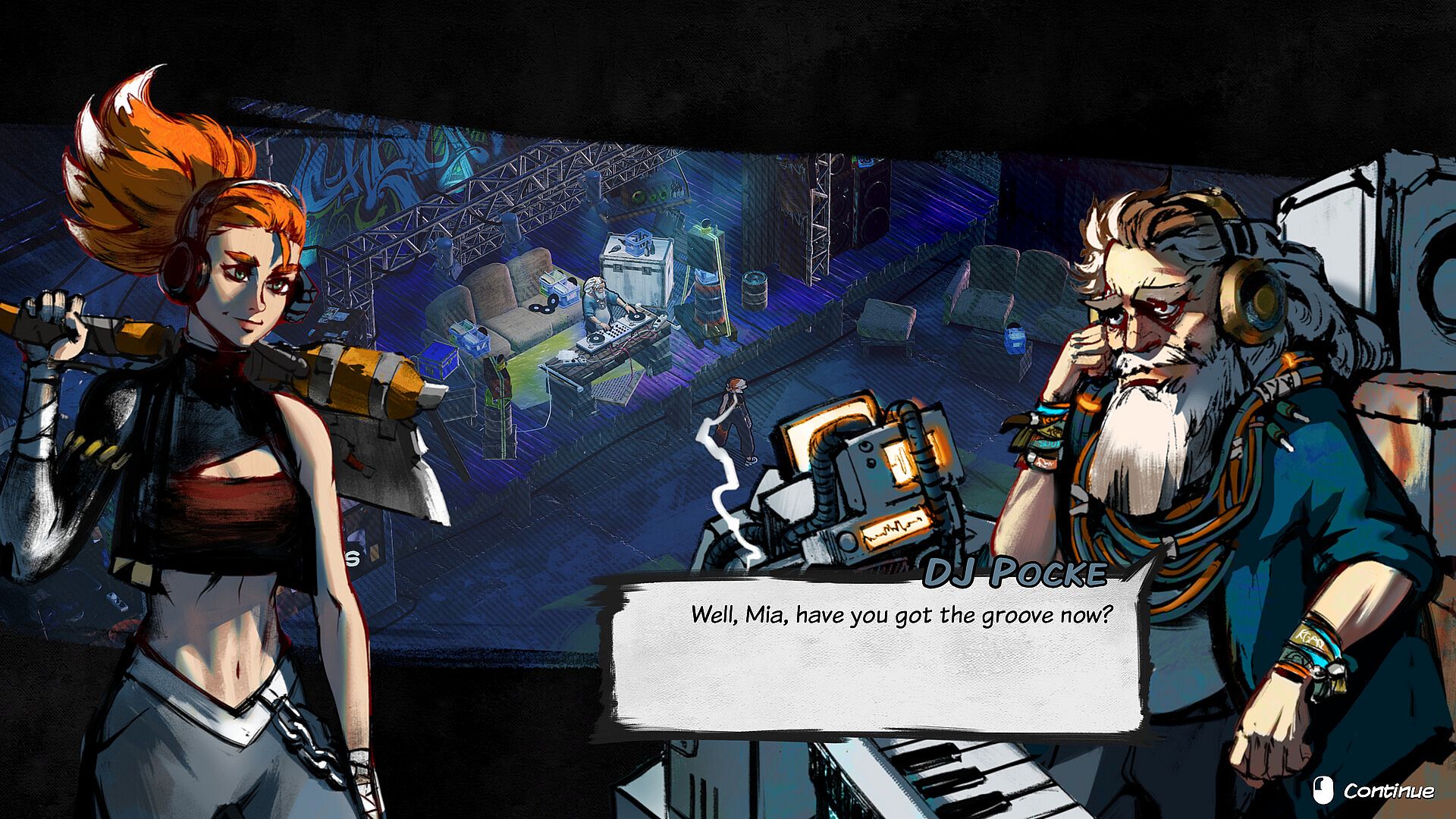
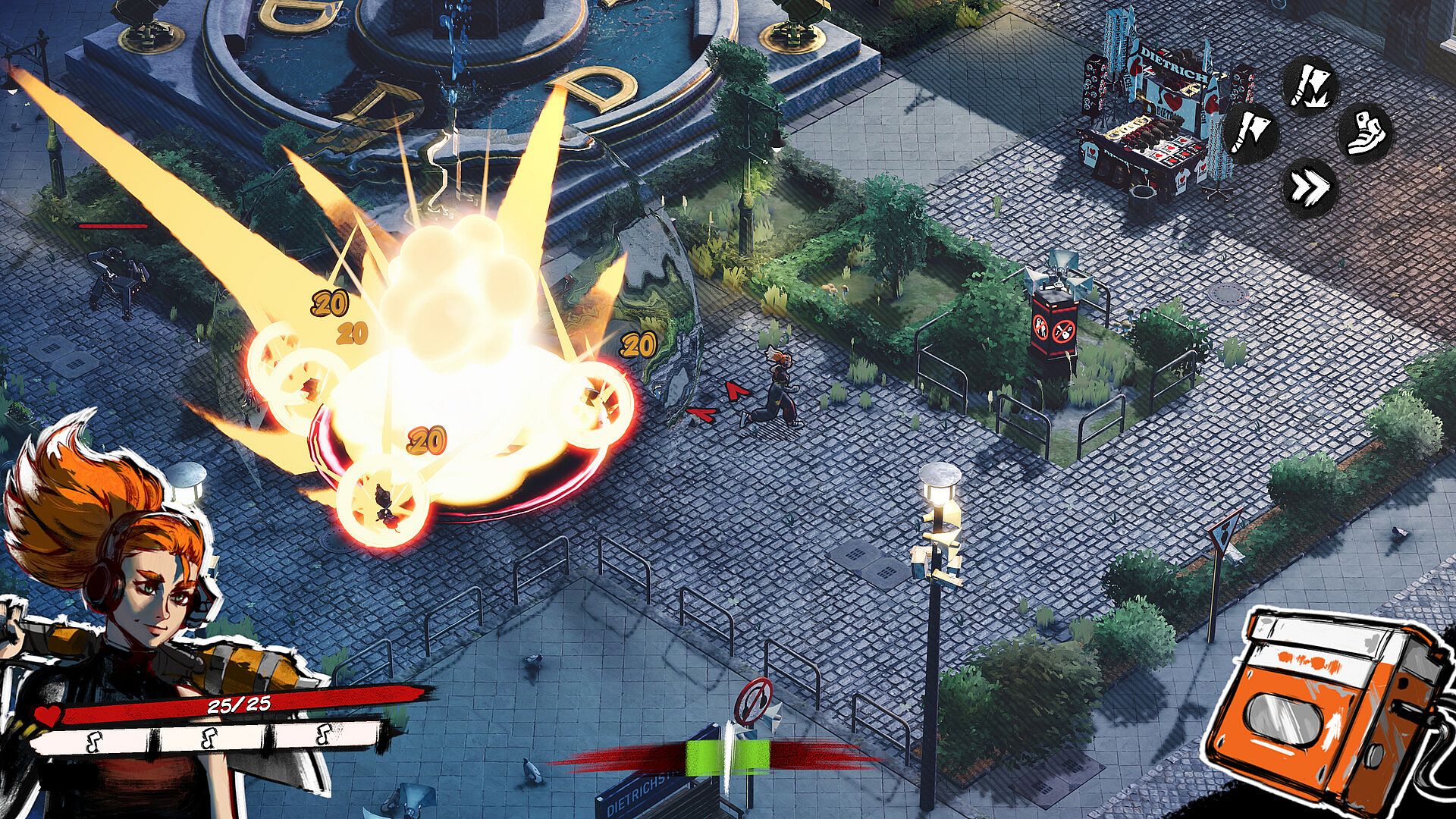
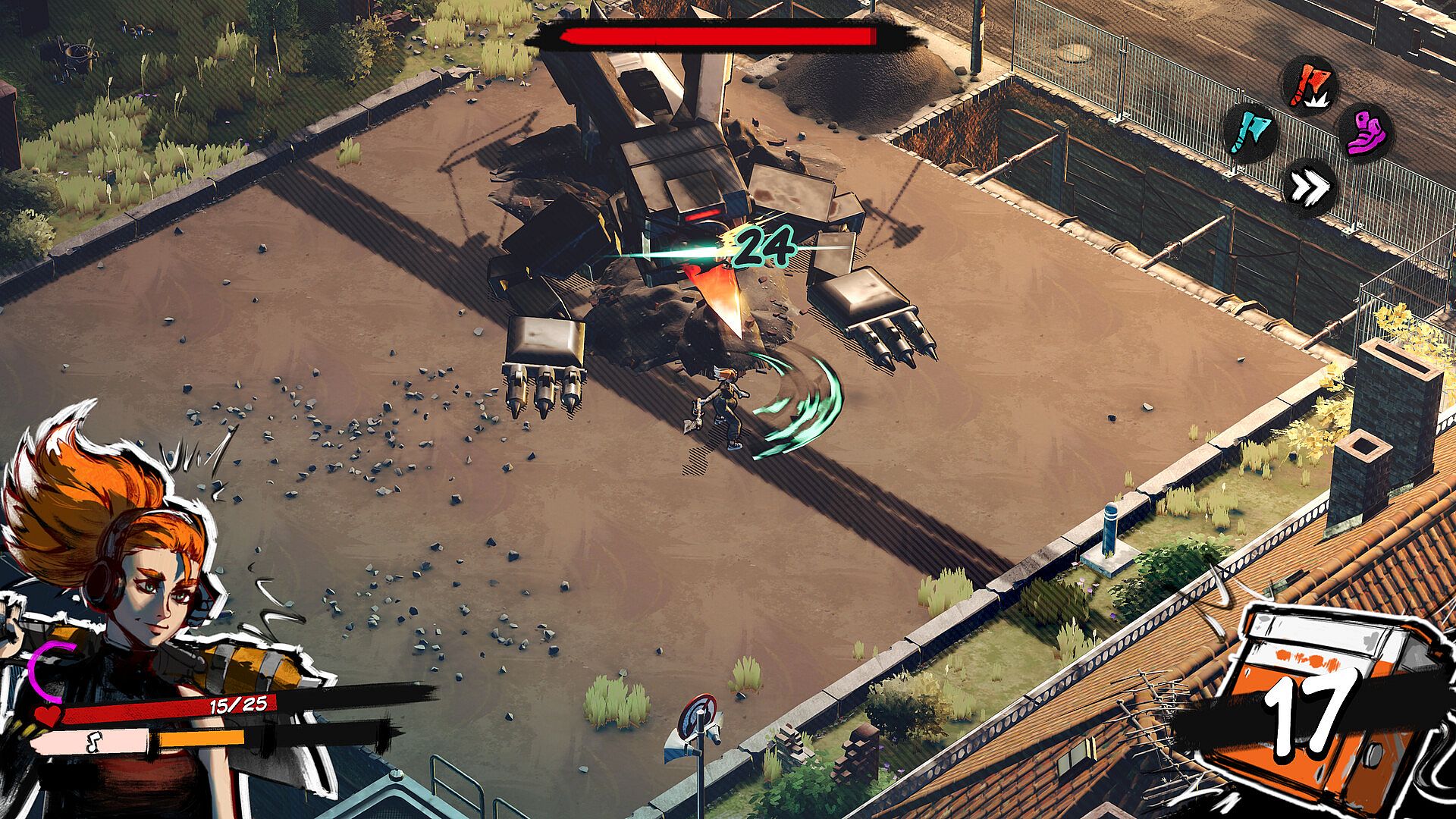
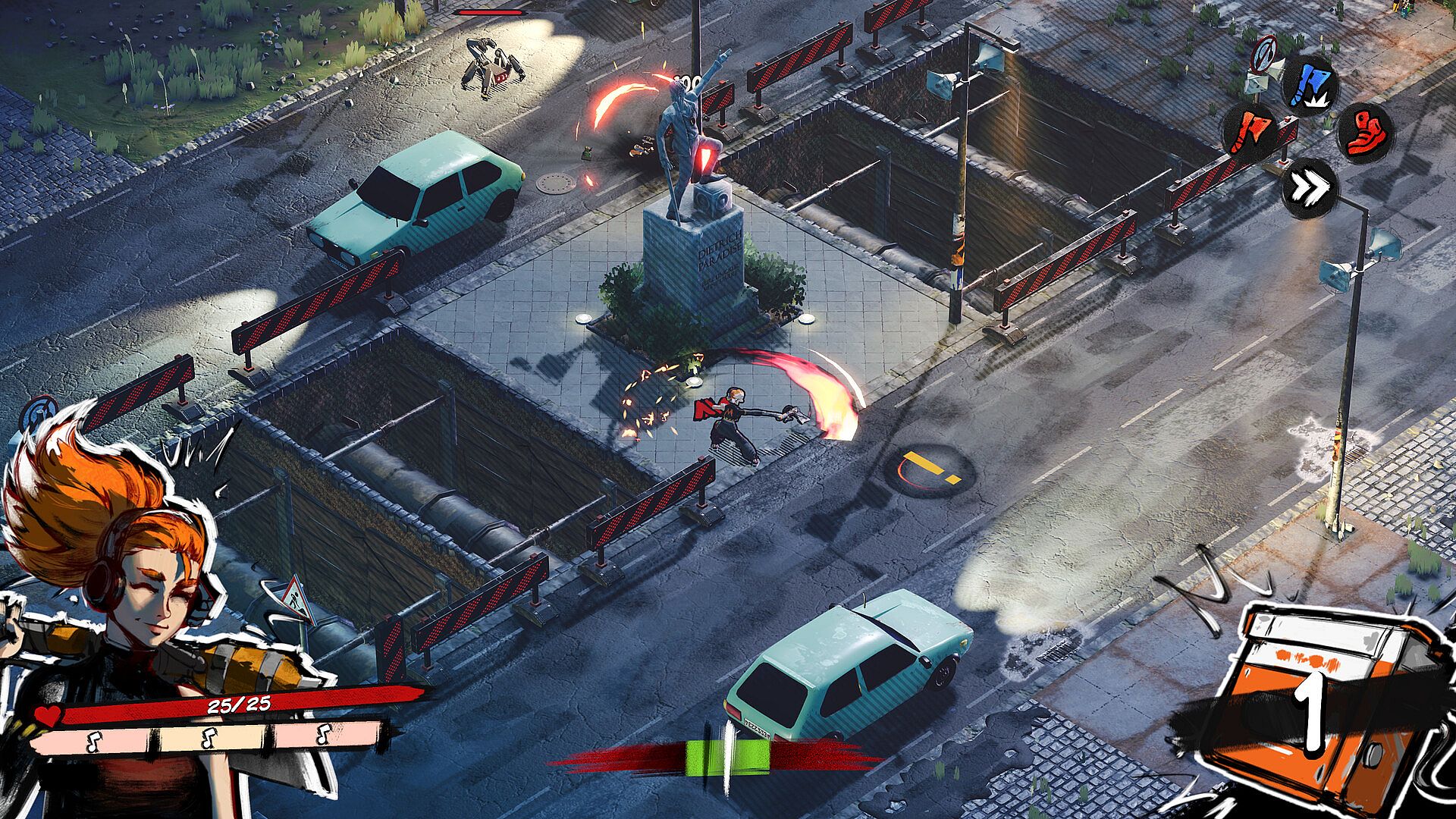
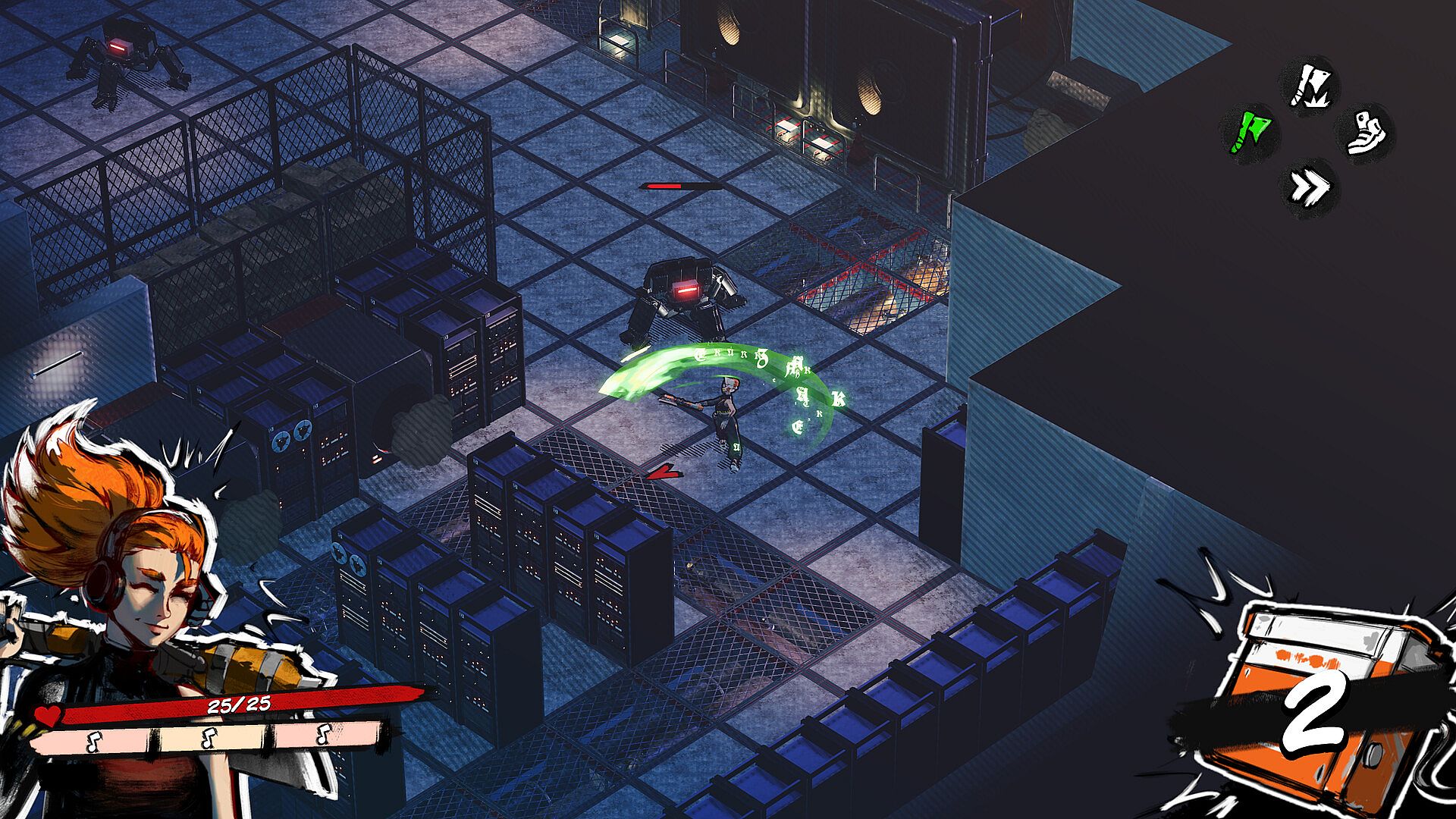
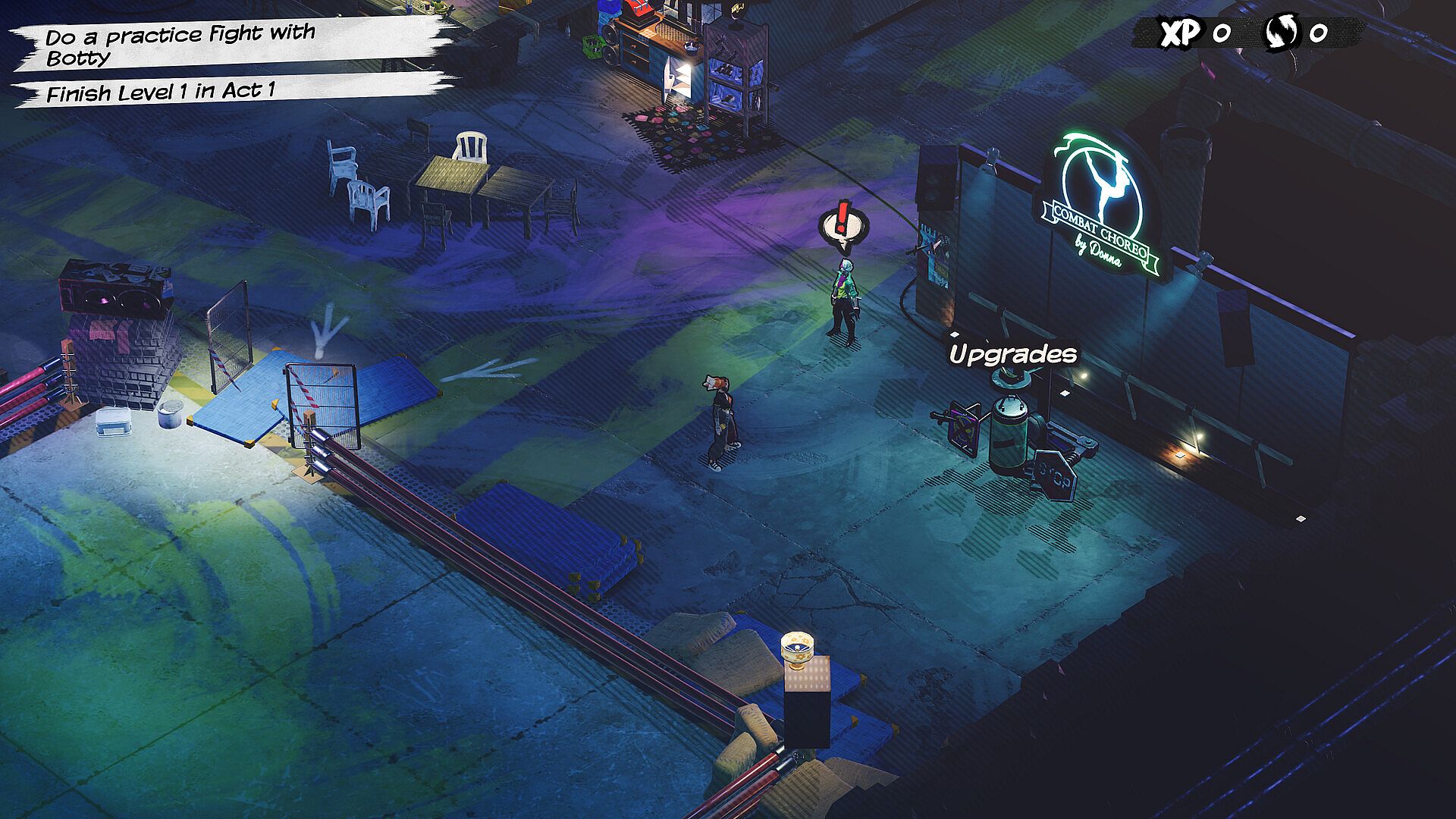
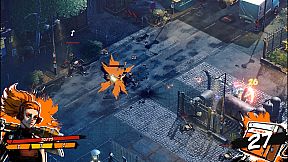
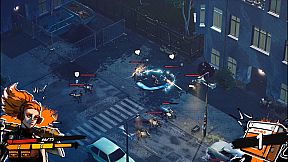
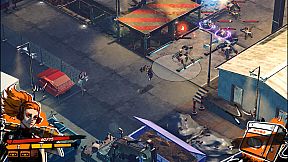
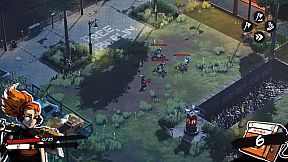
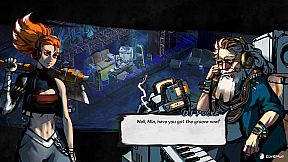
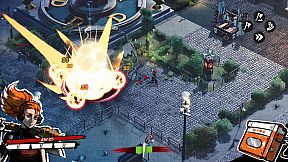
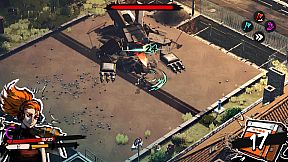
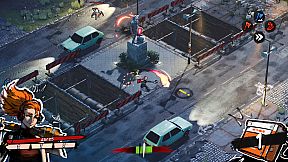
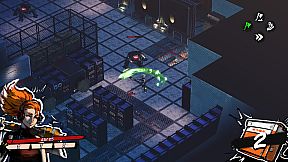
Beat Slayer é um action roguelite que coloca o ritmo no centro do combate hack and slash. O jogador controla Mia, uma inventor habilidosa que enfrenta ondas de inimigos robóticos em uma Berlim dos anos 1990 corrompida. Cada ataque, dash e habilidade precisa acompanhar a trilha sonora, transformando a precisão no fator decisivo para sobreviver.
Gameplay
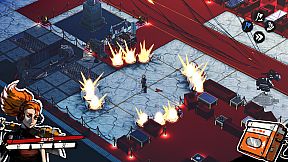
O combate exige sincronia com a música. Acertar os golpes no tempo certo constrói combos e enche a barra de impulso, enquanto efeitos de status e interações com o cenário - como empurrar inimigos contra paredes ou uns contra os outros - acrescentam camadas de decisão. O repertório de Mia inclui dashes para reposicionamento e ataques que espalham efeitos, exigindo escolhas rápidas entre agressividade e mobilidade em confrontos intensos contra diferentes tipos de inimigos e chefes maiores.
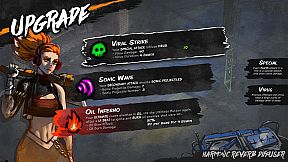
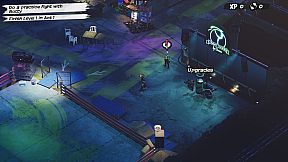
A progressão segue a lógica roguelite: cada tentativa muda conforme a arma inicial, as melhorias coletadas e o desenvolvimento da habilidade do jogador. As runs incentivam a experimentação com risco e recompensa, já que diferentes estilos de jogo influenciam a evolução das habilidades ao longo do tempo. O cenário permite explorar distritos distintos de Berlim, incluindo áreas subterrâneas e telhados elevados, com o apoio de aliados rebeldes que fornecem equipamentos e informações.
Usar fones de ouvido melhora a percepção do ritmo, e o jogo recompensa o estado de concentração em que a música guia as ações sem que o jogador precise pensar demais nos comandos. Isso cria um ciclo satisfatório de aprender padrões, adaptar-se a novas combinações de armas e refinar os movimentos para manter o ímpeto diante da pressão crescente dos inimigos.
Game Modes
A experiência gira em torno de runs roguelite repetidas que reiniciam após a morte, mas guardam melhorias permanentes para as capacidades de Mia. Não há modos competitivos ou cooperativos separados, mantendo o foco na progressão solo por fases influenciadas por procedural generation e repletas de desafios de combate. Cada sessão aproveita as tentativas anteriores por meio de upgrades acumulados e de um conhecimento crescente sobre o comportamento dos inimigos em relação à trilha sonora.
O jogador atravessa a cidade corrompida gerenciando recursos e o auxílio dos aliados, com a estrutura priorizando a rejogabilidade por meio de condições iniciais variadas e caminhos de upgrade, em vez de múltiplos formatos distintos. Essa ênfase no single-player atende quem prefere aprimoramento metódico ao longo do tempo em um sistema de ação guiado pelo ritmo.
Progression and Customization
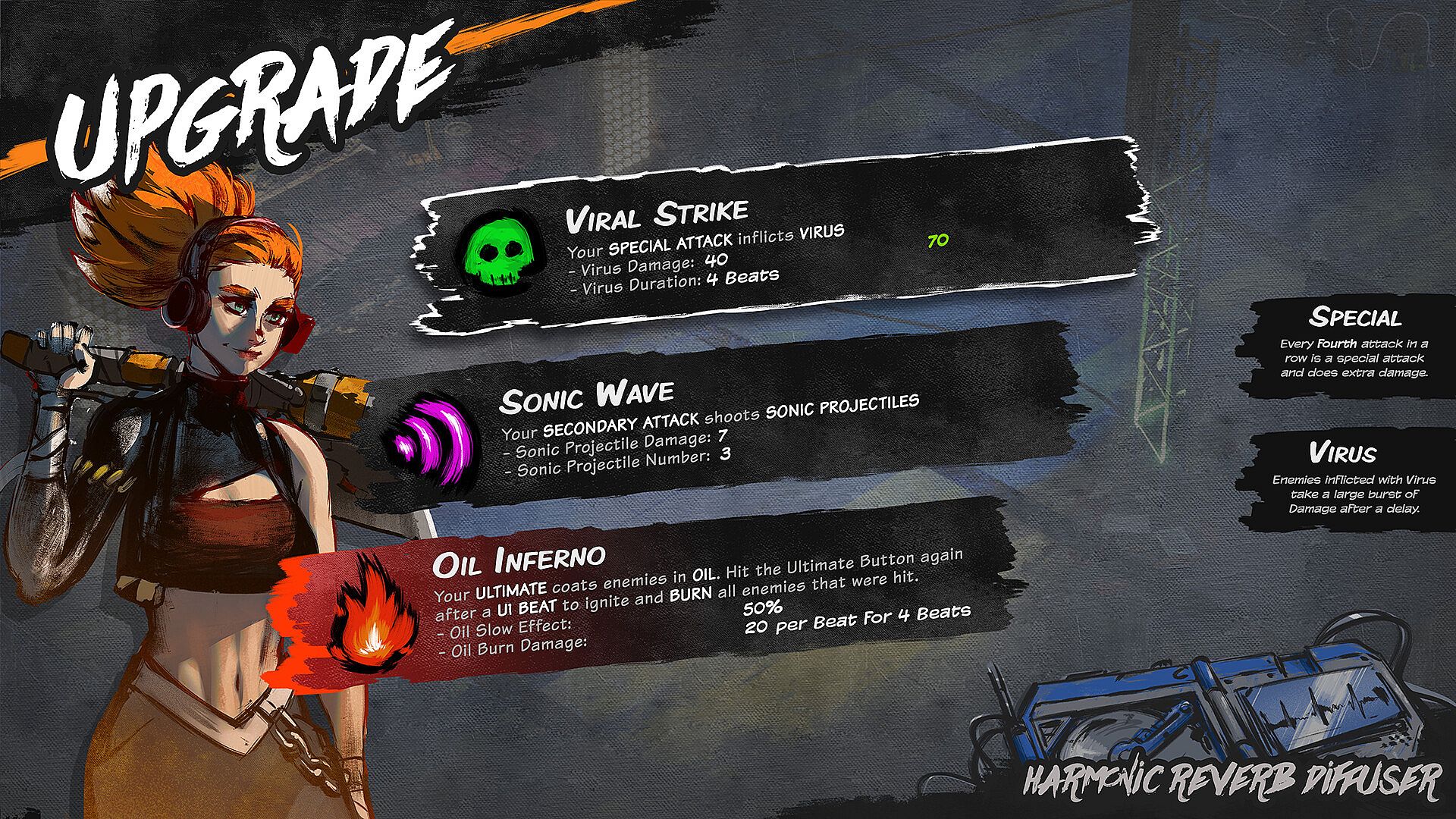
Upgrades e escolhas de armas influenciam diretamente o resultado de cada run, permitindo personalização em torno de builds agressivas, estratégias baseadas em status ou abordagens focadas em mobilidade. O desenvolvimento de habilidade surge da exposição repetida aos mecânicas de ritmo, permitindo executar sequências complexas com mais fluidez à medida que a familiaridade aumenta. O sistema aceita diferentes tolerâncias ao risco: escolhas mais ousadas podem trazer recompensas maiores, mas exigem maior precisão no tempo.
Os aliados oferecem benefícios práticos, como novas ferramentas e informações sobre o ambiente, ampliando as opções sem alterar o ritmo fundamental do combate. Esse arranjo recompensa a prática constante e a adaptação, transformando as primeiras derrotas em oportunidades de refinar estratégias nas tentativas seguintes.
Is It Worth Playing?
Beat Slayer foi lançado em 4 de abril de 2024 para PC e mantém uma recepção Muito Positiva na plataforma principal de distribuição, com 88% de aprovação nas avaliações de usuários. A combinação de timing rítmico e estrutura roguelite atrai especialmente jogadores que gostam de action games que valorizam precisão e experimentação em vez de velocidade bruta.
Quem se interessa por combate sincronizado com música e progressão baseada em runs iterativas encontra mecânicas envolventes, principalmente ao usar fones de ouvido para realçar o alinhamento com o beat. O jogo é indicado para sessões single-player focadas em maestria e descoberta dentro do cenário distópico de Berlim. Está disponível uma demo para testar o loop principal antes da compra, e o título continua recebendo atenção por sua abordagem distinta ao gênero.