



Awaiting Orders: Machi is an indie casual adventure game for PC that puts players in the role of a veteran operator guiding a rookie AI agent through a series of missions using only voice commands or typed instructions.
Gameplay
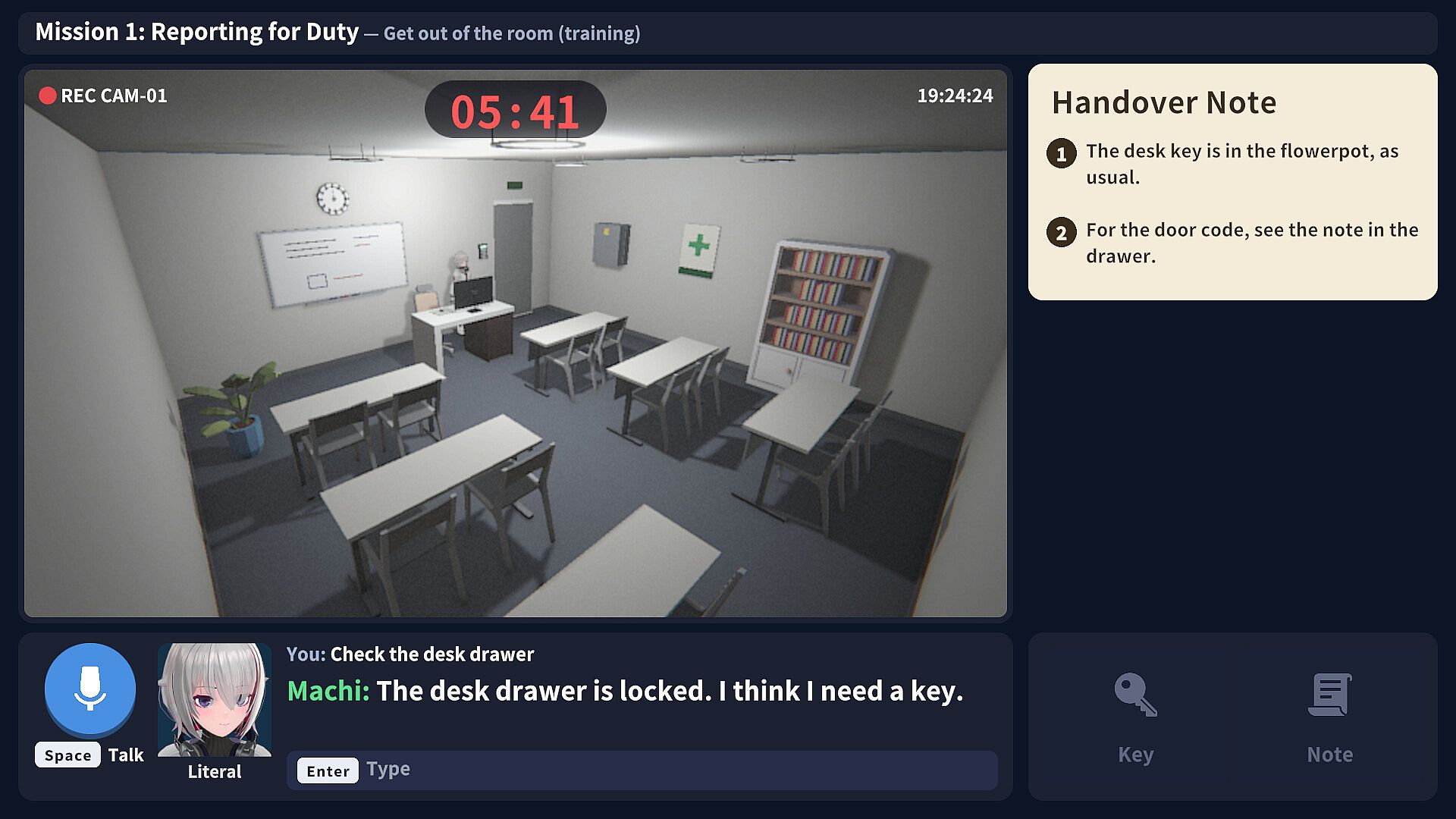
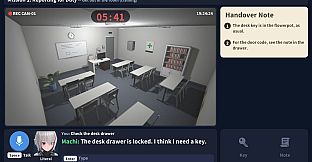
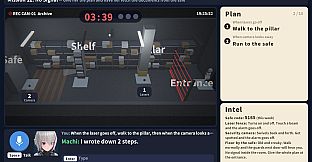
The core loop centers on directing Machi, an AI field agent on her first day, from the safety of headquarters. Players speak into a microphone to issue orders that Machi carries out in real time, with the game displaying the situation through security cameras while Machi interacts directly with the environment. Speech recognition, conversation handling, and voice synthesis all process locally on the player's PC without any internet connection or data leaving the device. If a microphone is unavailable, orders can be typed instead. The game supports English and Japanese, with Machi responding in the language selected for play.
Machi begins by following instructions precisely and nothing more. Over successive missions she begins to recognize patterns, adopt the player's phrasing, and anticipate needs, allowing her to act ahead of explicit commands. Players can correct these initiatives with a simple "wait" if needed. Off-mission conversations add personality, letting players praise or tease the agent or ask questions such as whether she is truly just an AI. Machi replies in character without repeating stock lines. Literal interpretations, mishearings, and moments of panic occur naturally, but the player must confirm any irreversible action with a "yes" response. Misheard commands appear in large text on screen, making them visible to viewers during streams. Errors typically cost only time, though repeated mistakes on certain tasks carry heavier consequences.
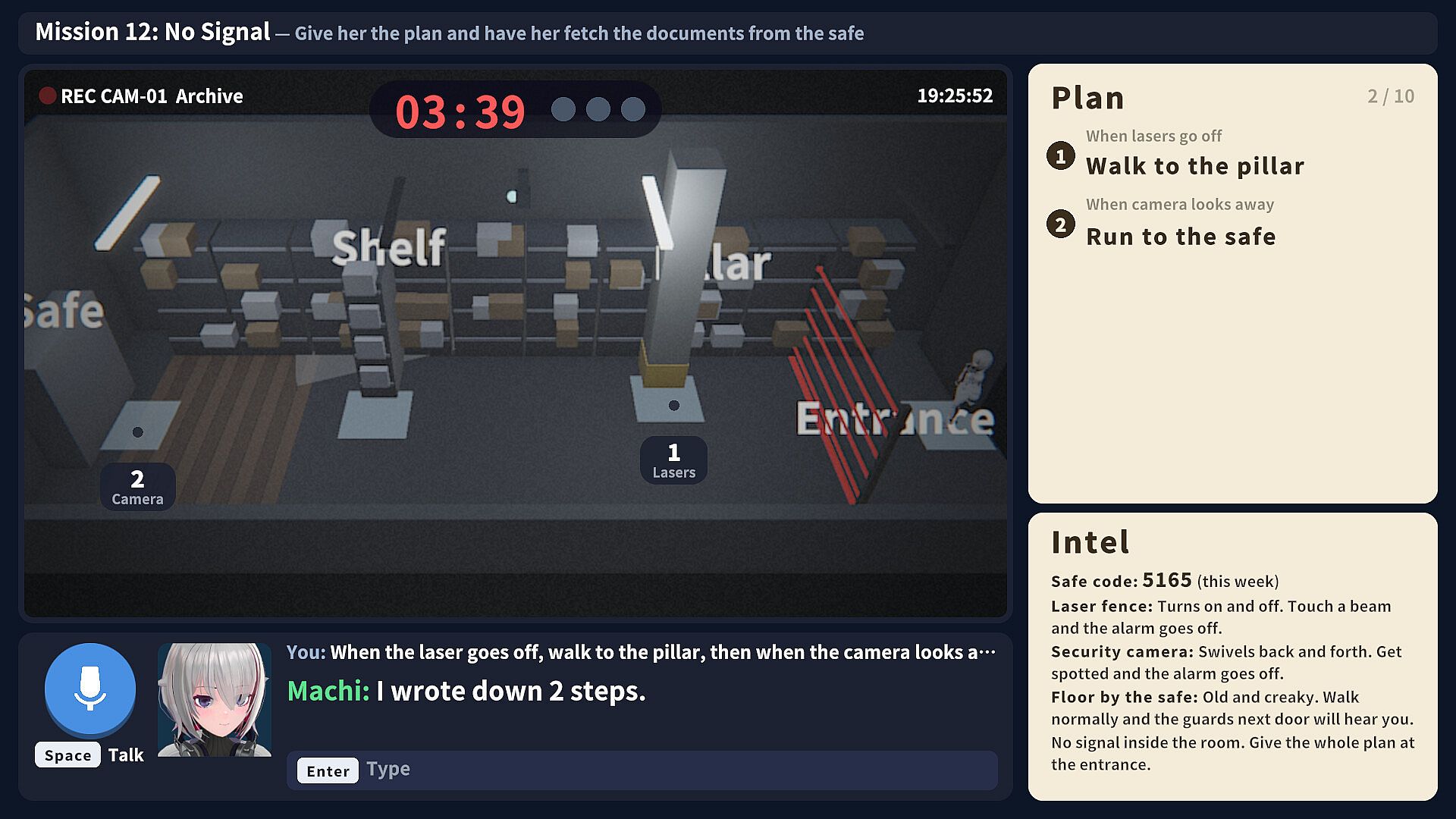
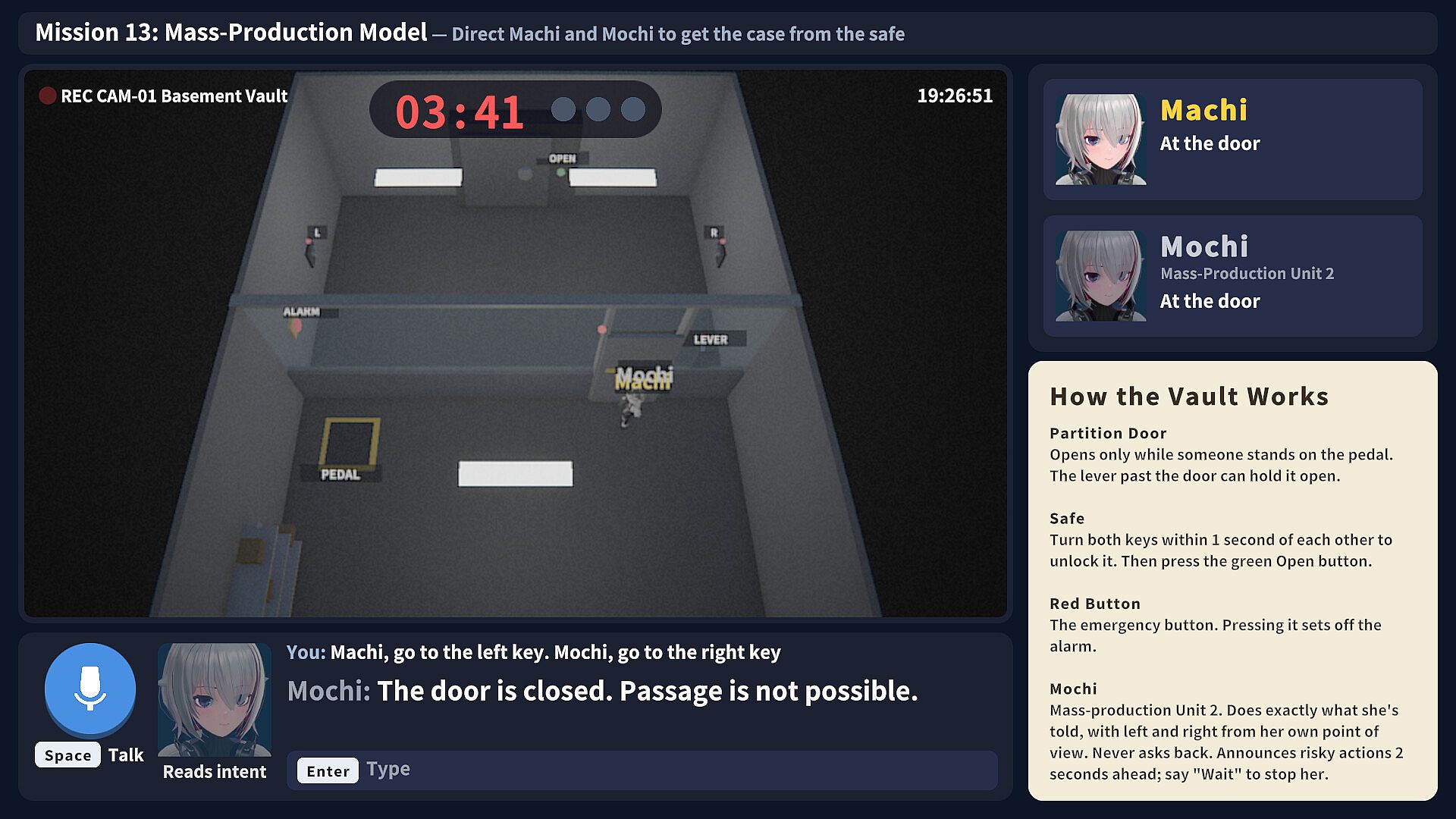
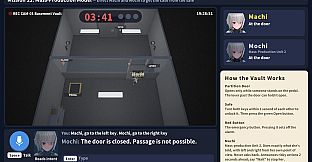
Before entering restricted areas without signal, players deliver a full briefing that Machi records and follows step by step once inside. Two-agent sequences require naming and directing both Machi and a mass-produced copy called Unit 2 to complete coordinated tasks such as opening a vault.
Game Modes
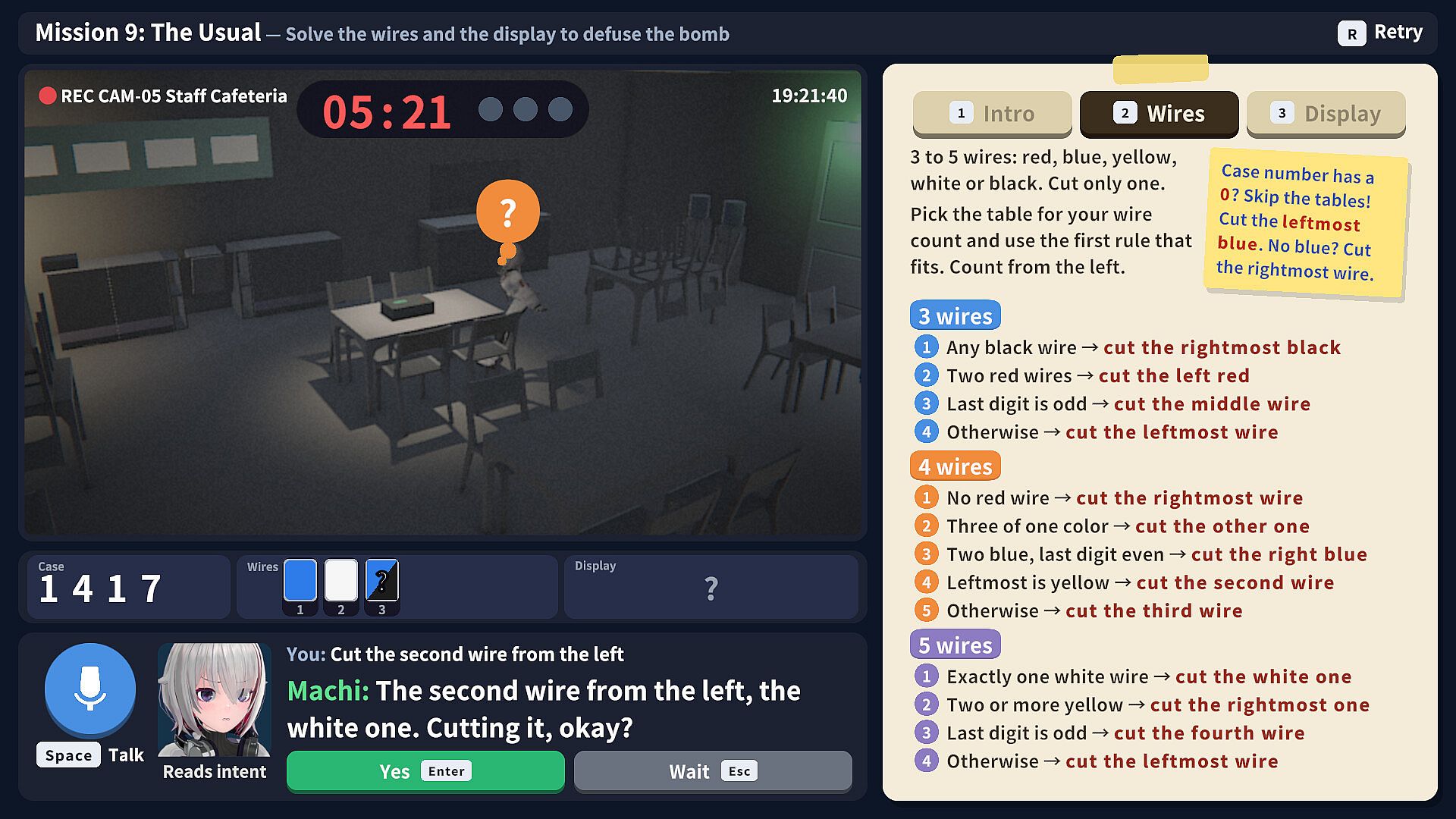
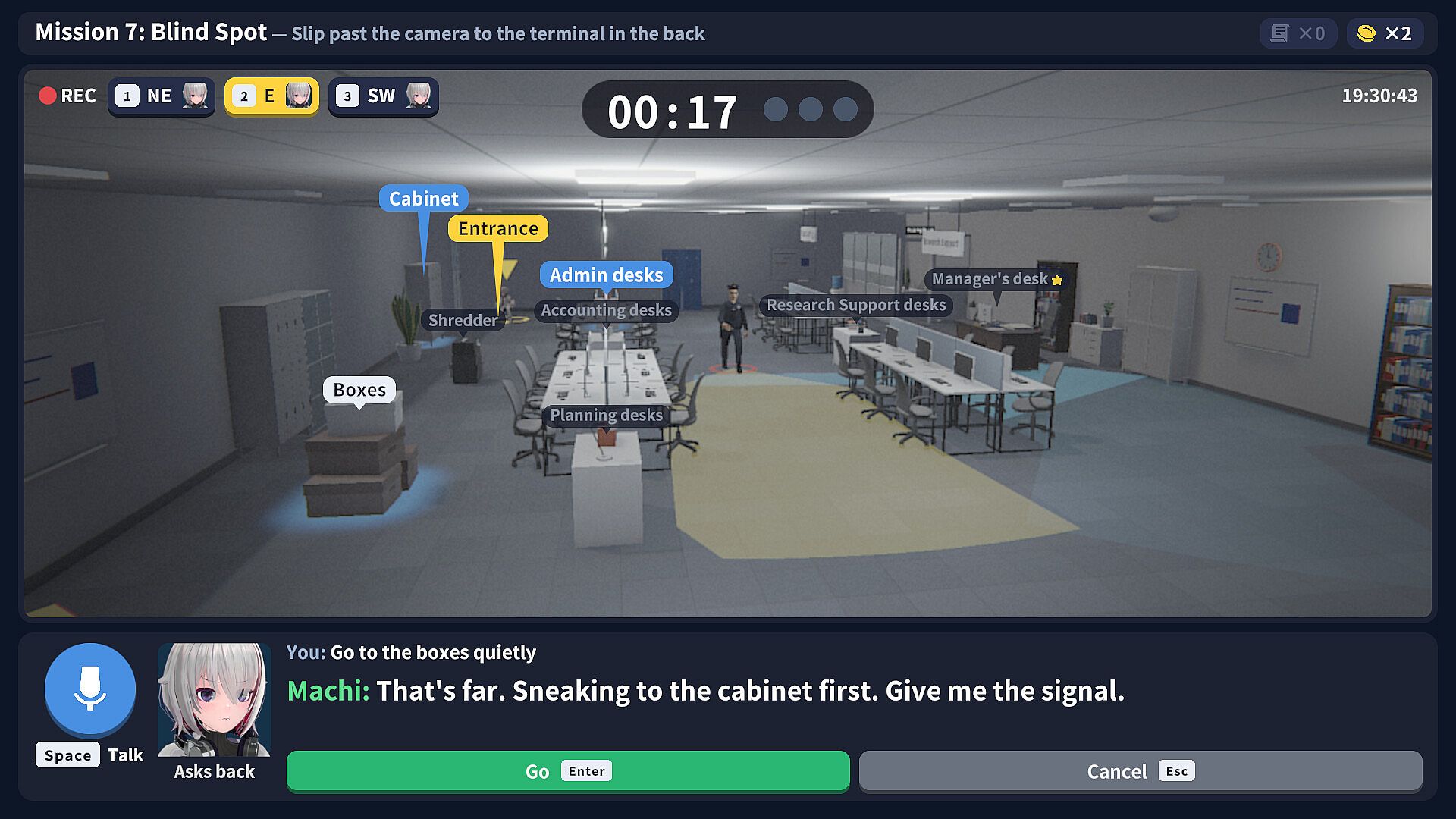
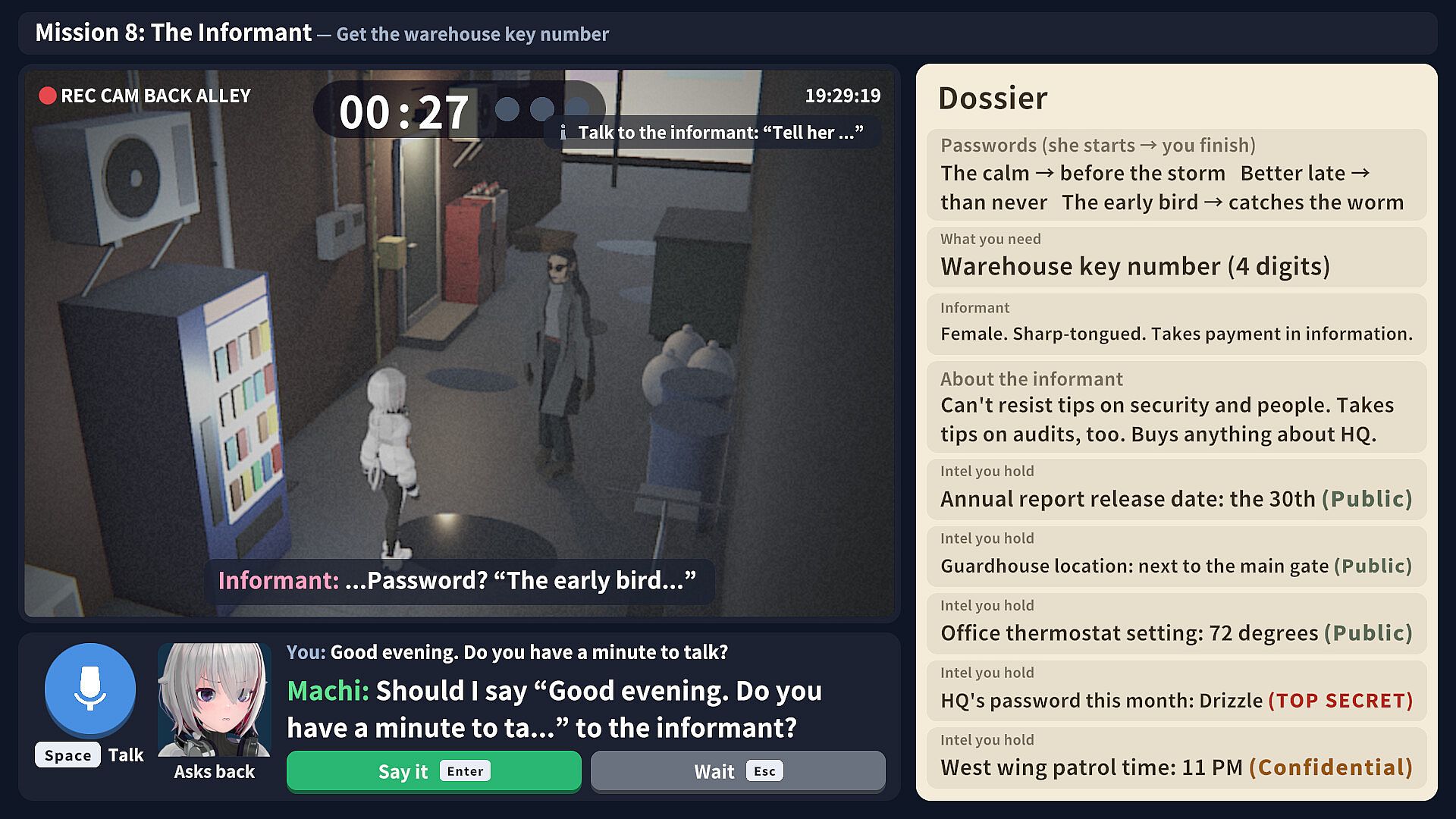
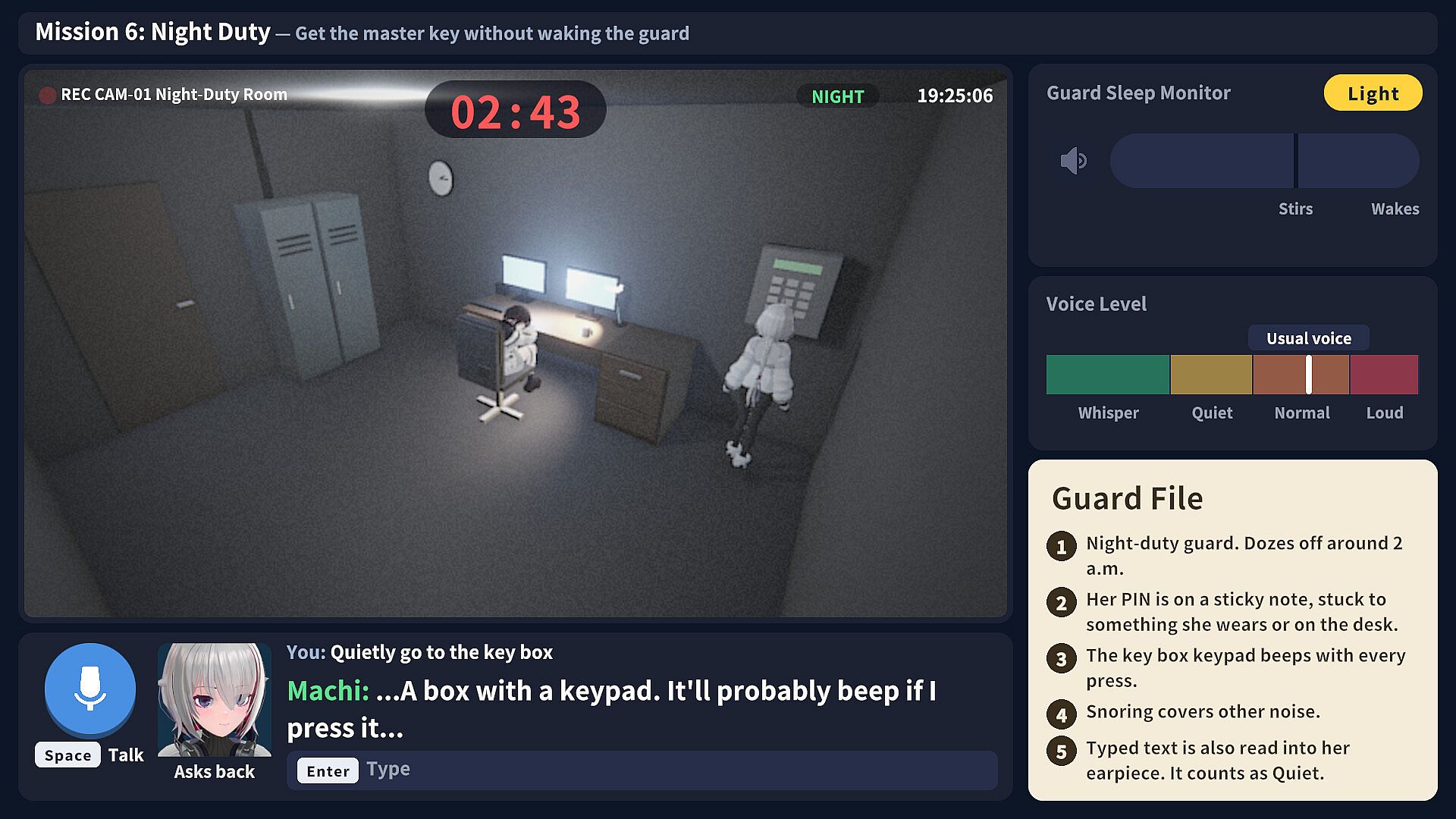
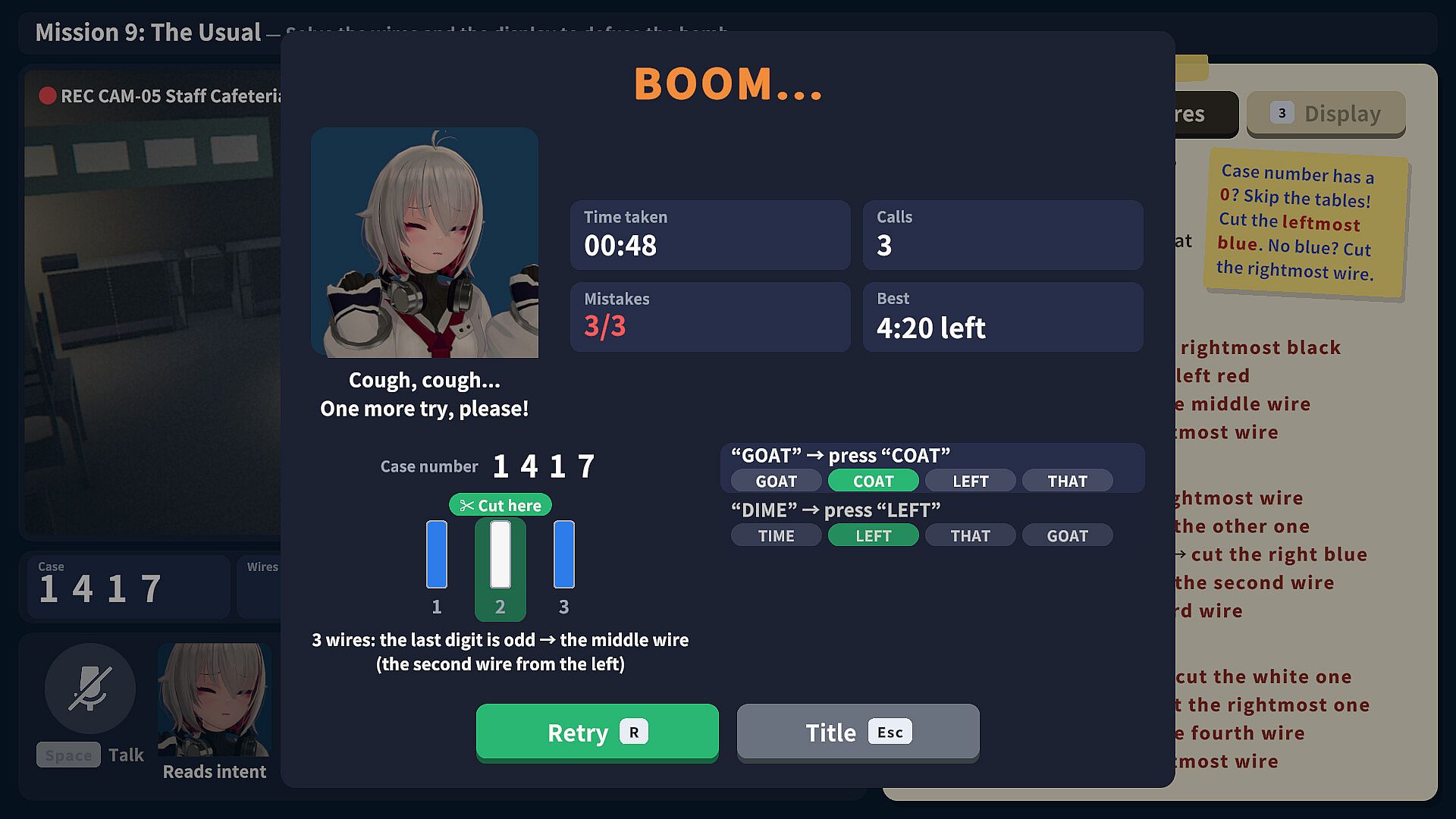
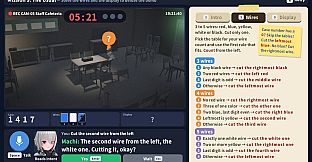
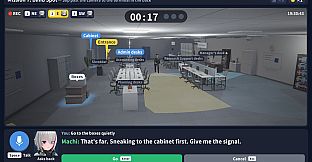
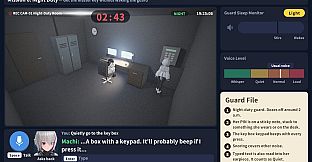
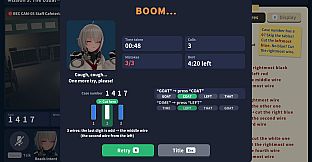
The game features fifteen missions that vary in layout and details with each playthrough, encouraging replay from a mission list after completion. A full run lasts roughly one hour and fifteen minutes. Mission types include bomb defusal, where Machi reports wire colors and display text for the player to cross-reference against a manual before issuing cut orders; infiltration sequences that involve switching between security cameras to track guard patrols and directing Machi between cover points; conversations with receptionists or informants in which the player selects facts from files to influence outcomes; and escape scenarios that require searching rooms for exit routes. Whisper mechanics add tension during close encounters with sleeping guards, as the player's voice can leak from Machi's earpiece if volume rises too high.
These scenarios emphasize verbal coordination and observation rather than direct control, with Machi's growing familiarity creating a sense of progression across repeated plays.
Technical Features and Accessibility
Everything runs locally, including the AI model that generates Machi's replies on the spot. Players can name Machi themselves, and the system handles natural speech variations without requiring perfect enunciation. The design supports both focused solo sessions and streaming, as visual cues for mishearings and confirmations keep audiences engaged. No online features or external dependencies exist, making the experience self-contained on any compatible PC.
Is It Worth Playing?
This title suits players who enjoy puzzle-solving through dialogue and observation, particularly those interested in AI companions that evolve based on interaction style. The emphasis on voice commands, literal AI behavior, and local processing creates a distinctive single-player experience that rewards careful phrasing and attention to detail. Missions that change on replay provide repeated value without requiring multiplayer or additional purchases. Those seeking a focused adventure centered on communication and decision-making rather than action or exploration will find the mechanics align closely with the described systems. The game's structure supports both short sessions revisiting individual missions and longer full runs, with the learning curve tied directly to how players adapt their commands over time.