



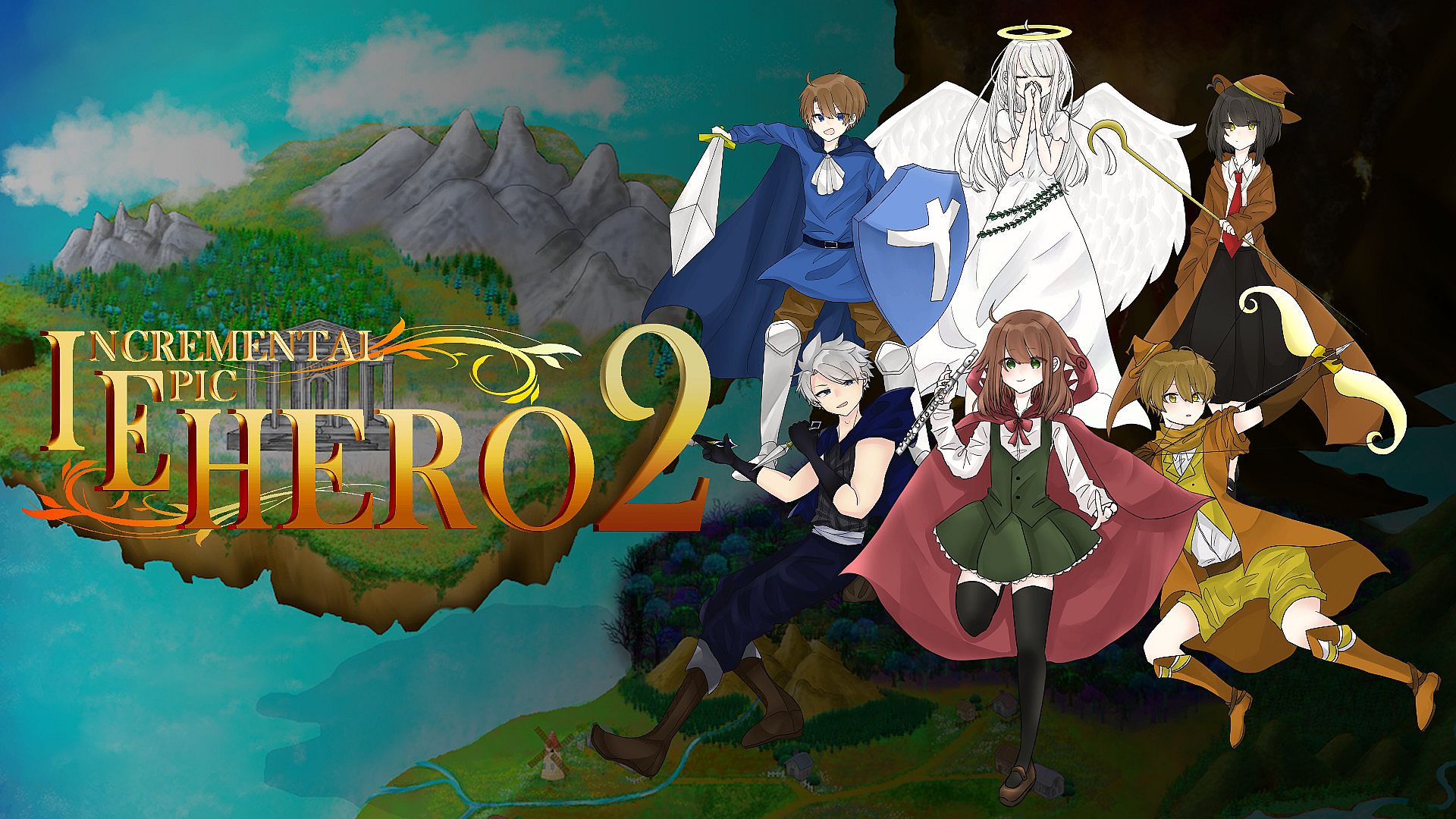
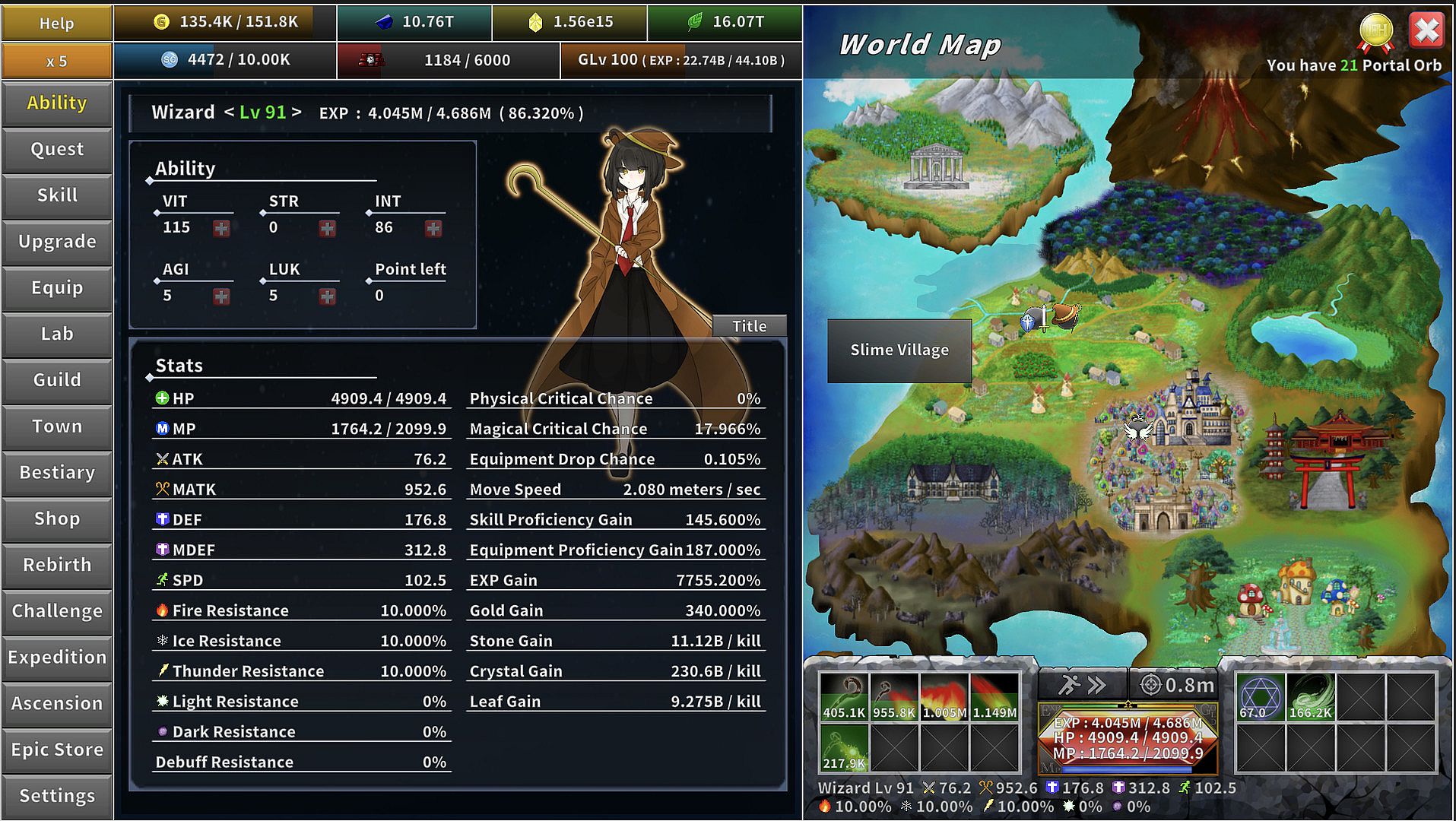
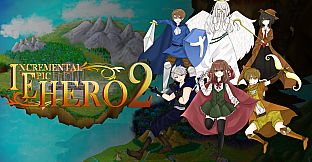
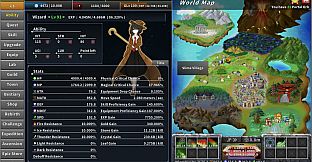
Incremental Epic Hero 2 is a free-to-play incremental RPG on PC that blends idle progression with deep management systems in a fantasy setting. Players control up to six heroes who battle automatically while the user handles upgrades, equipment, quests, and town development across a world map filled with regions and monsters.
Gameplay
The core loop centers on automated real-time combat where heroes move, attack, and heal on their own. Progress comes from clearing waves of enemies in explorable areas, collecting resources like gold and materials, and using those to improve stats through ability points, skill levels, and hundreds of upgrades. Heroes such as the Warrior, Wizard, Angel, Thief, Archer, and Tamer each bring distinct skill sets that can be leveled through use and shared across characters.
Equipment plays a major role, with over 200 pieces that can be socketed, upgraded, enchanted via scrolls, and mastered for permanent per-class bonuses. Captured monsters from the bestiary level up to provide special abilities, while alchemy allows crafting potions and the town system expands buildings to unlock new features. Quests come in global main lines, daily tasks, title-specific, and general categories, requiring prioritization due to limited active slots. Rebirth resets a hero for ability points and bonuses based on prior progress, and World Ascension applies broader prestige layers that keep earlier content relevant through multipliers and unlocks.
The Inventory Slot Expansion Pack directly supports this loop by adding 50 equipment inventory slots, 10 enchant slots, and 10 utility slots. It also provides a 25 percent multiplicative gold gain boost that stacks across multiple purchases of similar packs, along with 10 portal orbs for dungeon access and 5500 epic coins. Portal orbs specifically open dungeons that deliver large experience rewards and town materials upon completion.
Game Modes
Progression unfolds through layered systems rather than traditional separate modes. The world map divides into regions with multiple areas, each containing waves of monsters that grow tougher. Completing areas unlocks challenges and mastery bonuses that improve resource gains on repeats. Ultimate Trials pit players against specific bosses with leaderboards and a hard mode option that fixes certain mechanics like projectile counts for consistent scoring.
World Ascension introduces roguelike runs in higher tiers, where players enter parallel worlds, select relics, apply fractures to alter rules, and tackle ordeals under time pressure. Successful runs yield heart stones and spirit essence for permanent upgrades between attempts. Super dungeons add another layer with modifiers and artifacts, while time attack offers a reset-based sprint for guild level and ascension progress. These systems interconnect, allowing background automation once multiple heroes are unlocked and rebirth tiers advance.
Progression and Updates
Rebirth tiers expand over time, with higher ranks tied to town building milestones like temple ranks. Recent updates have introduced tier 3 world ascension as a roguelike endgame featuring relics and new guild abilities, along with quality-of-life improvements to automation and numerical limits on damage and health. Town features such as the mystic arena and tavern continue to receive expansions that tie into these prestige layers. The game receives ongoing support with hotfixes and milestone content that maintains relevance for long-term players.
Is It Worth Playing?
Incremental Epic Hero 2 suits players who enjoy methodical optimization, tab management, and long-term incremental growth in a single-player idle format. Its mostly positive reception stems from the depth of interconnected systems and the satisfaction of watching numbers scale across rebirths and ascensions. The inventory expansion pack addresses a common pain point by easing storage limits and providing multiplicative gold gains that compound with other purchases. Those comfortable with menu-heavy interfaces and repeated prestige cycles will find substantial content, while the free-to-play model allows testing the base experience before considering DLC. Recent updates keep the endgame active with new roguelike elements and automation tools.